
A Conversation w/ Tom Marioni and John Held, Jr.
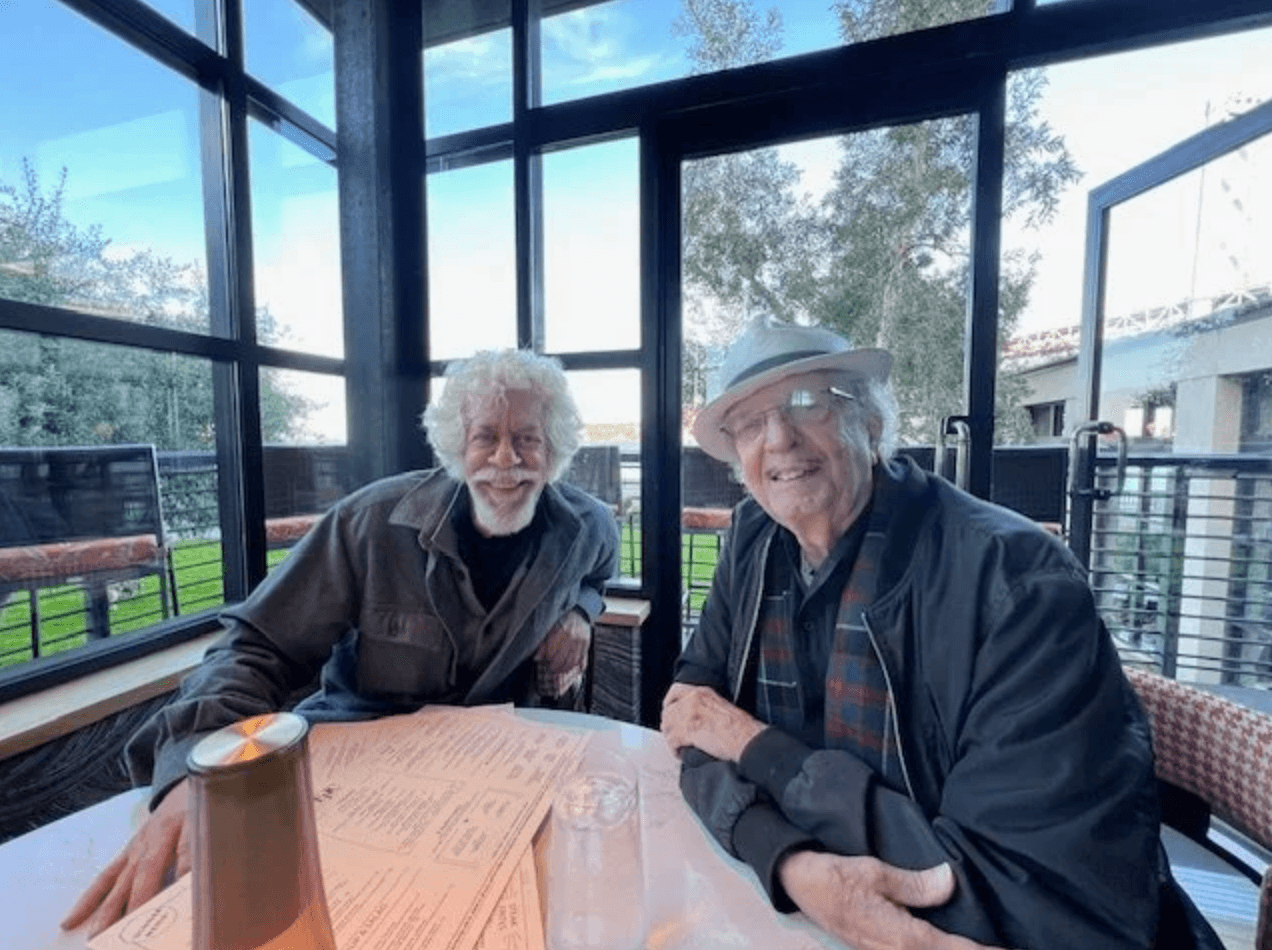
Tom Marioni, born in Cincinnati in 1937, is a pioneering conceptual artist whose work helped define social practice, sound sculpture, and performance art. After studying at the Cincinnati Art Academy, he moved to San Francisco in 1959, where he became a central figure in the Bay Area conceptual art movement.
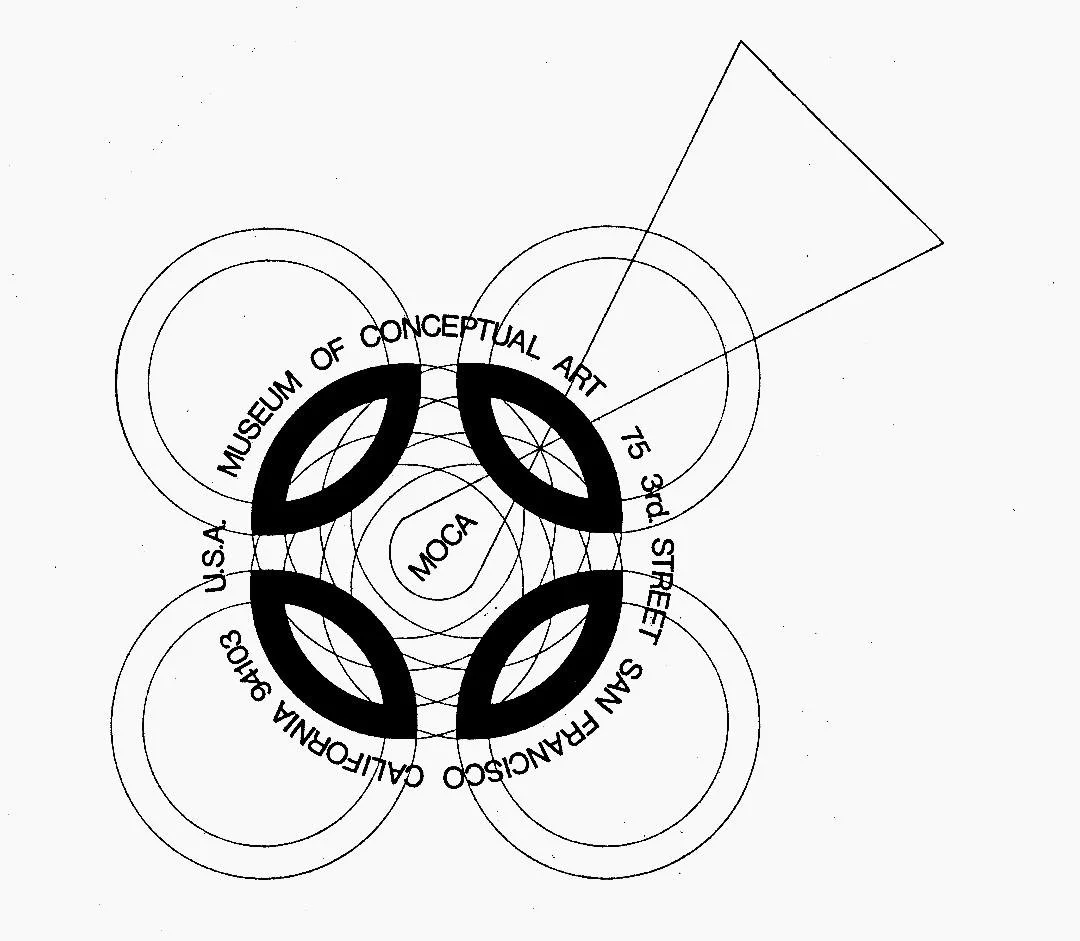
Marioni’s One Second Sculpture (1969) anticipated later artistic uses of sound, duration, and action. In 1970, his Oakland Museum exhibition, The Act of Drinking Beer with Friends is the Highest Form of Art, became a landmark work of social sculpture and has since been restaged internationally. That same year, he founded the Museum of Conceptual Art in San Francisco, one of the first alternative art spaces, which he described as “a large-scale social work of art.”
Marioni has exhibited and performed at major institutions including the Whitechapel Gallery, ICA London, Centre Pompidou, de Young Museum, Tate Gallery, MOCA Los Angeles, and the Guggenheim Museum. His work is held by SFMOMA, MoMA, the Pompidou Center, and other major collections.
He received a Guggenheim Fellowship in 1981 and multiple NEA grants. He is also the author of Beer, Art and Philosophy and other writings on art.
This interview with Tom Marioni was conducted by John Held, Jr.
Telling His Side of the Story
John Held: You’ve been interviewed many times. Do you enjoy the process, view it painfully, or do it out of necessity?
Tom Marioni: I’ve been interviewed many times over the past fifty years. I prefer to do it on email because I can check what I write before I send it out. When I have been interviewed, I find out that I stutter sometimes and there's a lot of ah’s an oh’s in the finished transcription. I enjoy telling my side of things.
A Catholic Cincinnati Childhood
John Held: You were born 1937 into a Cincinnati, Ohio, Italian American family to a doctor father with three other brothers, Paul, Don and Joseph, who also became artists. Additionally, your nephew, Dante Marioni, went on to become a noted glassblower. What was the family dynamic driving family members not only to practice and excel in the arts, but in such diverse fields? What was there in this strictly Catholic raised family that produced both a monochrome painter and a conceptual artist?
Tom Marioni: Yes, I was in grade school during World War Two. My father came to America from Italy in 1921 when he was 21, and became a doctor. His best friend was a painter, famous in Cincinnati for painting the murals in the airport. Dad was a Sunday painter and painted at home every weekend. My mother came from Syracuse, New York, and her parents were from Italy. My mother played the piano, harp and sang. My three brothers Don, Paul and Joe studied the piano and the three of us became artists. Paul makes art from glass, cast glass and stain glass windows. Joe moved to New York and became a monochrome painter. He was red /green color blind like me. I thought you cannot go wrong if you only painted one color paintings. He died in 2024. We all studied music. Don and Joe the piano, and I studied the violin and played in a youth orchestra at the Conservatory of Music when I was fourteen.
A childhood friend of my father in Italy when he was child wanted to visit Dad in 1958 when I was in art school. I drove my father to New York City to meet Dr. Bassi and his daughter, who came to New York on the cruise ship the Leonardo da Vinci. I took my father to Birdland, the most famous Jazz club in the country, and I was glad to introduce him to Jazz. I graduated from art school at the end of the 1959 and took the train to San Francisco to be a beatnik.
Learning Jazz as a Second Language
John Held: Before we move on to the San Francisco years, let’s stay in Cincinnati and discuss some of your formative experiences. Did your brothers join you at the Art Academy of Cincinnati, where you received your art training from 1955 to 1959? Was here competition between you, support from your parents, similar interests shared? Was there one professor who left an indelible mark on you? What was art school like in the 1950s and why did Jazz play such an important role in this early stage of your artistic development?
Tom Marioni: I remember also the Art Academy. My brother Joe who was six years younger than me went there after I left for San Francisco. Paul never went to art school but studied English literature. Noel Martin was my design teacher, my biggest influence. He said you should support products that have good design. I judge wine by the price tag and the label design.
My father did not expect any of us to become doctors. And I was interested in art. The 1950’s were the high point of modern Jazz. I went to Jazz clubs then and learned it as a second language. I even met Miles Davis briefly at the Monterey Jazz festival. My teachers in art school made fun of the Abstract Expressionism that was the art of the time. Be Bop and Jackson Pollock were the beginning of American Art.
Beatnik Dreams and the Army Years
John Held: You mentioned moving to San Francisco in 1959, but soon after went into the Army spending the next three years stationed in Germany. There were still a lot of fresh wounds from WW2 on display in Germany during the time you were there. What was this period like, and did it have an impact on your art down the line? I know that you became an admirer of Joseph Beuys, who dealt with his country’s fracture. Did any of this have to do with your first hand witnessing of a unique historical situation?
Tom Marioni: I went from art school to San Francisco and moved into a furnished room on California Street near Fillmore. The Fillmore area was a kind of West Coast Harlem in the 1940’ and 1950’s. I saw Big Mama Thornton and B. B. King there. I got a job working for a designer designing rugs and wall paper. It lasted about 9 months. I bought a motor cycle, a Matchless 500 CC, and went to North Beach every night. I realized I went to San Francisco to be a Beatnik, and because Italians had status.
After a year I was drafted into the army. I found out if I signed up for three years and not two, I could request to be sent to Europe and not the US or Korea. This was between wars. I was sent to ULM Germany on the Danube River. I was in the Infantry but after a few months I wrote to the Stars and Stripes newspaper for a transfer with my resume and they accepted me to be on their staff. My commanding Army colonel said if I forget the transfer he would give me my own office and put me in charge of beautification of the post. I painted murals in several buildings.
I got married to my San Francisco girlfriend Marilyn Swensen and was able to move off post. We went to Munich on our honeymoon and that was a great art town at the time. I got a Volkswagen, and an apartment for forty dollars a month. I made friends with a teacher at the famous High School for Design founded by Max Bill. A friend I met in basic training, who was stationed in Frankfort, got together and I drove my wife and his German girlfriend to Paris to see Bud Powell at the Blue Note Jazz club. Germany was good to me. We even drove to Rome and other parts of Germany.
After two years I was transferred to Columbus, Georgia, for six months. I got a job there at the sign painting office and had my first one man show in the art museum there. I was discharged in 1963 and drove with Marilyn and our first son Marino to San Francisco in an Oldsmobile that my brother Paul gave to me. Right away we got an apartment on Hyde St. for eighty-five dollars a month. My first room was at 2246 California Street in 1959.
My first job in 1964 was in a plaster shop, I was the finisher and spray painted the lamp bases, decorative objects etc. It was on Minna Street where the park for the Moscone Center is now. I was a layout person for a commercial newspaper after that, and a free lance graphic designer. I had a studio on Third St. where the SF Museum of Modern Art is now. It was across the street from a porno theater. There wasn’t much on Third St. then. Marilyn got a job downtown and Marino (now Reno) and Tony used to jump on the Hyde Street cable car to the bay beach and jump off if the conductor asked for their fare. Tony was in a school with all Chinese kids and the teacher told the class “you should only speak English when you are home.”
I was out of work in 1968, and I got a job at the Hunters Point Shipyard for one month when I suddenly became the curator of the Richmond Art Center in Richmond, California. I was there until 1971. I organized several important conceptual art exhibitions. In 1969, Invisible Painting and Sculpture included the first time Larry Bell was seen in the Bay Area. Also The Return of Abstract Expressionism, a sculpture show about process art, installation, and records of Earth Art etc.
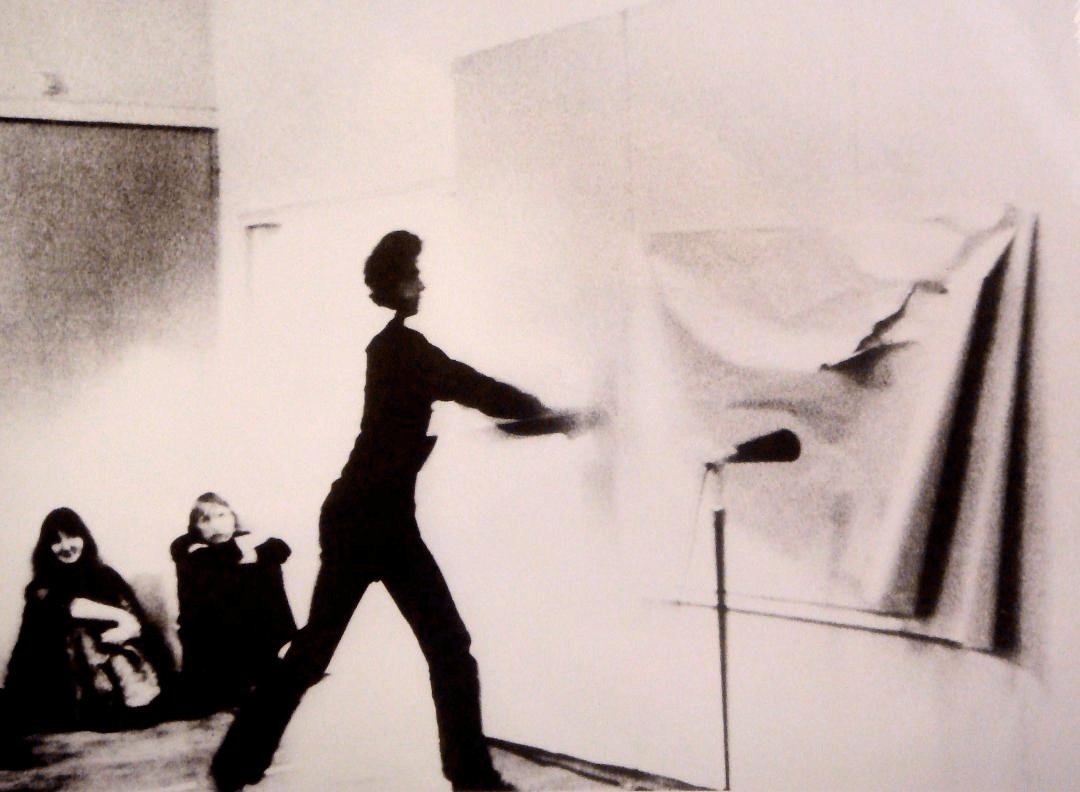
I got fired in the beginning of 1971 because my shows were too far out. Up until Richmond I was doing minimal sculptures and Op art paintings. I started doing language pieces to put on refrigerators like Free Beer, and Art is a Bunch of Shit but I love it. In 1969, I made an action piece, One Second Sculpture, that I later became famous for. I threw a metal tape measure into the air and had it photographed as it was opening itself up. It was an example what today is called Sculpture Based Performance. (A lot of this stuff is in my book Beer, Art and Philosophy [Crown Point Press, 2003]).
Curator Before Artist
John Held: You went to work at the Richmond Art Center in Richmond, California, just across from San Francisco in the East Bay in 1968, quickly turning it into one of the most adventurous alternative art spaces in California before you departed in 1971. These years were particularly decisive in the Bay Area socially, politically, and artistically. What was the inspiration for your programming at the Richmond Art Center? How did you see yourself fitting into the artistic scene in San Francisco? Who was the audience for your work? How did the Richmond Art Center distinguish itself from the other alternative art spaces developing in San Francisco?
Tom Marioni: Another thing about the Richmond Art Center, it had a great history. It was started in 1936 by Hazel Salmi in her house, who was responsible for getting it included in the civic center complex in the early 1950’s when it was built. It had a history of showing recent Bay Area artists, like most of the figurative painters, and in the 1960’s for showing some of the Funk artists. I just thought it was my job to continue this tradition to show the art of the late 1960s, the first Conceptual Art in the Bay Area.
They also had juried shows, and I did that too. After I got fired, it returned to a crafts center and never did any important shows after I left. My shows were reviewed in the SF Chronicle, even if they made fun of them. I was a conceptual artist that did many things including being a curator. I was not a curator that became an artist. It was the other way around. Unfortunately, in the Bay Area I was known as a curator at that time before I was known as an artist, and that hurt my career as an artist. People only want to see you for one thing.
In the 1970’s, I became known in Europe as a first generation conceptual, performance and sound artist. Also, at that time The Berkeley Art Museum was created, and Peter Selz was hired from New York’s MOMA to be the first director. He did the first Funk art show and it was written up in Newsweek, that put us on the art map.
Founding the Museum of Conceptual Art
John Held: After your departure from the Richmond Art Center, you created the Museum for Conceptual Art to continue your own practice and the curation of conceptually based artists in the Bay Area including Terry Fox, Paul Kos, David Ireland and Howard Fried. You also served as a destination point for visiting conceptual artists Chris Burden, Barbara Smith and Linda Montano.
Was MOCA a direct result of your firing at the Richmond Art Center? What were some of the more noteworthy performances that occurred? What was it like paving the way for a new artistic medium with a cadre of friends that were eventually responsible for initiating the New Genres program at the San Francisco Art Institute in 1979?
Tom Marioni: I founded the Museum of Conceptual Art (MOCA) in 1970, the year before I left the Richmond Art Center. MOCA’s philosophy came from Joseph Beuys, who was the inventor of Sculpture Based Performance and Social Sculpture. MOCA was a museum for actions by sculptors. There was no theatre or dance. The collection consisted of relics, records and documents. The 1970’s was the most important decade for me as an artist. Other important local artists at the time were John Woodall, Mel Henderson, Bonnie Shirk, Linda Montano, Terry Fox, Paul Kos, Howard Fried and me. David Ireland, the one you mentioned in your question, was seven years older than me and came into the Conceptual Art world as a second generation Neo-Conceptual artist.
I gave shows to artists outside San Francisco like Chris Burden, Vito Acconci, Dennis Oppenheim, Barbara Smith and Robert Barry. The first show in the beginning of 1970 was Sound Sculpture As. I think it was the first sound art show ever. (Not music, sound as a sculpture material) It was actions by sculptors. The next most important exhibition was All Night Sculpture, actions and installations by nine artist from sunset to sunrise. I sold the MOCA archive to the Berkeley Art Museum in 1994.
In 1970, I moved to Forest Knolls, and in 1972 I divorced Marilyn and moved into my MOCA space at 75 3rd Street. In 1974, I moved in with Kathan Brown in Berkeley, and we were married in 1983. We were together fifty years. We had a happy marriage, and she passed away on March 10, 2025. Kathan founded Crown Point Press in 1962, and I was invited to make prints there many times over the years. I was also the designer for the press. We made many trips to Japan and China where I made actions and wood block prints.
(End of part 1 of 1970’s)
The work I am most known for besides the founding of MOCA is
The Act of Drinking Beer with Friends is the Highest Form of Art, 1970, originally at the Oakland Art Museum. Sixteen friends were invited during an afternoon when the museum was closed, because I didn’t want to have my friends be performers for the public. The act was the art and the debris was left as evidence of the act. The left over bottles etc. were on exhibit for the rest of the month. It wasn’t aesthetic, just what was there and what happened.
Later over the years, it became more and more organized as an installation. It became more aesthetic over time as I was influenced by the Japanese tea ceremony I saw in Japan. The basic elements after years of doing it around the world are yellow light, Jazz music, a refrigerator (with FREE BEER on the door) behind a bar that the gallery builds, a wood table with four wood chairs, a shelf to hold 216 bottles of Pacifico Mexican beer, if possible, and a flat screen video monitor vertical on the wall with a video of the inside of a beer glass filling up.
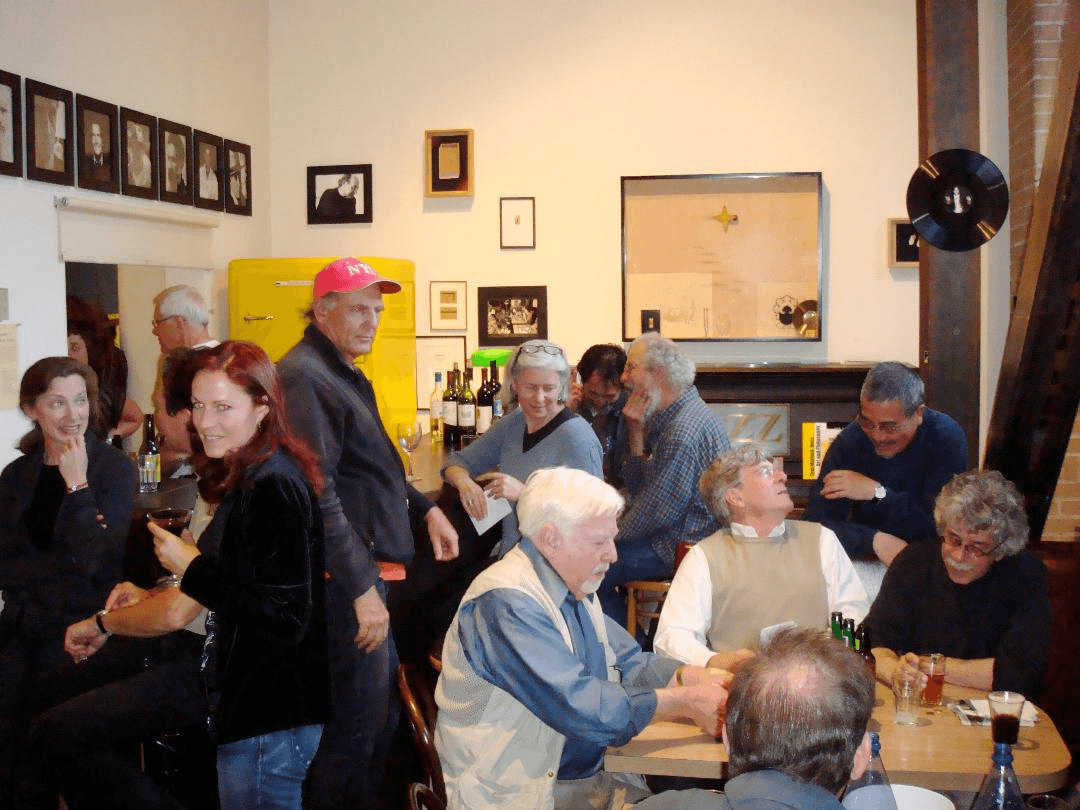
I have recreated this work about fifty times since 1970. It’s a work of art that will always be in the present every time it is created and never be dated. During these fifty years since 1973, I have been meeting with friends in my studio every Wednesday. It has changed location and titles, and since 2000, it has been called the Society of Independent Artists, SIA. People sign up to bartend and after three times they become members.
In 1975, I created Vision an art journal published by Kathan and Crown Point Press. I was editor and designer. We did five issues until 1981: California, Eastern Europe, New York City, Word of Mouth (three lp records), Artist Photographs. We went to an island in the Pacific for a week with about thirty-five people and twelve invited artist to record twelve minute talks. The artists were all recognized artists from Europe, New York and California. The fifth issue was Artist Photographs that included fifty-six artists from sixteen different countries, who produced photographs as art. These artist were not photographers but painters, sculptures and mostly conceptual artist. These books have become collector items. A teacher once told me that he used the New York issue as a text book in class.
With MOCA and my books, I have been trying to explain conceptual art to the art public. In 1978, John Cage came to us to make etchings. I asked Kathan to invite him, and he came every year after that until 1992 and stayed at our house in Berkeley. We got to know him and become friends. He recommend me to a German radio station that produced Radio Plays as new music and sound recordings.
Zen, Cage, and the Pacific Rim
John Held: What draws you to John Cage, zen, and Japanese Art? Do you think California artists have a special affiliation with our Pacific Rim neighbors? How does this appreciation of zen run through the body of your creative work?
Tom Marioni: I was very influenced by Asian ideas in the 1970’s. Beginning in 1972, I started to make my out of body free hand drawings. Drawing a Line as Far as I Can Reach was the first. It was like doing yoga while holding a pencil. It was supposed to be a tree, but not the way a tree looks, the way a tree grows. I drew a line from the bottom up on a large piece of wrapping paper. Later, when I studied Chinese writing in the 1980’s, l learned how you write “stick.” It was a word like my line drawing. Another one was “art.” “Beauty” was the left character, the one on the right is “skill.” I saw it as male and female. Male dancing with female.
In 2016, I was in a show at the Guggenheim Museum, American Artists Influenced by Asian Culture. I made a wall drawing of a circle, Out of Body Free Hand Circle on Prepared Wall. Living in California, on the Pacific Rim, it is impossible not to be influenced by Asian culture. When I sold my first Line Drawing to the Oakland Museum, the art critic in the paper referred to it as, "A mindless drawing on cheap brown paper.” Later I told him he was right on.
When the Action Is the Art
John Held: I’m very interested in that many of your art works come out of physical actions, and they are the primary motivation, not the look of the finished product. It reminds me of the Japanese Gutai art movement, where participants focused on the material itself, feeling it was the artist’s responsibility to reveal the poetic core of the material under investigation. What were some of the other “out of body free hand drawings,” you’ve performed over the years, and how have they developed, if at all, in unexpected ways?
Tom Marioni: Running and Jumping While Trying to Fly, was a record of flight, and the finished drawing looked like the wing of a bird. Walking, drawing, holding the pencil at my hip and walking along a long piece of paper. The result was a wavy line like a snake,
The Drum Brush Drawings started in 1972. I drummed on large sheets of sand paper with wire Jazz drum brushes. The result of the trance drumming was like a shadow of a flying bird. It was just what happened after the action, a marriage of art and music. It was usually a Jazz 4/4 tempo.
Prints and the Cycles of Art
John Held: In contrast to your performance drawings, you have done more formal prints under the supervision of the master printers at Crown Point Press. How many prints have you done with them over the years? Do you enjoy collaboration with the Crown Point Press staff? What has been your relationship with other Crown Point Press artists, such as Richard Diebenkorn, who successfully recommended you for a Guggenheim Fellowship in 1981. What has been your role and rationale for recommending other artists to work at Crown Point Press?
Tom Marioni: I have been making prints since 1974. I have made fifty-six etchings over the years, and five lithographs in Texas since 1972. Richard Diebenkorn recommend me for a Guggenheim fellowship in 1981. Hans Haacke, John Cage and Larry Bell all recommended me for grants in the 1980s.
Starting in 1977, painting returned and conceptual art was over. No-one bought it because it had no color. I think that the seventh year of every decade starts the next movement in art. 1947 abstract expressionism, 1957 pop art, 1967 conceptual art, 1977 Neo AE painting, 1987 Neo pop and so on. I called 2007 Pathetic Art, artists complaining about their place in the world. We are still in a series of Neo movements.
Jazz stoped evolving in 1970, and art stopped in 1980. When the economy is good, art is about money and painting always returns. When the economy is bad, the art is philosophical, poetic and usually does not sell. In the early part of the 20th century after Dada, people predicted the end of art and what they really meant was the end of painting. Duchamp declared that he had quit art to play chess. He was quitting painting, and he continue to make sculpture additions and exhibit ready-made objects. My work in the 1980’s became more three dimensional with shadow boxes and installation. Usually about countries cultures and, cities.
In 1970, alternative art spaces started after MOCA. They were artist run and about alternative art, not formalist art. By 1980 performance art had evolved into theatre, dance and cabaret.
Seven Shadow Boxes
John Held: You mentioned your shadow boxes. Can you tell me more about them?
Tom Marioni: In the 80’s I spent the whole year making seven shadow boxes (a 19th century deep frame box with objects). They were named for the days of the week, the way the Bible described what days God invented life on Earth. Monday was for Leonardo and the universe; Tuesday was for Duchamp with objects for Rrose Sélavy, John Cage an ear, bell etc.; Wednesday was for Joseph Beuys, erasers, Allan Fish disguise, hat mold; Thursday Brancusi, tools; Friday for Yves Klein wine bottle, woman figure; Saturday Music, Miles Davis music score, trumpet, the day of rest and celebration. It would take too long to describe all the objects and their meaning.
The rest of the 1980’s are just a list of exhibitions in Europe, and the United States. I did books, Beer Art and Philosophy, Writings on Art, Social Art, 1969-1999, and Social Art translated into Italian, published in Rome.
The Salon That Became a Society
John Held: Besides being a maker of objects over the years, the fallout from the Oakland Museum installation, Drinking Beer with Friends is the Highest Form of Art, continues into the present. When MOCA came to an end, the camaraderie continued at Breen’s Bar on a weekly basis. How did this art salon come about? Was it a natural occurrence or was it modeled on a historical precedent? Why do you think it has lasted until the present, under the banner, Society of Independent Artists?
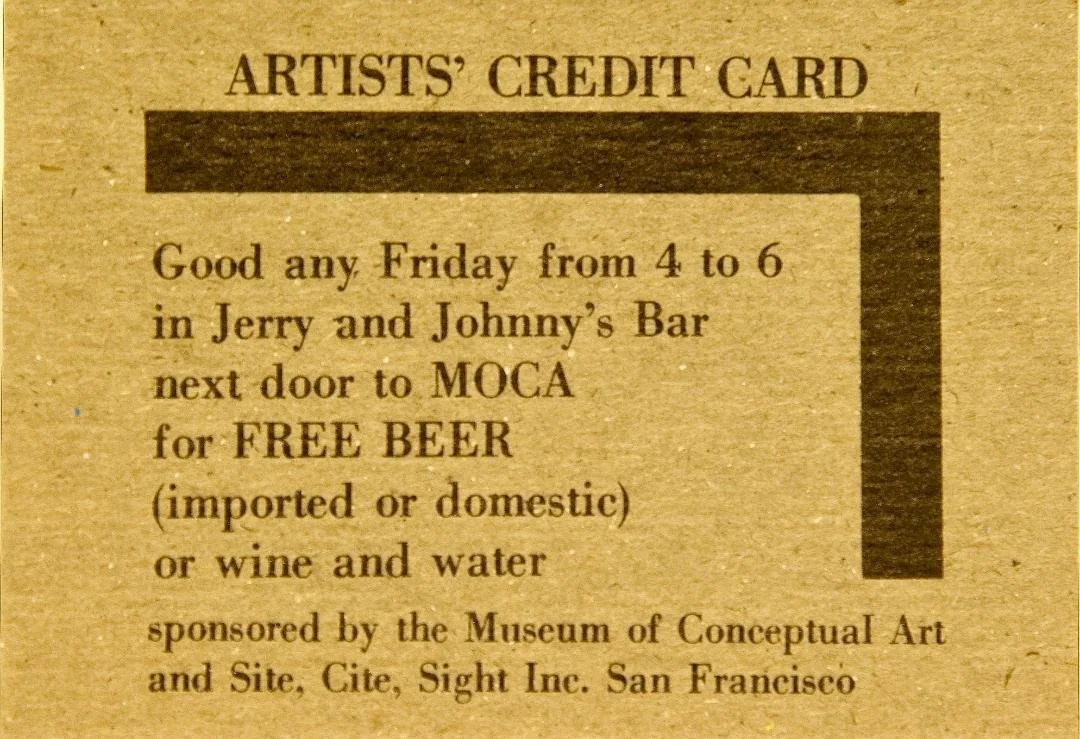
Tom Marioni: In 1973, I started doing it in MOCA with video and free beer from a NEA grant. In 1976, I moved it downstairs to Breen's bar and called it Cafe Society. 2 to 4 pm. In 1979, the bar closed. I moved it next door to Jerry and Johny's and called it Academy of MOCA. From 1981-82, I issued Artist Credit Cards for free beer with an NEA grant. In 1989, the earthquake hit San Francisco and the bar closed. In 1990, I continued Beer with Friends in my new studio, and called it Cafe Wednesday with bartenders who become members after bartending three times. In 1999, I make it official and call it Society of Independent Artists (SIA), named after the early 20th century group in New York founded by three people, including Duchamp. I have house rules and give degrees to bartenders.
I continue to be invited to have shows in galleries and museums in the United States and Europe, including Beer with Friends. Around 2010, I started telling jokes at my openings. I see this installation/action like a symphony. I am the composer, the bartender is the director and the drinkers are the players. The Act of Drinking Beer with Friends is the Highest Form of Art lives on and will never be dated as an ongoing art work.
Standup as Performance Art
John Held: You mentioned that in 2010 you began telling jokes. You have even performed at bars, clubs and galleries as a standup comic. How does that fit into your artistic practice, and what are some of your funniest jokes?
Tom Marioni: O. K. Stand up Jokes. The difference between performance art and theatre is that in theatre the performer is being someone else not himself, story telling and creating an illusion of time. A performance artist is being himself and manipulating material, not the audience or playing a role. I was a performance artist and sound artist in the 1970’s. I considered that in the 21st. century, stand up comedy was performance art. A comic acts funny. A comedian tells funny. I cannot tell my funniest jokes in mixed company because they are too dirty. My best jokes are in my book Social Art.
Social Art and the Italian Instinct
John Held: Social Art seems to be at the core of your artistic repertoire. Many consider you the father of Relational Aesthetics, whereby the artist requires the collaboration of others in the completion of the work. This goes back to the time you were tied to Linda Montano. Your weekly artist salon is a perfect example of this. So are the Sound Art orchestras you’ve put together in the past. How does this reliance on others grow out of your work? Why is it important for you to include others in what is normally a solitary pursuit?
Tom Marioni: I was told that my social art was an Italian thing. New York’s Little Italy has Italian Social Clubs where Italians meet to drink, eat gamble, etc. I had three bands, the first was the MOCA Ensemble. We played free Jazz in the Edinburgh Festival in 1973. My second band was The Art Orchestra in 1997. We performed a one time show made up of 15 sculptors who invented their own instruments at the Legion of Honor Museum in San Francisco. My last band in 2004 was The Buddhist Band, composed of six sculptors playing invented instruments that created low frequency chant like sounds.
The Masters Over the Bar
John Held: I know you have a list of mainly deceased artists (Leonardo, Duchamp, Brancusi, Picasso, Klein, Cage…) hanging in your studio, that have guided your art, but who are some of the living artists you’ve met over the years that have impressed you in some manner? Can you list five for me, and the reasons you responded to them?
Tom Marioni: The masters of art for me are on my studio wall over the bar. All invented a new way of seeing. Leonardo -automation, Duchamp -conceptual art, John Cage- the happening, Joseph Beuys- sculpture based performance, Brancusi -abstract sculpture, Yves Klein -invisible art, Picasso- cubism and collage.
Contemporary artists that I admired and knew are Walter Di Maria, his Earth Room, moral and political art (God has given us the earth and we have ignored it). Hans Haacke, exposing corruption. Sol LeWitt, manifesto for conceptual art. Carl Andre, invented minimal sculpture. Larry Bell, the father of the LA light and space movement.
The More You Know, The More You Can See
John Held: It’s just as crucial that artists sharpen their spirituality, as hone their craft. You have a sign over your bar reading, “The more you know - The more you can see.” Meeting artists like the five you mention cannot help but advance one’s insight into the creative process. How do you think your artistic range has changed over the years, and what perspective have you gained by repeated contact with some of the greatest artists of our time?
Tom Marioni: I got a whole lot of spirituality from John Cage, who I knew. I am a sun worshiper. Five thousand years ago people thought the sun was God because it gives life. I have kept up with the times until about twenty years ago, but I’m 89 and too slow to keep up with anything except friends. I try to learn from life not from books, but I do read biographies of artists and comedians.
The Question of Legacy
John Held: In matters of artistic legacy, I take the long view and am willing to sacrifice current recompense for posthumous reputation (for example, giving a lecture for free). You on the other hand, have often expressed to me that you won’t be around to collect on anything after you’re gone, so you might as well reap the reward while you can. Have you thoughts on shaping your artistic legacy, or is that just best left to others? How do you think you’ll be remembered?
Tom Marioni: I don’t know how to answer that. I will be remembered, and I have no doubt that I will be remembered as an influential and important artist.
Manifesto 2025
The new aesthetic is no aesthetic. Multicultural is everyone except Europeans. There is no excellence in universities or art museums. The art museum has weaponized itself against intellectuals. Art museums formerly collected preserved and interpreted the most excellent examples of a cultures products. 3 elements in conceptual art of the 60's and 70's were elegance subtlety and contact. Artist are trained observers and private investigators. Today everyone is an artist so art is all over. AI cannot make art only copy it. Social art is the new art after grievance art. Artist invent a new way of seeing that becomes a poetic record of the culture. The rich don't dress up anymore.
— Tom Marioni
