

A Conversation with Dave Eggers
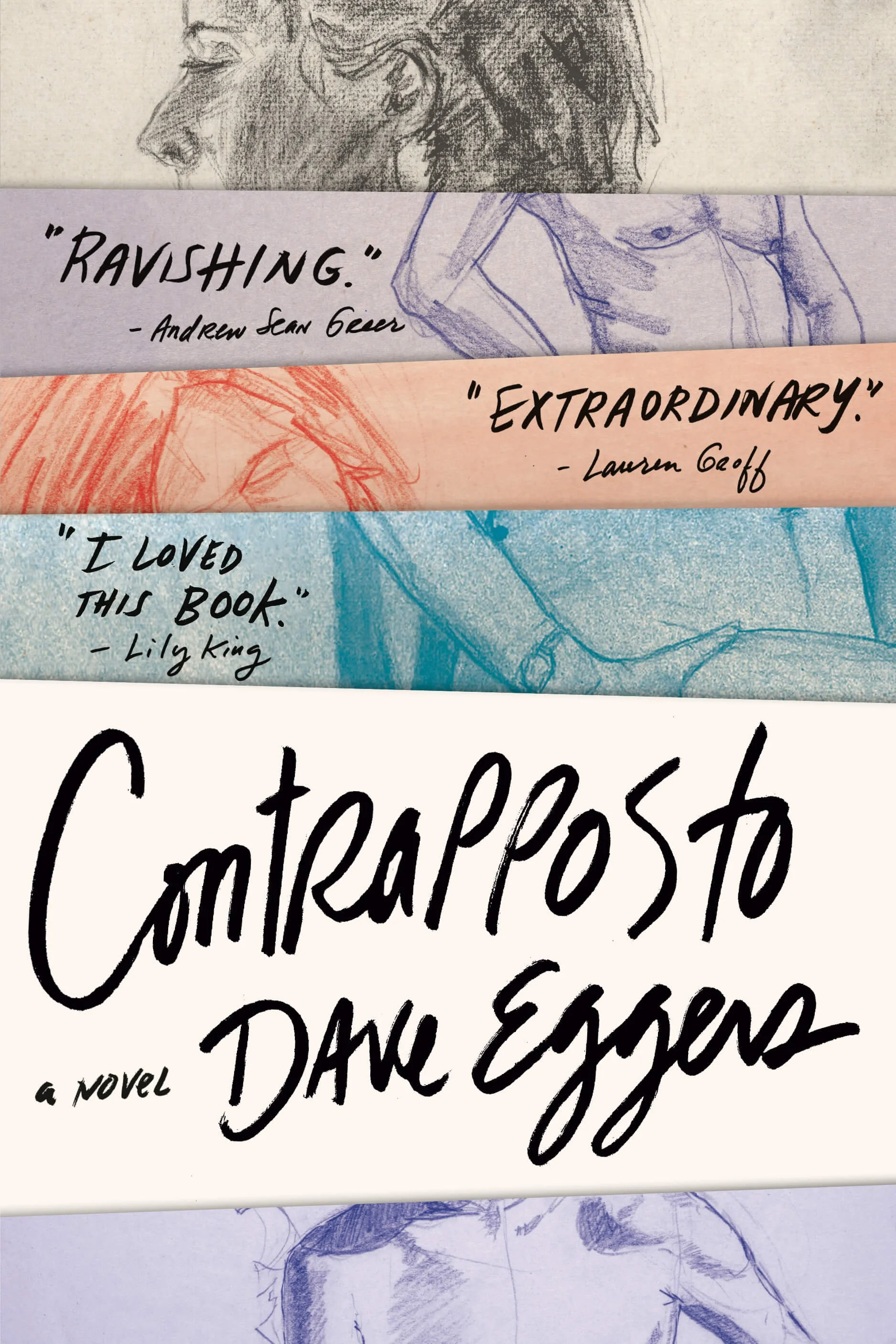
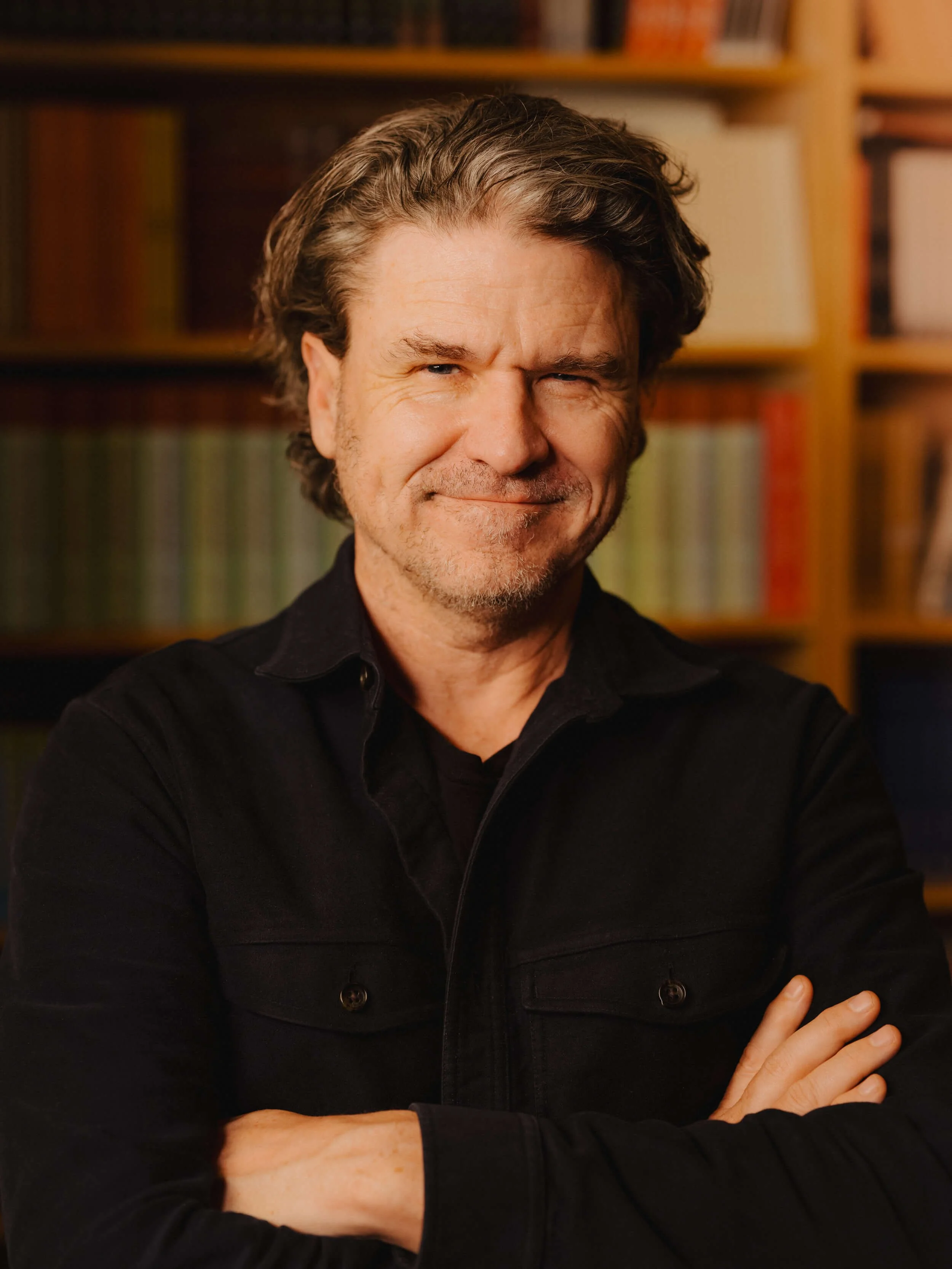
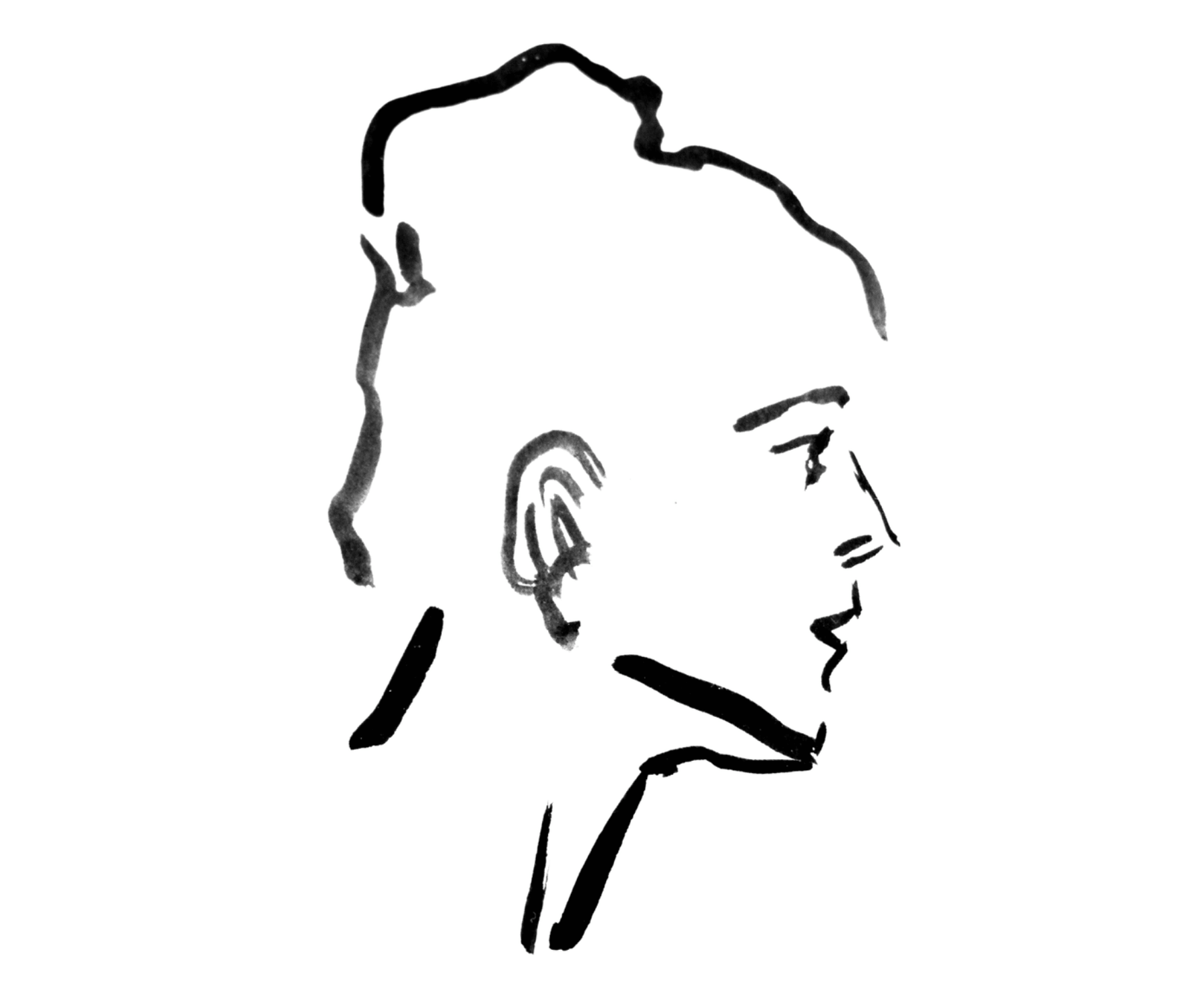
Dave Eggers, Author, Contrapposto | Interview by Hugh Leeman
Dave Eggers is the author of many books, among them Contrapposto, The Eyes and the Impossible, The Circle, The Monk of Mokha, Heroes of the Frontier, A Hologram for the King, and What Is the What. He is the founder of McSweeney’s, an independent publishing company, and co-founder of 826 Valencia, a youth writing center that has inspired over 70 similar organizations worldwide. Eggers is winner of the American Book Award, the Muhammad Ali Humanitarian Award for Education, the Dayton Literary Peace Prize, the TED Prize, and has been a finalist for the National Book Award, the Pulitzer Prize, and the National Book Critics Circle Award. He is the 2024 John Newbery Medalist, for the most distinguished contribution to children's literature for The Eyes and the Impossible. Eggers is a member of the American Academy of Arts and Letters.
Art School, Chicago, and the Kid Who Couldn't Find the Balance
Hugh Leeman: Dave, long before you wrote this book that pulls readers through all angles of the art world, and years before you became a best-selling author, you went to art school. In what ways do you see your own art school years inside Contrapposto's characters?
Dave Eggers: I was an art student starting when I was maybe ten. I loved drawing, I loved painting, I had art teachers who were very encouraging from a very young age. I started being sent around the Chicagoland area to take different classes and develop. All the way through college, I was a painting major for about a year and a half before my parents and I got a little more practical about things, and I had to switch to a slightly more pragmatic major.
So there are bits and pieces from my early art education that made their way into Contrapposto. Cricket is drastically different from the kind of artist I became — he's incredibly uncomfortable with anything related to the intersection between art and commerce, and he never finds an equilibrium between what he wants to do on the page or on a canvas and what becomes of it in the art marketplace. We all know those people. Sometimes the most talented artist you've ever met has no ability to translate that talent into a living. Cricket is very stubborn — the opposite of pragmatic, the opposite of practical — and he never quite figures out a way to match his talent with the right kind of ambition. His friend Olympia is always trying to drag him into that world, guide him through the intersection of art and commerce, but he's not having it.
As different as Cricket is from me — for my own art practice, I do drawings and paintings and prints to pay the rent on the building at 849 Valencia, where we have various nonprofits. I've been doing artwork for about fifteen years now with Electric Works to help fund ScholarMatch, our college access organization. For me it's the exact opposite of Cricket's experience — it's pure practicality and pragmatism, but also pure joy. There's never been any angst associated with creating art for me. For Cricket, though, there's quite a struggle between what he wants to do and the pleasure he takes in moving paint and charcoal around, and then what becomes of it in the marketplace.
Feral Children of the 70s and 80s
Hugh Leeman: The two protagonists, Olympia and Cricket, are very different from one another in how they relate to art and commerce. But there's a strong parallel in that both figures in the book grow up without a stable father figure, and it shapes who they are and who they attach to later in the story. What drew you to that creative choice?
Dave Eggers: I hadn't thought about that, but you're right — it's quite obvious that Cricket doesn't have his dad in the picture. He has a stable grandfather figure. Olympia is wealthier and has various stepdads and biological fathers and mothers in and out of her life — people in and out of trouble with the law for insider trading and such — but she's kind of feral, often alone in this great Victorian home full of books and paintings and art. Both of them are sort of self-raised to some extent.
A little bit of that goes back to the 70s and 80s, when all of us kids were a bit feral. The vast majority of our time seemed to be spent on our own. We were allowed to roam twenty or thirty miles a day. I remember biking seventeen miles to get records — that was the closest record store, and it was a weekly occurrence. I wanted to honor that kind of self-upbringing. Culturally, you just found your own way. Discovery was entirely on your own.
Olympia is far more worldly, better informed, better read. She'll mention a hundred references and names and books in a ten-minute span, and Cricket has no idea what she's talking about most of the time. But they're both free of any steady parental oversight. That's how I remember the 70s and 80s — your parents were definitely there, but they were very trusting. Free-range by default. They put a roof over your head and fed you, but your daily life was your own. You got yourself to school, got yourself home, worked your own hours, made your own money. I don't remember showing my parents my grades after eighth grade. We were peers, in a way, sharing a home with great mutual respect — but it wasn't the helicopter parenting you hear about now.
Learning to See: Nude Drawing and a Lesson Cricket Passes to His Mother
Hugh Leeman: Cricket starts taking art classes early and gets encouragement from teachers who had moved from abroad to the town near him. He goes on his own to Chicago to take life drawing classes. There's a scene in the book that's heartbreakingly beautiful, where Cricket sits down with his mom, they draw an action figure together, and it's his first time really seeing her as a person. Who are the people in your life who encouraged you, and how do they show up in the book?
Dave Eggers: There are very few direct parallels between actual people in my life and the characters in the book. And unfortunately I never taught an art class to my mother or anyone like that. But I maintain to this day that once you go through an academic training in how to see and how to draw — which I did — I genuinely feel I could teach anybody to draw accurately. There's a canon of proportions, a way to learn how to see, a way to measure and use relationships between different parts of the body to draw in an academic way. It's something I really value having learned, and it's been largely lost. It's very hard to find people who will teach you to draw the way it was taught for many hundreds of years.
Cricket grows exponentially as a young man in his teens, having taken these classes and gone into the city and encountered naked people of all ages. It's a radical thing — you're fifteen, and a middle-aged man takes off a robe and poses naked in front of you. Startling, especially for those of us from the sheltered Midwest. It's startling for about ten minutes. And then after that, it's an aggregation of lines and shapes and curves, and there's work to be done to render it accurately on the page. You grow very quickly. There's a maturity that happens fast when you're exposed to that.
It's the same way that for hundreds of years, apprentices would go off to work with masters at fourteen or fifteen — from the countryside to Ghent or Amsterdam, apprenticing with a Rembrandt or whoever, treated like young adults expected to take on real responsibilities. To such a large extent, it's about learning how to see. Your eyes will always lie to you about what something looks like, how big a head is compared to a body. Learning proportionality, being able to draw accurately — it's quite humbling. And thrilling at the same time.
Wherever you go with art after that — conceptual work, abstraction, whatever you want — I do think learning to draw accurately is a good part of the process, the same way you'd learn musical notes and tone and pacing if you're a musician. So at a certain point, Cricket has grown so quickly and learned so much and had his eyes awakened that he wants to share that with his mother. That touching moment — helping someone you love learn to see.
Carpenter: The Professor Who Rails Against the Cannibalism of Art School
Hugh Leeman: Beyond Cricket and Olympia, there's a powerful figure in Contrapposto — Carpenter. He's effectively a supportive paternal figure and he gets some of the book's most quotable lines. At one point he says: "The dreams of young people artistically inclined are so tragically uninformed. That's the crime of it." If Carpenter were looking at an eighteen-year-old artist in 2026 — with apps, artificial intelligence, massive MFA debt, and an Instagram as their portfolio — what would he find tragically uninformed about their dreams today?
Dave Eggers: Cricket thought that because he knew how to draw and drew well at the academy in his teens, he would just be discovered and flown to Europe and apprenticed to the contemporary equivalent of Rembrandt or Van Eyck. And when that doesn't happen, he's crestfallen. At sixteen, he hasn't been brought to Europe yet, and he's shocked — he just assumed it would somehow manifest itself.
Carpenter is one of Cricket's college professors — a rebel in his classicism, really. Cricket is taken under Carpenter's wing, and Carpenter becomes something of a surrogate father. Carpenter believes in the old methods, and in a pluralistic art environment — but also a forgiving and supportive one. There's a big set piece where he's able to strike down a group of people who are cannibalizing each other — artists, college students, MFA students, and professors doing a group critique, effectively flaying alive a young artist who has a lot of talent but not the theoretical language to explain it. He sees that as the worst kind of environment to bring forth in the art world.
If you go to art school thinking it's going to be this beautiful, happy, delightful place of fellow artists loving and supporting each other — so often it becomes a miserable place where everybody's at each other's throats, seeing it as a zero-sum game where one success comes at the cost of another's. A hyper-competitive, cannibalistic atmosphere, which is just the last place on earth you'd expect that kind of violence to exist.
So Carpenter creates a kind of shadow school out on the prairie, where people can get away from all of that and get back into the pure practice of learning to draw and paint — without competition, without the dominance of specious theories, and more about the pleasure of it, creating beauty and delight. Knowing that these are teenagers for the most part — there will be plenty of time for the misery and the competitiveness later, if need be.
A Hundred Thousand Dollars to Learn Printmaking
Hugh Leeman: You recently wrote an article on art school and student debt in which you stated: "Somehow, though, we went from a model where students paid little to nothing and learned techniques passed down through the centuries, to a system where students pay $100,000 and often learn very little beyond theory." In Contrapposto, you give dialogue to your characters that expresses very similar disappointment. What is the future of the arts in a society with such costs?
Dave Eggers: We're talking about American society exclusively, where we are in this utter madness of spiraling costs of higher education. It seems particularly illogical to charge an eighteen-year-old $100,000 to learn printmaking, or to learn how to draw the figure, or to learn painting.
With Art and Water, we took aim at that. There's a reason a lot of people are fleeing this world and some art schools are not doing well. The model is bloated and unfair — for sure classist and exclusionary. So many people who have the talent to pursue visual art as a career cannot afford to study, cannot afford to continue their education, because it's $100,000 a year. It becomes radically inequitable, and it needs to be upended.
I've visited MFA programs — not in San Francisco, I'll say that clearly — and been genuinely shocked by the quality of the work and the quality of instruction. Hard skills are not emphasized. Sometimes it's three years of vague theoretical mumblings without any rigor or discipline, and kids end up having barely inched their work forward because there is so little emphasis on hard skills. These hopeful aspirants spend so much money and receive so little instruction in return.
My co-founder of Art and Water, J.D. Beltran, when we started planning this, was still carrying $150,000 of debt from her MFA program at the San Francisco Art Institute. In her fifties. Think about how absurd that is. Only the United States would ever think of such a system and then perpetuate it. Elsewhere in Europe, you're not paying hundreds of thousands of dollars for an MFA. The apprenticeship model worked for five hundred years and should be revisited. And the idea that you need a four-year degree to be able to make pictures is also absurd — this did not exist until the middle of the twentieth century. There was never any emphasis on a piece of paper that determined whether you were a worthwhile artist or not. Artists are supposed to be outside of that system of degrees and imprimaturs.
Hugh Leeman: Is Art and Water a potential template — the way 826 Valencia was copied as a model across multiple cities and school districts? Does it possess a similar potential to answer this bloated, predatory system?
Dave Eggers: I think so. It's very easy to copy. All you need is an empty building. Ana Teresa Fernandez, who's the head of faculty at Art and Water, will be putting together a very detailed year-long program with classes taught by her co-teachers and ten really talented established artists in the city. Students will receive thirty to forty hours of instruction and mentorship every week — which far outstrips anything being done at these $100,000-a-year schools.
Not only that, but they'll be sharing space with these successful artists. If they want to see what Jet Martinez is up to, they just have to walk over and watch. You learn so much by watching, so much by talking while someone is working, so much by just seeing how somebody goes about their business. The art school model has forgotten what its essential goals are. Like a lot of American higher education, it's become a business — fundraising, building new buildings, charging people, students incurring crippling debt for decades.
Every artist we asked to be part of Art and Water immediately said yes. Nobody said no. That told us we might be onto something — that this might be the time to reinvent this model and make it more accessible. And it is replicatable anywhere. Sydney, Berlin, anywhere — you gather ten established artists, give them space, add twenty students. It would work.
Generosity as a Counterforce
Hugh Leeman: You've mentioned 826 Valencia, Art and Water, and beyond those you've given away portions of your own earnings to audiences and causes. What's the importance of sharing and generosity in the arts for you?
Dave Eggers: The artists whose work and careers I admire most tend to stay free. Three come to mind immediately. Kristen Farr, a notable Bay Area artist based in Richmond, just helped build our international library of young authors — miniatures, models, chairs with giant floppy arms that embrace students. If you go into 849 Valencia, you'll see her stamp everywhere. She's brilliant and hilarious and very generous. She gave all that time for free because she wanted it to exist.
My first friend who became very successful in the art world was Marcel Dzama — represented by David Zwirner Gallery now, and Zwirner was with him before either of them became well known. To this day, Marcel will just give you anything. If there's a cause and someone wants a print, a drawing, a painting, if they want him to show up and do a mural, Marcel is always going to say yes. He hasn't become a prisoner of that aspect of the art world that enforces artificial scarcity — only this many works per year, only these venues, all of those rules you see sometimes.
And Tucker Nichols, who's always been one of my favorite artists here in the Bay. He sends mail art to people randomly, whether they ask for it or not. High-end commissions one day, public art for free the next. The people whose work and careers I most admire stay free, stay anarchic, stay free-range rather than letting a gallery tell them how much to produce and when and how.
It's the very best life anybody could ask for — creating visual art for a living. But you still have to remain free. You still have to be able to create whatever you want, whenever you want. Why do this for a living unless you're a thousand percent free? And yet here and there, in little corners of the art world, a different energy takes hold — more mercenary, more controlling, more buttoned-down, and ungenerous.
Bedrooms of the Dead: Art That Disorients and Awakens
Hugh Leeman: There's a part of the book where an art installation is created called Bedrooms of the Dead — the bedroom of Cricket and Olympia's friend Jed, who dies in Iraq, is recreated alongside the bedroom of an Iraqi man's brother who also died in the war. It's intense and beautiful. How did you build that idea?
Dave Eggers: Honestly, I don't remember exactly why or how I came up with that. The installation is on a barge on the Chicago River — I'd actually never been on the Chicago River until about a month ago. It's a show that Olympia puts on. They lost their friend Jed maybe ten years earlier in the first Iraq War, in '91, and they pay tribute to the dead on both sides of the conflict by recreating their bedrooms on this barge in the river.
Why is it on a barge? You could say it's an echo of the Tigris River. But a lot of it is about Olympia's curatorial instinct — she's really good at creating disorienting experiences that take you out of the everyday and awaken you to something else. The most powerful art experiences I've had are often not in a gallery. There's some disorienting factor — art in an unexpected place. So she borrows this barge, it's semi-legal, you have to take a boat out to it, you step aboard, walk into this container that's been decorated this way, and it's all done in the small hours of the night.
I love the idea of art outside of a gallery or museum setting — as much as I love museums and galleries, which I do, I'm there all the time. But I love experiences that say: we're putting this show in a taxi cab going to the airport. Or, speaking of airports, whoever curates the shows at SFO is a master. So well done — random travelers encountering brilliantly curated exhibitions. It's the best art curation of any airport in the world.
That's what I love about Pier 29, too. It's right next to the cruise ship docking bay at Pier 27. I love the idea that passengers pulling their roller bags on their way to Fisherman's Wharf are suddenly confronted instead by the most San Francisco place you can imagine — this anarchic place of visual artists, exhibits, and galleries. I'm always trying to say: you're welcome to this world. We want you here. You don't have to have Clement Greenberg's theories under your arm to understand what's happening here. If artists can say that — if they can say they don't want to be exclusive, they want anyone with eyes to experience what they're doing — then we have something. Then we have an art form that's vital and alive and accessible. Anything that gets in the way of that, any hint of exclusivity, I am at war with.
No Smartphone, No Surrender: On Screens, Reading, and the Oligarchs Who Profit
Hugh Leeman: The character Carpenter says: "We've gotten weaker, less skilled, less competent, and less versatile." It seems parallel to criticisms of today's society — we write less, we read less, we're as distracted as ever. How do we keep people interested in stories, in reading books, in writing? And how do you personally maintain that practice with all the modern world's digital distraction?
Dave Eggers: I don't have as much distraction myself because I've built very high walls around it. I'm talking to you from a landline, because I don't have a smartphone — and I know how distracted I would be if I did.
I wrote a few dystopian novels about the tech world. I did not see the wholesale offering of our free will and souls to AI coming quite so quickly, and it's something I find very upsetting. But I do see, in our international library of young authors, that it's a no-tech zone — all books written by students, typewriters, glue and staples and paper, zine writing classes, lo-fi options across the board. And it's wildly popular. The average kid does not want more tech. So we as adults have to model that and say, let's offer alternatives. Let's have a family reading hour where we're just reading books on paper. Let's give ourselves a diversity of experiences every day.
When you're reading fiction, it should be on paper — you retain significantly more, it's a fundamentally different experience. You should not channel everything through a screen. Whenever we put media that needn't be on a screen onto a screen, we've made a mistake. We've channeled everything through a profit-driven vehicle, and we've given more money to these oligarchs who are tearing down our democracy. When an educator assigns a novel, every kid in that class should be given the paperback. Read a short story in the tub — just give yourself an alternative, a break. It's just a matter of intentionality. We don't have to assume that every last part of our lives needs to be channeled through a screen.
The Circle Was Prescient. The Reality Is Worse.
Hugh Leeman: In 2013, you published The Circle, later adapted to film with Tom Hanks and Emma Watson. For a guy calling from a landline, that novel feels strikingly prescient — warnings about oversharing, surveillance, the erosion of privacy, corporate power, democratic vulnerability. How do you see society, culture, and the arts changing under the increasing pressure of tech?
Dave Eggers: I got here in '92 from Chicago, and after a year I was sharing office space with Wired Magazine and Boing Boing, working in South Park where so much of the early tech world was happening. So I sort of got to live a lot of that through osmosis. But I was always a skeptic — what I consider a certain type of Chicago skepticism, where we're not early adopters, we're the last adopters, because we see everything as inherently suspect until it's proven otherwise. I thought even email was a joke that nobody would ever really want to do. So I've never been right about any of my predictions.
But having that distance from it allowed me to write about it and speculate on a worst-case outcome of where we were in 2013. And so much of that has come true and gotten much worse. What I've always been most interested in isn't the companies' motives — those are always going to be profit-driven and sometimes terrifying — but more our willingness to adopt these technologies knowing that they're profit-driven and terrifying.
In The Every — the follow-up — there's a character who keeps creating worse and worse technologies and apps and algorithms, thinking at some point the public will say, that is way too far, that is enough. And yet it never happens. After thirty-three years here, I've still been shocked again and again. You see some horrifying new app, some horrifying new idea, and you think there's just no chance anybody will go for this. And people quickly adopt it. It continually surprises me, continually shows how little I know about human nature.
The only power any of these companies have is power that we've given them. You don't have to order anything from Amazon. And yet everybody does — every day we give Jeff Bezos money, and then we don't like how he and Zuckerberg and Apple and Google give tens of millions to political figures who then enact policies that hurt millions of people. And then we turn around and give them more money. It's a very strange cycle.
The great thing is that when people do act on their outrage, things change very quickly. These companies don't want bad publicity. They back away fast when people stand up. The same people who will protest against an oil company or a university are never protesting in front of the gates of Google or Apple or Amazon, which do far more damage. I think these companies get a pass that they absolutely should not be getting.
ChatGPT Is Plagiarism. Full Stop.
Hugh Leeman: You loosely referenced large language models like ChatGPT as machines that write for us. As a published author, and someone who's dedicated enormous energy to teaching youth how to write through 826 Valencia, what are your views on large language models?
Dave Eggers: There is no safe usage of AI in anything creative, in the humanities. When I first heard a very smart kid say, about four years ago, that he only uses it to help generate ideas, I said: you are one of one. There's only been one of you in the history of humankind. You are an unprecedented creature with a brain unlike any other brain that ever existed. Only you see things as you see them. Whatever you write about, however you express yourself, is the most original thing possible. But you need to do so without interference. You cannot cede your mind to an unthinking machine. You cannot give your voice to a computer. You cannot have an algorithm speak for you.
That's the end of humanity, period. The moment you have a machine speak for you, you have left the human race. You've given up your humanity card. You've become half machine, and that's fine if that's what you want — but you've definitely left the rest of us.
Teachers I know have to spend enormous time policing AI now — it's made their jobs so much harder. Their remedy is to ask students for rough drafts, handwritten drafts, messy drafts. Nobody wants polished AI slop. And once you relieve students of the feeling that they need to produce something vaguely polished, maybe they can get back to expressing themselves.
I was recently at an international school in Potrero Hill — mostly kids who've been in the country less than three years. We were working on poems about their lives and home countries. They were writing beautiful, handwritten work. Radically different forms, pure joy. But the teacher told me afterward that she'd moved to paper and pencil specifically because these students — who are just learning English and desperately want to produce something polished — are among the first to immediately go to ChatGPT. It's so sad that wanting to catch up means letting a machine write for them. Thank God this incredible teacher is fully committed to making sure their authentic voices are heard.
As for the plagiarism dimension — it's a hundred percent plagiarism. AI companies have trained their models on authors' work without permission, consent, or knowledge. I'm part of a number of lawsuits against these companies for stealing our work. I do hope they are made to pay, because it's morally right.
The great thing about publishing contracts is that they all have plagiarism clauses — the author has to assure the publisher that every word in the book was generated by them. Anything plagiarized means the book gets destroyed, pulped, pulled from shelves, and the author can be sued. It's fraud. So no aspiring or established author should think there's a shortcut there. Nobody wants to read that. And you are in serious legal jeopardy if you let a machine write for you.
The term "AI art" is an oxymoron — it doesn't make any sense. Only humans can create art. If a human didn't create it, it's not art. Call it AI-generated imagery, call it whatever you want. The only living organism on this earth that can create what is actually art is a human being.
The Drawings in the Book: Ten Artists, Two Models, One Soul
Hugh Leeman: To close us out — Cricket and Olympia, and so many of the richest scenes in your book, take place in the atelier, with a nude model and people sitting there with charcoal and paper, depicting what they see. And there are actual drawings in the book. What's the story behind those?
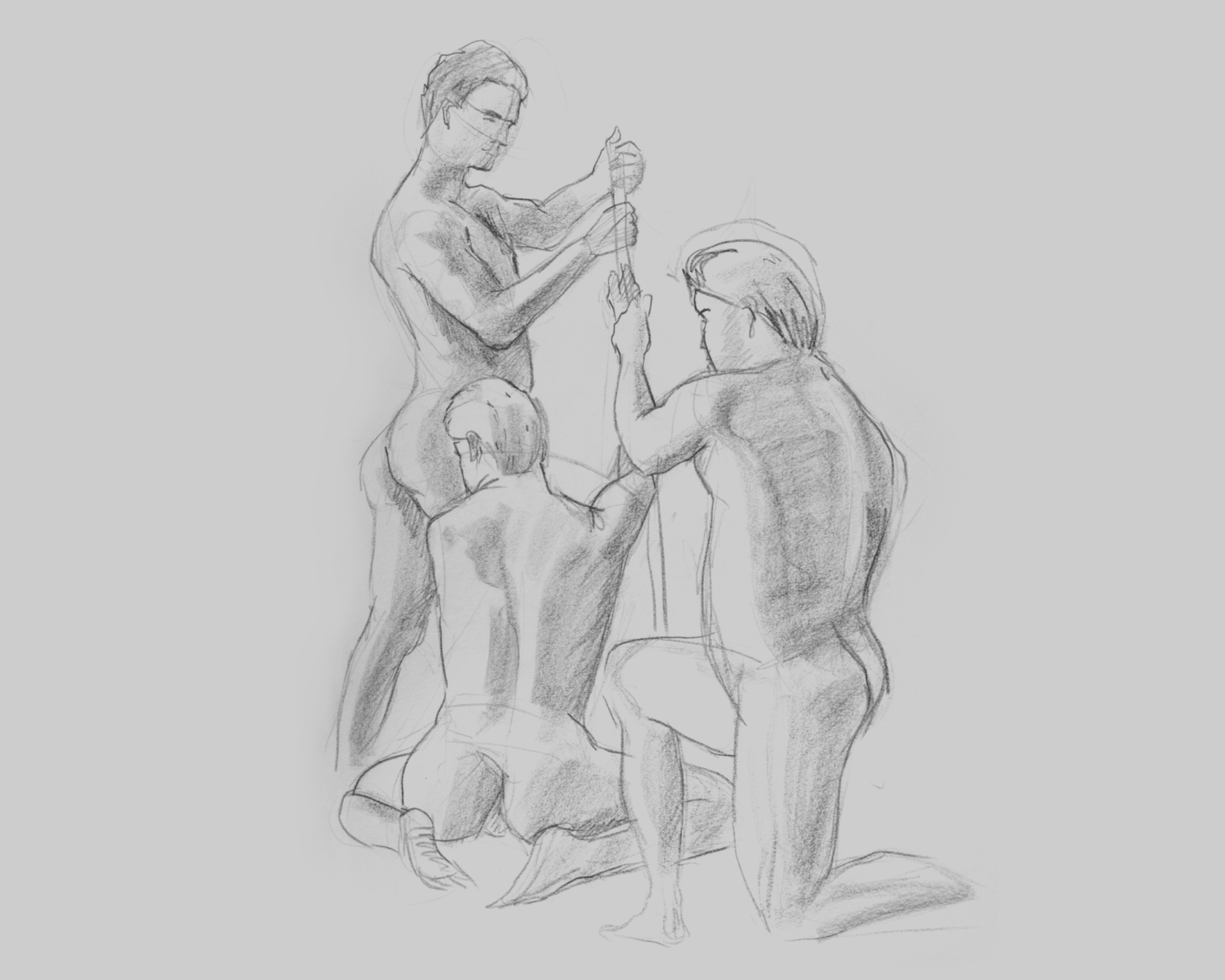
Dave Eggers: There are two sections of drawings. One is a number of different figures drawn in an art class, credited to Cricket — to show the kind of academic drawing you do as a student, and how radical an act it is for a fifteen-year-old to walk in and suddenly be drawing naked fifty-year-old men and sixty-year-old women, trying to depict these very complicated figures and the emotions in their faces. How strange and how extraordinary it is to see a teenager taking all that on — and doing it so well.
I recommend figure drawing to anybody at any age. When you see the strength and vitality of the human body at any age — whether it's an eighty-year-old or a twenty-five-year-old — you still see this glowing, inspiring musculature and life emanating from every pore. Even if you feel like you can't draw a line and you know nothing about anatomy, you should do it, because it's such a revelation.
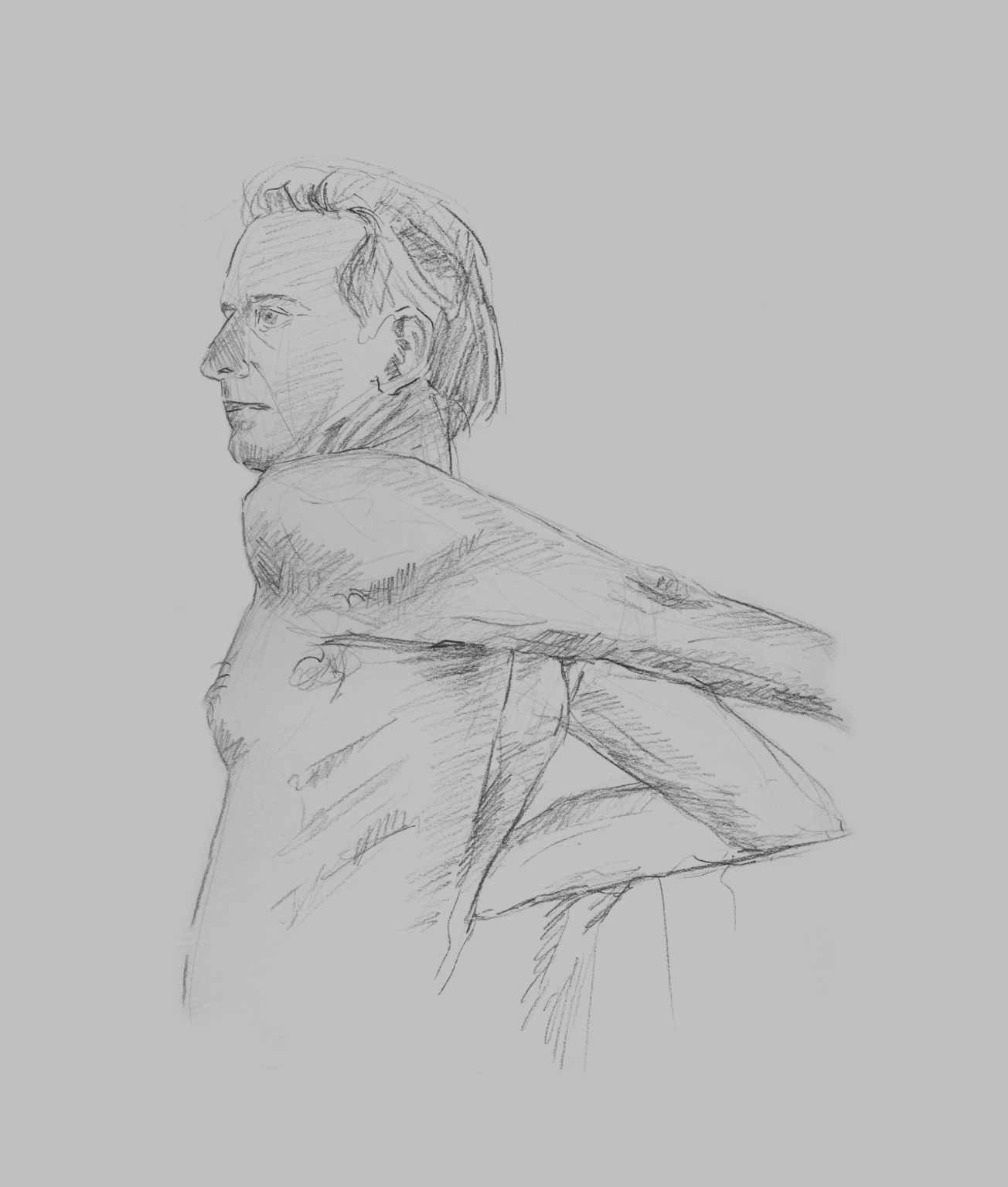
The second section of drawings is at the very end of the book — depictions of two older figures, which I won't identify. That was done at a beautiful studio up on 23rd Street in Noe Valley, run by Michael Markowitz, where I used to go for figure drawing sessions. We asked about ten Bay Area artists to draw from two models who were representing these characters at a certain age. I really wanted to show these two figures from the perspectives of all kinds of artists — to see how drastically differently people meet the same two humans in front of them, and yet capture some essential, shared emotion in the relationship between them.
The styles are all over the place, but they all capture the same soul. No matter how different the drawings are, these are clearly the same two people — something very common and powerful in their expressions and the way they interact with each other. It was an experiment that paid off.
Hugh Leeman: Dave, of everything we've covered today, what's something we haven't covered that you'd like people to know?
Dave Eggers: I think you covered it really well. Thanks for thinking deeply about so many of these issues. It's genuinely refreshing. And I'm grateful to you for taking the time.
Hugh Leeman: Dave, thank you for sharing the book with me. Parts of it felt like reading stories from my own life and from people I've known intimately. It's beautiful. Thank you for your time.
Dave Eggers: Thanks so much, Hugh.
