
Pam Longobardi, What We Carry: Meaning, Memory, and the Human Experience, Momentum Gallery
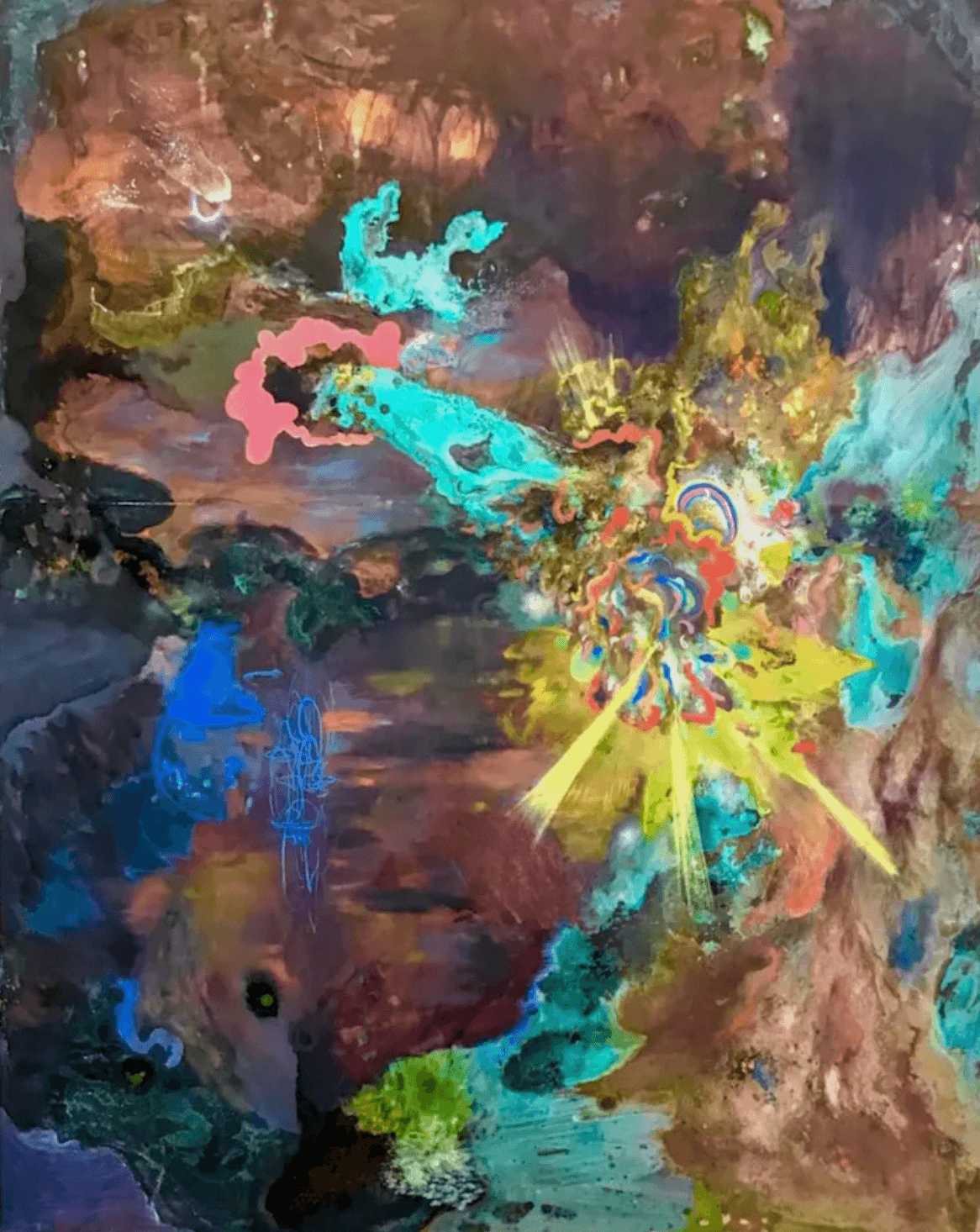
Eremocene I (Spark); oil, acrylic, patinas on copper over wood, 60 x 40 in., 2000
By Bill Russell
I was strolling through Asheville, North Carolina, as one does in the slow-rolling southern states where heat, history, and memory seem to rise from the sidewalks, and wandered into Momentum Gallery. Inside, a group exhibition titled What We Carry: Meaning, Memory, and the Human Experience unfolded like a quiet chorus of voices. Among them, the works that stopped me cold were by Pam Longobardi: fiercely painted environments that speak to the collision between the natural world and global consumer culture. Her deliberately “messy” brushwork becomes a call-to-action, reminding us of the labor still required to clean up our planet. The narratives threaded through her paintings urge us to recognize our responsibility to the imperiled landscapes we inhabit. She asks us the question: Will society face the financial burden of the environmental crisis and will each of us fully own our responsibility?
What We Carry: Meaning, Memory, and the Human Experience asks us to consider our responsibility to artistic practice in a world under strain. The six artists here move through themes both intimate and expansive—environmental stewardship, inner landscapes, the passage of time. Their works invite viewers to look closely and enter into conversation, finding echoes of their own experience within each artist’s narrative and conceptual frame.
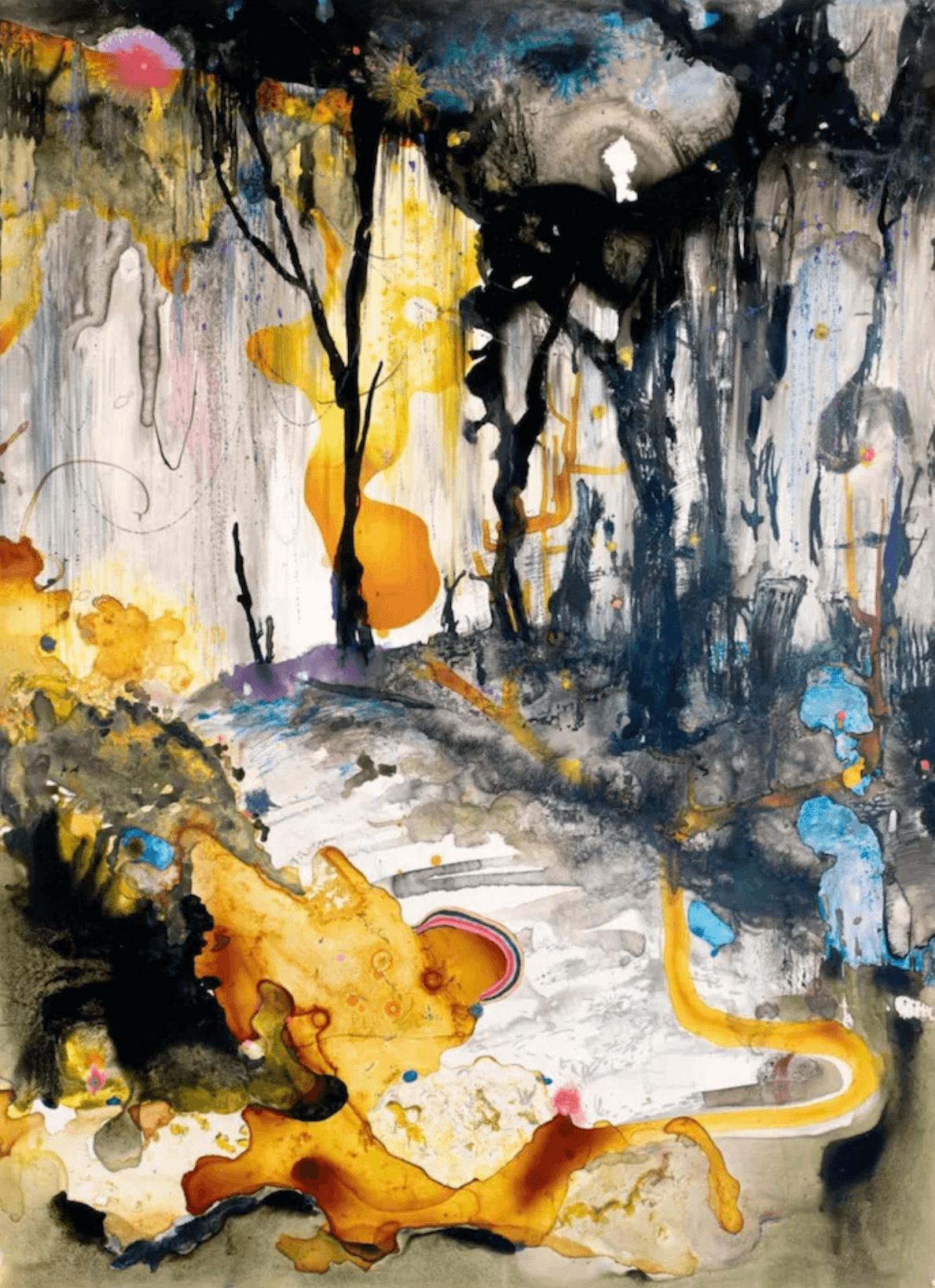
Threshold VII (wildfire); gouache, watercolor, walnut ink, pigment, acrylic, spray paint, alcohol, vinegar, water on paper, 24 x 20 in., 2019
We enter Longobardi’s dream-like abstractions of crisis that hover at the edge of decay. Color and material become a volatile force in her hands…spontaneous and forceful, using sumi and walnut ink, gouache, raw pigment, and acrylic conjuring Turner-esque atmospheres of storm and illumination. Within these torrents of painterly desolation, singular messages surface: troubling narratives of a natural world thrown out of balance, from poisoned oceans to reckless deforestation to the steady erosion of biodiversity. It becomes an alchemical passage inward past forms and through her materials: drips of ink mixed with alcohol and vinegar delineate trees denuded by acid rain. We dodge a pathway of orange forms that seem to corrode the paper itself.
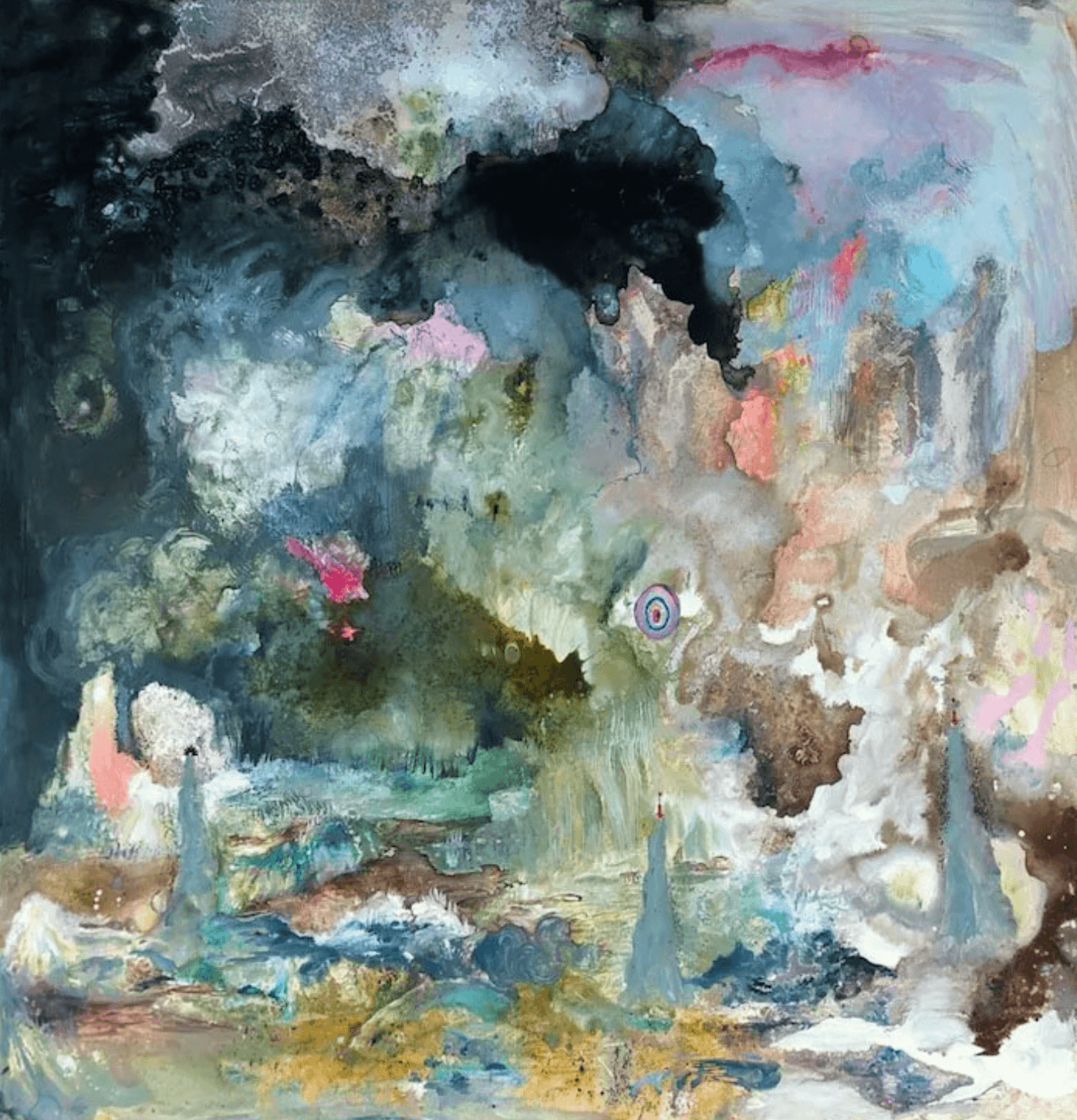
Afterland; gouache, ink, acrylic, pigment on paper, 29 x 29 in., 2000
The message in Afterland lies in the way she moves paint and in the environment of chaotic streams, greenhouse vapors, and drifting continents she creates. Is this a vision of what the world once was or what it may yet become?
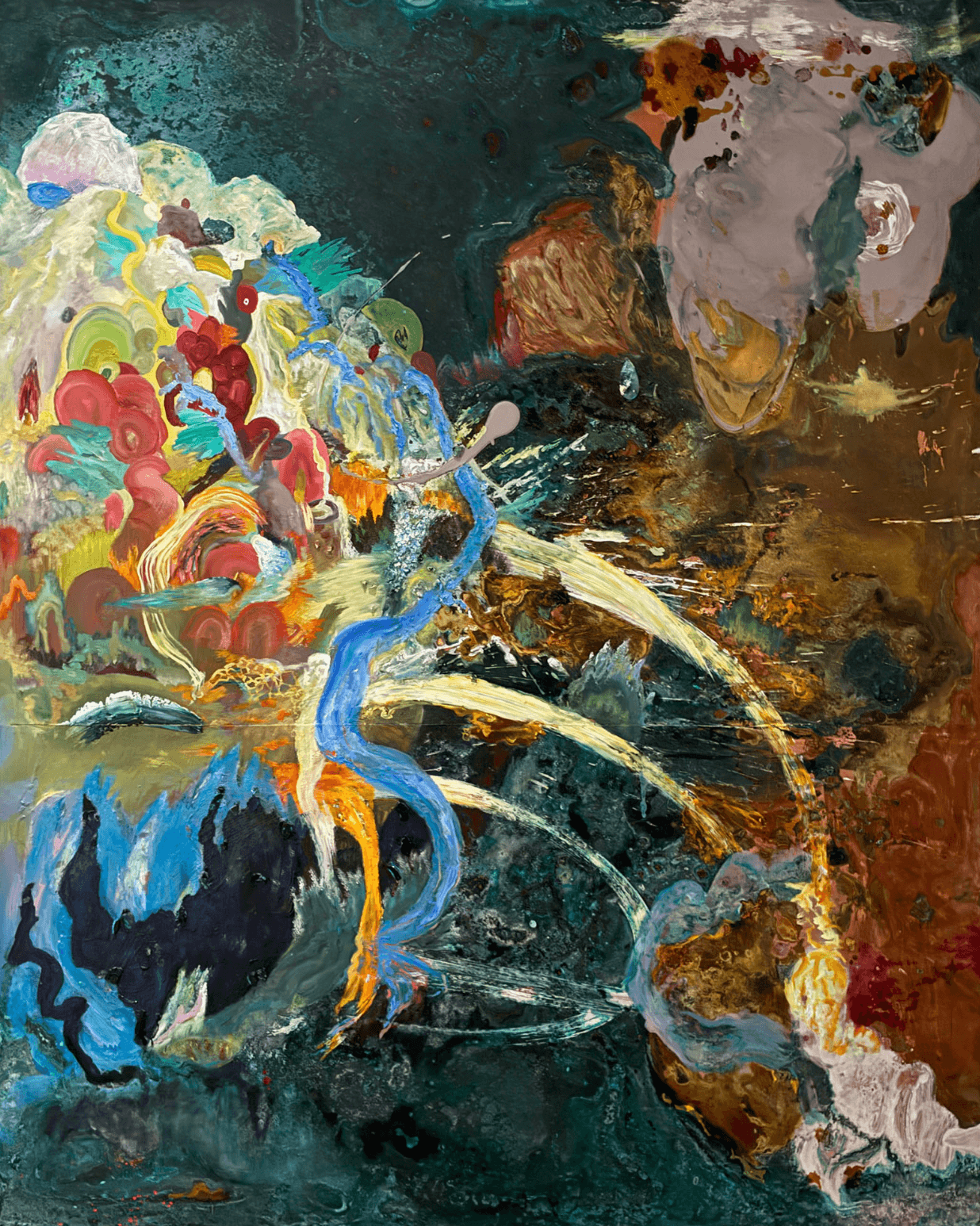
Eremocene III (transmute) churns with turbulent, painterly forms, evoking catastrophic cycles of weather.
Not included in this exhibition is one of Longobardi’s installations composed from the ocean plastics she gathers. In 2006 she founded the Drifters Project, her global, community-driven art initiative, after coming upon immense amounts of plastic washed onto remote Hawaiian beaches and other distant shores. Since then, she has mobilized thousands of participants to reclaim and reposition tons of debris, transforming it into the raw matter for her gallery and museum installations. Ocean plastic becomes the substance through which her activism is released. Longobardi suggests that art’s purpose is not only to make us see but to make us care…a call to attention and empathy in the face of accelerating ecological crises. The interiority that drives making abstracts is different from the public, collective processes of gathering plastic and building installations, work that demands managing people, physical labor, accumulation, and ecological witnessing. She describes making paintings as an “antidote” to the challenges of work with the Drifters Project. Yet the message running through both practices remains aligned.
"I view the paintings as an antidote to the plastic work, but still wholly part of the Drifters Project. They are visualizations of vast forces of collision between natural processes (such as chemical patination of copper) and industrial human-made products (like plastics, acrylics, resin, and oils) that are happening around the world, all shrunken to the manageable scale of a painting space. Through these works, I’m able to control the outcome and nature always comes out on top." - Pam Longobardi
Longobardi also showed a handful of tiny collages made from devalued currency…a shift in pace and scale. These miniature worlds feel controlled and intimate. They carry a quiet poignancy unlike her larger, more turbulent works.
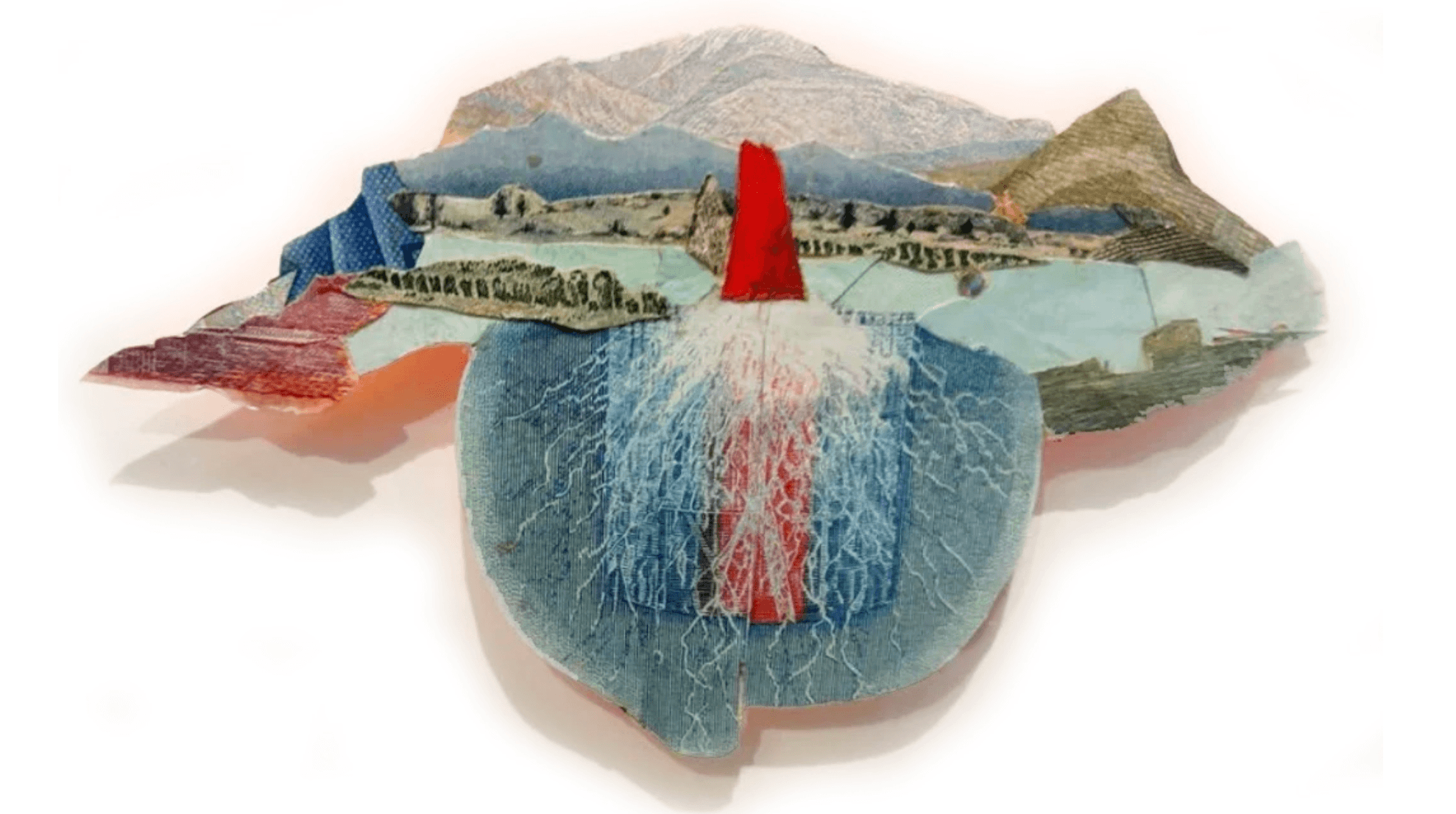
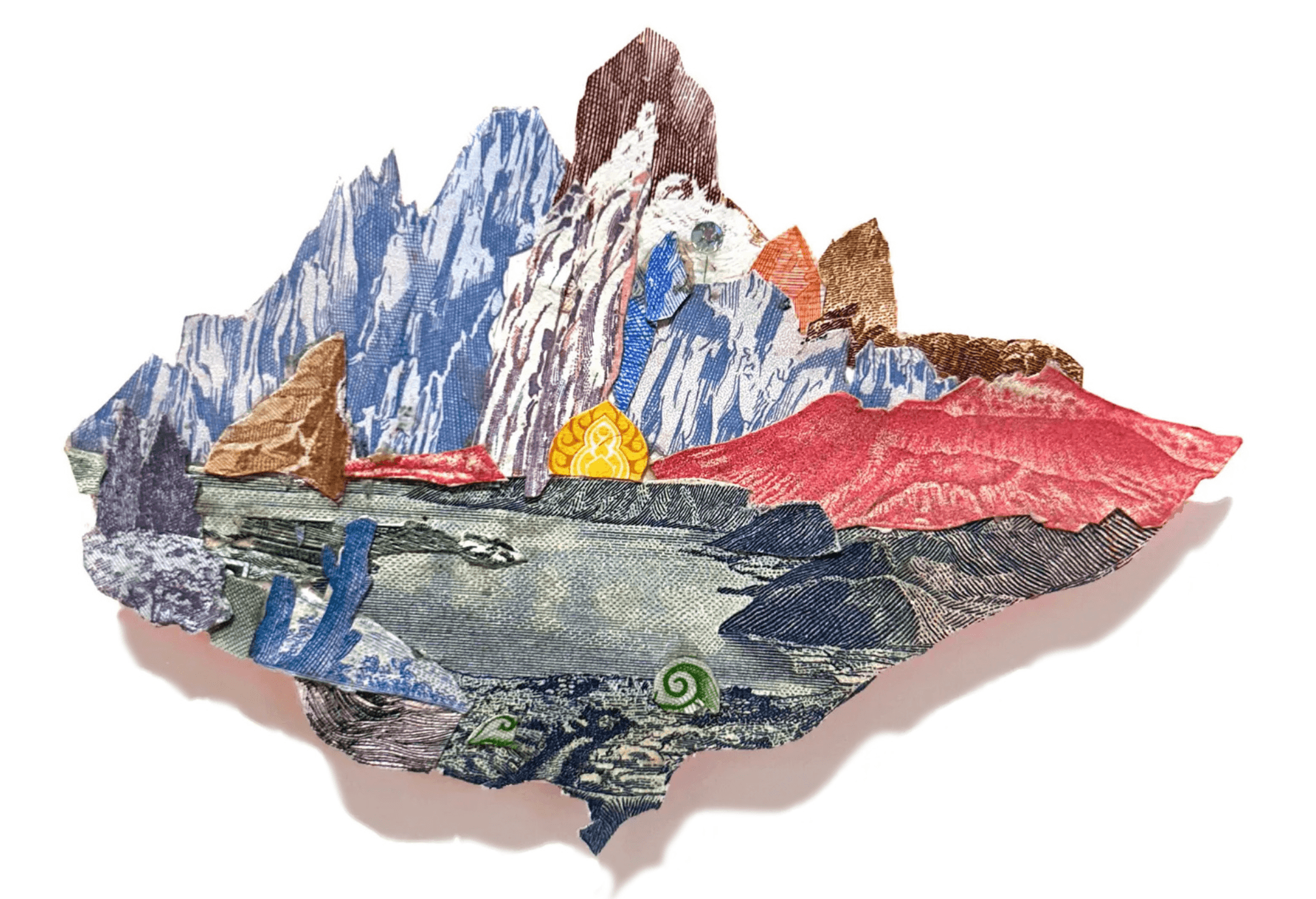
(L) Island of Refuge (red spire underground electricity); devalued currency collage on paper, 11 x 14 in., 2017 (R) Island of Refuge (purple waterfall green fossil); defunct and devalued currency collage and paint, 11 x 14 in., 2017
Pam Longobardi’s practice moves fluidly among painting, photography, and installation, all in service of examining the psychological ties between humans and the natural world. Her work unfolds within a larger conversation about globalism and conservation. Based in Atlanta, she recently retired as Regents’ Professor and Distinguished Professor of Art at Georgia State University.
The What We Carry: Meaning, Memory, and the Human Experience exhibition reminds us that art is both a mirror and a mandate. The works press us to see our own entanglement with a world under strain. Pam Longobardi’s practice makes that entanglement unmistakable. Her interactions with the world are physically and emotionally difficult, yet they reveal how creativity can shoulder responsibility…how it can turn witness into action. We’re asked not only to look, but to reckon with the mess we’ve created, and find ways to solve it.
Works by Pam Longobardi and the other artists in the What We Carry: Meaning, Memory, and the Human Experience exhibition are showing at Momentum Gallery, 52 Broadway Street, Asheville, North Carolina through August 29, 2026.
