
Staging California in Early Hollywood, UC Irvine Langson Orange County Museum of Art, Costa Mesa
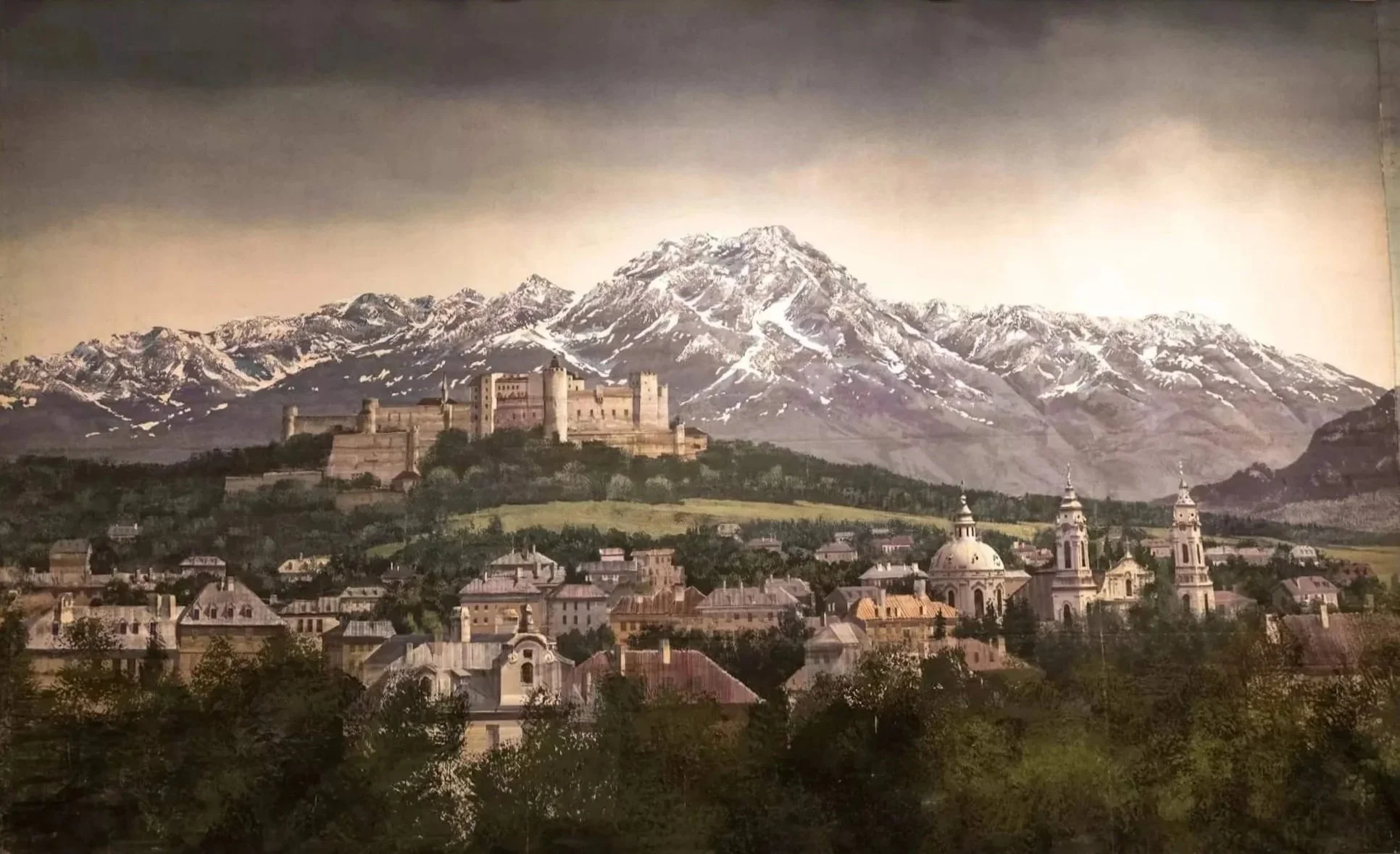
Bill Anderson, Gordon Butcher, John Gary Coakley, John Harold Coakley, Emil J. Kosa, Jr., and Arthur Grover Rider, Backdrop for The Sound of Music, 1965, Dry color and gelatin binder on cotton muslin. Courtesy JC Backings Corporation and the Coakley Family
By Liz Goldner
During the Golden Age of Hollywood (early to mid-20th Century), an important aspect of filmmaking was the painting of scenic backdrops, especially for picturesque movies. As the producers desired those backdrops to appear as “real” places, the film studios intentionally concealed the fact that they were created by hired artists. Most of the artists, who worked long hours on them, often on high scaffolds, were not credited for their work.
Those circumstances resulted in tensions between the workers and the film studios, and ultimately in strikes, including the 1945 Hollywood Bloody Friday, by artists who resented the poor working conditions and inequities in wages and recognition. Conditions improved somewhat over the years, as they continued devoting their talents to the industry.
A magnificent example of the artists’ contributions is the painting of an Austrian town, “Backdrop for The Sound of Music” (1965). This 18-by-25-foot scene is displayed along a gallery wall in “Staging California.” The backdrop contains several majestic buildings and churches, nestled among the mountains, along with translucent materials inserted into the building windows, allowing light to shine through. Yet only Los Angeles artist Emil J. Kosa Jr. was credited for this work, even though five other artists had worked around the clock to create the scene.
The contributions of these talented artists, who were trained in the techniques of French and California Impressionism, became essential aspects of filmmaking during Hollywood’s Golden era. Indeed, this exhibition contains several movie clips featuring scenes painted by artists. These include “The Wizard of Oz,” 1939, with Dorothy dancing along the Yellow Brick Road, surrounded by the magical painted Land of Oz; and Hitchcock’s “North by Northwest,” 1959, with Cary Grant viewing the hyper-realistic Mount Rushmore. As the National Park Service would not allow the filming of actors climbing Mount Rushmore, the scene was so deftly constructed at MGM Studios in Culver City that many viewers believed they were seeing the actual monument.
Local artists also transported moviegoers, via painted backdrops, to locations as diverse as the Swiss Alps, Siberia, the South Sea Islands, the Sahara Desert and the New England Coast. Many artists were well acquainted with foreign landscapes thanks to their immigrant backgrounds, international travels, or art education in Europe.
Most studio painters had been fine artists before they worked on films. But unable to make decent livings with their art, they obtained studio employment for financial stability. They continued to work on their own paintings in their spare time, exhibit them and even win awards.
The acquisition of many magnificent paintings in this exhibition occurred last September when the UC Irvine Jack and Shanaz Langson Institute and Museum of California Art merged with the Orange County Museum of Art (OCMA). Events preceding the merger began in 2017 when the celebrated Gerald E. Buck Collection of 3,200 19th and 20th century California artworks were donated to UC Irvine. Dr. Stephen Barker, formerly dean of UC Irvine’s Claire Trevor School of the Arts, proclaimed back then that the Buck Collection, with art by Larry Bell, Tony DeLap, Lorser Feitelson, Gilbert Lujan, Helen Lundeberg, Agnes Pelton, Peter Voulkos and many others is, “The greatest collection of California art that nobody has seen.”
The University soon resolved that the Buck Collection, along with the Irvine Museum's collection of California Impressionism (that had also been gifted to them), would become the genesis of a UCI museum, with a building to be erected on its campus, to be called the Institute and Museum of California Art
In spite of valiant efforts, a museum structure to house those valuable works did not materialize, and the UCI collection was displayed for several years in a 6,000 square foot gallery in Irvine. Then last June, to the surprise of many in the art world, a proposed merger of Langson IMCA and OCMA was announced, with the expectation that the new entity would be located in the OCMA building in Costa Mesa. After months of plans and negotiations, the merger went through, and “Staging California” is the new venue’s first exhibition containing many pieces from the Buck Collection. Of the 50 art pieces on display, there are also works from the former Irvine Museum collection, from OCMA’s permanent collection and from loans.
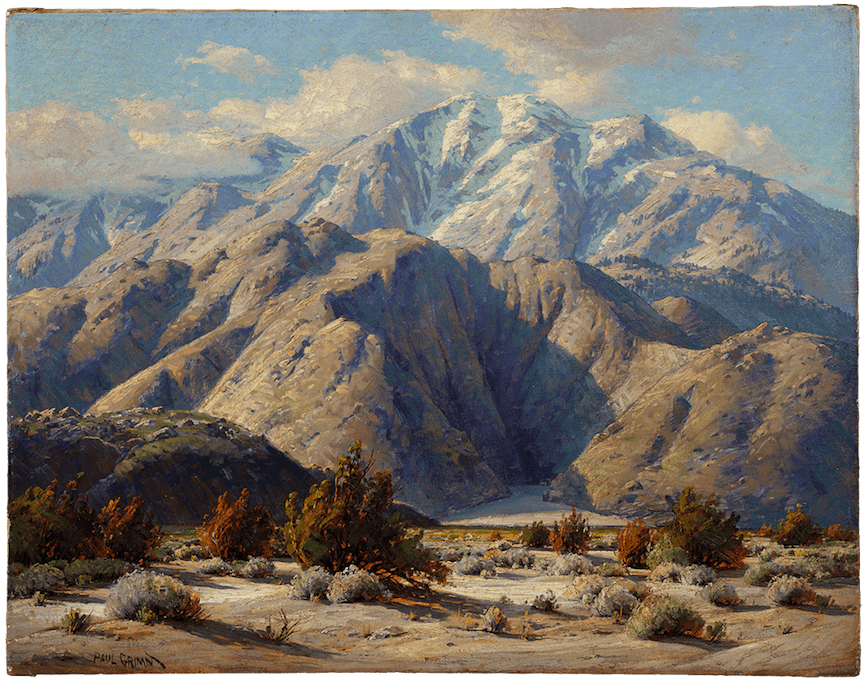
Paul Grimm, Untitled, after 1932. Oil on canvas, 36 x 46 in. UC Irvine Langson Orange County Museum of Art
The exhibition reveals the talent and technical expertise of artists who made their livings at film studios. “Untitled,” after 1932, by Paul Grimm (who painted virtuosic versions of clouds and overcast skies for films) is in this show. The painting illustrates sunlight and shadows illuminating a mountainous landscape. It contains detailed brushwork of the dessert foliage leading to the mountains, and the ridges and striations of the mountains, which are visually echoed by the sky and clouds above. Its luminous atmosphere captures the spirit of classic California Impressionism.
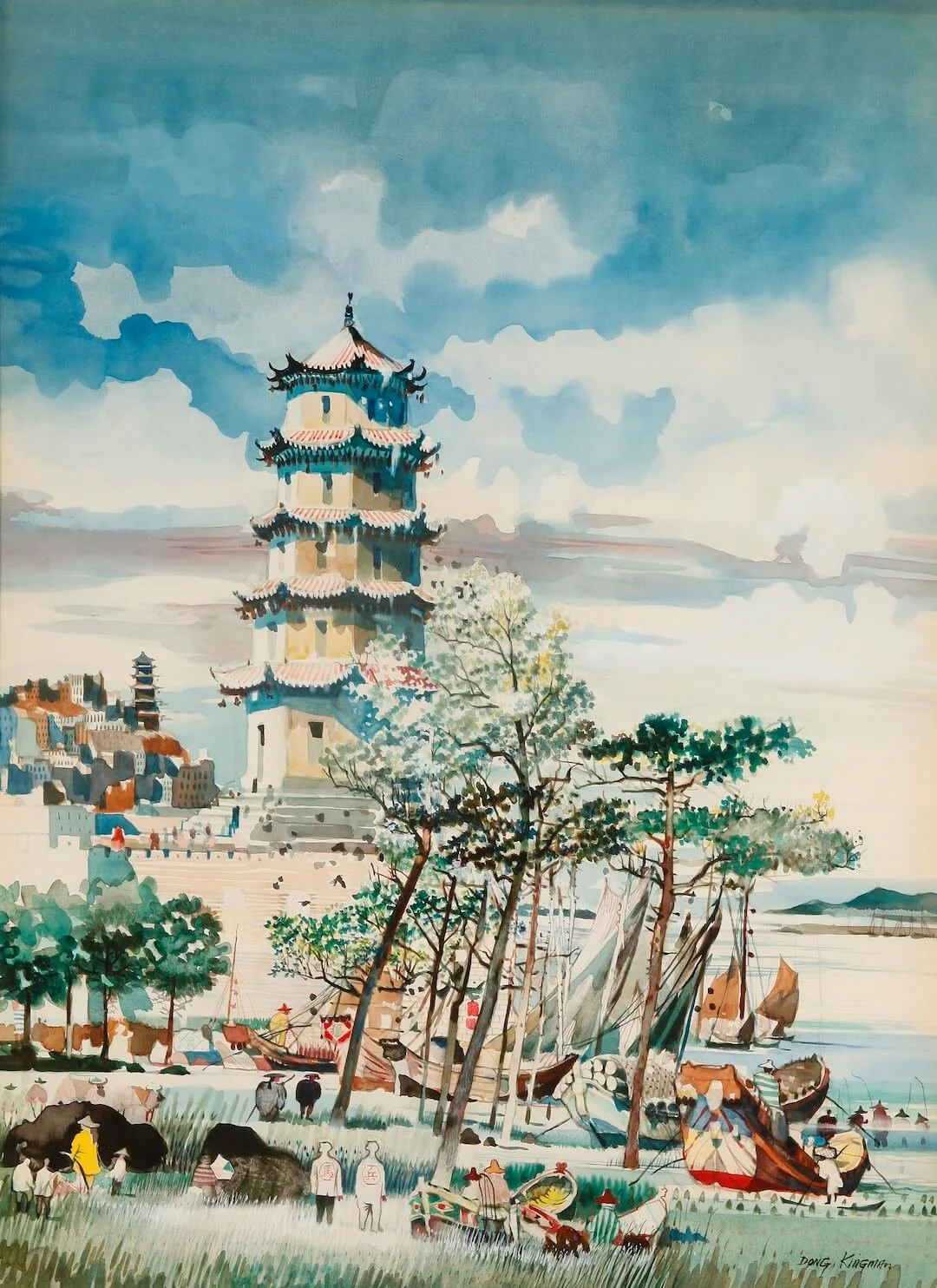
Dong Kingman, Along the China Coast, 1965, Watercolor on paper, 39 x 28 in. The Buck Collection at UC Irvine Langson Orange County Museum of Art
Dong Kingman’s background—he was born in Oakland, CA, raised in Hong Kong, and lived in both countries—and his work painting scenery for films including “Flower Drum Song,” 1961, influenced his personal artwork. While his paintings often contained cultural influences from the U.S. and China, his watercolor, “Along the China Coast,” 1965, is located in his beloved Hong Kong. As a major piece from the Buck Collection, it contains boats and people nestled among bushes and trees, with a village in the background, and a luminous body of water. The painting reflects the type of detailed graphic artwork that Kingman engaged in for the film industry.
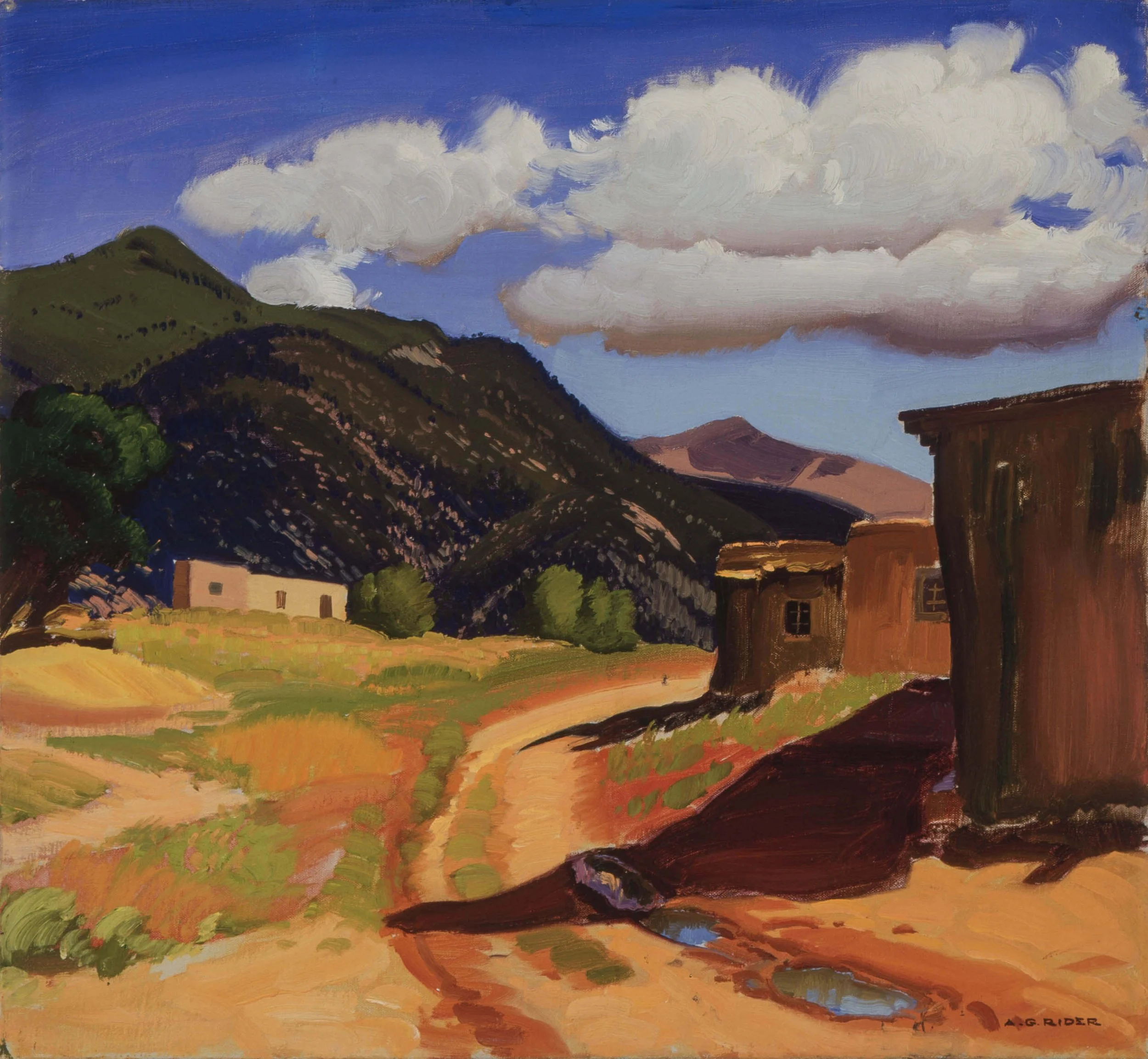
Arthur Grover Rider, Untitled (Taos, New Mexico), after 1918, Oil on canvas, 22 x 24 in. The Buck Collection at UC Irvine Langson Orange County Museum of Art
George Gibson, Marche de Fleurs, Nice, between 1943 and 1945, Watercolor on handwove paper, 15 1/2 x 22 5/8 in. The Buck Collection at UC Irvine Langson Orange County Museum of Art
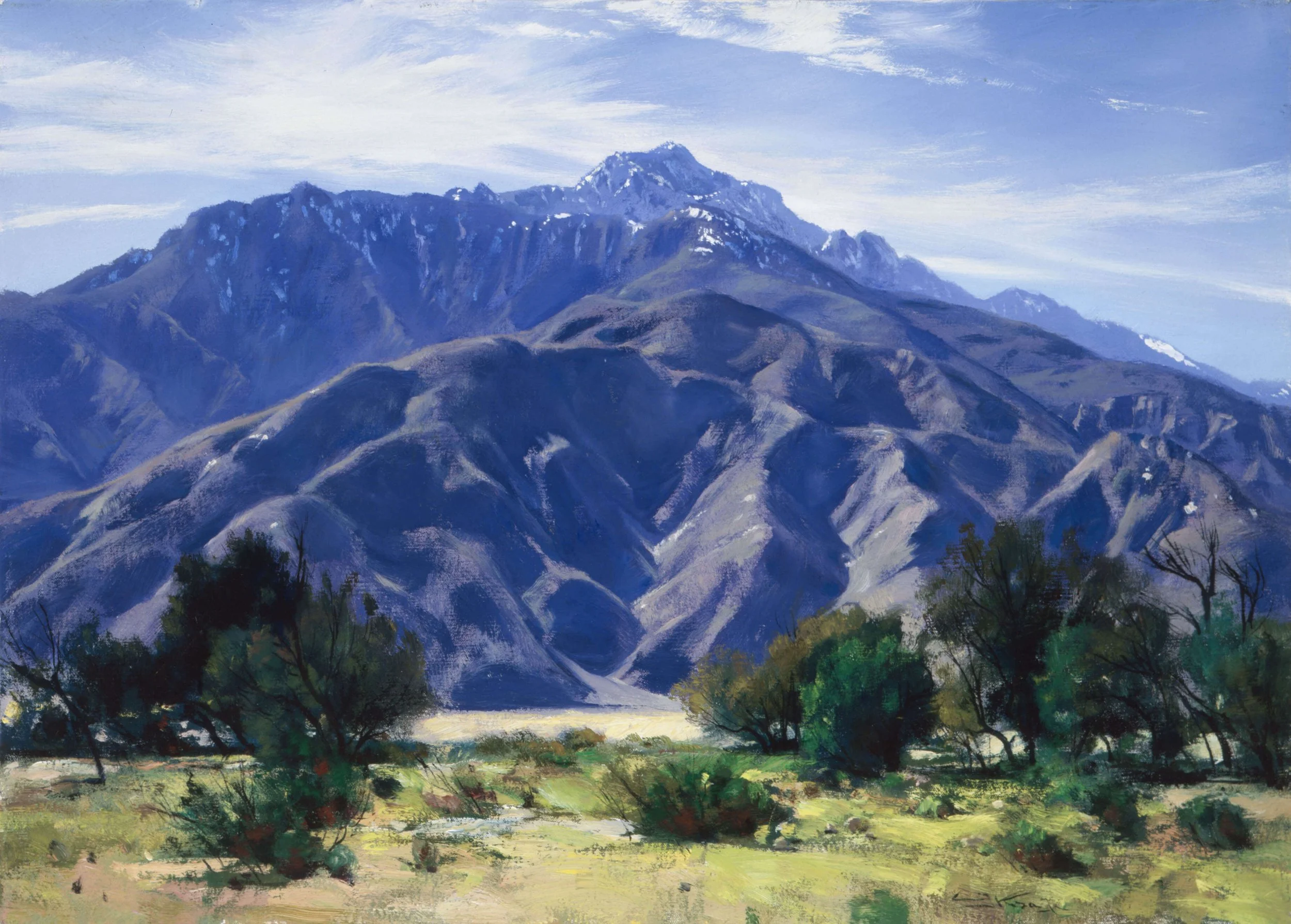
Emil J. Kosa, Jr., How Marvelous Thy Works, after 1928, Oil on canvas, 26 7/8 x 37 ¾ in. The Buck Collection at UC Irvine Langson Orange County Museum of Art
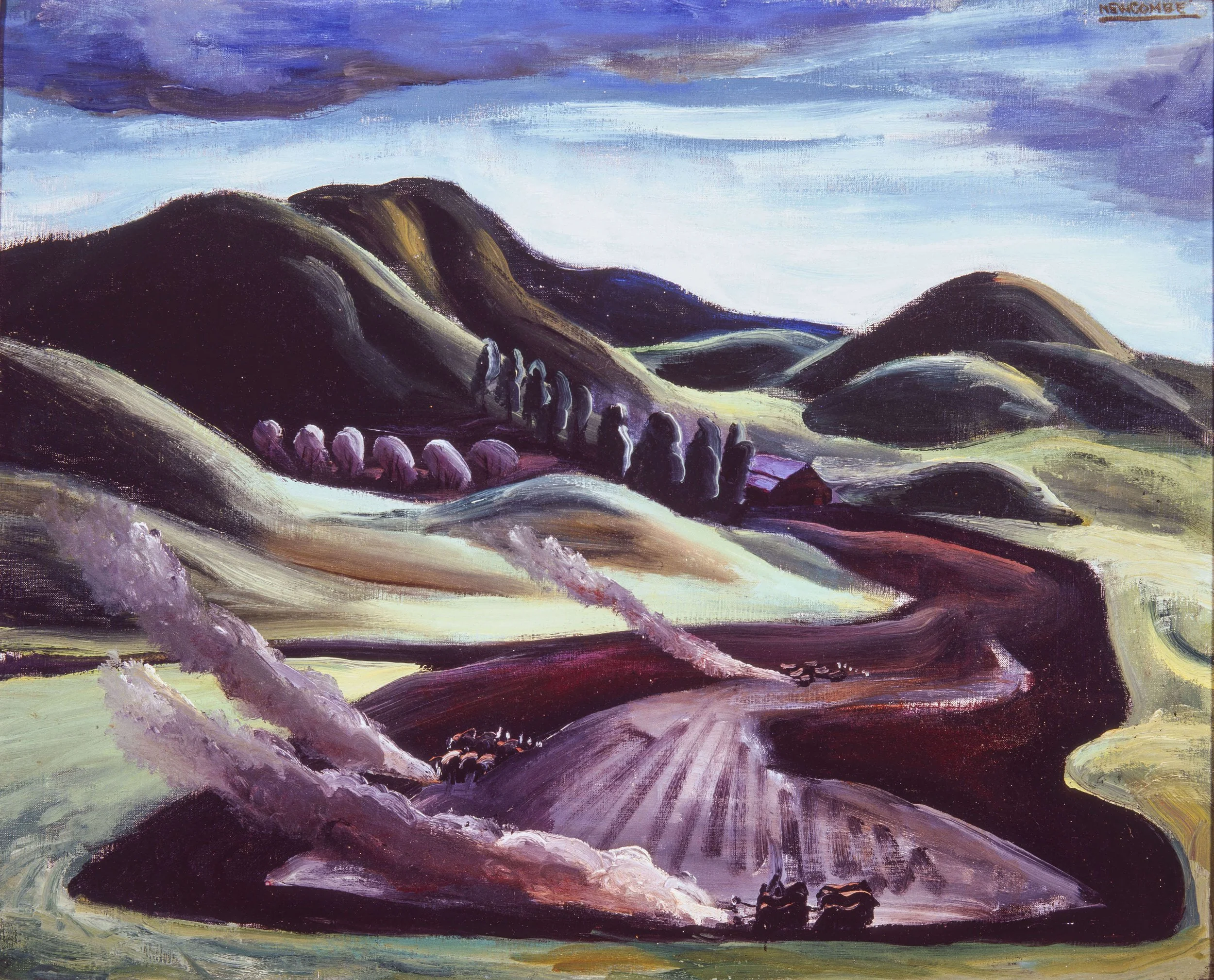
Arthur Grover Rider’s “Untitled (Taos New Mexico),” after 1918, also from the Buck Collection, expresses magical Southland light, which is endemic to California Impressionism. Yet the painting captures a classic Taos scene with its scorched earth, low-slung adobe buildings and hillsides. Two other paintings in this show, expressing the grandeur of California’s purple-appearing mountains, are Warren Newcombe’s “Winter Ploughing California, Calabasas,” 1931, and Emil J. Kosa Jr’s “How Marvelous Thy Works,” after 1928.
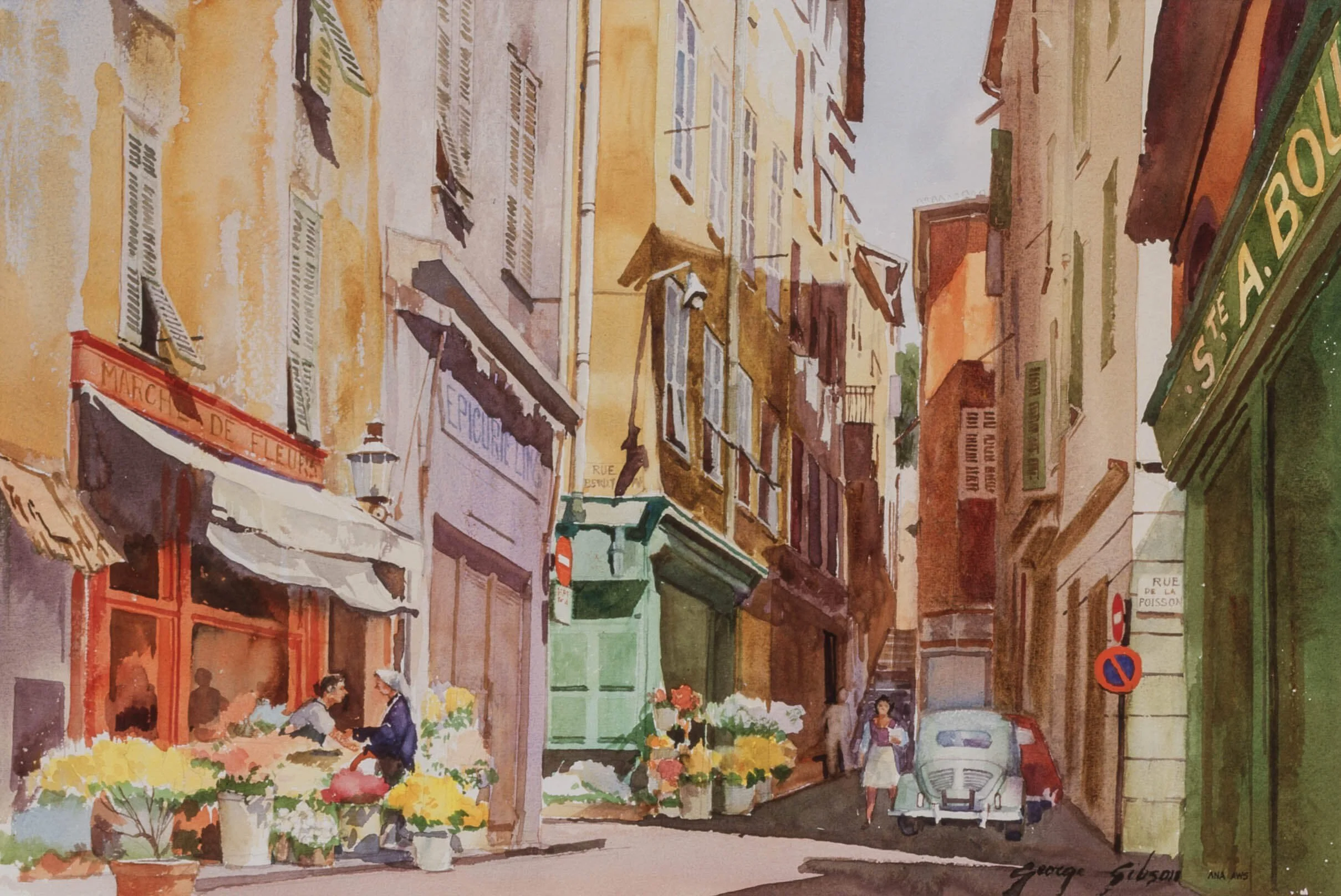
George Gibson, Marche de Fleurs, Nice, between 1943 and 1945, Watercolor on handwove paper, 15 1/2 x 22 5/8 in. The Buck Collection at UC Irvine Langson Orange County Museum of Art
A surprising piece in this show is George Gibson’s “Marche de Fleurs, Nice,” 1943-45, likely painted during a trip abroad. This depiction of a village in Southern France, with people, homes, shops and potted flowers, is closer in technique and subject matter to classic French Impressionist paintings.
“Staging California” is a diverse and delightful exhibition, presenting an amalgam of film clips and paintings from a highly creative period in Southern California. It reveals how early Hollywood’s compelling and popular films depended in part on fine artists’ work shaping the viewers’ perceptions of our world. The show has further importance, as many paintings from the Buck Collection, now on display, have been in storage for years, with art lovers yearning to see them. The exhibition at UC Irvine Langson Orange County Museum of Art runs until October 4, 2026.
