
Zoë Latzer
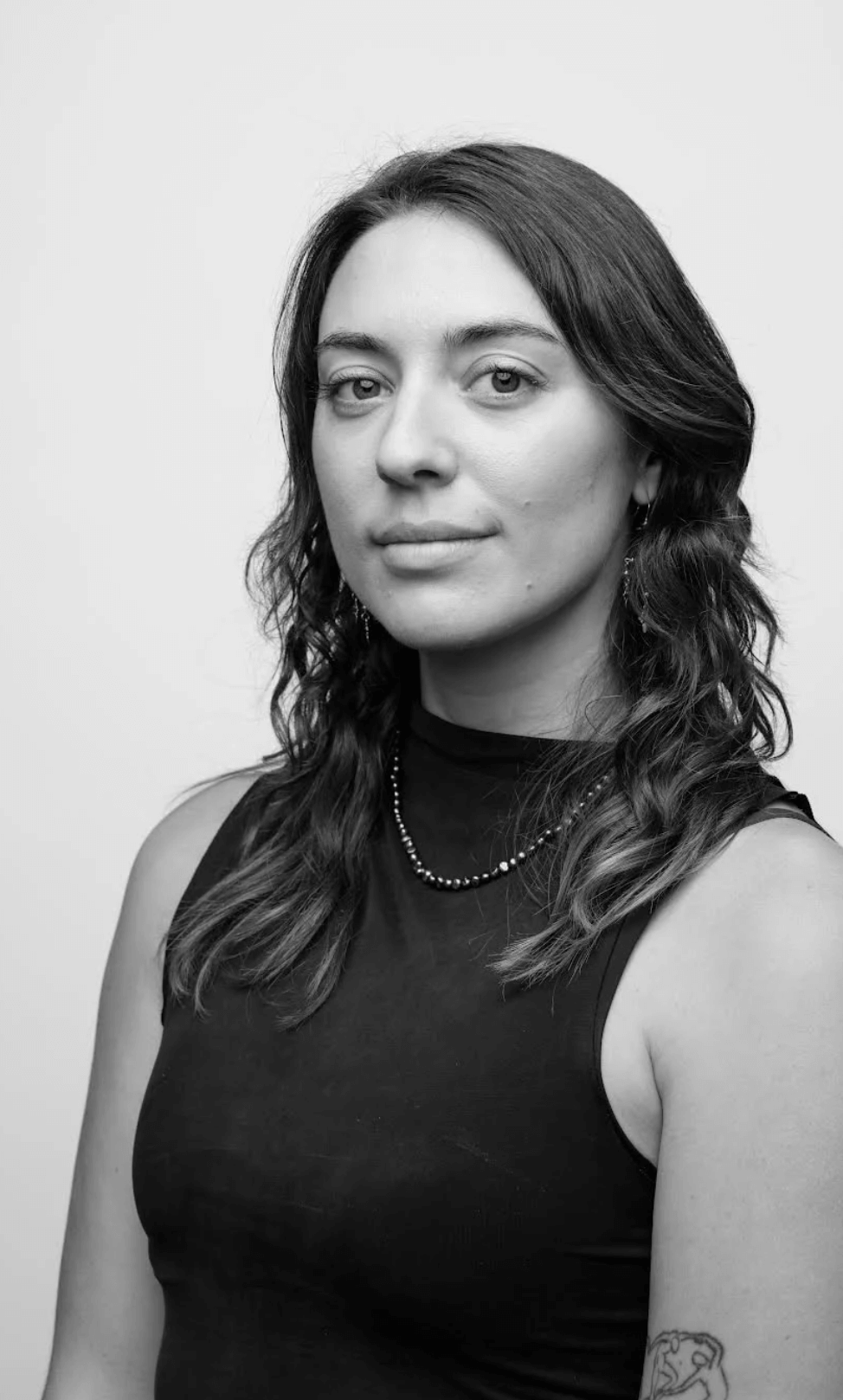
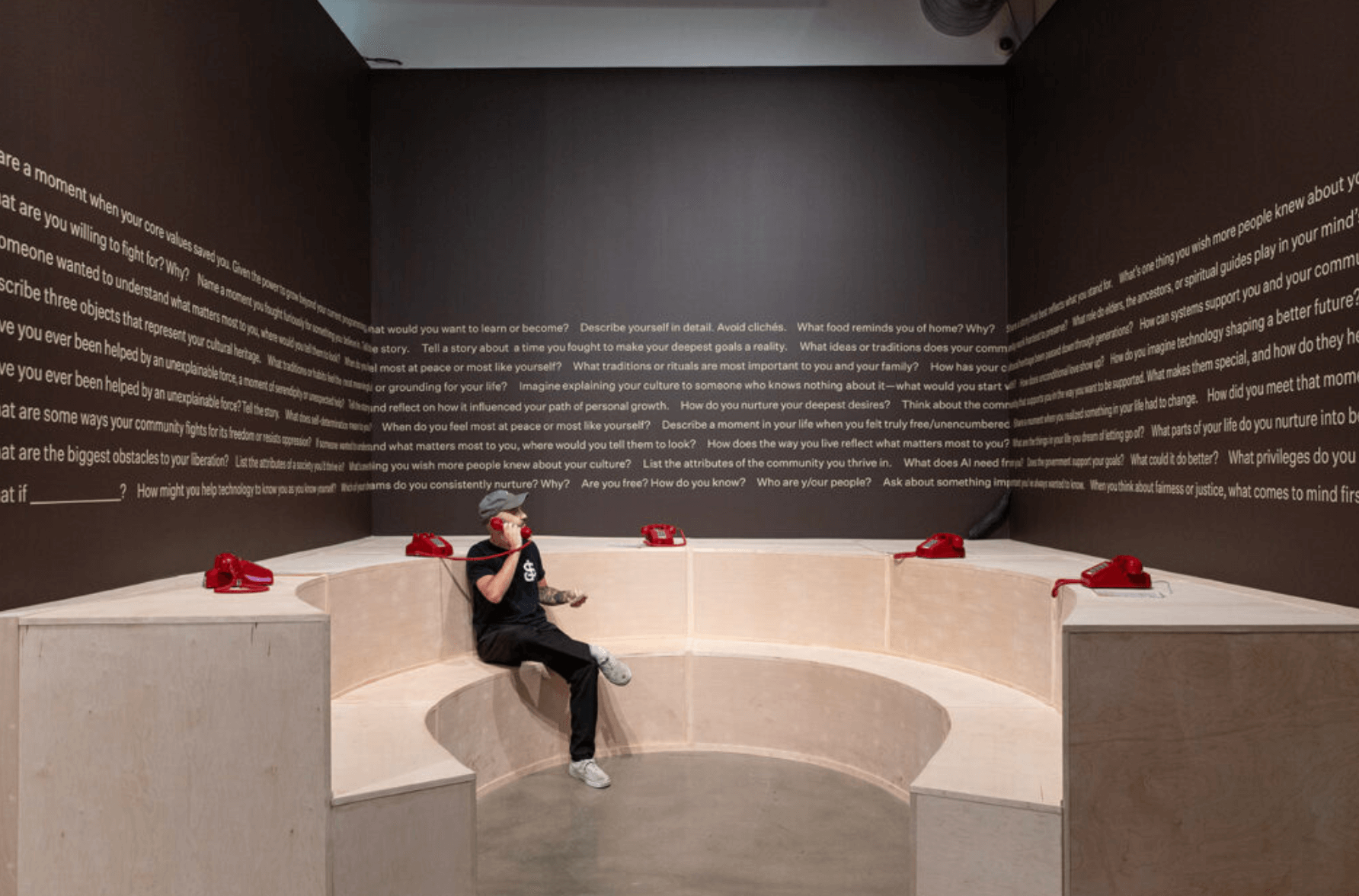
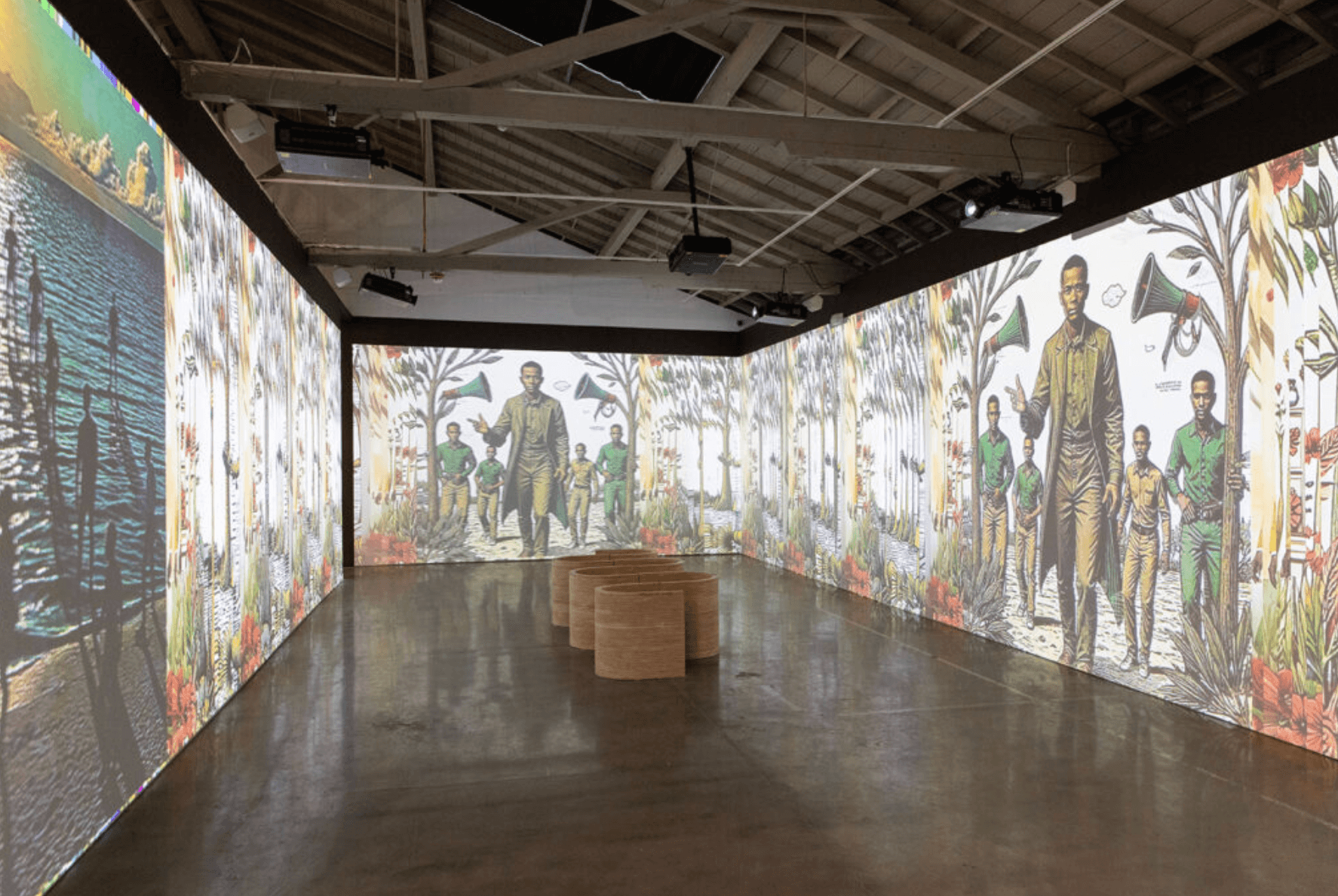
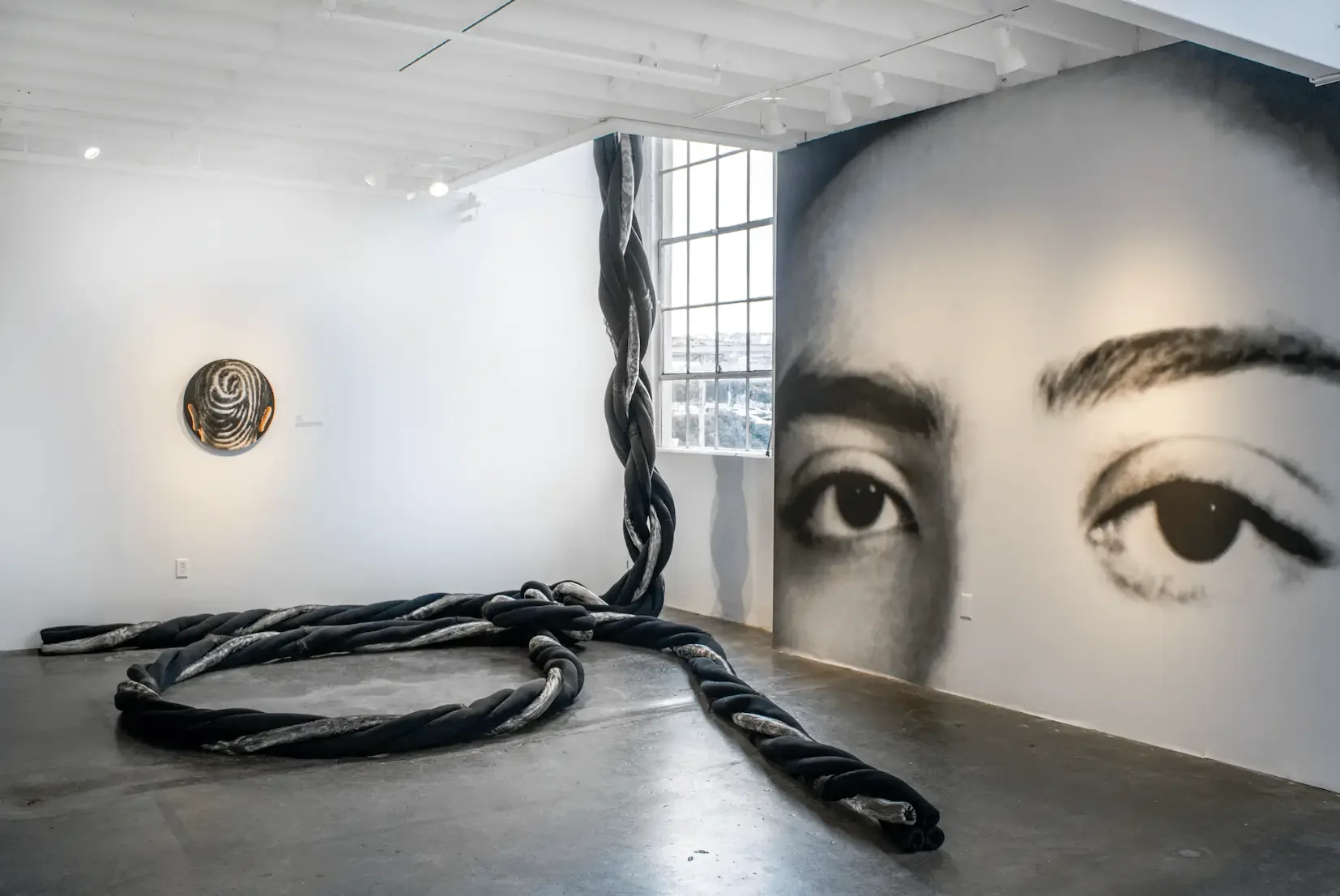
Zoë Latzer is a writer and curator, currently serving as Curator and Director of Public Programs at the Institute of Contemporary Art San José. Her curatorial practice centers on immersive, multi-sensory exhibitions that explore technology, new media, and speculative, research-driven world-building. Latzer prioritizes collaborative care, supporting artists whose work engages archives, material experimentation, and cross-disciplinary research.
She holds a BA in History of Art and Visual Culture from UC Santa Cruz and an MA in Curatorial Practice from California College of the Arts. At ICA San José, she has curated solo and group exhibitions including Blood Be Water, Allegedly the Worst Is Behind Us, Leymusoom Garden, In a Knotted World, and Blood, Sweat and Time. She foregrounds immersive environments, experimental narrative structures, and time-based media.
Through her work, Latzer creates exhibitions as research-driven ecosystems, enabling artists to expand media, reconfigure archives, and imagine alternate systems of social, technological, and environmental engagement.
The following are excerpts from Zoë Latzer’s interview with Hugh Leeman.
The Future of Curatorial Practice
Hugh Leeman: Your bio describes your curatorial practice as grounded in immersive, multisensory exhibitions exploring technology, new media, and speculative world-building. With those forward-thinking labels from your bio, looking five to ten years ahead — with all of the financial pressures museums are facing and so much change on the horizon — what do you think will most reshape curatorial authorship? And what do you hope won't change?
Zoë Latzer: The role of the curator, as I see it, is a dual or multi-part role. You're a facilitator, a supporter of artists, an uplifter. In the contemporary field especially, you're really working to facilitate arts and culture for the public. I hope that role doesn't change.
As we navigate technological change, I think there will be an even greater need for people who genuinely care. A lot of my curatorial practice is rooted in care — care for artists, care for community, care for viewership. It's about stepping out of the binary of "I know" or "I don't know" and into "I care."
I also come back often to the idea that research isn't about an endpoint. It's cyclical — a returning, a re-searching, a reflecting on what we're faced with in our society and what pressing questions we're all trying to think through. Right now we have so many of them, both politically and in terms of the rapid acceleration of artificial intelligence, technology, and the transformation of human work. My hope is that curators continue to support and uplift artists — who I see as the visionaries who help us reflect on and discuss the things we're all facing.
Speaking Beside, Not On Top Of
Hugh Leeman: There's a phrase you've used — speaking beside someone, or speaking nearby, rather than speaking on top of or for someone. That reframes the curator's role as a discourse with the public rather than a monologue from an expert. You've also worked across both digital and analog exhibitions, you studied curatorial practice at CCA, and in many ways you represent the future of curatorial practice during a challenging time for the arts. With all of that in mind: what is the value of analog art in a digital society?
Zoë Latzer: For me, it's not really a binary between analog and digital art. I think both have their place, and the more important word is actually place — it's about working in a space where visitors can have experiential engagement with both forms. I try to create a balance within exhibitions where people have different entry points.
We have this long history of painting being highly accessible — particularly within American and European art contexts — and that continues to shift in the internet age. But for me, it's really more specifically about creating spaces and places for engagement, rather than differentiating by medium. Both allow different access points into mythology, into themes, into cultural background, into technology — into whatever the artist wants to explore.
On the idea of speaking beside rather than on top of — that's very important to me. As a curator, I try to create space for the artist to come in and fill the gaps rather than talking over them. And I also try not to talk over the visitor. Ideally, I'm a facilitator — letting the voice of the artist speak to and with the visitor. I often do joint curator-and-artist tours so that people can learn from both the curatorial framework and from the artist directly.
Community Memory, AI, and Ethical Frameworks
Hugh Leeman: In the show featuring Stephanie Dinkens at the San Jose ICA, her Data Trust used oral histories encoded with bacterial DNA and carried in plants, while generative projections and seating invited visitors to share their own stories. What ethical and practical frameworks do you rely on when curating projects where community memory and AI systems intersect? And how do you define success for a project like that beyond visitor counts?
Zoë Latzer: It's a question I still carry with me as a curator working within an institution. While I wasn't the project curator for that show, working on its organization prompted deep conversations for us as an ICA — around data collection, archiving, and how systems like AI are being implemented in relation to surveillance and tracking.
Honestly, I have more questions than answers right now. But I think it's about keeping those questions present. It's not that I have a set answer — we're all faced with so much uncertainty around AI, surveillance, and data control. The work Stephanie Dinkens is doing really thinks through what technology is missing from communities, how it's being implemented, and how we can imagine new systems of archiving and care for communities. That's a set of questions, not a resolved answer — and I think that's where we all are right now. What protocols and systems do we need to be putting in place? That's the real work.
Amending History, Mending Practice
Hugh Leeman: Your show The Worst Is Behind Us reframed the body as a living archive amid fractured memories and disrupted histories. Can you walk us through the curatorial decisions — from artist selection to spatial sequencing to the balance between installation, painting, and video?
Zoë Latzer: That group show grew out of a reflection on a number of Bay Area artists who were navigating the challenge of carrying so much of their past — ancestry, lineage — while also doing the contemporary work of tending to that history. I found that many of them were holding a tension between amending history, revisiting who and what and why certain histories are written, and simultaneously mending — a somatic, community-oriented practice of care and nurture.
The title came from an Amanda Gorman poem called "Ship's Manifest." The opening line is "allegedly the worst is behind us" — and that word allegedly captures something so delicate. We think, but we're not sure. I loved that balance: the feeling many people carry that these historical narratives aren't actually behind us, that they're still very present in different forms. I wanted to hold that tension — the desire to speculate, to imagine a new future, alongside the uncertainty of how we move forward.
Inside the Institution: Who Gets Shown and Why
Hugh Leeman: Since George Floyd, there's been a significant shift in conversations about whose histories get told in museums and who gets access. For an outsider, the hierarchy of how decisions get made inside a museum is largely invisible. Who is actually deciding what gets shown, and what gets passed on?
Zoë Latzer: Every museum and gallery is different — each has its own infrastructure. A museum with a permanent collection has a different set of needs than an ICA. The ICAs themselves are all quite distinct from one another — ICA Boston, for instance, operates more like a large-scale museum, with a collection and Venice Biennale sponsorships. Smaller ICAs are non-collecting, more experimental, oriented around contemporary practice.
What I always come back to is the language: an institute is a place of learning, of experimentation, of innovation. That distinction matters to me. At the ICA San Jose, we've also made a real commitment over the past four years to emerging and mid-career artists — artists at a brink of change who are well-positioned for a first institutional show. We try to support them through commissioning new work, giving them solo exhibition opportunities, and putting multiple artists in dialogue through group shows.
In terms of process, we're a small team, so it's largely my team and I identifying artists whose work feels urgent and important — particularly within the Bay Area — and who would benefit from that next level of platform and support.
What Is an ICA?
Hugh Leeman: For listeners who may not be familiar — what is an ICA [Institute of Contemporary Art] , and why does that distinction matter compared to, say, a MoMA [Museum of Modern Art] or a privately held institution?
Zoë Latzer: The ICAs are not connected to one another — they're all quite different. But I try to focus on the language of the term itself. A museum stores, preserves, and interprets. An institute is a place of learning, of experimentation — and for ICAs, that experimentation is specifically oriented around contemporary artists. It's not just a container for objects; it's an active space of inquiry.
At the ICA San Jose, we're non-collecting, which means we're not buying or holding work — we're creating space for it, often commissioning new pieces and supporting artists through that process. Our main mission is to remain free and accessible, which I think is increasingly rare and increasingly important.
Care as a Core Competency
Hugh Leeman: You've described your curatorial practice as rooted in "collaborative care" — care for artists, for archives, for material experimentation and cross-disciplinary research. If care were treated as a core competency in curator training rather than a personality trait, what would that training pipeline look like?
Zoë Latzer: It would focus far more on collaboration. Traditional curatorial and art historical programs often emphasize individual expertise — "I know, and I'm teaching." They can be less focused on collaboration.
For me, care flows directly from collaboration. I don't come into an exhibition as someone teaching an audience about an artist. I come in as someone collaborating with the artist to create something with and for audiences. So the models I hope to see are ones where curators, artists, institutions, organizations, schools, scientists, and researchers are genuinely working together — being playful, experimenting, trying new things. Collaboration at the core, not as an afterthought.
Competition vs. Collaboration
Hugh Leeman: That idea of collaboration implies a movement away from the competitive model — where institutions guard their collections and their prestige. It sounds like what you're describing involves a more metaphorical understanding of "space" — not just a room where things are displayed, but a space of expression and encounter. Is that fair?
Zoë Latzer: Yes, metaphorical — and also very literal. A lot of what we've been doing at the ICA San Jose is collaborating with our neighbors: the LGBTQ youth space dedicated to supporting queer youth, Sacred Heart, and Veggielution, providing farm and garden access for city communities. And with nearby institutions — the San Jose Museum of Art, Movimiento de Arte y Cultura Latino Americana, the San Jose Quilt Museum, local galleries. How can you view that as competition when together you're so much stronger?
Something like First Fridays — which Sher Lacy has really developed as a platform — creates an art walk where communities can come out and see the diversity of thinking and exhibitions across a whole city. I hope we can continue building both theoretical spaces for shared writing and thinking, and physical spaces where communities, organizations, and researchers can be in genuine dialogue.
Spaces for Liberation
Hugh Leeman: You wrote about a garden exhibition: "The garden acts as a metaphor for cultivating our lives — from the people we embrace to the values we plant and let grow. How do we individually and collectively tend to our gardens? How can we create new spaces for liberation, and fight for everyone's liberation?" I'd like to hear you answer those questions in a more literal sense. How do we create spaces for liberation?
Zoë Latzer: For me as a curator, it comes through working with artists who are dedicated to that question — and prompting exhibitions where people can come in and imagine new world-building. It's about building exhibitions where people can imagine and inhabit spaces where they are free, where any identity is welcome, where queerness is invited, where dialogue is invited.
For each person in each field, that looks different. But as a curator, I try to implement it in my own work and prompt it in others.
Attention as a Medium: The Masako Miki AR Project
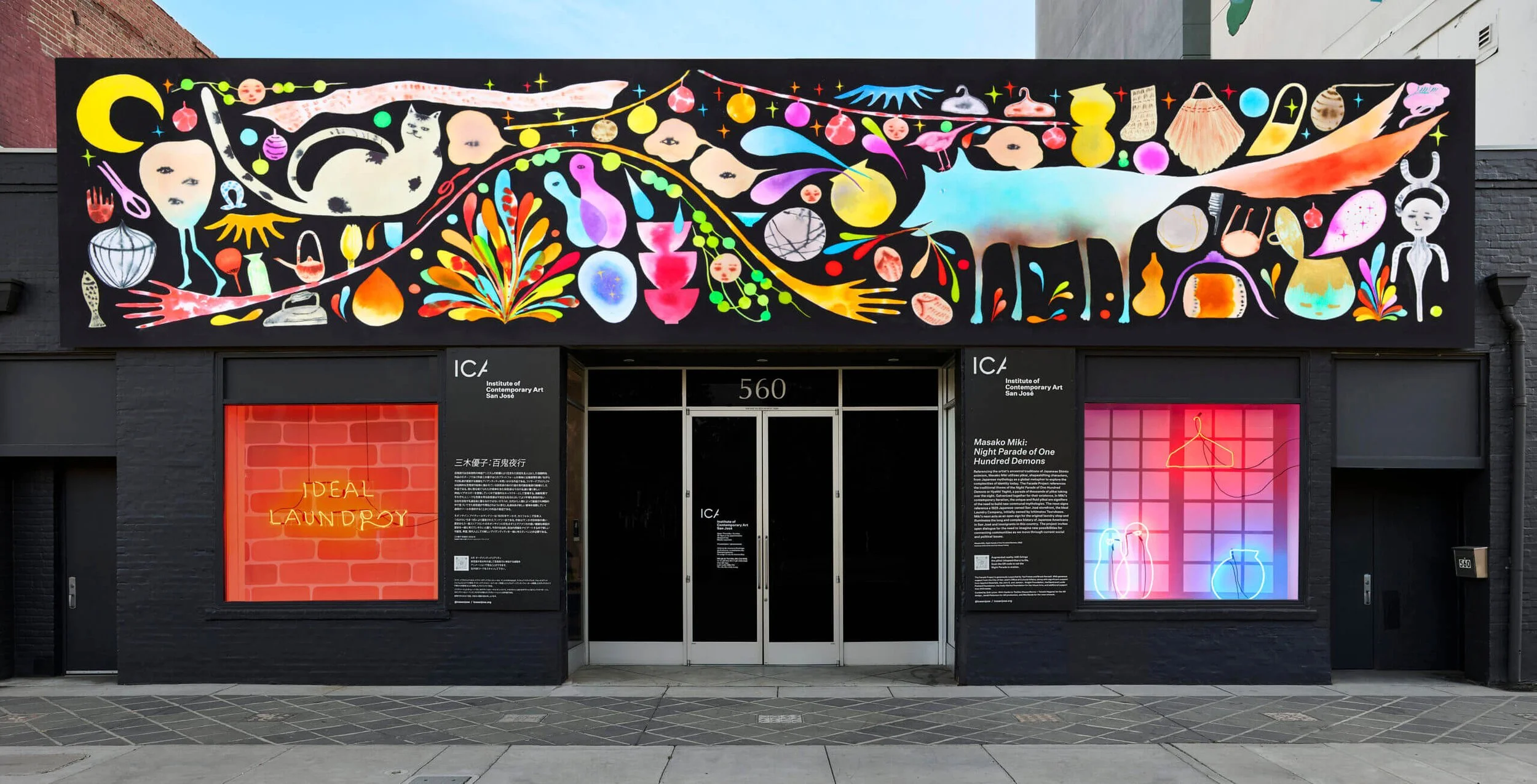
Hugh Leeman: Museums are in a complicated position competing for attention in the era of YouTube and TikTok. In the Night Parade of 100 Demons project with Masako Miki, you used augmented reality to bring her felted Yo-kai characters to life on the ICA's exterior facade. How did you decide what AR should do in that exhibition — and what it shouldn't do?
Zoë Latzer: It was a facade project — on the exterior of our building — which I think is exactly what made AR feel like the right addition. The facade project came during COVID, when museums couldn't be open, and the question became: how can the building itself be accessible to everyone? Some of the best feedback we got was from people who live in the neighborhood who said, "I get to see art from my building every day."
Masako also wanted to highlight the history of the first Japanese-owned business in San Jose — a laundromat — and her larger body of work centers on Yo-kai, these mythological spirits and beings. She painted a beautiful watercolor that functions almost like a billboard at the top of the building, and then collaborated with She Bends on neon works to accent the windows.
For the AR, the principle was simple: it should augment what's there, not replace it. We didn't want to create something where the wall is empty and everything exists only through your phone. Instead, the AR was additive — if you wanted to, you could pull up these Yo-kai from the static painting and see them animate around you. You could access it from Instagram, from anywhere in the world.
And that was part of what we loved — a site-specific project made for San Jose that could be accessed from anywhere, bringing Masako's language of Japanese animism — seeing the inanimate come alive — to people everywhere. Augmented reality felt like a genuine fit for that, because it's doing exactly what animism does: bringing static things to life.
Layered History: San Jose and the Japanese American Archive
Hugh Leeman: Can you give more context on the laundromat connection and what that research process looked like?
Zoë Latzer: Masako did her MFA at San Jose State and has been working in San Jose for a long time. She and I visited the Japanese American Museum of San Jose — one of only two in California focused specifically on Japanese history — to research the history of Japanese and Japanese Americans in the city.
Masako was born in Japan, so her relationship to that history — including the internment camps — is different from someone who grew up in the U.S. as a second-generation Japanese American. At the museum, we heard from a woman who had grown up in the camps as a child, and the layered difference in perspective between her experience and Masako's was profound.
Through that research, Masako became really interested in this first Japanese-owned business — the laundromat — as a story of people who came and worked extremely hard to find grounding. San Jose has a complicated history: the Chinatown was burned down, and there's a lot of evidence that the fire department deliberately allowed it. The city went from being the Valley of Heart's Delight — agricultural land — to Silicon Valley through tech. These places in the Bay Area carry enormous historical weight, and Masako wanted to add her voice to that story as a Japanese artist in San Jose.
Speaking Nearby: The Practice of Listening
Hugh Leeman: Let's come back to that phrase — "speaking nearby." What does that actually look like in day-to-day curatorial practice?
Zoë Latzer: The phrase came to me through an Anthony Huberman essay on care and curatorial practice, and also through Kathy Park Hong's Minor Feelings — her work on speaking nearby has had a real impact on me, and I want to give credit there.
Practically, it starts with listening. I want artists to think through the language they want to use — I ask them to send me notes, writings, I interview them, and I try to have things in their voice or very close to it. It means using their own language in labels, in wall text, in core themes — whether that's poetic or theoretical.
It means writing with them, not for them. Commissioning new work and asking: Is there something you've always wanted to do but haven't had the funds or the space? Are there organizations you've always wanted to collaborate with? It means giving artists a say in how they're represented on our website, in our essays. And it means deferring to them — giving my feedback and opinion, but making it a dialogue where I'm not the deciding factor. My role is to translate their vision into a physical space while navigating the practical constraints of budget and architecture.
Technology, Data, and the Lines Museums Should Hold
Hugh Leeman: You're operating in the middle of Silicon Valley, incorporating AR, engaging with AI — you're at the edge of a lot of these conversations. What responsibilities should museums hold around data, consent, and community knowledge? And where are the guidelines around what technology should be refused?
Zoë Latzer: The biggest guideline I hold is simple: don't sell data. Don't benefit from demographic information, archival data, membership data — don't sell any of it or use it for other purposes. We're seeing businesses track who moves in and out of buildings, aggregate zip code data, build profiles. Museums shouldn't be participating in that. Protecting who visits, not storing or selling that information — that should be a core commitment.
More theoretically, I think artists are the ones most deeply engaged in thinking through surveillance, politics, community, immigration, and the implications of technology on human life. The institution's role is to let artists lead that research — not to place an institutional voice over them, but to give them the space to pursue what they want to explore.
The Further Triennial and Access as a Value
Hugh Leeman: You were listed on the Further Triennial program committee. If you could make anything happen for that programming at the ICA, what would it look like?
Zoë Latzer: The Further Triennial is really about connecting Northern California audiences and creating more visibility across regions. For me, the biggest goal through our participation is more collaboration and more access — time for people to see what's happening across these regions, to travel between Napa, Sacramento, San Jose, San Francisco, and encounter parts of those communities they haven't seen before.
The ICA's core mission is to remain free and accessible, and I hope the Triennial becomes a platform for that too — moments when museums and spaces that might charge admission open their doors, when communities can move across regions and have access to performances, exhibitions, and conversations they might not otherwise encounter.
Accessibility Beyond Price
Hugh Leeman: Accessibility in Bay Area conversations often refers to price and to people historically not included in museums and removing barriers to entry. But you're describing something broader than that. Can you talk about the other dimensions of accessibility you think about?
Zoë Latzer: Price is critical — you need to think about the very practical elements of access. But accessibility is also about language. If an artist uses a word like "ontological" or "phenomenological," I think about how to translate that into language anyone can understand without losing the integrity of the idea.
It's also about translation — literally. San Jose has one of the largest Vietnamese communities outside of Vietnam, and a significant Latin population. We translate our audio guides into Spanish and Vietnamese. For Masako's show, we translated into Japanese. For Heesu's show, into Korean. English is not everyone's language.
And then there's what I'd call mental accessibility — the psychological dimension of how people interact with art and space. Would someone feel comfortable sitting on this seating? Would they want to slow down here? Would this wall text make them feel welcomed or excluded? I try to step into the mindset of someone encountering the space for the first time and ask: would I want to be here? That kind of thinking — about comfort, about invitation — matters as much as ADA compliance or admission price.
Hugh Leeman: Zoë Latzer, thank you so much.
Zoë Latzer: Thank you.
