
What’s In a Name? Chris Buck’s Chris Bucks at Cafe Alma, San Francisco
In 2000, New York based photographer Chris Buck began a side-project, one outside of his commercial and advertising work, when another person he didn’t know named Christopher Buck (a Georgian-era furniture dealer in Kent, England) reached out to him via email. Quite serendipitously, this furniture salesman wanted to congratulate him on his new photography website. That random hello got him thinking of a namesakes project: Chris Buck, the photographer, would photograph others named Chris Buck.
According to the U.S. Census Bureau there are an estimated 40,000 persons with the surname Buck in the United States alone and Chris is one of the more common boy’s names (10th most popular male names with an estimated over 2 million people in the U.S. named Christopher). Put these numbers together and photographer Chris Buck had vastly more material to work with than you might think, certainly hundreds (if not thousands) of people in the U.S. alone were eligible for the project.
Although Chris Buck has had a noteworthy career as a professional photographer, the “Chris Buck’s Chris Bucks” series has not been exhibited as a stand-alone group, ever. Fourteen of the photographs from the series that spanned 2000-2018, are presented at Cafe Alma in India Basin in San Francisco. The Chris Buck show was organized to coincide with the retirement party for Chris Buck the city arborist, who was leaving his job as Urban Forester for the San Francisco Public Works Department after 20 years, and who many many years ago, had been the subject of photographer Chris Buck’s project
At the heart of this whimsical series is the unifying element as simple as a comparable name. A number of other artists have also explored the similarity in names and how it can lead to explorations into connectedness. One of my favorite such projects is Bernadette Mayer’s “Helens of Troy, New York” (2013). It's cheeky yet also poses the question of how names unite us. Through a series of poems and portrait photos, Mayer’s offers poetry profiling different women named Helen who were then living in Troy, New York, obviously playing off of the legendary beauty Helen of Troy, who sparked the Trojan War (in the early 12th century BCE) and who was immortalized in Homer’s Iliad. What the two projects share is taking something relatively mundane like people with shared names and elevating it to something special and worthy of our heightened consideration.
For the photographer, what started as something to do between paying gigs, turns into a game of collecting and profiling others who inhabit this shared space with a shared name. Like an entomologist “with net, notebook, poison bottle, pin, and label” as Welsh poet Dylan Thomas would say, Chris Buck searched and gathered other like-named subjects. It can both be true that Chris Buck the photographer set the ground rules and controls the project, but that the final significance is determined by the subjects themselves.
Buck is best known for what he says are “awkward pictures of celebrities.” Buck has photographed presidents, actors, and musicians including Barack Obama, George W. Bush, Björk, Keanu Reeves, Sonic Youth, Francis Ford Coppola, Julia Child, Elvis Costello, Kid Cudi, Jay-Z, David Byrne, Ozzy Osbourne, Billy Bob Thornton, and Steve Martin, to name a few. Yet, it’s an entirely different venture to photograph subjects who are not already notorious. When they are famous, the audience already has a context that makes the featured photograph compelling. When the subject is unknown, the photo has to demand to be looked at. It has to compel the audience to want to see it.
One of the challenges of photography, according to Chris Buck, is that “People don’t want interesting pictures of themselves. They want pictures where they look cool, young, and thin. That’s it. And those pictures are not interesting.” Buck quickly realized that he had to remember that “I’m making the pictures for you [the audience]. I’m not making it for them [the subjects].” And the final image he selects for the project comes after many attempts (in one case he shot 40 rolls), and he alone chooses the photo that makes it into the series. In the process, Buck has learned that the best pictures come from being “aggressive and controlling.” He even prepared a speech to warn his Chris Buck subjects: “I’m not here to protect you. I’m not here to take care of you.” As if to say, I’m here doing something for me and you have to take care of yourself.
Listening to the two Chris Bucks in conversation together (photographer and arborist), in a curated public program which occurred January 17 at the exhibition venue, conveyed the extent to which these persons become tethered to one another, not by name alone, but through the project itself. It was the first time in 20 years that the two had been reunited. What became evident was how each had imposed their own ideas and expectations on it over the years. One wonders whose project it really belongs to. Now, to be sure, Chris Buck the photographer frames the public’s reception to the images himself. However, whatever Chris Buck the photographer may have intended ultimately gets overridden by his subject matter. Roland Barthes’ 1967 essay “The Death of the Author” comes to mind in reflecting on how photographer Chris Buck really isn’t the one in charge of this project. Barthes argued that the meaning of a text was not determined by the author but rather by the reader thus liberating the text from a single authorial and fixed meaning. Famously saying “the birth of the reader must be at the cost of the death of the author.” Barthes understood that the text was a culmination of various cultural cues and its interpretation was as open to the reader as anyone else because they were part of its genesis whose sources were more diffuse than previously thought. In a similar manner, Buck’s photography project gets taken over by the subjects who realize this is their 15 minutes of fame. In many cases, the subjects ignore the photographer's cautionary advice and fling themselves into the moment.
This is not to detract in any way from the immense talent photographer Chris Buck brings to the project. It’s one of his strengths, that he both conceived and curated the project and at the same time, stepped aside to let his subjects navigate and push it further. In fact, it may be the ultimate compliment to say he succeeds in receding into the background altogether.
To be associated with Chris Buck the photographer gives the subject something to measure up to. Perhaps something to lift them up toward. It may be a side project for Buck the photographer, but it is a lifelong moment of taxidermy for each of the Chris Buck subjects. For each of them, it elevates their self-worth and offers a kind of public notoriety of being famous for a moment, all because of their having a common name, precisely the last thing any of them would have imagined.
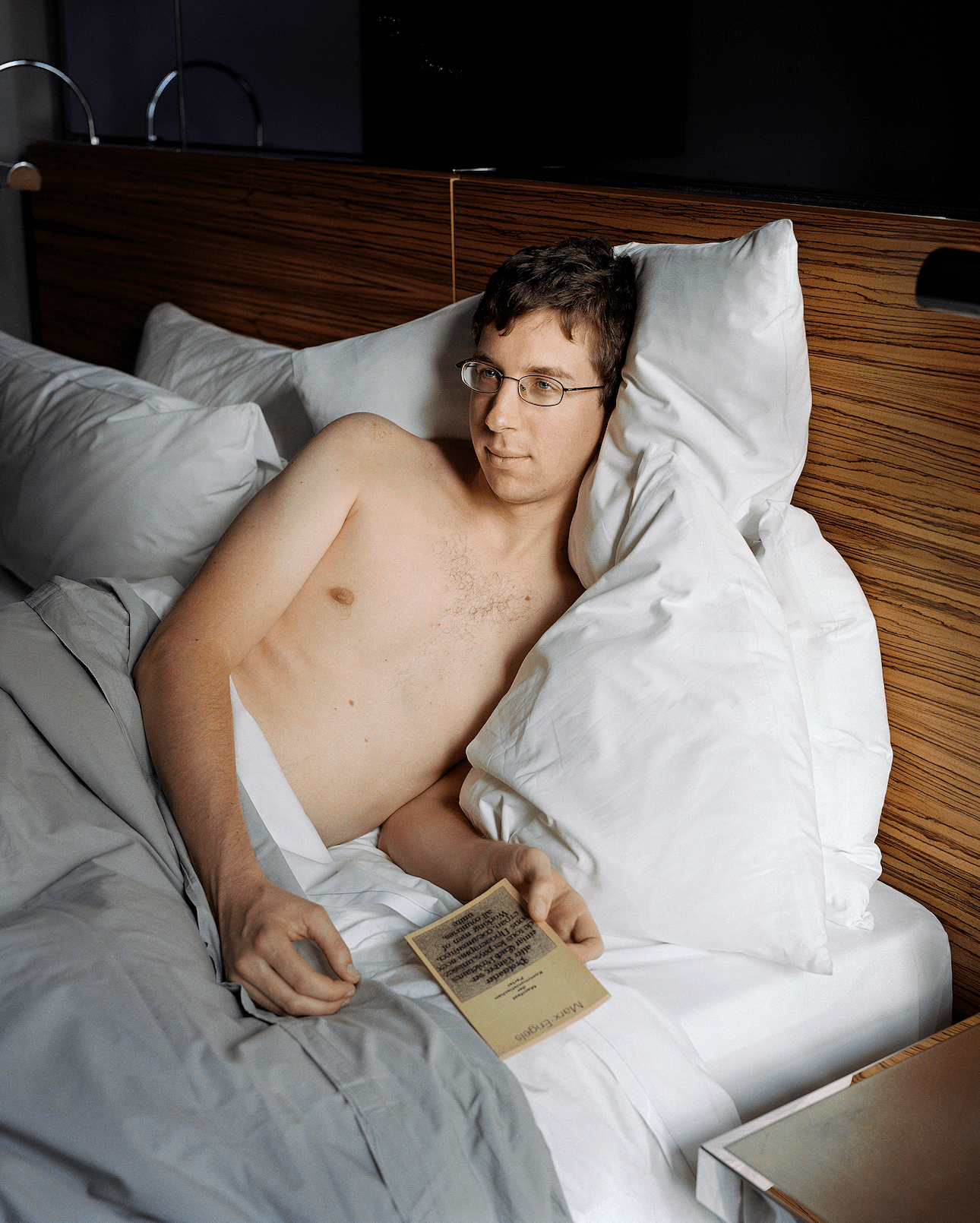
Chris Buck, Chicago IL, 2005
Chris Buck, Chicago, IL (2005) depicts a graduate student in politics and philosophy. He is photographed in an intimate space, lying bare-chested on a bed with a copy of the Communist Manifesto by Karl Marx and Friedrich Engels (photographer Chris Buck playfully observed that “Nothing’s sexier than that, right?”). That the photograph is posed on Chris Buck the photographer’s hotel room bed doesn't matter much as the viewer couldn't possibly know this. Although the modern fixtures that are visible in the composition, including wood grain back board, modern side table and light fixtures, and clean linen, make a stark contrast with what you normally associate with the proletarian struggle. The confident pose conveys the certainty that many grad students have, believing their inquiry into certain rarified ideas are elevated over those the common person generally grapples with. Photographer Chris Buck observes how the photograph “Reminded me of the luxury of being in bed when you’re a student; being in bed for 12 hours reading.”
Seemingly acknowledging the enigmatic quality of photographing un-famous people, Buck started asking his subjects to write something for him that might accompany their portrait. Many such anecdotal confessionary replies accompany the exhibit. In his, Chicago Chris Buck captured, in part, the contradictory nature of his composition: “what would my face tell its readers? Would they consider me a member of what Marx referred to as the ‘small section of the ruling class’ that ‘cuts itself adrift, and joins that revolutionary class, the class that holds the future in its hands’? Or would they conclude that by choosing to be an academic instead of an activist I am devoting my life to interpreting the world when the point is, as Marx insists, to change it?”
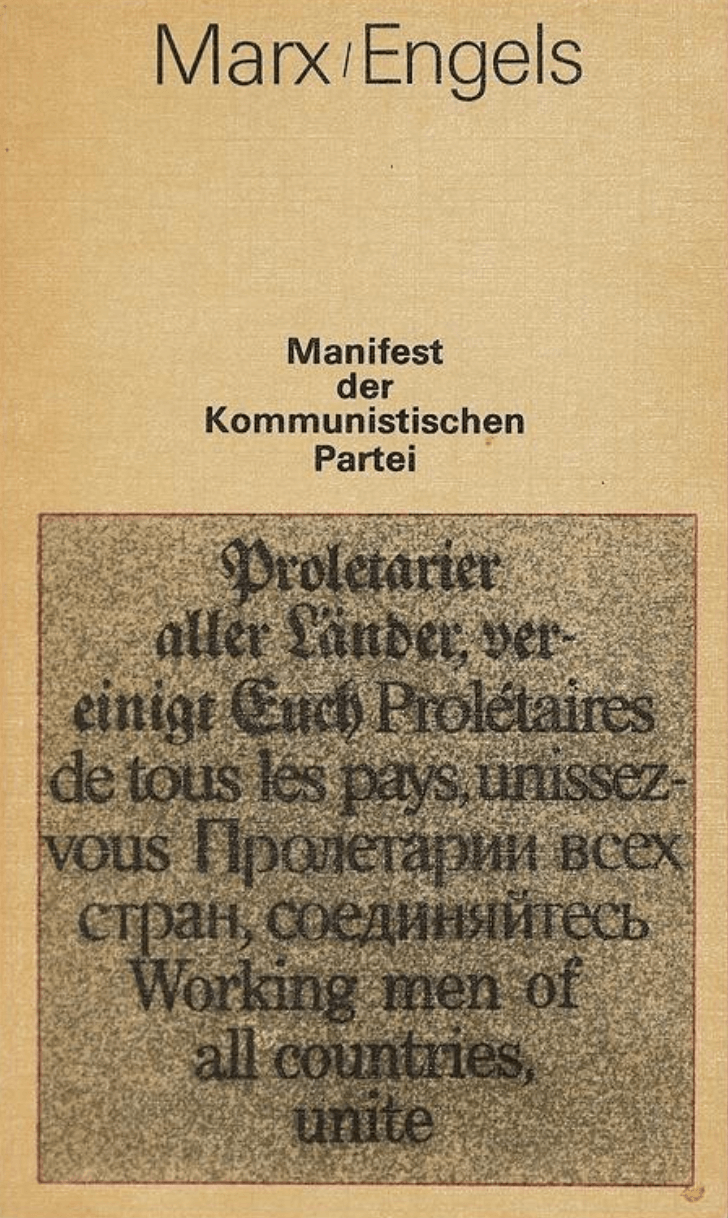
German language edition of Karl Marx / Friedrich Engels - Manifest der Kommunistischen Partei, published by Pretorian Books.
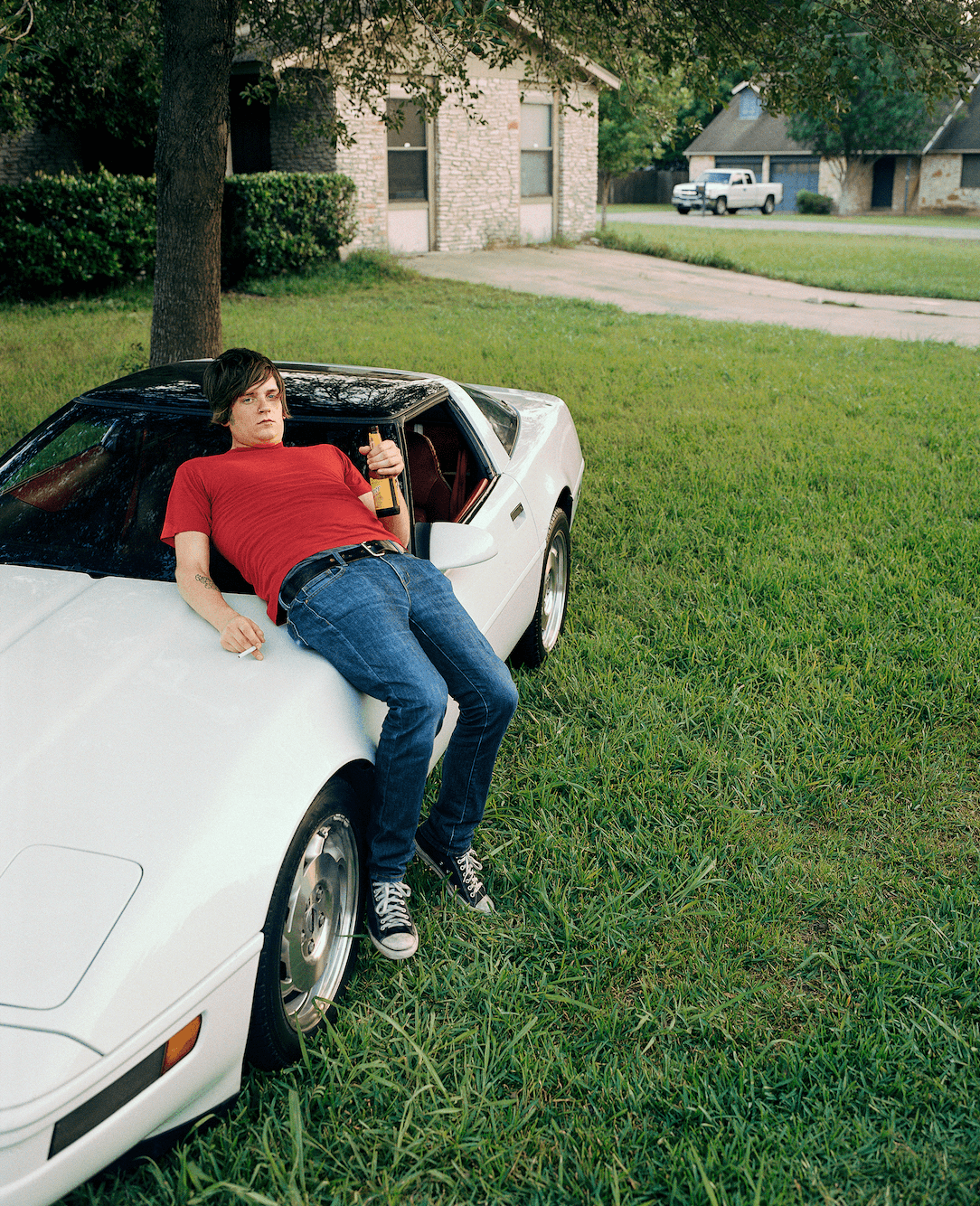
Chris Buck, Waco TX, 2007
Something about suburbia and the knowing rejection of everything it represents is evident in Chris Buck, Waco, TX (2007) which captures an undergraduate history student not being very studious. Leaning back onto a sports car parked on a luscious green lawn with cigarette in hand, bottle of beer in the other, one can see the structures of rather ordinary homes; not quite the affluence and excitement that the white sports car represents. This Chris Buck is letting you know he doesn't care what anyone else might think of him or anything else for that matter. Quite fittingly, the car doesn't belong to him either.
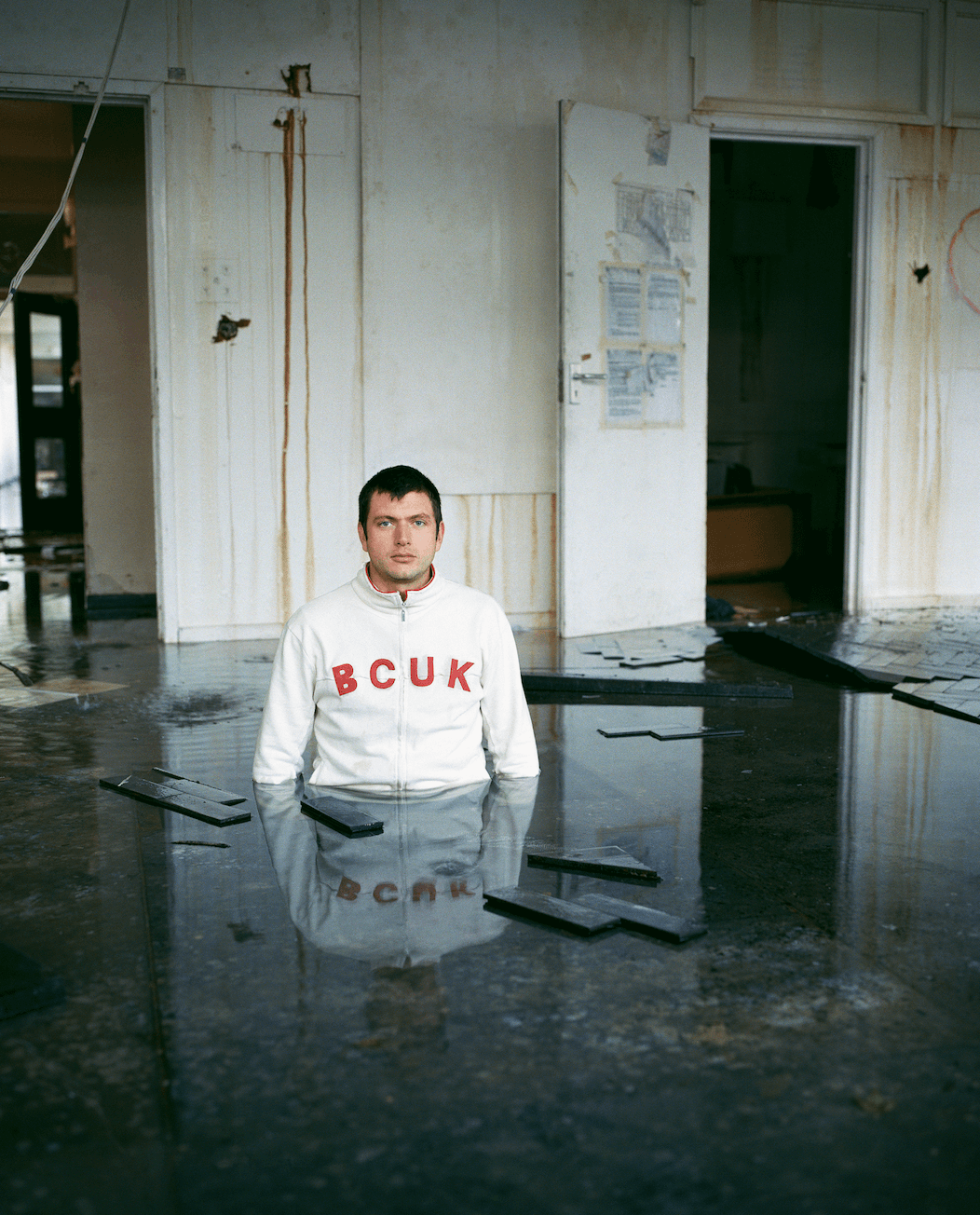
Chris Buck, Warwick UK, 2005
Chris Buck, Warwick, UK (2005) depicts a market manager in a rural small town in England, who offers us a matter-of-fact visage, as he stands waist deep in water in what looks like a derelict building. In fact, it’s an abandoned middle school that vandals have broken into and run the plumbing on the upper floors which has flooded the entire building. This Chris Buck stands on a ladder going down to the lower level, hence why the ceiling looks so high. The sewn lettering which is visible on his sweatshirt, originally spelled FCUK, the monogram used by French Connection, a UK based global clothing retailer founded in the 1970s. A clothing stylist friend has altered it to read BCUK, quite nearly BUCK. Although the subject looks quite casual and at ease, the photograph was taken in November, during the onset of winter. Photographer Chris Buck proudly notes that his subject was shivering as if to confirm the best photos happen when he didn't protect his subjects.
In many respects this photograph underscores what photographer Buck is trying to capture; an essential moment that’s provocative or mysterious. Something interesting. Yet this is only possible because the subject seizes the moment with his non-chalance and seems to understand he’s being recorded and will be judged for this split second.
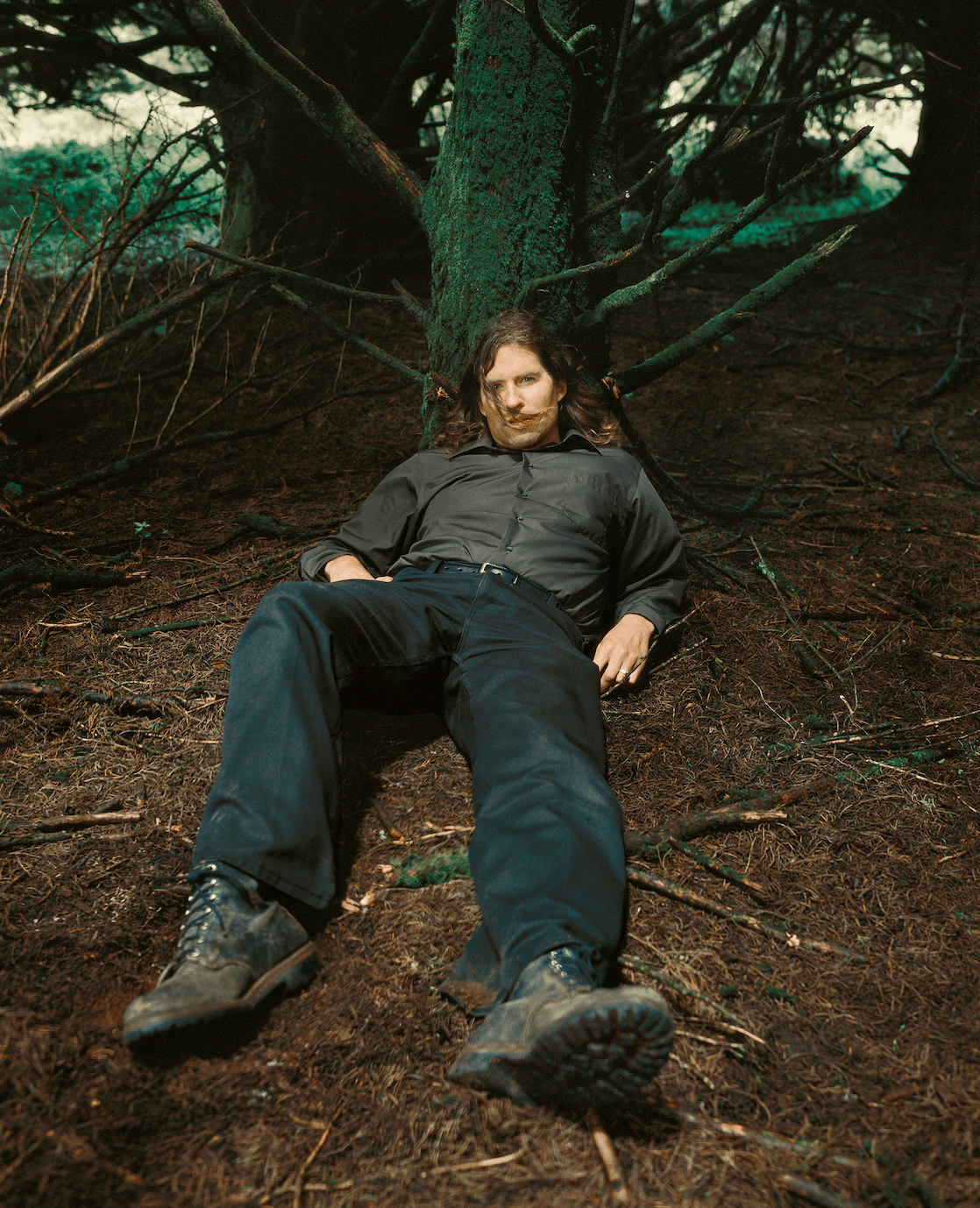
Chris Buck, San Francisco CA, 2006
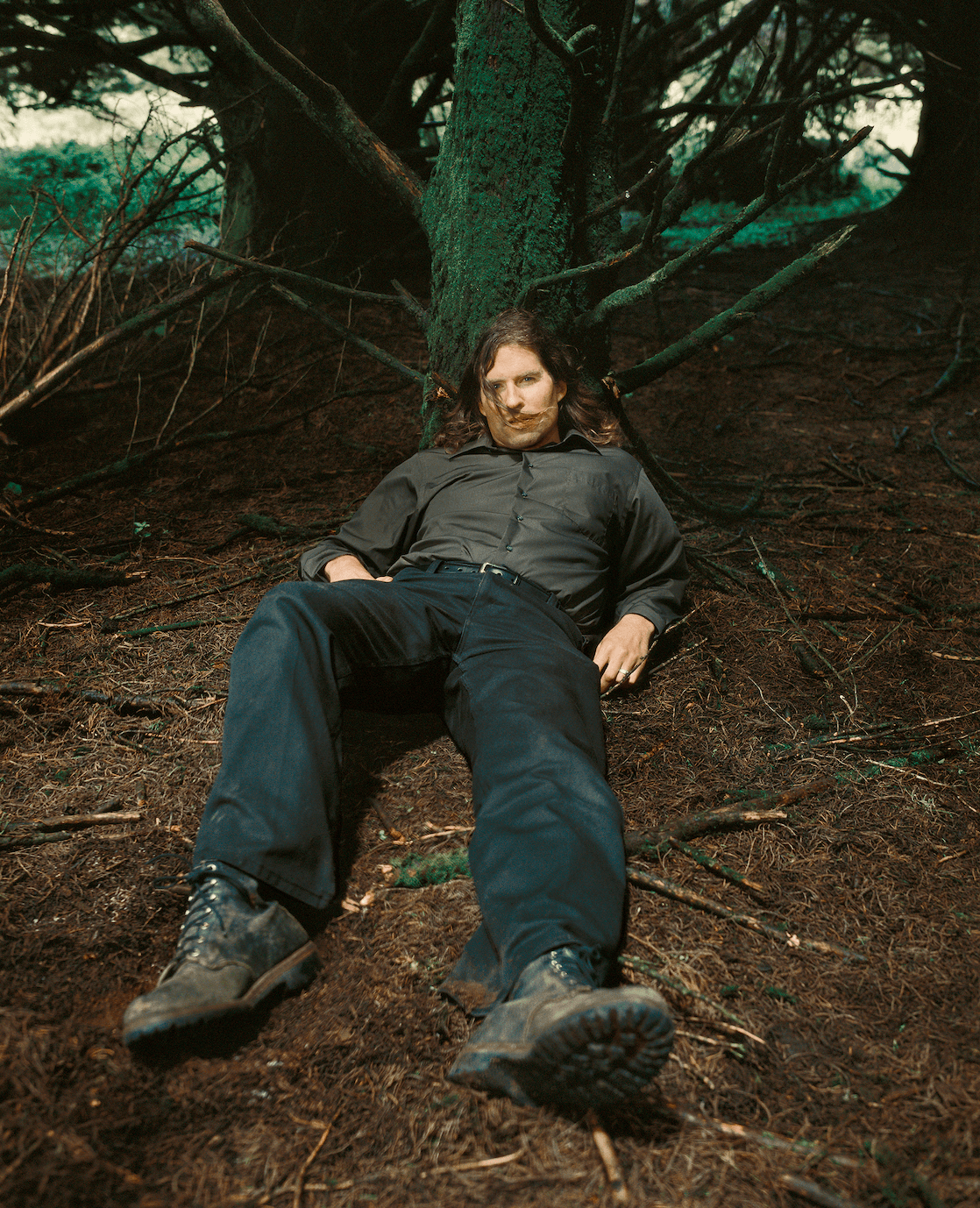
The best photograph of all Chris Buck, San Francisco, CA (2006) captures the arborist in repose. At the time, this Chris Buck, worked as an inspector for San Francisco’s Bureau of Urban Forestry. He is presented in a languid pose, almost lethargic. It’s as if we’ve stumbled upon a vampire at rest amidst the dark overgrown shade of trees. The hair across the face, a direct gaze, and heavy work boots in the foreground all keep the viewer wondering what they’re looking at. The peering back at the viewer suggests knowledge and confidence, yet there is something out of place, as if we’ve interrupted something. A male nymph or dryad-like quality, among the trees symbolizing one with nature, and a certain atmospheric narrative is suggested.
The originality of the project isn’t what makes it special. It’s the range of possibilities each Chris Buck presents us with. Although they may have spent their adult lives competing for social media handles, they might not have otherwise ever encountered one another. But their collision here gives us an excuse to see Chris Buck the photographer explore how to make the mundane, or I should say non-famous “Chris Bucks”, into interesting people to look at. He accomplishes this with seeming ease, allowing his subjects to bask in the success. Somehow I'm certain it is all easier said than done.
The phrase, “What’s in a name?” aptly should be referenced here. Originating from William Shakespeare’s “The Tragedy of Romeo and Juliet” (1597), where the point is made that the essence of something doesn’t truly change because of the name we give it. Juliet argues that a name is irrelevant to the nature of a person or thing. "What's in a name? That which we call a rose by any other name would smell as sweet." For Romeo this is significant because his last name, Montague, is associated with a family feud and does in fact seem to change his prospects with Juliet, and thus perhaps his very life trajectory.
If Chris Buck the arborist were named Montague, alas, I’m sure he would be just as interesting and compelling. But he wouldn’t have made it into this delightful and captivating exhibition.
The exhibition is part of the 3rd St Creative Artery led by Sarah Stangle (Chris Buck, the arborists' wife). Stangle has thoughtfully assembled ephemera from the project including various photo outtakes and copies of photographer Chris Buck’s personal notes, calendar book, and geographic maps about his subjects.
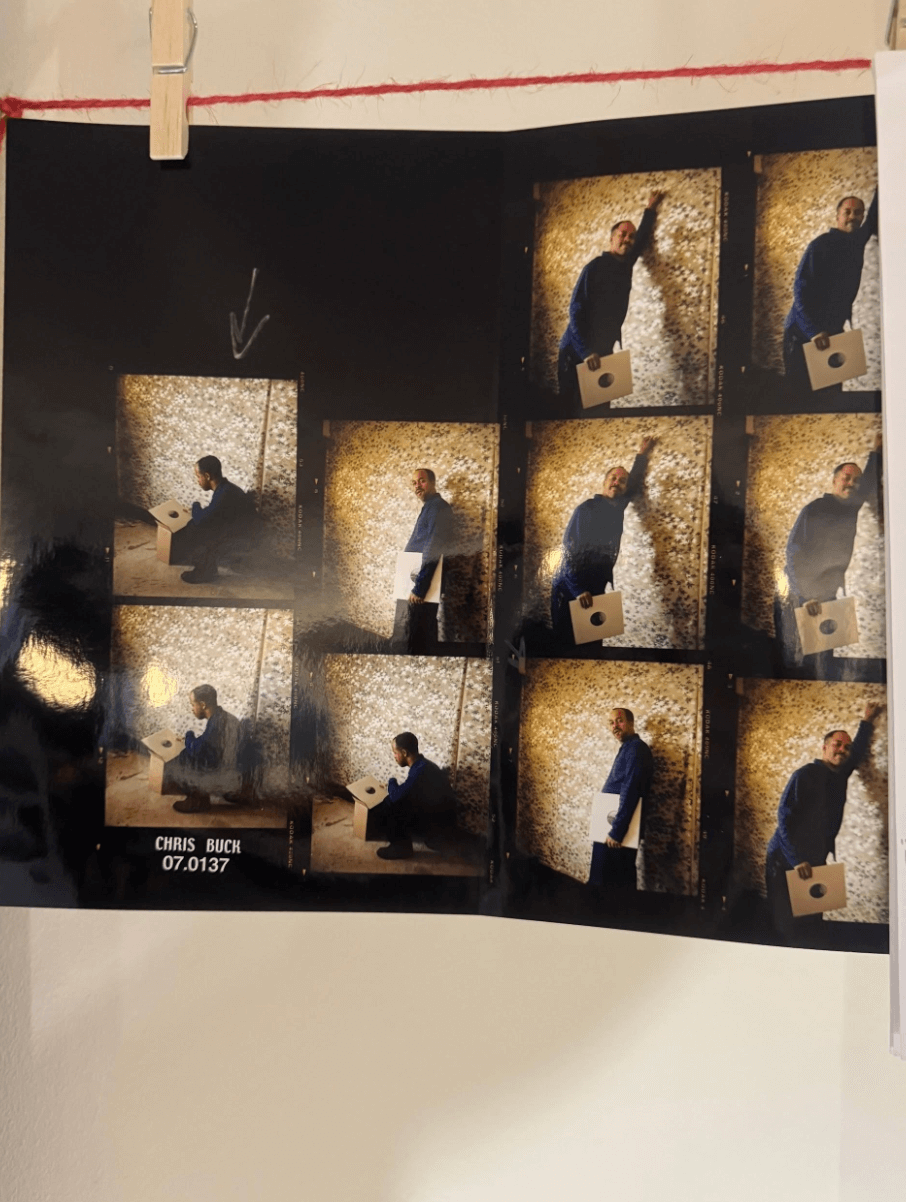
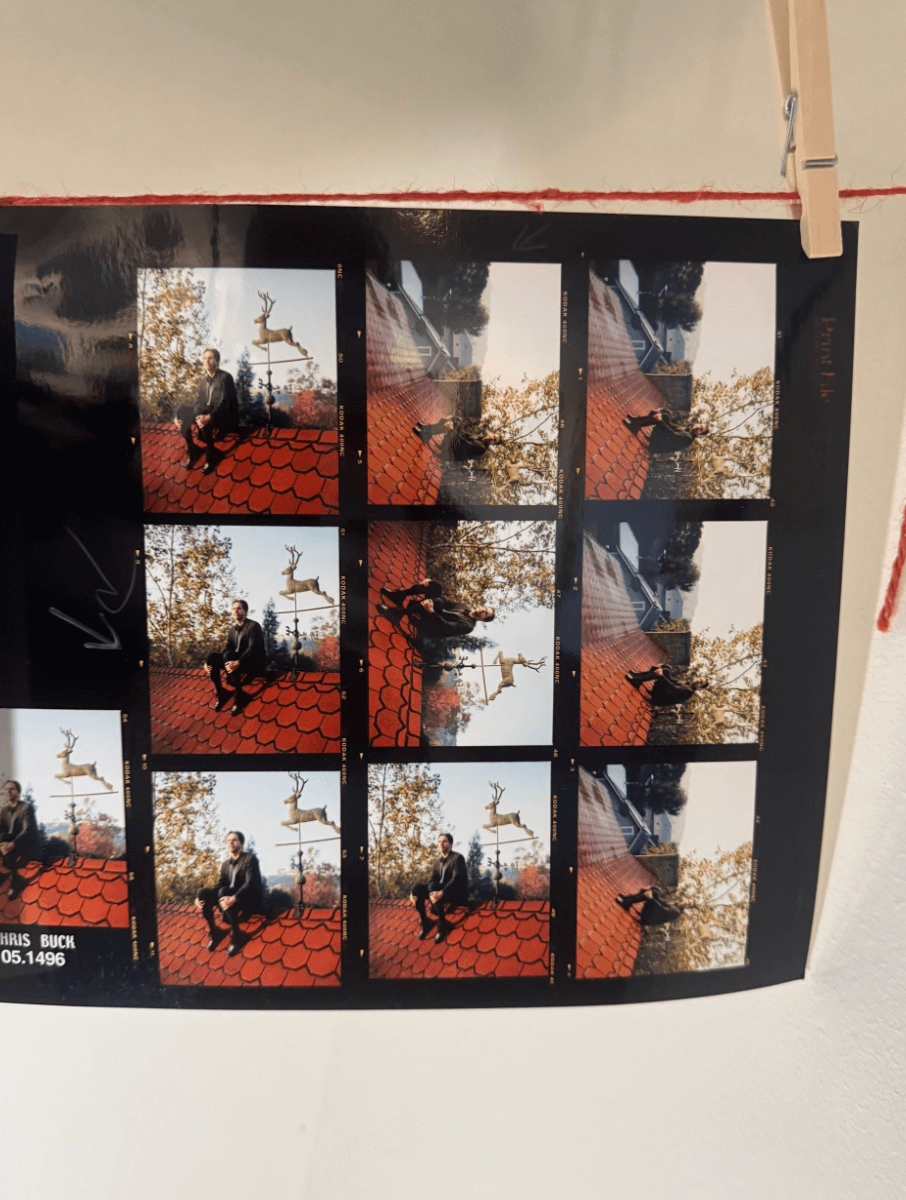
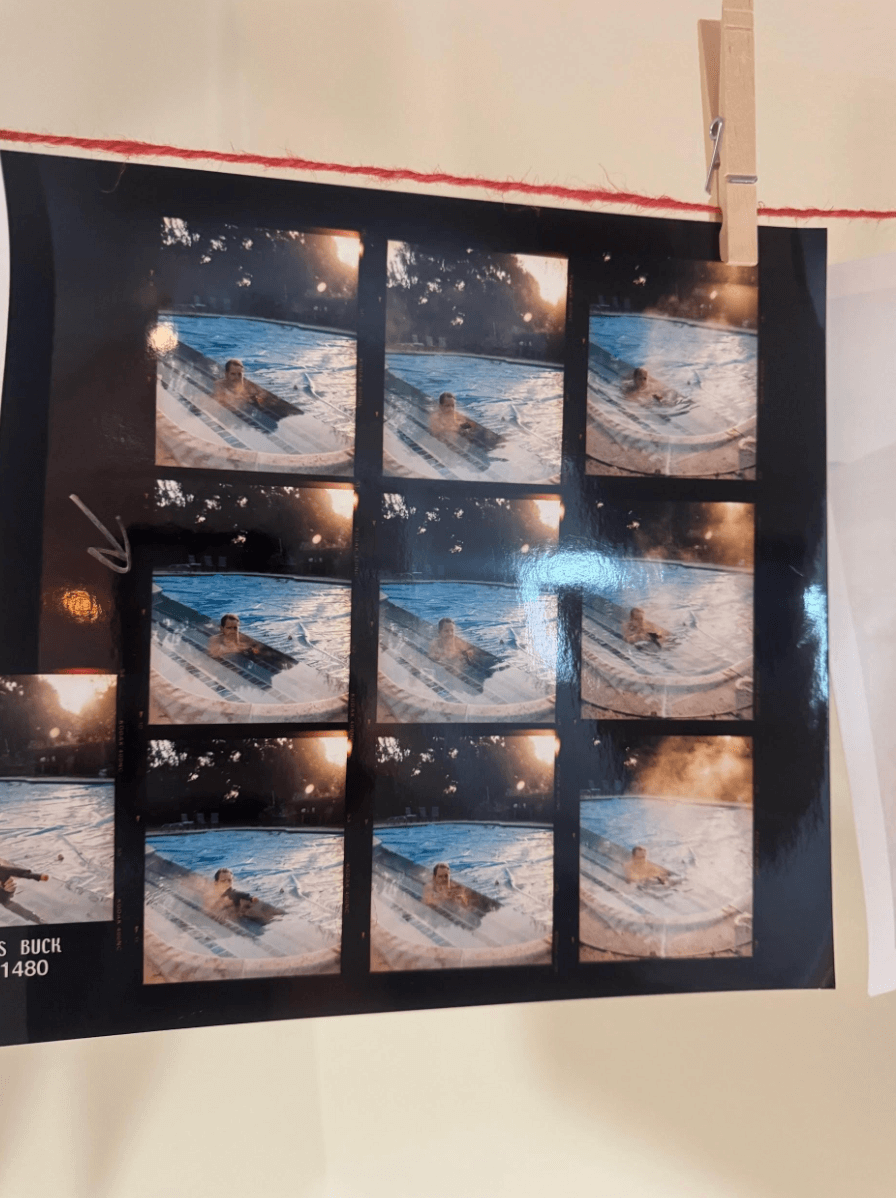
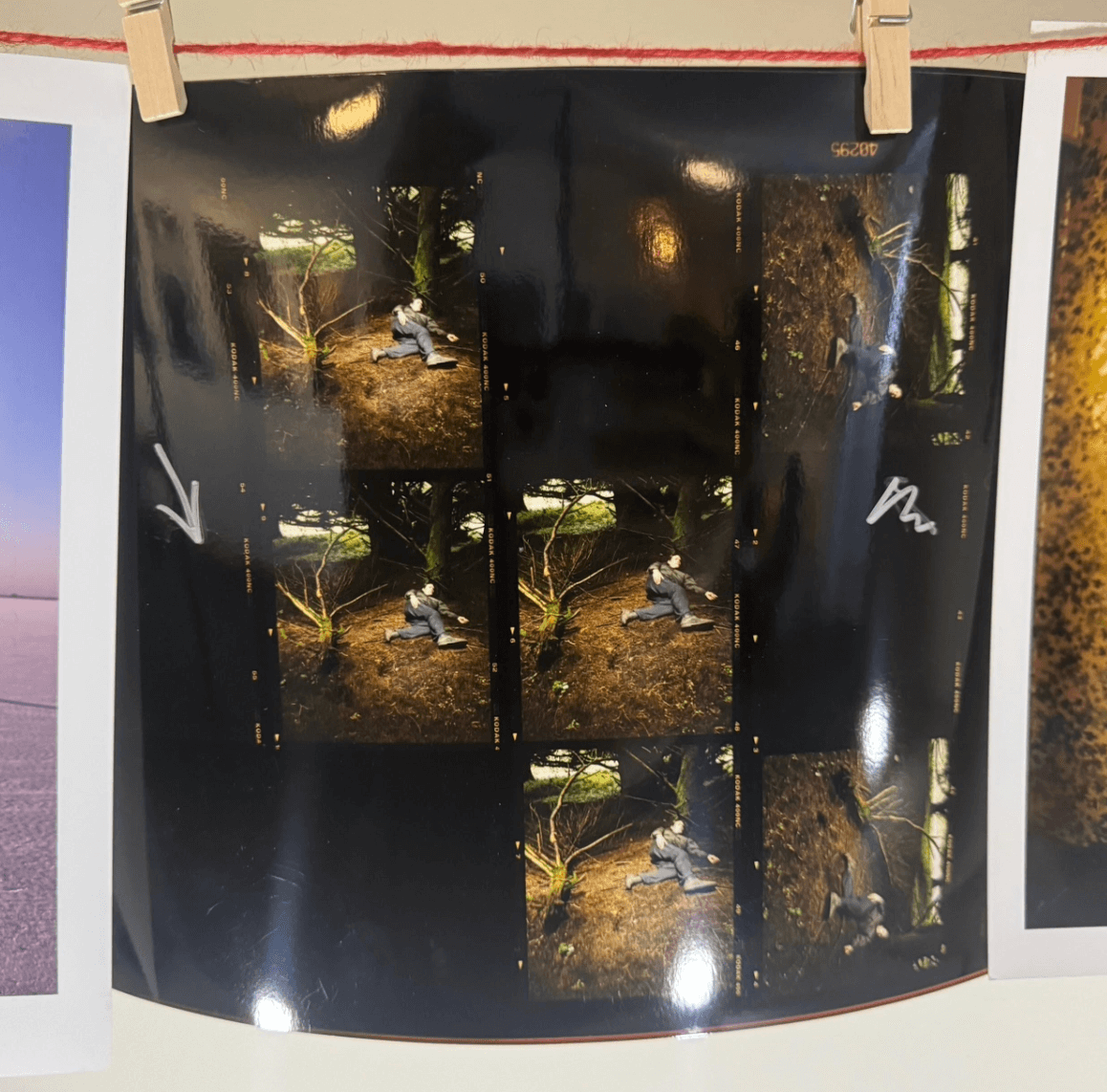
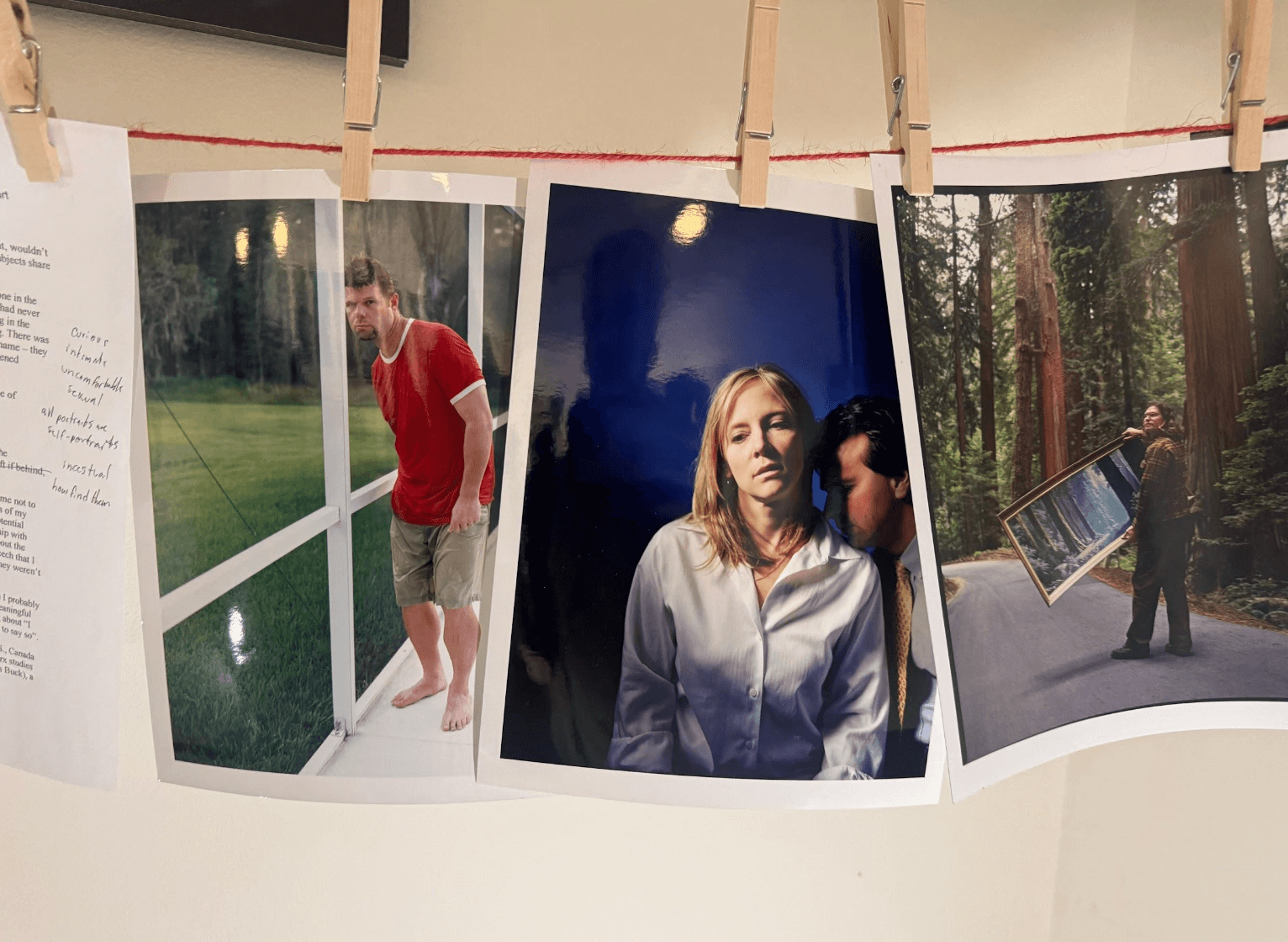
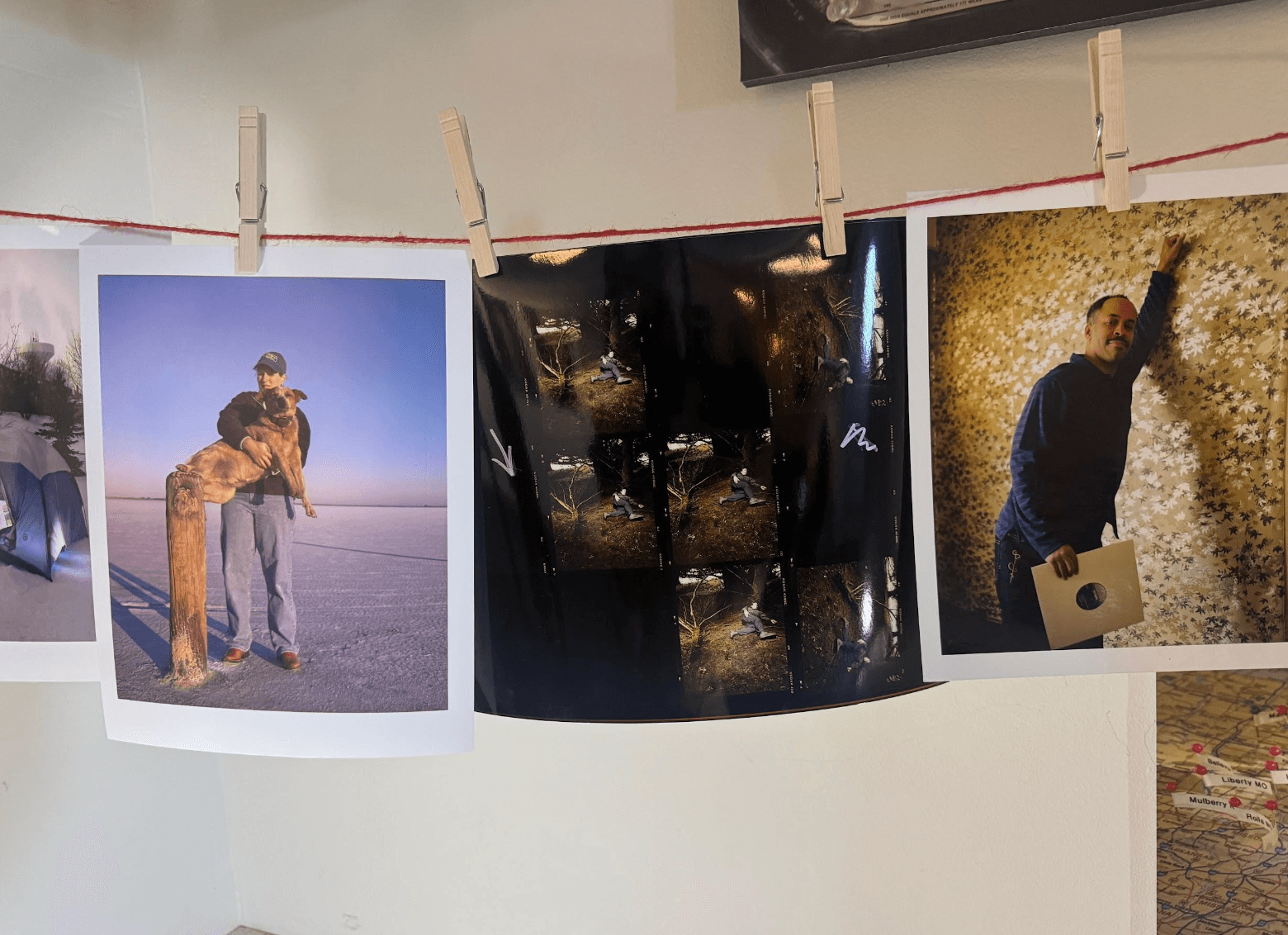
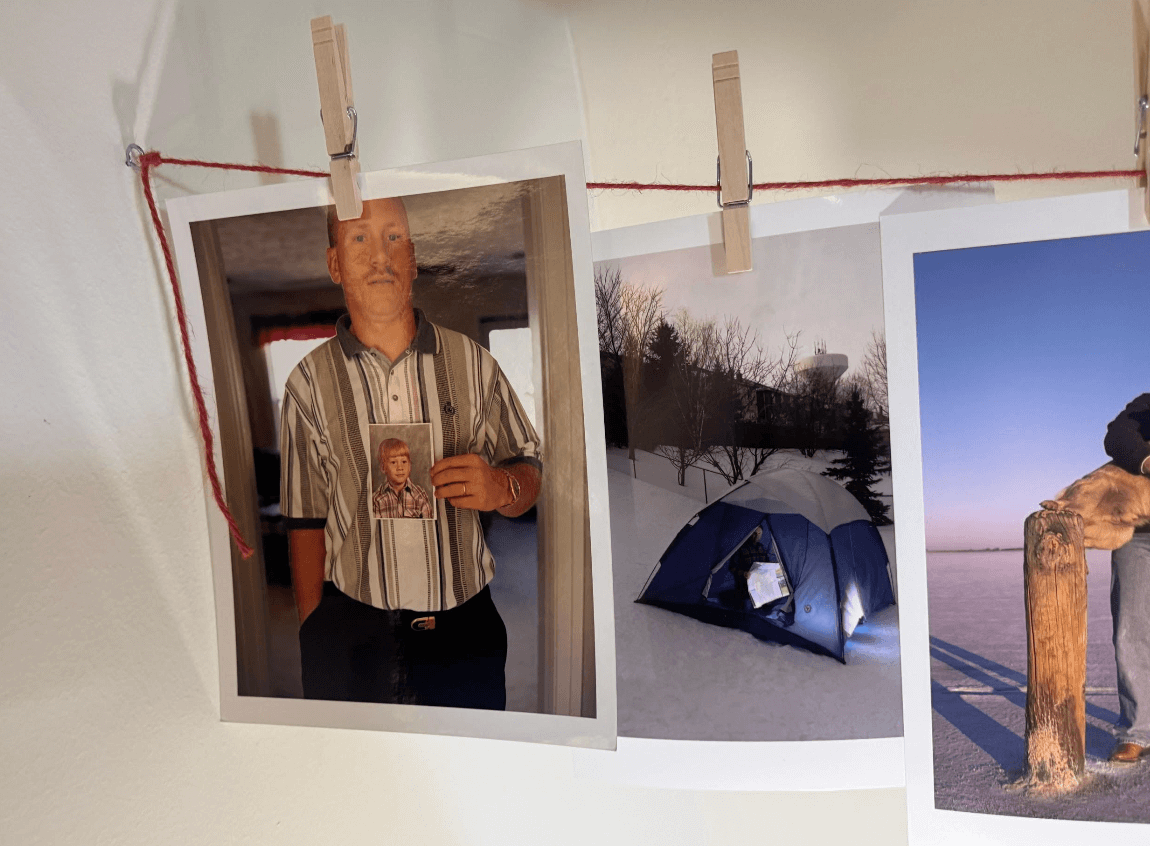
Various contact sheets from the photographic sessions:
This is the last weekend to see the exhibition at Cafe Alma, a health conscious restaurant/cafe that sources much of their product from the Bayview neighborhood. Cafe Alma maintains an active arts events calendar including offering classes in ceramics and screen printing, as well as hosting rotating exhibitions by local artists. The cafe is named for the flat-bottomed scow schooner that was built at the site in 1891.
