

Welcome to the Newly Opened David Geffen Galleries at the Los Angeles County Museum of Art
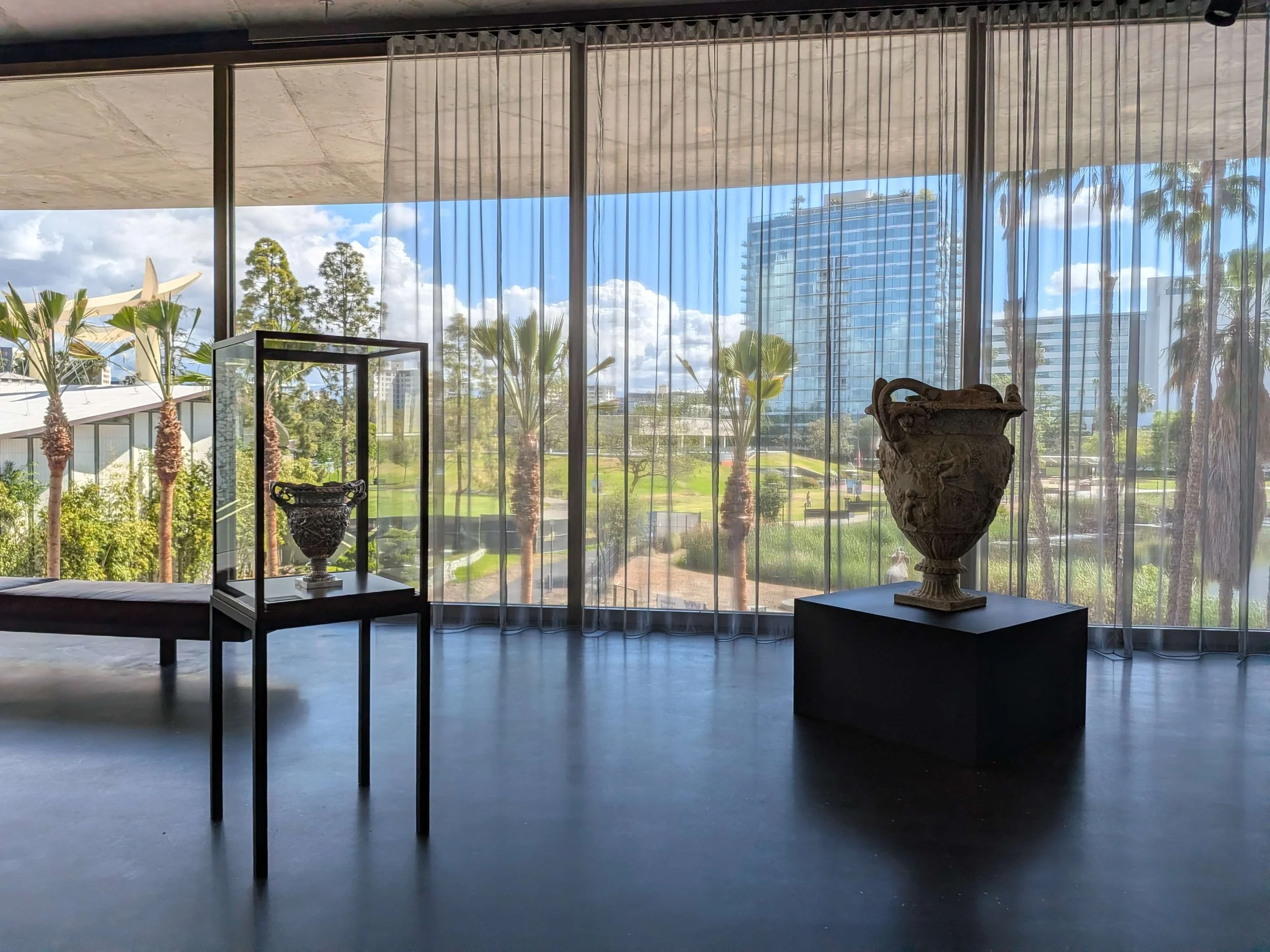
Installation view of the inaugural presentation in the David Geffen Galleries, April
2026, photo © Museum Associates/LACMA
By Liz Goldner
The recently opened David Geffen Galleries at LACMA offers a delightful new paradigm in museum construction and art presentation. Elevated 30 feet above the street, with 110,000 square feet of space, the galleries’ design and exhibitions within it defy the traditional museum model of square white galleries with primarily chronological displays. The museum’s art exhibits, organized around four major bodies of water—the Atlantic, Pacific, and Indian oceans and the Mediterranean Sea—are enchanting with their mix of several time periods within individual displays.
The extensive galleries, which took 20 years to construct, from conception to completion, for $724 million, are built largely of concrete, which provides solidity and warmth as a backdrop to the art. The venue contains floor-to-ceiling windows throughout, casting extensive, soothing light into the space, and sometimes glare onto the art, along with fabulous outdoor views. Stretching 900 feet from the original LACMA campus across Wilshire Boulevard, the Geffen’s dramatic shape, which resembles an amoeba, not only challenges traditional museum design. The wildly creative layout, with its expansive windows, welcomes the city of Los Angeles below and the Hollywood Hills beyond.
This global museum, with 2,000 works on display, doesn’t compete with the more comprehensive museums in this country, including the Met and the Art Institute of Chicago. While cherishing its objects from many different countries, cultures and time periods, its curators have arranged the works from a fluid, non-hierarchical perspective, reflecting the nature of Los Angeles today, with its rich cultural heritage and diverse population. “We live in modern Los Angeles, where migration and interconnectedness are so essential to our daily life,” Museum Director Michael Govan remarked at the museum press opening on April 15. LACMA museum directors and curators would like the viewers to “wander” freely within the venue’s open-ended and individual spaces, to not feel limited in their perceptions of art movements.
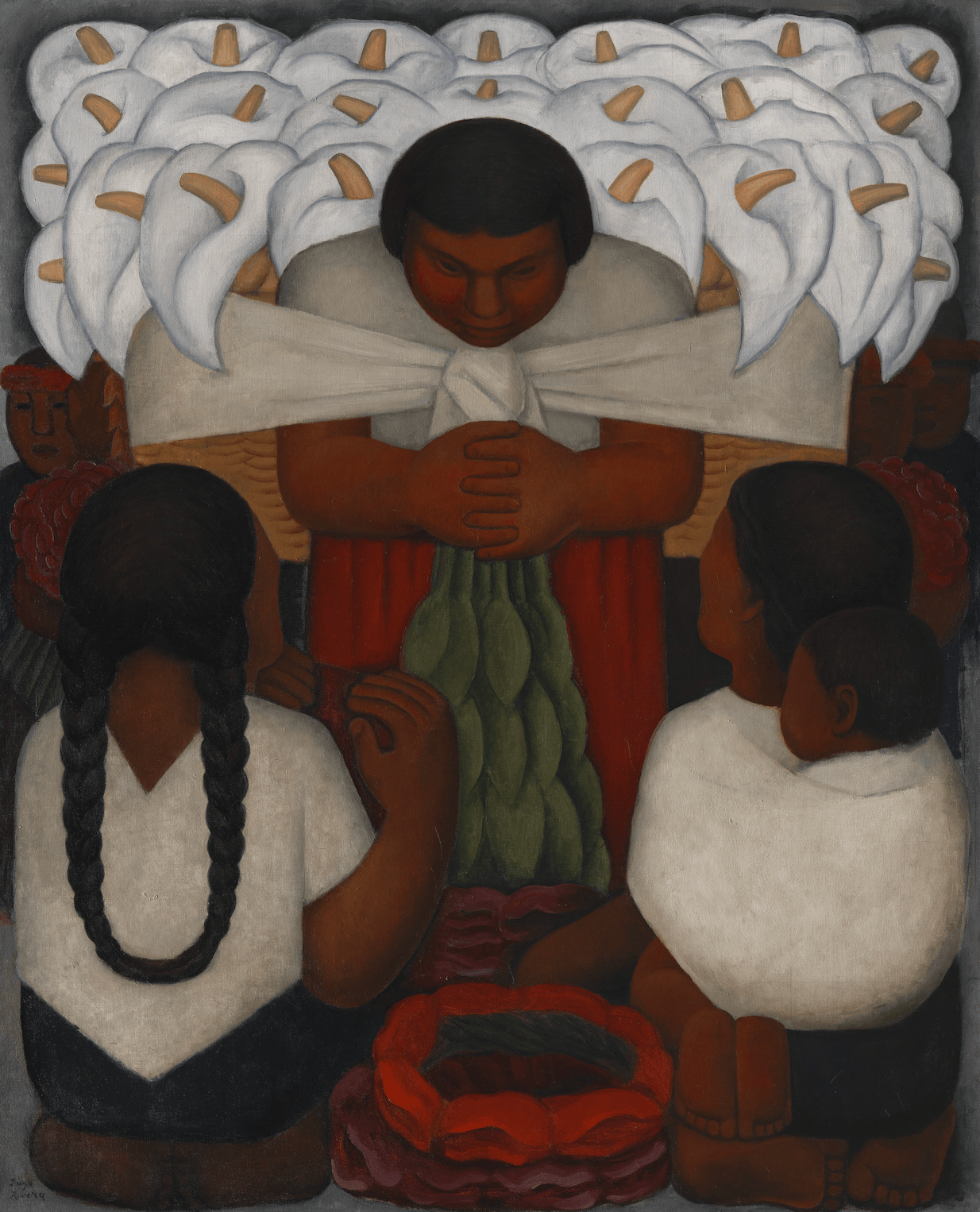
Diego Rivera, "Flower Day," 1925, photo © Museum Associates/LACMA
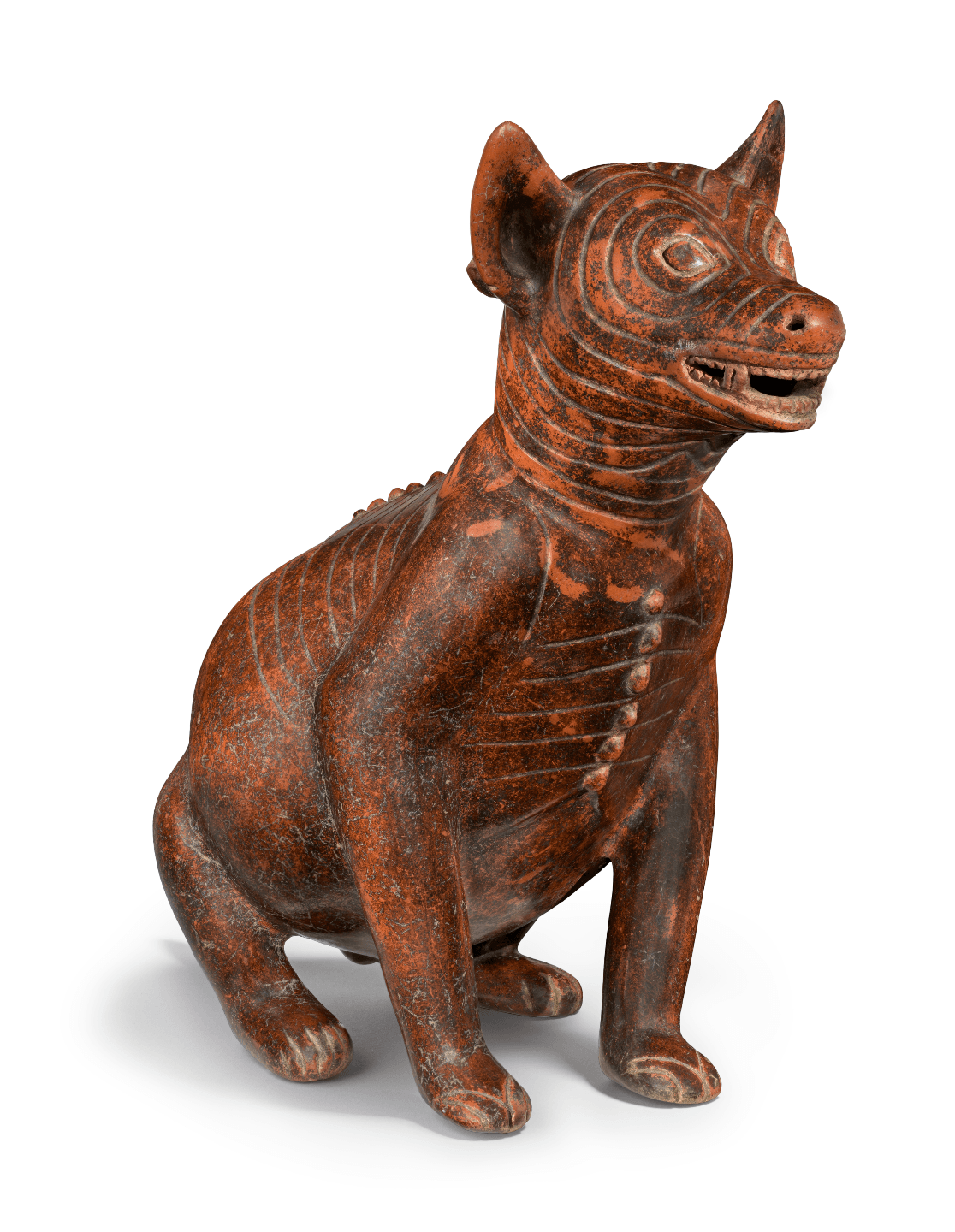
"Dog," Mexico, Colima, 200 BCE-500 CE, photo © Museum Associates/LACMA
The six distinct art pieces described below are displayed throughout the museum, with one outside of it. Diego Rivera’s classic “Flower Day (Día de flores),” 1925, featuring magnificent calla lilies, is inspired by indigenous culture and by his study of European art. The painting, with its modern art influences, welcomes visitors to an exhibition of Spanish American art, a display reflecting the multicultural city with its strong Latino heritage. Nearby, the elegant ceramic sculpture, “Dog,” 200 BC–500 CE, from Colima, Mexico, illustrates the Xoloitzcuintle, a hairless dog that was reported to have accompanied the dead on their journey to the afterlife.
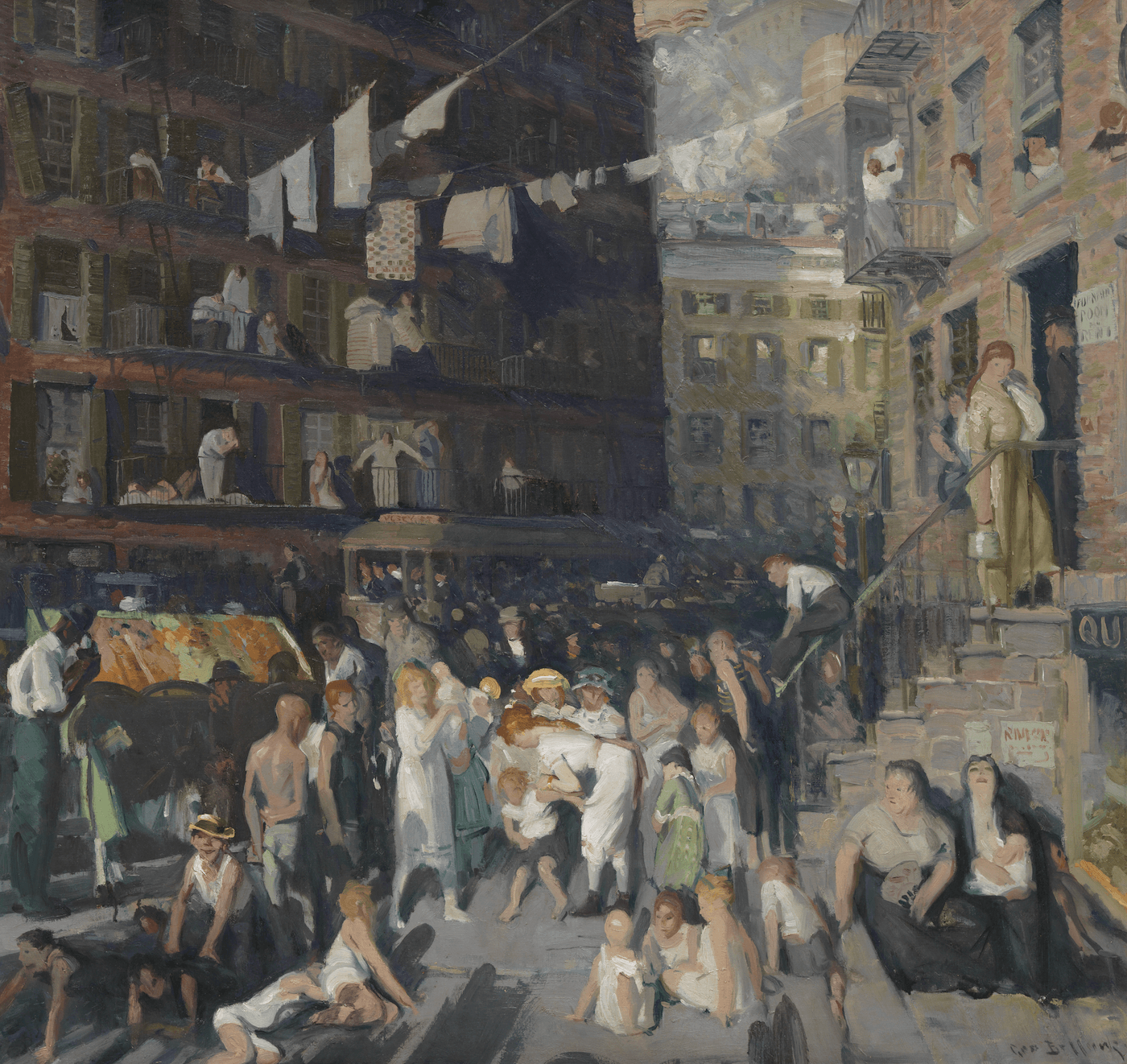
George Bellows, "Cliff Dwellers," 1913, photo @ Museum Associates/LACMA
George Bellows’ “Cliff Dwellers,” 1913, is part of the Ashcan School of painting. Depicting the hustle and bustle of lower-class urban life with young women conversing, children playing, laundry hanging on lines, and buildings crowded together, the painting expresses the joy of togetherness, along with the gritty congestion of life in New York City’s Lower East Side more than 100 years ago.
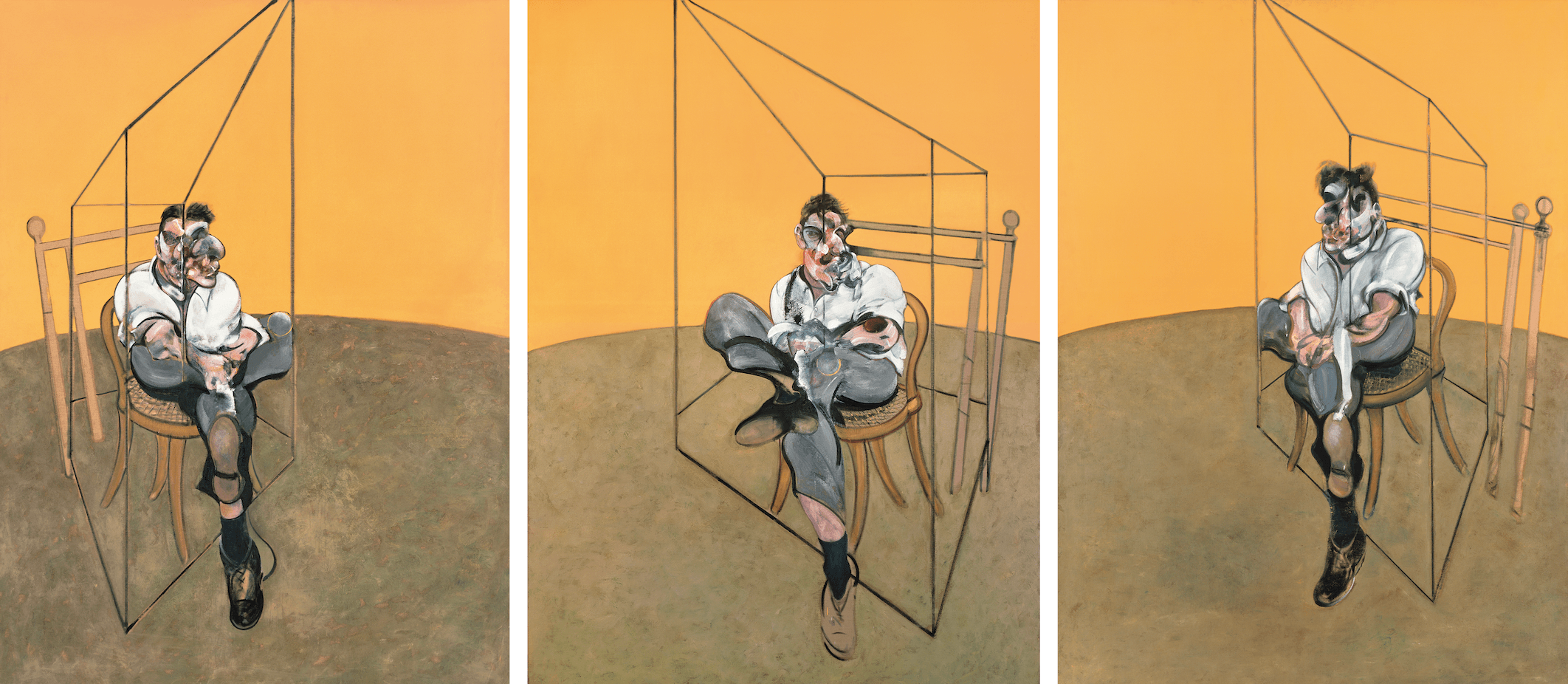
Francis Bacon, "Three Studies of Lucian Freud," 1969, photo by Prudence Cuming Associates Ltd.
A newly-acquired series is Francis Bacon’s triptych, “Three Studies of Lucian Freud,” 1969. The Irish-born artist, known for his raw, unsettling imagery, was a good friend and artistic rival of Lucian Freud. He celebrated their relationship by creating three nearly life-size, semi-abstract depictions of his friend. The series, with its first LACMA showing now at the Geffen Galleries, is hung where the museum crosses Wilshire Boulevard, affording visitors a magnificent view of the city.
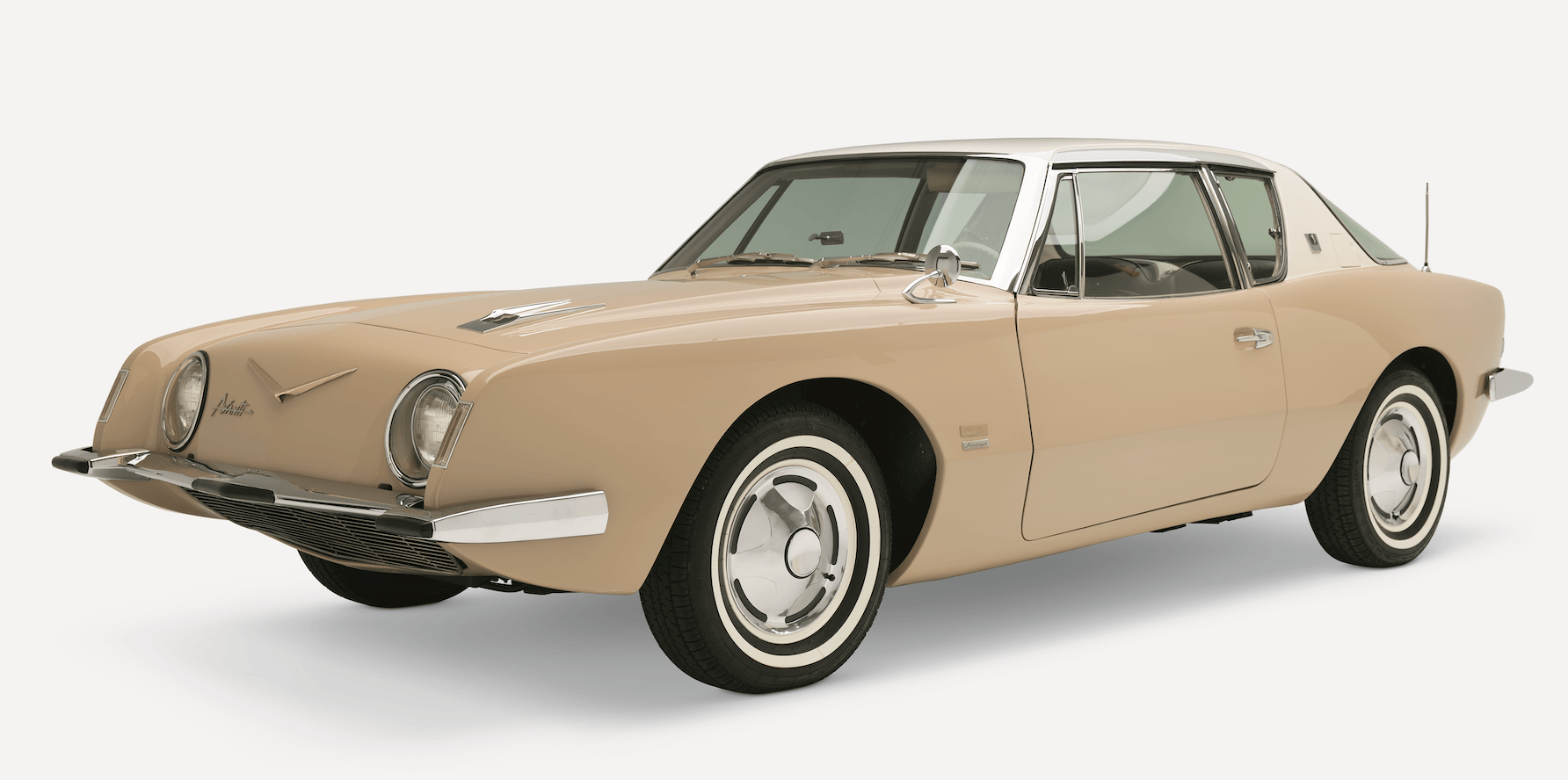
Raymond Lowey, "Avanti," 1961, photo © Museum Associates/LACMA by Yosi Pozeilov, LACMA Conservation Center
Raymond Loewy’s Studebaker “Avanti,” 1961, was created by one of the few industrial designers to be featured on the cover of “Time” magazine. The car on display was owned by Loewy who kept it at his Palm Springs home. After being acquired by LACMA, it was restored to its original splendor and shown there several times. It is prominently displayed in this Geffen Galleries’ exhibition about car culture affecting California art and design.
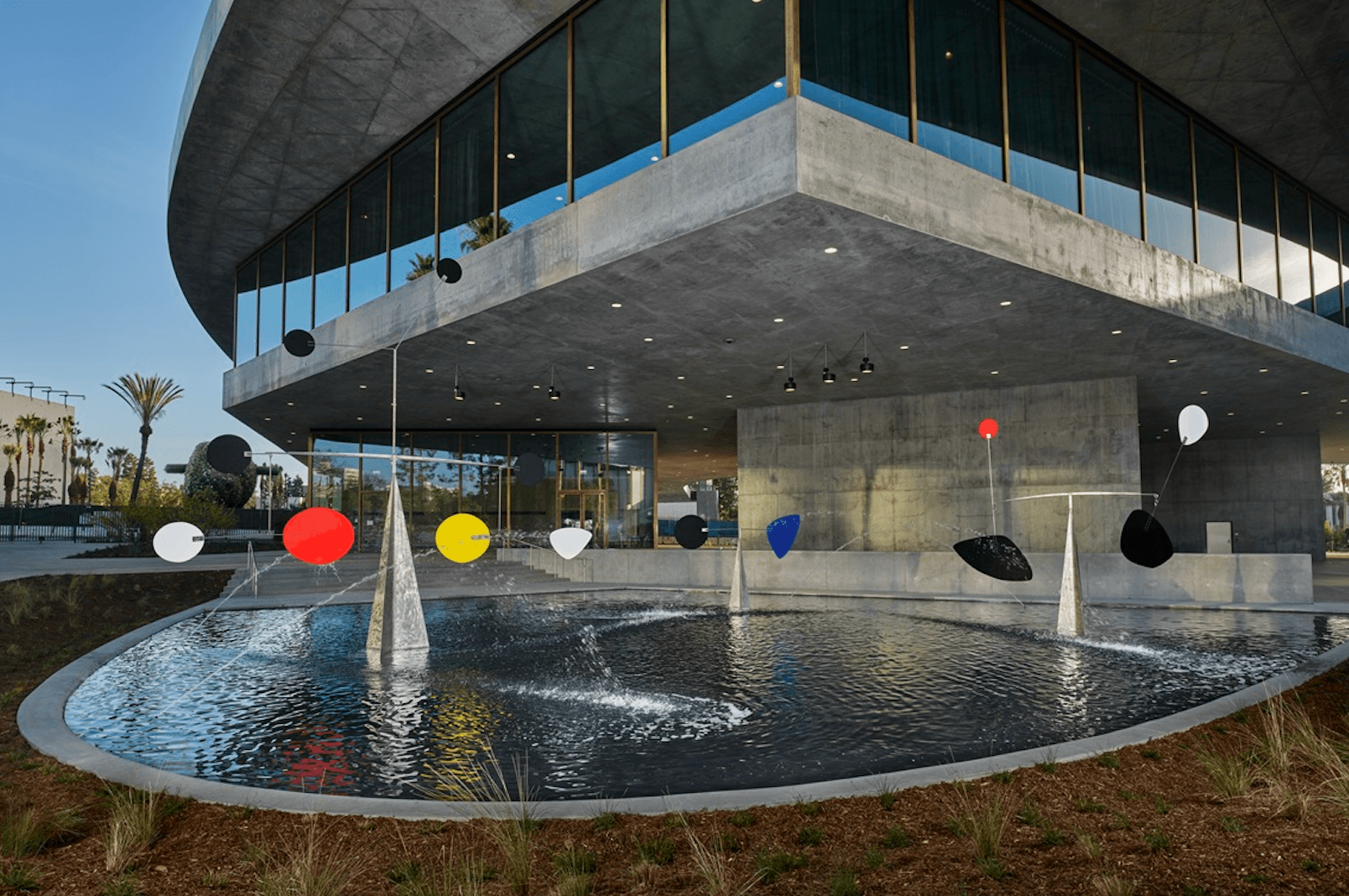
Alexander Calder, "Three Quintains (Hello Girls)," 1964, photo © Fredrik Nielsen Studio
Alexander Calder’s monumental “Three Quintains (Hello Girls),” 1964, outside of the museum, was originally commissioned for LACMA in 1965 when the venue opened in its current incarnation. (Before then, it was part of the Los Angeles Museum of History, Science and Art.) The art piece is now reinstalled on the Geffen’s northeast corner, alongside the museum’s Erewhon cafe. Four water jets propel the colorful, graceful sculpture.
These are just a few of the many artworks on display at the David Geffen Galleries at LACMA, which also include pieces by Vincent van Gogh, Henri Matisse, Dorothea Lange, Carlos Almaraz, June Wayne and Betye Saar. Wandering throughout the art spaces feels like a joyous art-filled adventure, propelled by curiosity and the love of art.
LACMA is the largest art museum in the western United States, with 155,000 objects, representing 6,000 years of artistic expression. The David Geffen Galleries will be open for member previews through May 3, and will be open to the public on May 4, 2026.
