

Walks: Sydney G Walton Square
The first public art work in San Francisco I ever came across with any awareness of it as such (aside from the Vaillancourt fountain at skater mecca EMB plaza on my first visit in the late 1980s) was Jim Dine’s “Big Heart on the Rock” (Bronze, 1984) tucked up along the pedestrian path of Pacific Ave between Davis and Front streets among red brick office buildings just down from Jackson Square and only a short stroll away in fact from EMB plaza. That’s the path I always approached it from, after walking along the bay to then turn west heading back into town, passing Dine’s “Heart” making my way up into North Beach invariably bound for City Lights, Vesuvius and Specs.
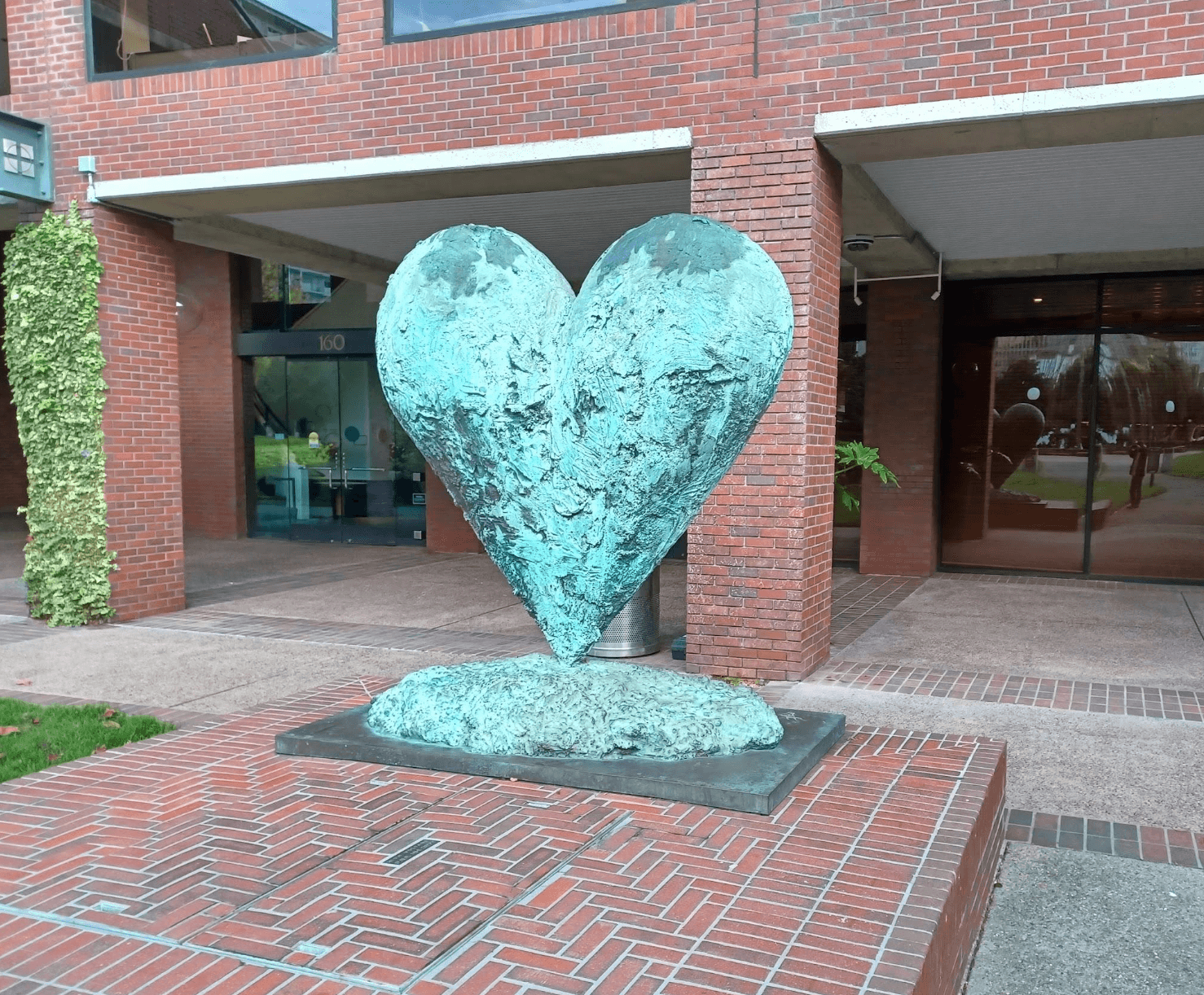
Dine’s done a whole series of hearts, another one that’s a favorite of mine is his painting “Blue Clamp” (1981) regularly on view in SFMOMA’s second floor galleries. There’s apparently no connection between Dine’s “Heart” and the annual Hearts in San Francisco collections which are publicly displayed in Union Square and around town before being auctioned off to benefit SF General Hospital. These claim to be inspired by Tony Bennet’s iconic “I left My Heart San Francisco” which in turn I suspect also has no connection to Dine’s work. As he takes the sentimental and drags it back to its place curbside from where it crawls forth into our lives.
Some might pass Dine’s “Heart” every day without stopping to consider its place in the city’s life. How in its raw unsettled mettled manner of resting atop “the rock” it offers passersby the chance to reflect on just being, hanging around…as poet Gregory Corso put it “Standing on a street corner doing nothing is POWER.” That’s what Dine’s getting at. Physical dynamics of bodily health taken for granted everyday. We breathe and move about because of the heart pumping along inside our chest. As all living things do. Stop awhile, have a rest and consider that.
Several years later I came to hear of Joan Brown’s “Pine Tree Obelisk” (1987) and upon looking up the address realized that the site of its location, Sydney G Walton Square at 21 Front St, was the very same park adjacent to the red brick where Dine’s “Heart” rests.
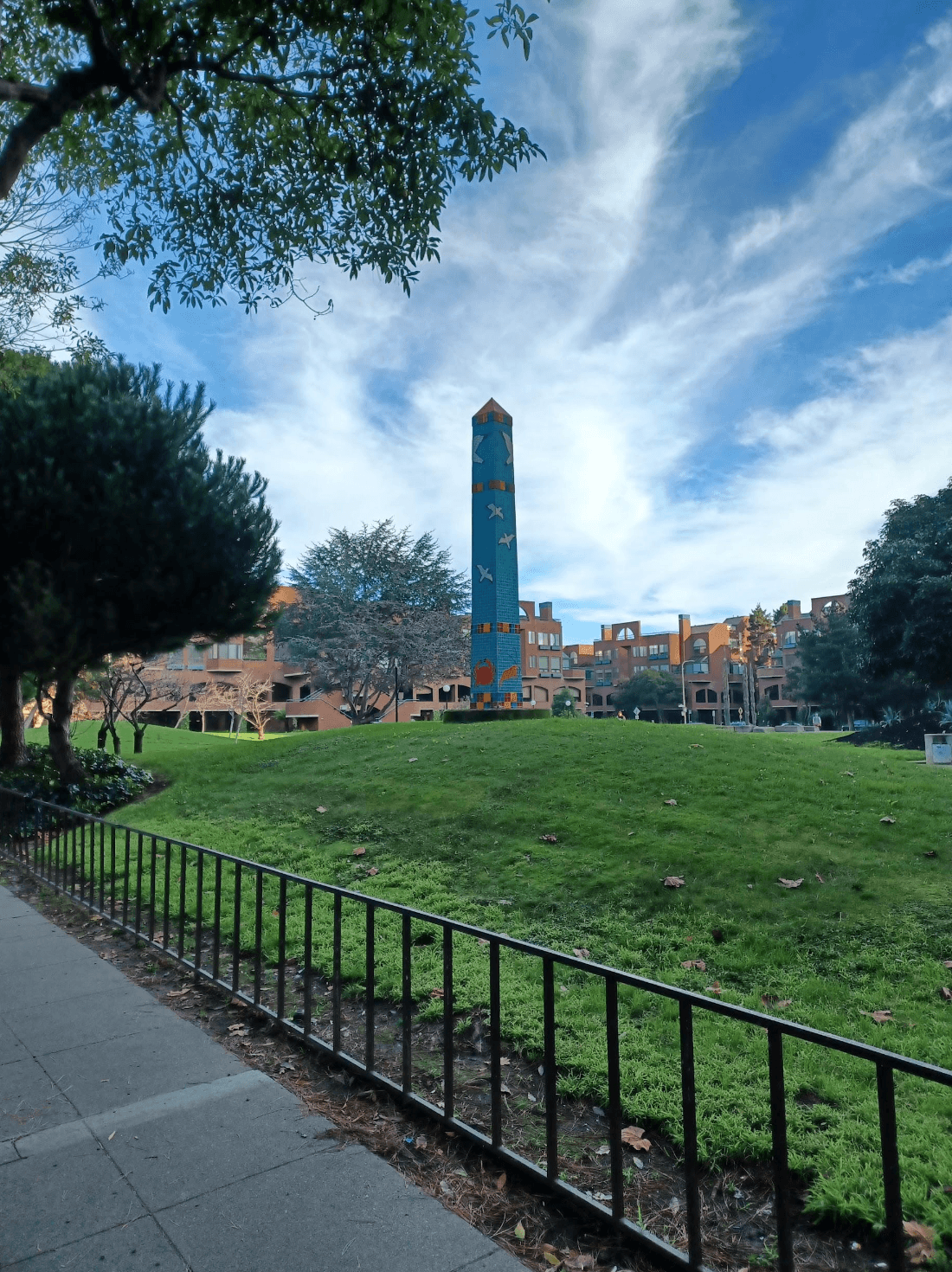
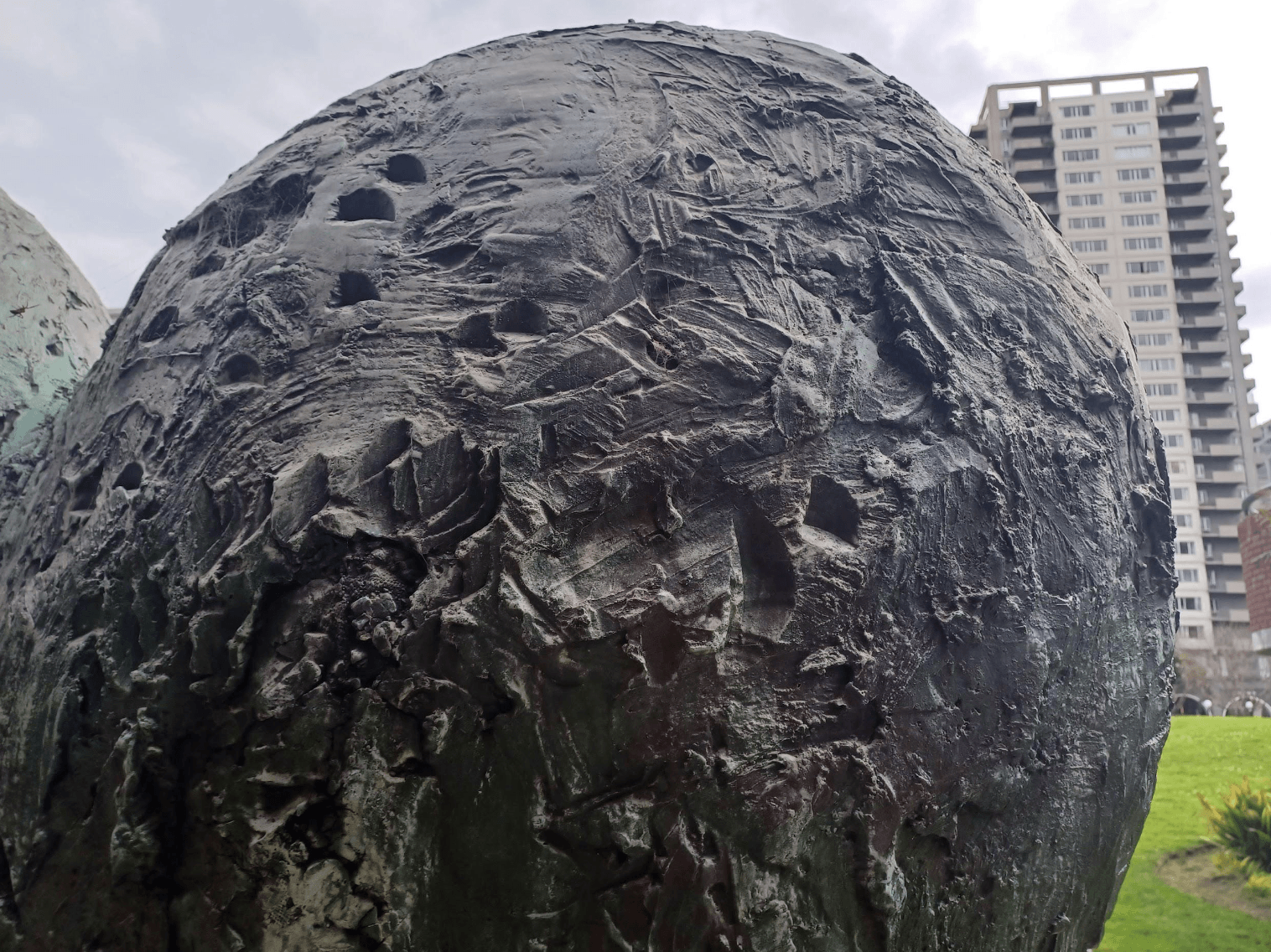
With its loud and brightly solid colored tiles Brown’s “Obelisk” provides quite the clean contrast to the gouged out edginess of Dine’s gnarled “Heart”.
A long time fan of Brown's earlier works, particularly her collaborations with her second husband sculptor Manual Neri (which in fact share a similar gnarled surface to Dine’s “Heart”) and her own early constructions such as Untitled (Bird), 1957-1960, I was rather disappointed when first checking out her “Obelisk”, yet this later work of Brown’s continues slowly to grow on me. There’s something totally Californian about this column challengingly rearing up against San Francisco’s downtown sky.
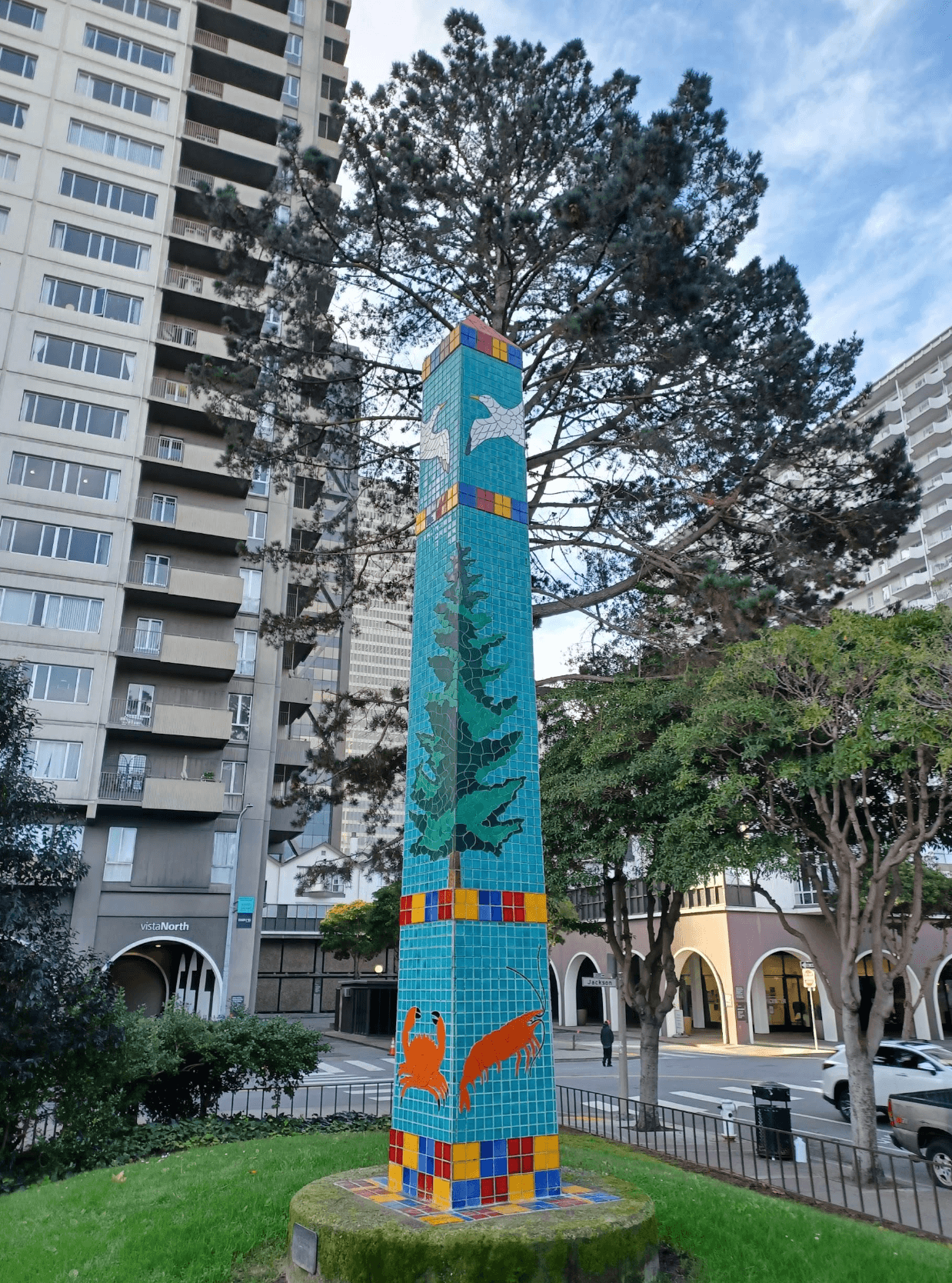
Brown enlists key emblems of the San Francisco Bay Area: the ever present seagull soaring atop the obelisk’s crown while the column’s shaft is embossed with the towering pine tree with bay water regulars the crab and the shrimp adorning the base. Totems of the locale which as a San Francisco native she was quite intimate with.
Complimenting the inclusivity of Dine’s “Heart” (i.e., everybody’s got one) Brown’s “Obelisk” offers an everyday specificity centered on San Francisco itself. Presenting familiar critters framed in a bright display of color.
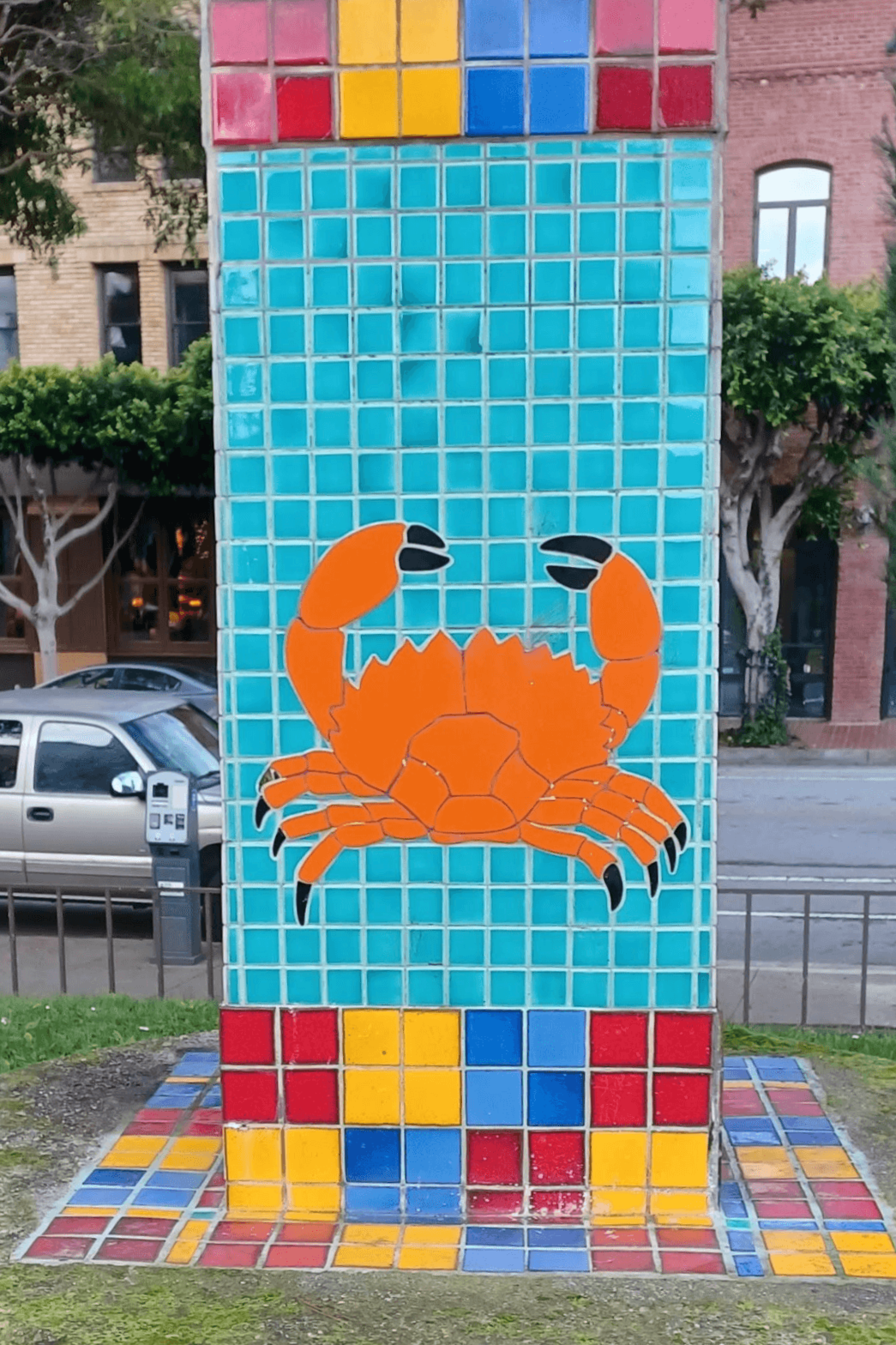
Appreciation for Brown’s use of bright lively colors and the upbeat vibe of her imagery arrive haunted by the knowledge of her death beneath a falling turret as she was installing another obelisk in India just three years after this one’s completion. Delivering an eerie shadow of premonition to the work’s otherwise cheery disposition.
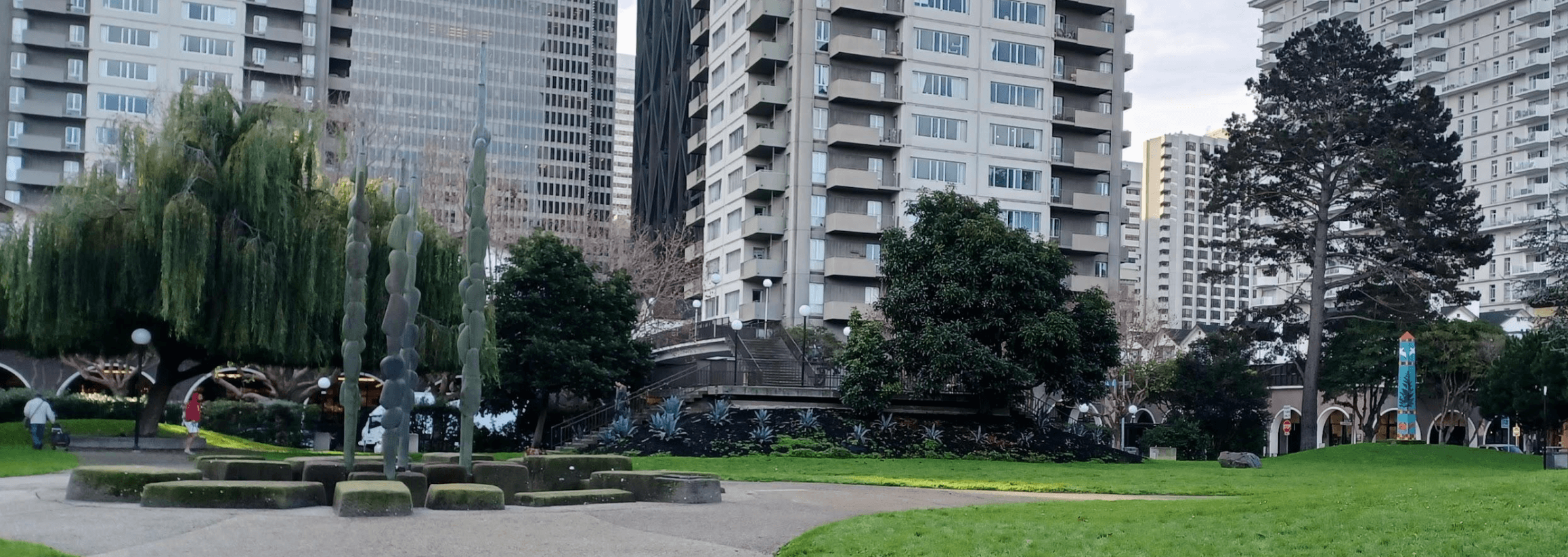
At the center of the square is French sculptor Francois Stahly’s “Fountain of ‘Four Seasons’” winner of the 1962 Golden Gateway Sculpture Competition. This was the inaugural work dating back to the Square’s creation as part of the Golden Gateway redevelopment project led by the San Francisco Redevelopment Agency.
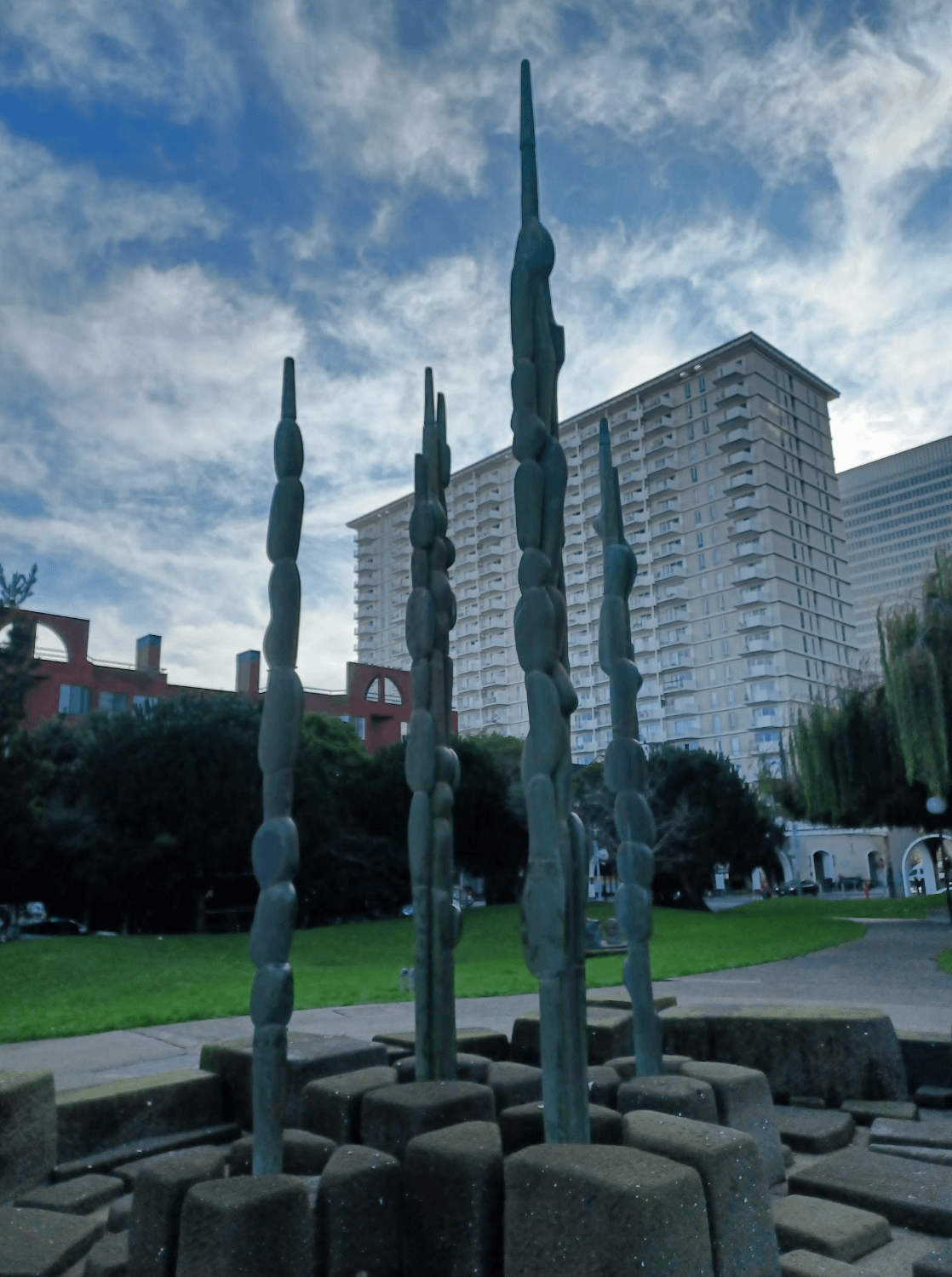
I’ve never seen the fountain in action, however, the plaque asserts: “The labyrinth of stones which surrounds the watergarden leads one visually to four columns of sculptured bronze representing the seasons. There, the alternate light and soaring water streams recall one to contemplate the constant changing moods of nature.” Encouraging viewers I suppose to see the city as nature. Which it is. Natural as anything. Notwithstanding Frank O’Hara’s infamous quip: "One need never leave the confines of New
York to get all the greenery one wishes—I can't even enjoy a blade of grass unless I know there's a subway handy, or a record store or some other sign that people do not totally regret life."
It’s unclear what may have doomed the prolonged functionality of the fountain. Perhaps it does come to life on occasion. As it is, its dry spires are fittingly reminiscent of overly tall rounded out stone cacti.
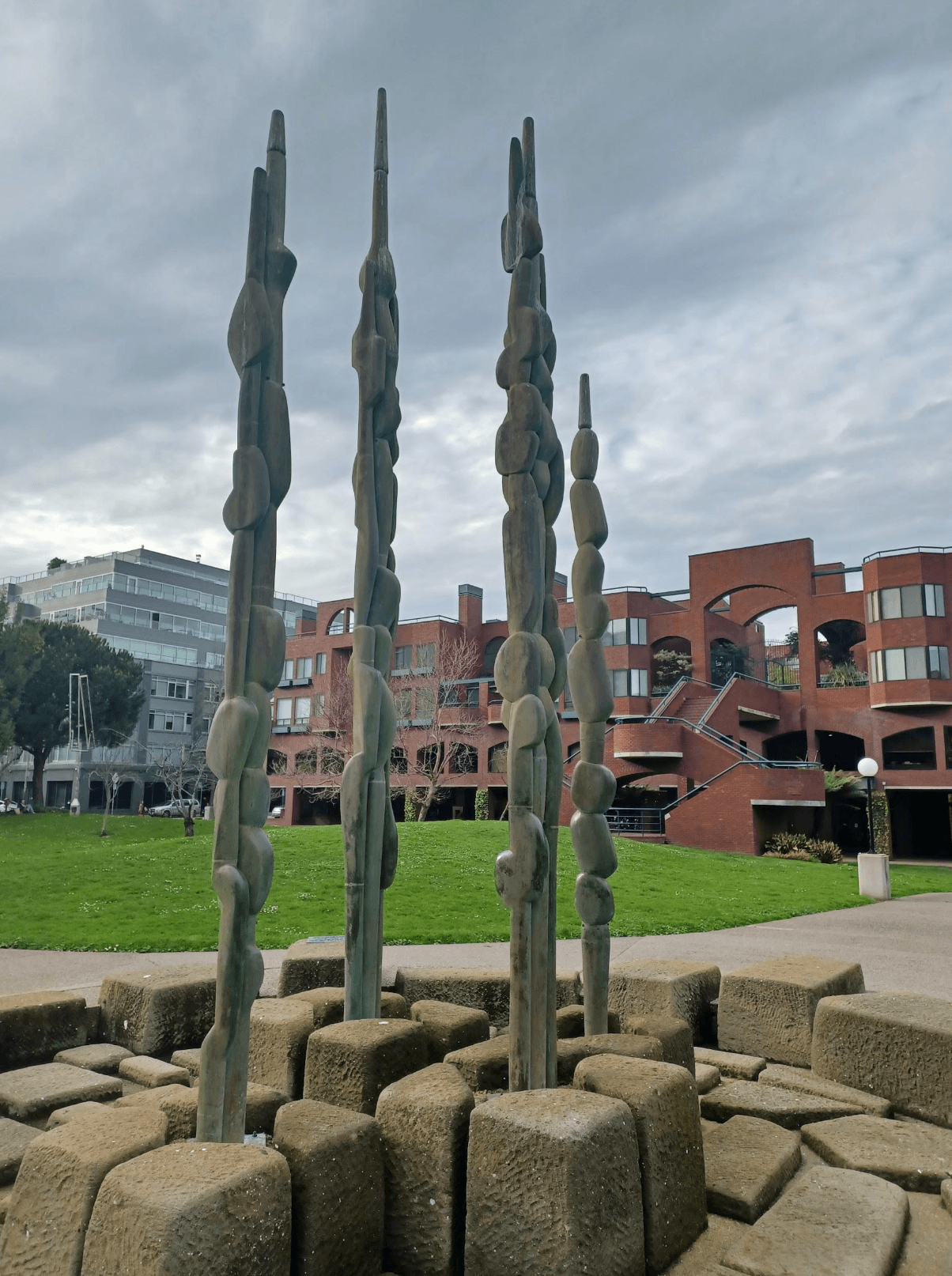
Off to the far left in the above image may be seen George Rickey's “Two Open Rectangles” (1977) yet another sculpture in the park. The distance of the shot is not meant to denigrate his work or anything, the exclusion of a closer photo and lack of any further attention given to the work is simply due to the fact I have never previously noticed it. (Wikipedia also includes Benny Bufano's “The Penguins” among its listing of artworks in the square; this is strange since it stands kitty-corner across the street from the Square’s southeastern edge in front of the shopping plaza. Where it might be said to be observing things from afar.)
Just down off a path on the opposing side of the fountain from Dine’s “Heart” and facing off against Brown’s "Obelisk" in the distance on the far hill is Marisol’s “Portrait of Georgia O’Keeffe” (cast bronze 1982). Having never walked over to the area before I had never come across it until just recently. There’s such the quiet intimacy to the work in this setting I’m sure many others easily pass by it hardly ever taking note it’s there. Like the young blonde walking her small dog who hesitantly smiled at me as I fumbled about with my phone snapping some pics of O’Keeffe perched atop a treestump stick in hand a pair of her chow chows faithfully flanking her.
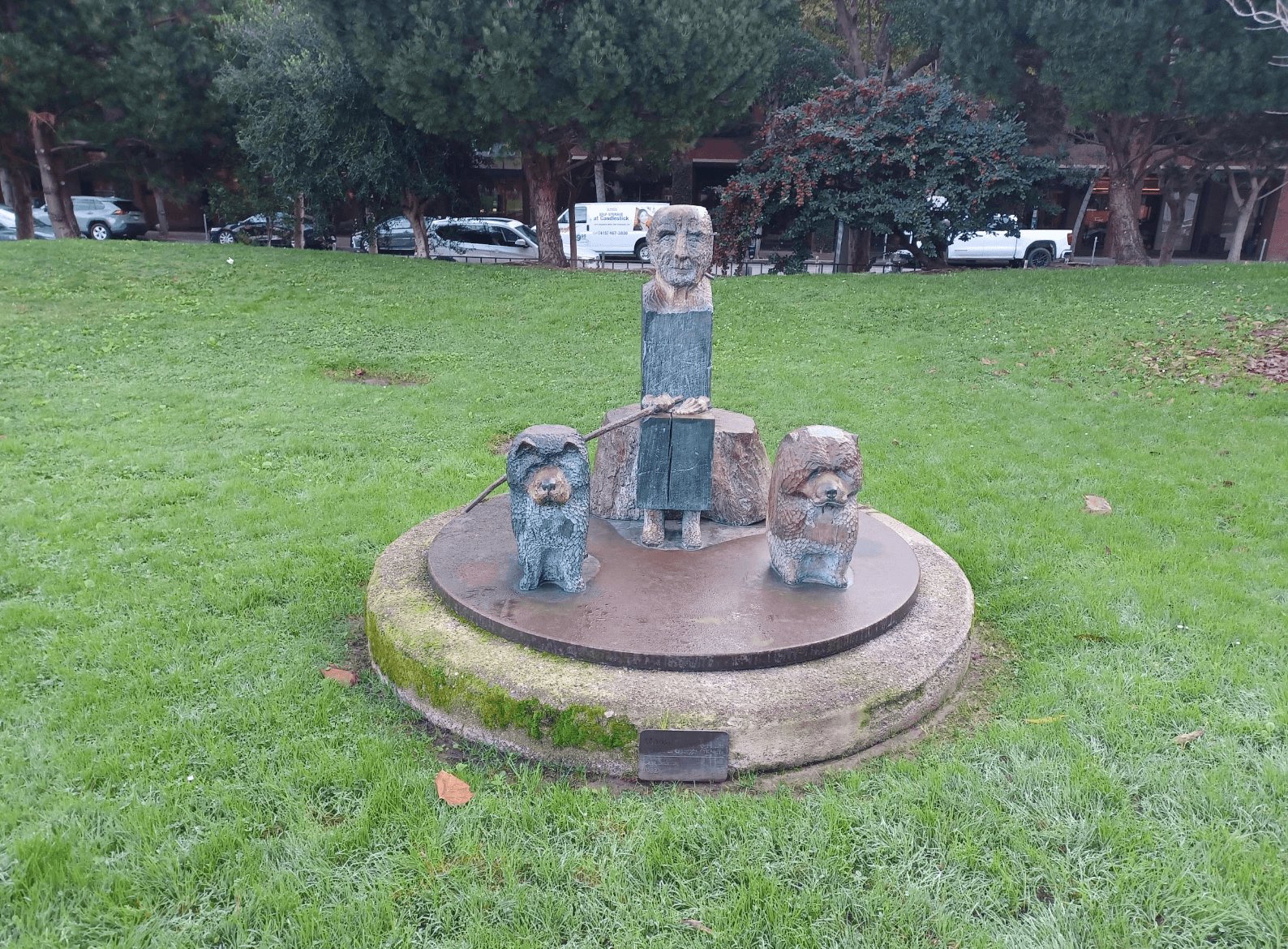
Marisol gives us the O’Keeffe of her later final New Mexico years capturing the gnarled readiness and sturdy durability which mark the artist’s visage in the abundant photographs and film footage from the period when O’Keeffe had become a living legend. A pragmatic symbol of the integrity of the disciplined artist.
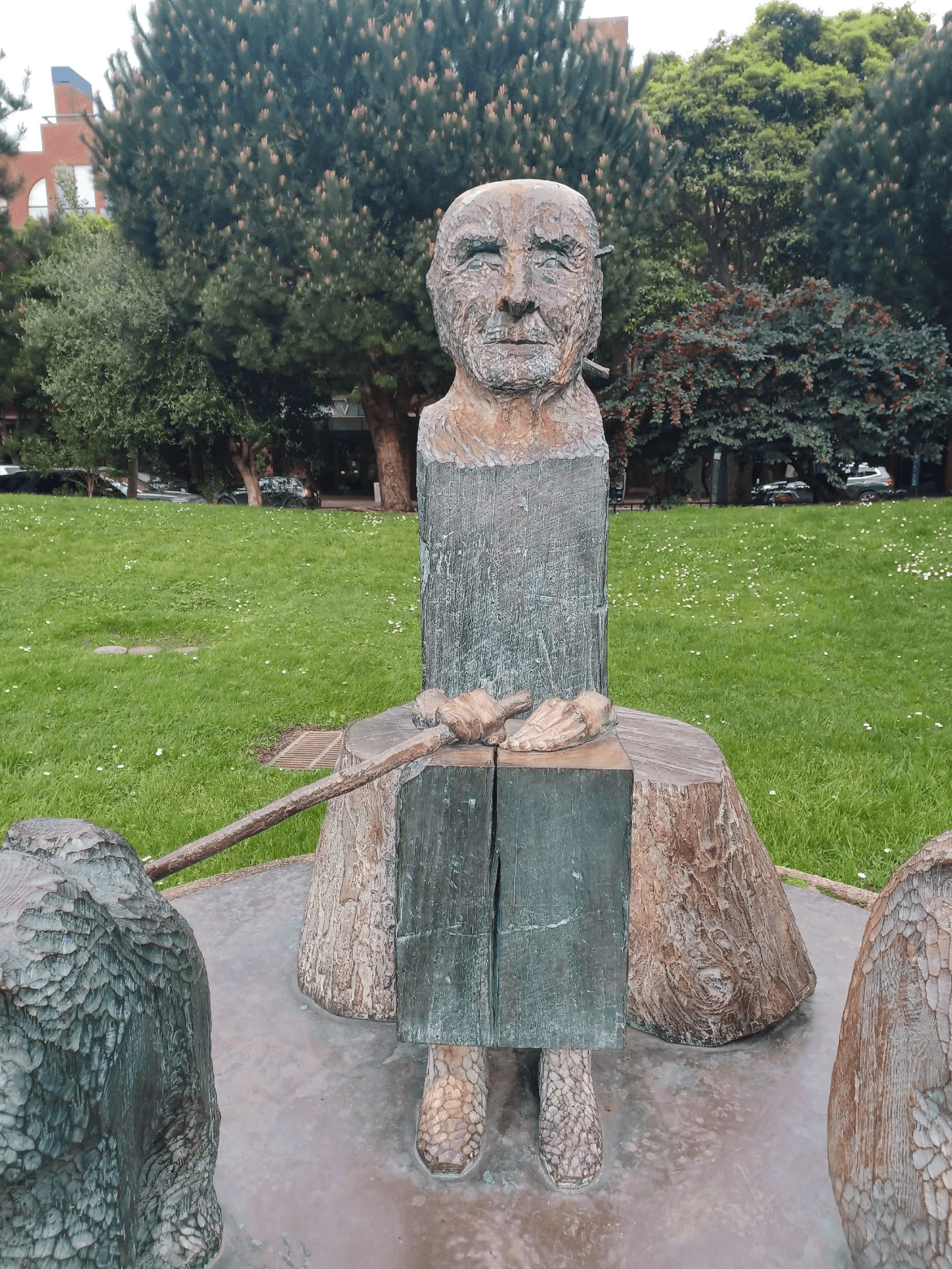
Marisol’s leaving off of the chiseled features in all their rawness, along with giving a purposively unfinished block-like form to O’Keeffe’s body, echoes and complements the grittiness of Dine’s “Heart” just a stone’s throw away.
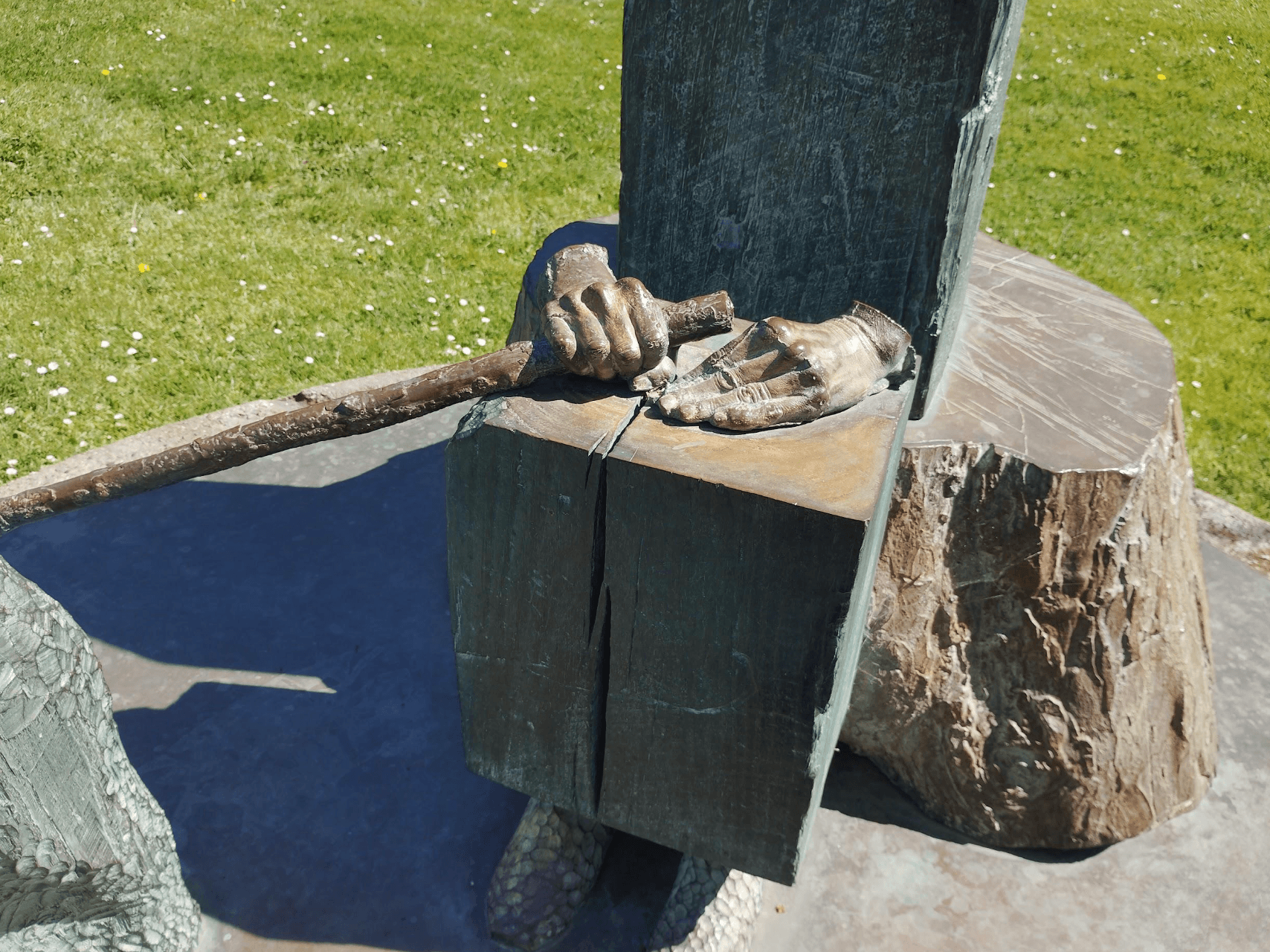
While O’Keeffe’s close up paintings of flowers are among the hallmarks of Modernist art recognizable to many North Americans her name most likely is not. Her visage is even less so. Marisol, Dine and even city native Brown are likely artists unknown to many of the city’s residents (let’s not even mention Stahly). Few ever bother to stop and stare at their works.
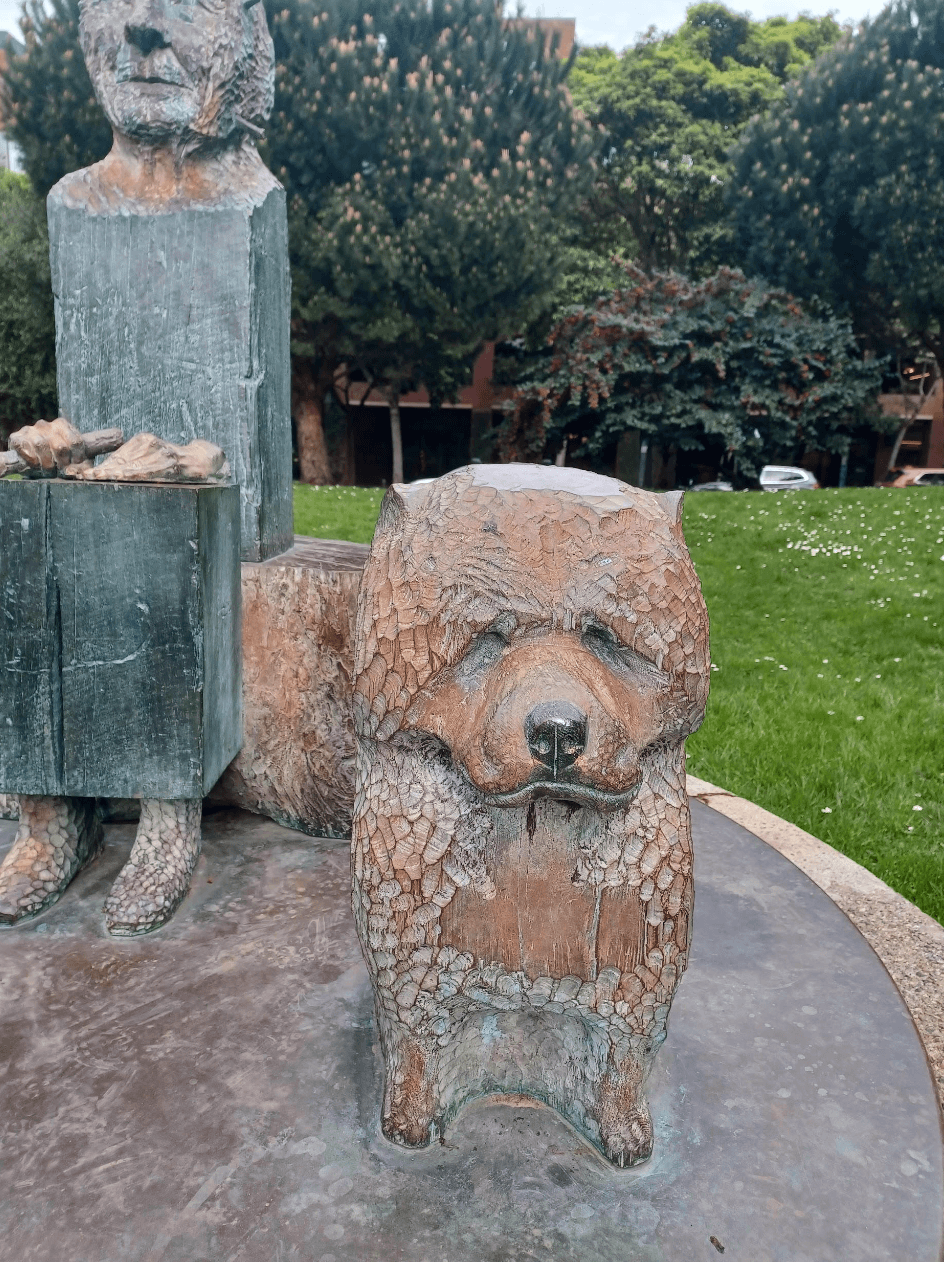
The Square’s small enough with so few hindrances blocking your view that it is possible to stand in several different spots and easily distinguish each of these works from a distance as you turn about. My own preference is always to just be passing through. Then it’s continually as if a surprise to find one’s self next to these works observing how patterns of light strike them as in and out of passing cloud shadow they emerge at times wet from showers or fog while at other times they bask in sunlight as sunbathers lounge about and here or there a ball or two gets thrown back and forth. Among dog walkers, lunchtime workers and the random athletic trainer workout in progress I make my way from here to there. Enjoying what the eye sees as the feet carry on.
