

Shelley Niro, Gorman Museum of Native American Art
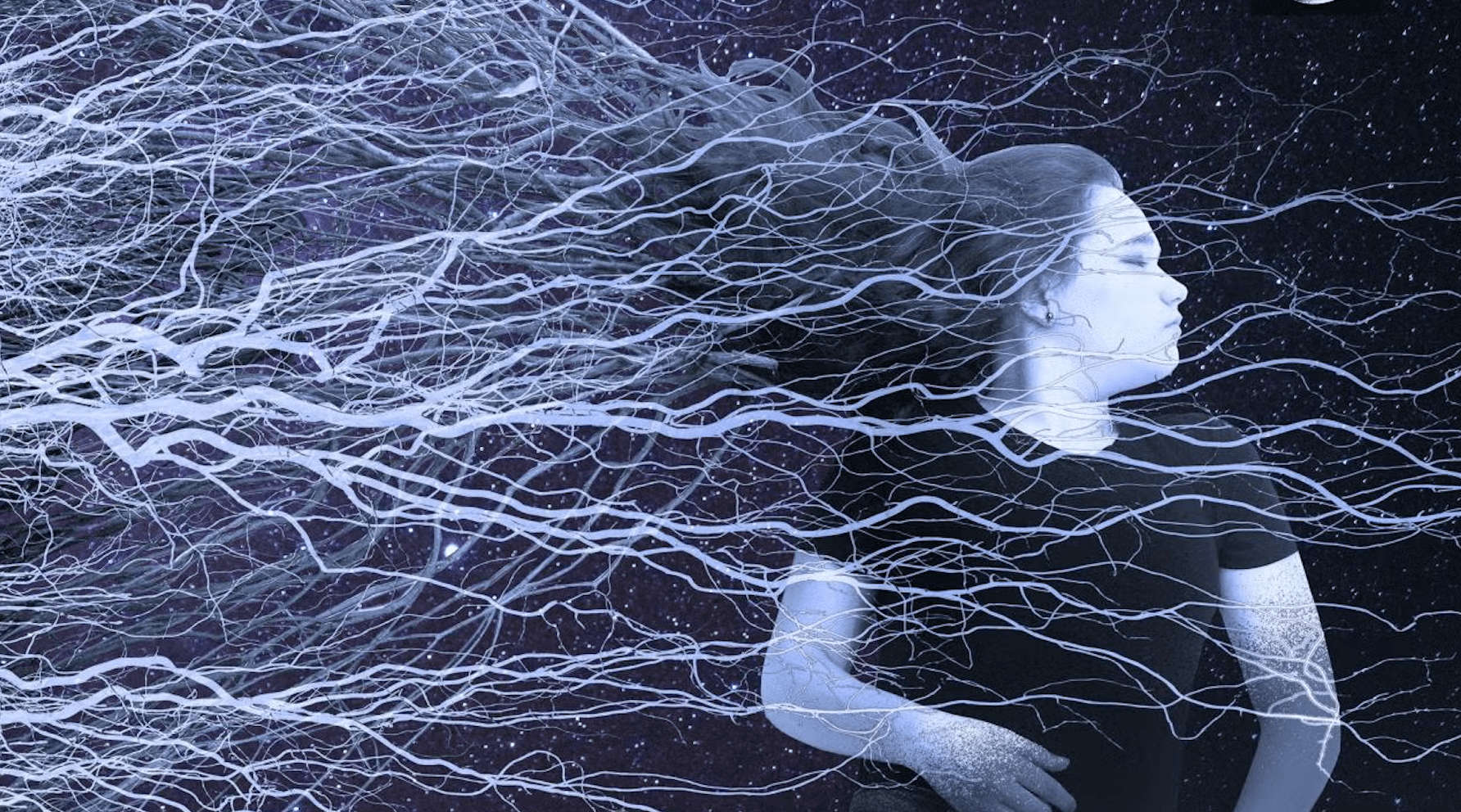
Shelley Niro, Raven at Night, 2022, pigment print on archival paper
The current exhibition of work by Shelley Niro at the Gorman Museum of Native American Art beckons visitors to enter her world through deeply personal and meditative photographs. One begins the journey into her work and life even before stepping foot into the building, strolling through a garden filled with herbs historically used in Indigenous and Native American ceremonies. Crystalline panes of glass serve as the only separation between the entryway with the small shop and the exhibition space itself. With no admission fee, it is only too easy to be instantly drawn to the special exhibition gallery. The pristine walls of the museum’s new, light-filled building (only opened to the public in 2023), currently showcase numerous works from throughout the award-winning artist’s life as a member of the Six Nations Reserve, Turtle Clan, Bay of Quinte Mohawk. This exhibition highlights how she reclaims a medium - photography - that has historically been used by Edward S. Curtis and others with colonialist agendas to dehumanize Indigenous peoples and perpetuate the stereotype of the noble savage. Niro’s narrative photographs, one of many media she has employed in her career, reveal her profound musings about the autonomy, self-identification, and hopes of her fellow First Nations people. Her masterful story-telling, imparted through each work in every series, reveals a personal vulnerability rarely explored in museum exhibitions.
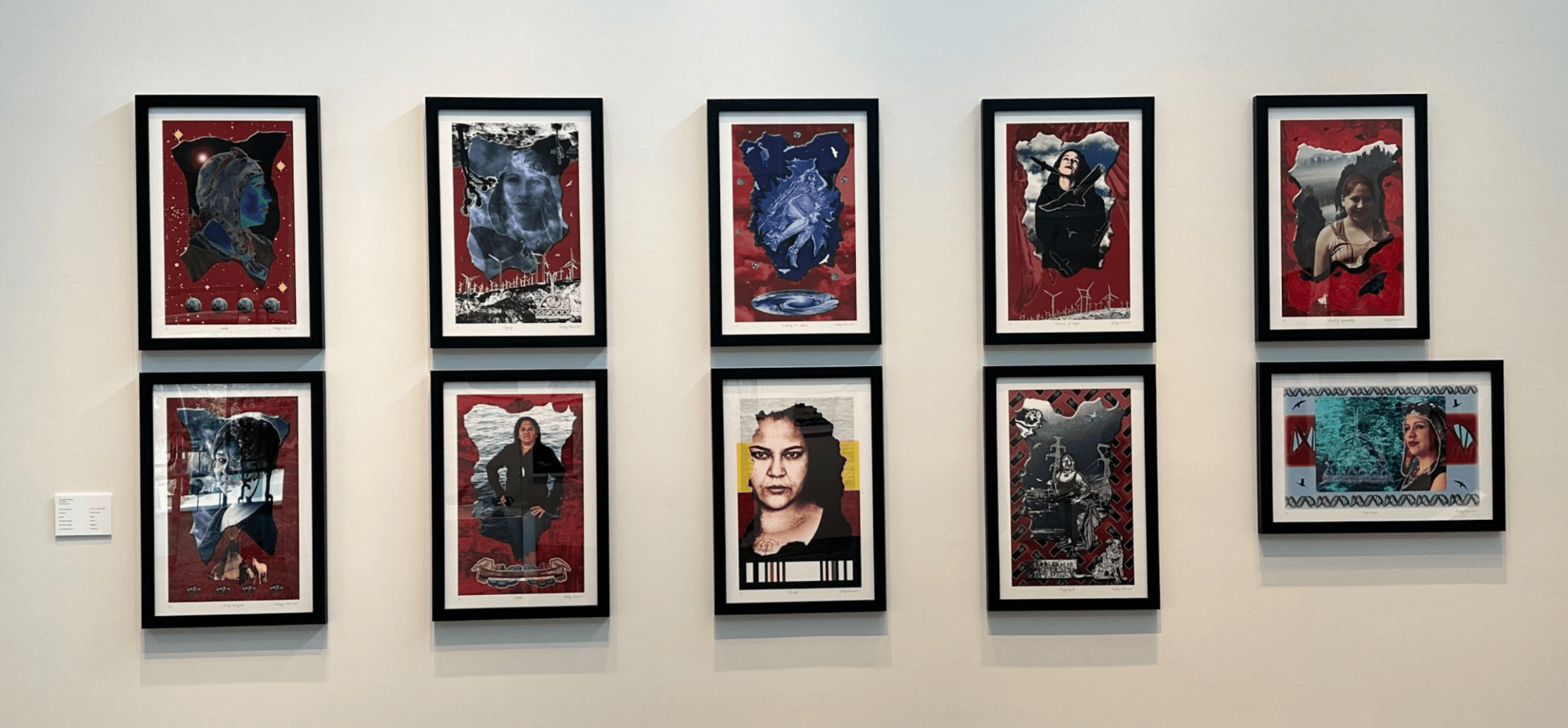
Shelley Niro, Stories of Women series, 2011, archival pigment print, courtesy of the Gorman Museum of Native American Art
The exhibition is composed of and physically organized according to several of her thematic series. There is no clear predetermined sequence throughout the exhibition, rather the openness of the special exhibition gallery allows one to wander wherever the eye is drawn. Within these dozen or so groupings, each including between two and ten works, the exhibition highlights the methodologies through which Niro has expressed the tenacity of her people and the introspections of the artist herself. The series presented in this exhibition cover a wide period of time, jumping from the early 1990s to the present day. Most of the photographs are in black and white, and include a combination of archival and silver gelatin prints. Scattered throughout are speckles of color, including the maroon borders of each work in the Stories of Women series, within the slight tinge of her cyanotypes, and especially the neon-bright hand-colored photographs in the Mohawks in Beehive series.
The Mohawks in the Beehive series perhaps exemplify Niro’s approach to art and life most evidently - showcasing her ability to transform competing emotions into cohesive images that rely on humor and deep conviction. The artist created this series at a time when she was reeling from the Oka Crisis in Quebec, and the fallout from not just the conflict entering the global consciousness, but the connotations that came from broadly painting the living conditions of Indigenous populations with a broad brush. In the resulting series, she invited her sisters to join her for a day of outings, to celebrate their closeness and to simply have fun. The deeply personal photographs capture each woman’s playfulness, while the addition of vibrant pinks, blues, and yellows only serves to increase that liveliness. This series is nothing less than a full-blown rejection of fatalistic stereotypes, especially those that were permeating public consciousness in the aftermath of the Oka Crisis. Instead, the artist heartily invites viewers into the typically exclusive circle of her sisterhood, to witness their joy.
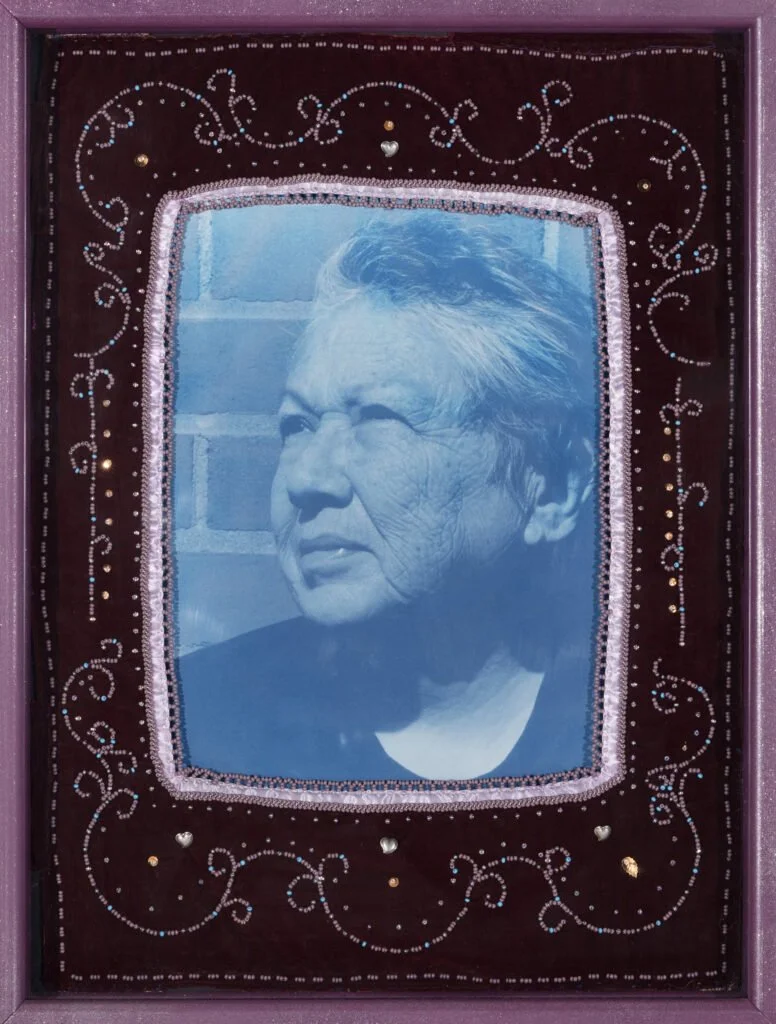
Shelley Niro, Chiquita, 2002
These are not the only images of Niro’s family members. Cyanotypes of her daughters and mother, within the My Girls and Chiquita series, are a crucial element of this exhibition.Through her experiments with this photographic technique, Niro primarily sought to expand her practice. By applying this technique to images of her very closest relatives, she shares the deep love and respect that flows between her and these other women in her family. The velvet framing surrounding both cyanotypes is also adorned with traditional Iroquois beadwork, a medium often used to create frames around images of loved ones. Much like the portraits of her sisters, she offers this intimate glimpse into her own life to bring the viewers into her world.
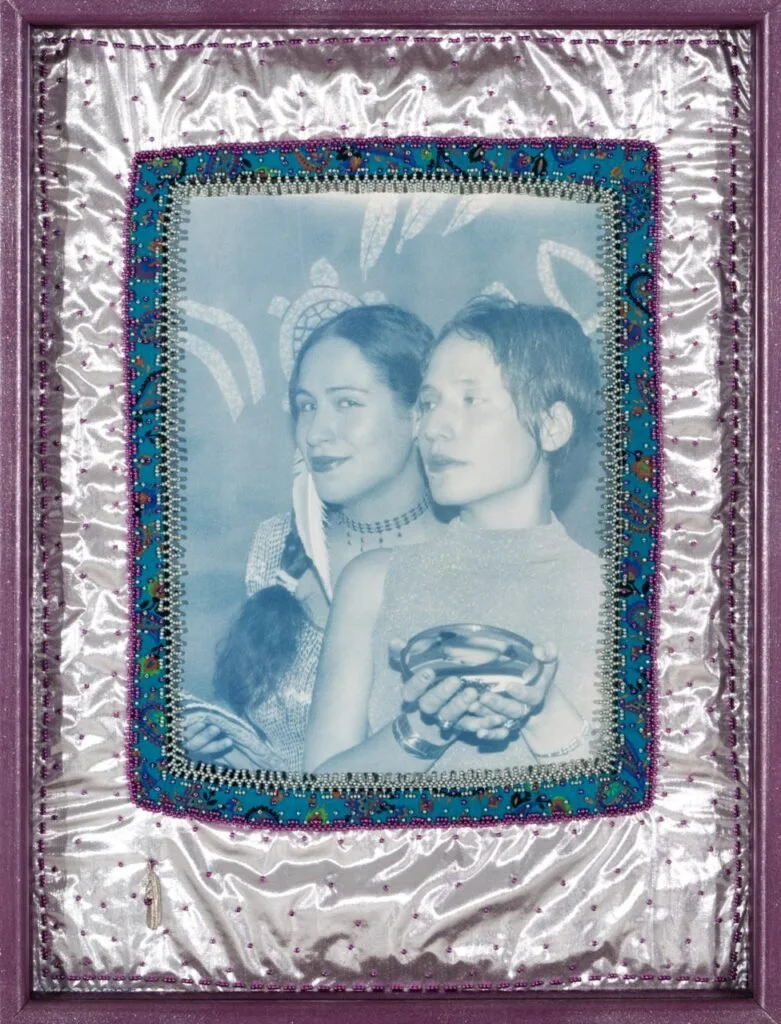
Shelley Niro, My Girls, 2002
Oscillating from deeply personal portraits to treatise-like series such as Stories of Women, Niro fearlessly shares so much of her inner world and thoughts through her works. This group of ten works each features a portrait of a woman and superimposed objects. While the themes of individual works create a narrative for each woman, the series as a whole highlights the strength and dignity of the group. In the accompanying exhibition text, Niro explains the importance of the Skywoman story. While she honors the sacrifices of that divine figure, she also imparts her belief in the power that she and others have to choose another narrative for themselves - as something other than the stereotype of the constantly sacrificing and stoic Indigenous woman. Through so many of the other works in this exhibition, Niro directly comments on her beliefs about how art and self-identity are essential to unraveling connection to her ancestors and to others living in her community. The largest works in the room - the three eye-catching self-portraits in the Abnormal Aboriginal series - are yet another testament to the careful thoughtfulness she applies to identity. Although she uses humorous word-play with the text boldly printed on each of these three works, she does not undermine the serious nature of her topic, and instead offers a thoughtful entry into her way of thinking. Through this series and the other portrait and composite-based images in the room, Niro deconstructs and then reformulates her philosophies on history and culture. In all works, it remains her goal to share her belief, “in the healing power of art.”
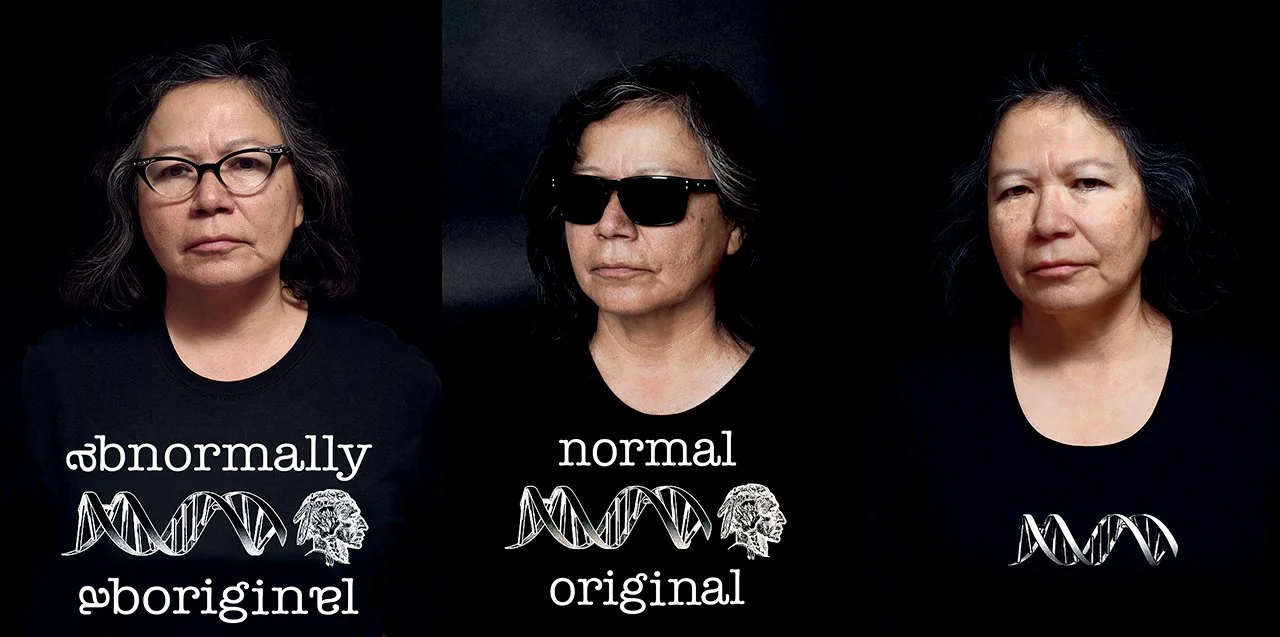
Shelley Niro, Abnormally Aboriginal, 2014-17, colour ink-jet prints on canvas
Her approach to healing also takes form in her series Solace, and it offers visitors a moment of peace and meditation in an exhibition that often places them face-to-face with the various subjects of portraits. Devoid of any overt human presence upon initial glance, the six vertical amalgamated landscapes within Solace offer glimpses of nature. These composite photographs, which each consist of three thoughtfully conjoined scenes, ask viewers to look closely to understand the connections between the distinct elements. In the work Home, for example, Niro positions a soaring eagle within the top third, a forest, heavy with leaves, in the middle third, and the rushing waters of Niagara Falls in the bottom third. In creating her own landscape - filled with earth, water, and air - she concedes an undeniable human intervention. Yet, this and the other works in the series remain deeply meditative and allow for a welcome interlude into the natural world. The peace she offers to viewers is, in fact, one that Niro sought so desperately herself. In 2014, the artist was deeply enmeshed in the Idle No More Movement and deeply engaged with the interconnected Missing and the Murdered Crisis. Grasping at the sublimity of nature, Niro found her moments of reprieve through Solace.

Shelley Niro, Solace series, 2015, courtesy of the Gorman Museum of Native American Art
Niro creates each and every work in all of her series to promote dialogue and to share her own thoughts. Almost like a diary, this exhibition captures the highs and the lows she has faced throughout her life. With photographs of her loved ones, deeply meditative natural images, and composites that highlight the mythos and lore that shaped the world of her and her ancestors, this exhibit excels at showcasing the diversity of Niro’s subjects and techniques. While the scope of this exhibition allows for visitors to only explore a single portion of Niro’s large body of work (there are only four sculptural works on view), this exhibition feels focused and celebrates the powerful photographic works from throughout her career. It is also a highly informative exhibition, including extensive quoted material that the artist shares about each series. Above all else, it succeeds in honoring Niro’s sentiments that through art, “I give thanks to my ancestors every day. I connect with them through my own imagination.” One might be asking themselves, long after visiting, how to mirror Niro’s sincere vulnerability so as to continue the dialogue needed to address the vital subjects within her artwork.
Shelley Niro - Gorman Museum of Native American Art (January 28 - August 30, 2026)
