

Kevin Ivester
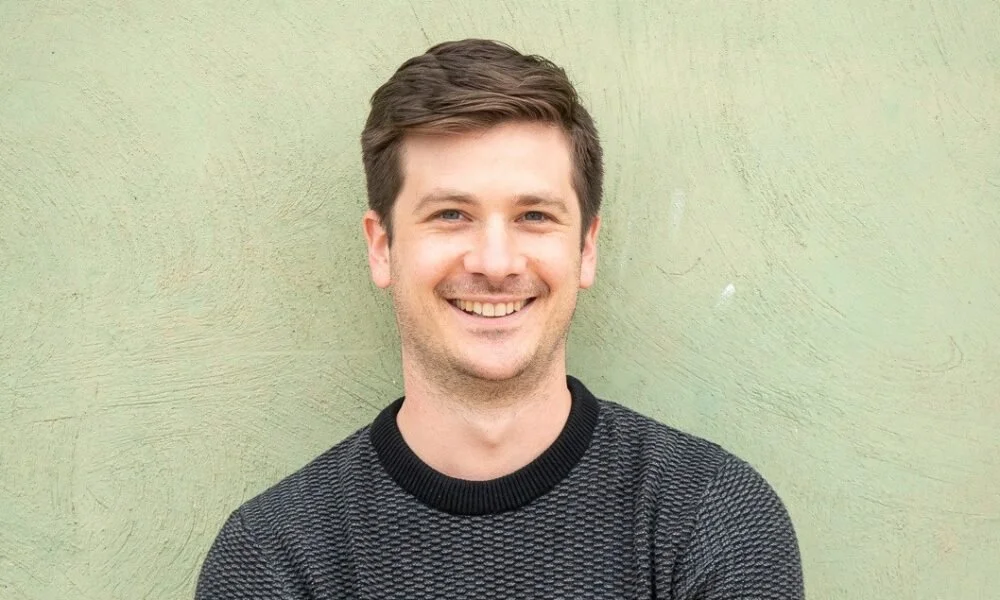
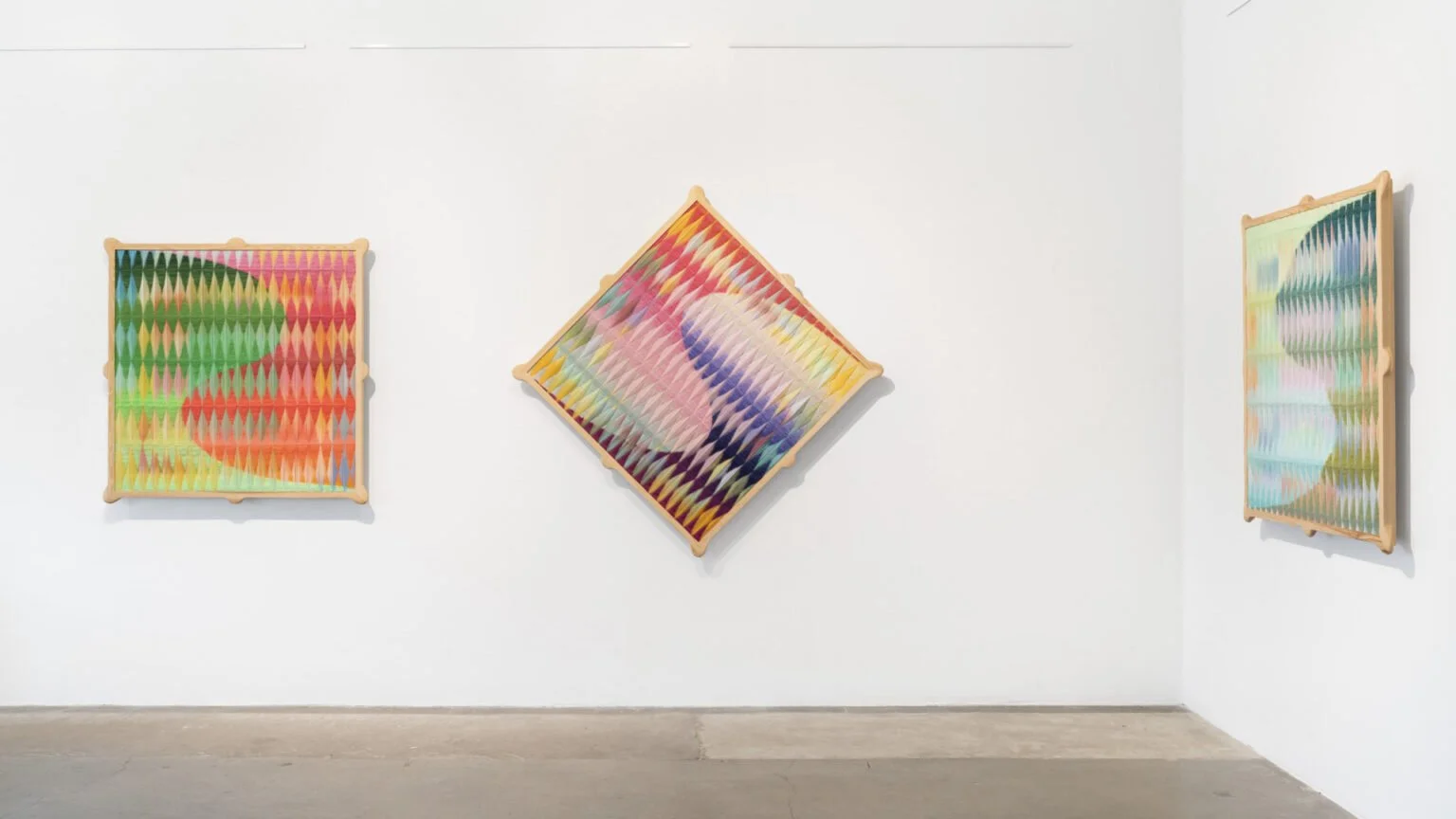
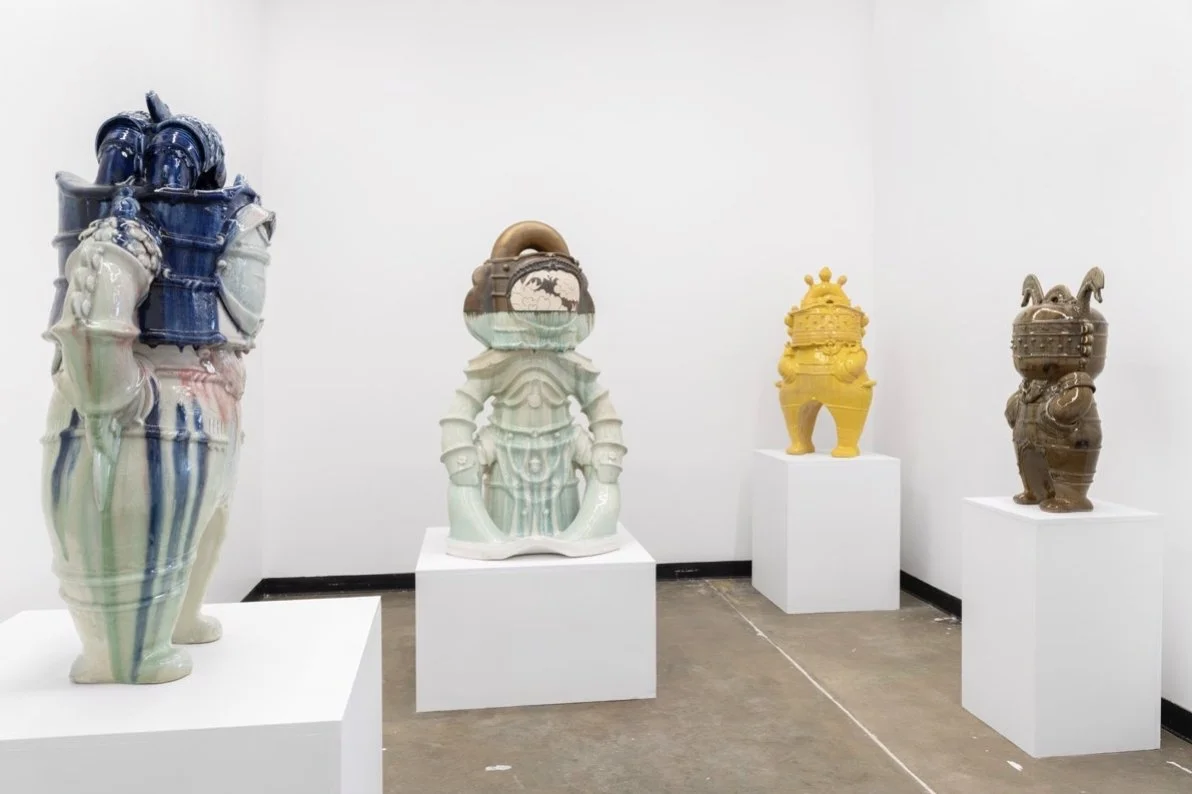
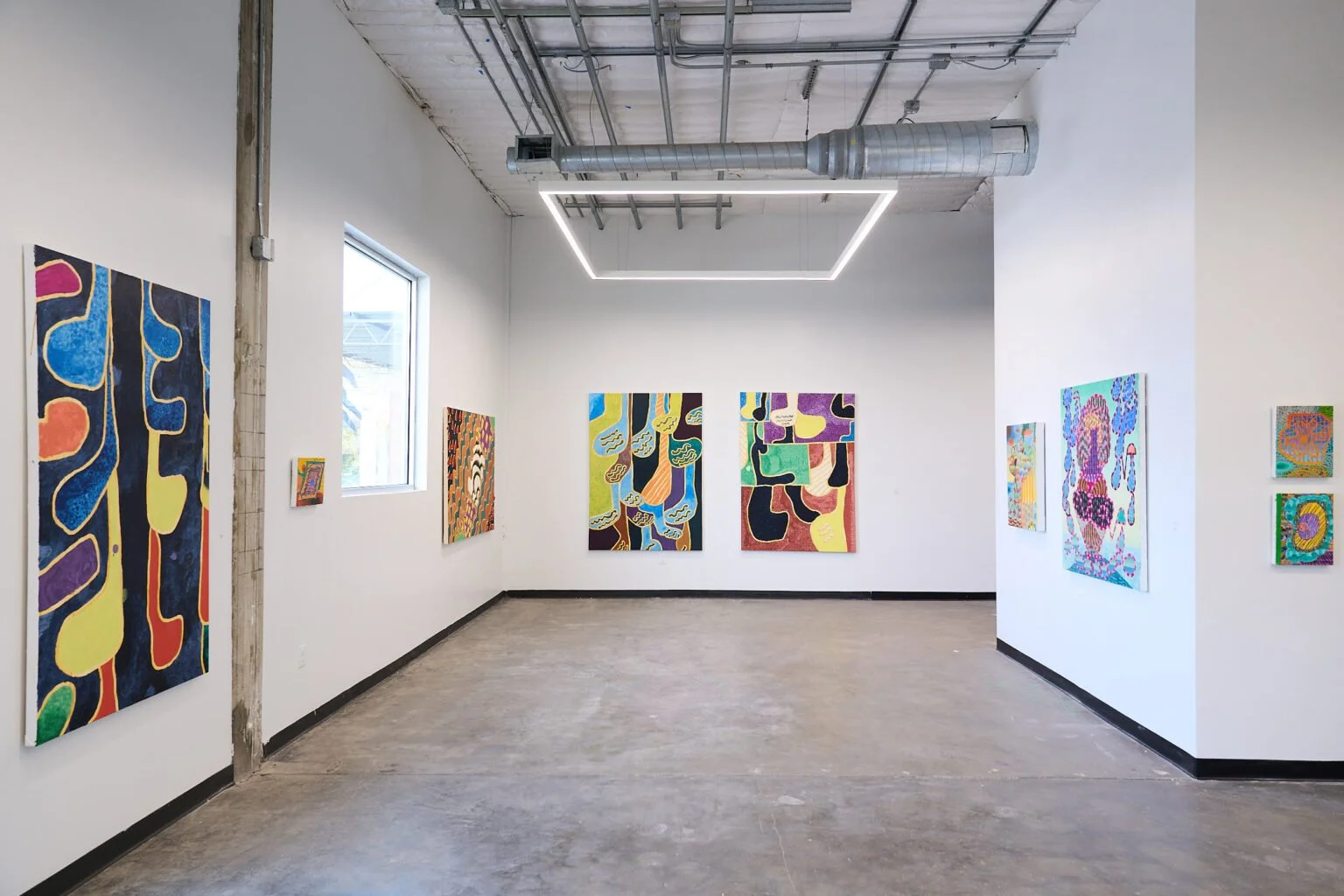
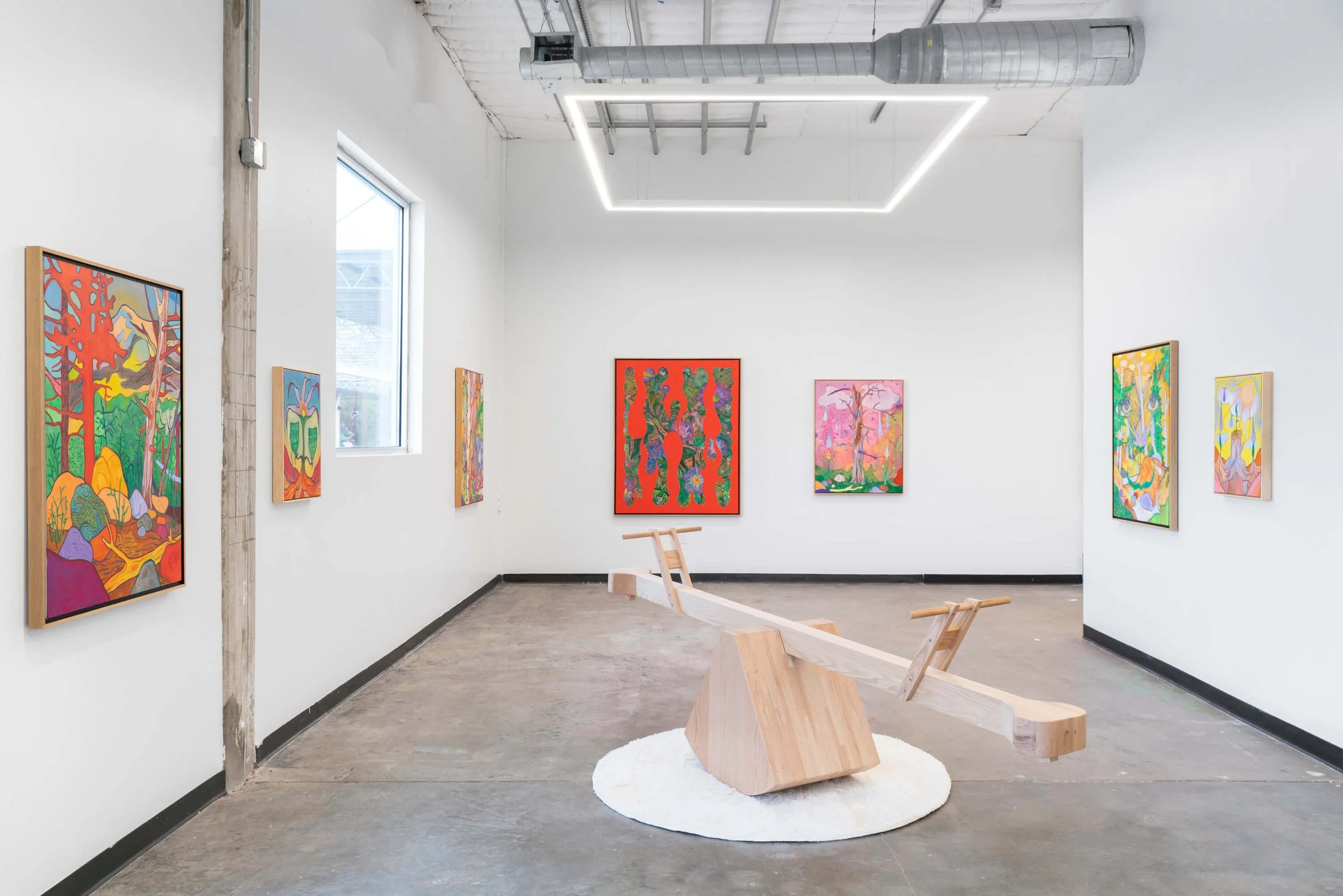


Kevin Ivester is the owner and director of Ivester Contemporary, an Austin contemporary art gallery in the Canopy Creative Complex, and the owner of East Side Picture Framing. He built the gallery from broad art-world experience, including gallery work, auction houses, restoration, conservation, art handling, framing, and appraisal. Opening Ivester Contemporary in 2020 during Austin’s pandemic shutdown, he turned uncertainty into opportunity, launching with Maiden Voyage, a roster exhibition of 18 artists, most based in Austin. Ivester co-founded Austin's Friends Fair and serves as Board Chair of the Austin Art Alliance. Over the past six years, the gallery has expanded its program to include artists from across the United States and abroad, with an emphasis on experimentation, process, and a sense of joy.
The following excerpts are from Kevin Ivester’s interview, as conducted by Hugh Leeman.
From Massachusetts to the Battleground State of Texas
Hugh Leeman: Kevin, as we prepared for this interview you told me: "I moved from homogeneous Massachusetts to the social and political battleground of Texas." Tell me the story of how a guy from Massachusetts who went to art school for painting ends up owning a gallery and starting an art fair in Austin.
Kevin Ivester: I went to art school and studied painting. By late high school, and definitely by freshman year of college, I started working in galleries, working in the arts, and discovering how much I loved the world of it — working with artists, looking at other people's paintings, learning from other people's work. When I wrapped up my degree I could kind of forecast what the next years of my life would look like, and I wasn't excited by it. In Massachusetts I knew what galleries I could work at, I knew what the art scene looked like, I knew what artwork I would be in conversation with. I really wanted to mix it up.
So in 2015, somewhat impulsively, I jumped in my car and drove out to LA where I had extended family and some friends working as art handlers. Did a few months there. I was in a long-distance relationship with my now-wife, who was still living in Boston. I flew home, grabbed her, packed up all of her belongings, and we were driving back to LA. We took about two and a half months on the road, just camped and looked at different parts of the country. No real distinct plans. We drove through Austin, where a friend was living who convinced us to even visit Texas. I had very stereotypical views of what Texas was and had no interest in visiting. But within twenty-four to forty-eight hours, my wife and I were convinced it was a better move than LA.
So we finished the road trip, picked up my stuff in LA — I'm twenty-four, neither of us really had anything, it all fit in a Camry and a Corolla — and we moved back to Austin. Stayed on a friend's couch for two weeks, got an apartment, and just started looking for jobs.
Hugh Leeman: It's impressive that in twenty-four to forty-eight hours, an entire set of stereotypical perceptions just dissolves. What was it about Austin that hit you?
Kevin Ivester: I was struck by how the city is laid out — it's on the Colorado River, which Austinites call a lake. The city is so active, so young. You can feel the energy, you can feel the ideas. There's a reason so many tech companies have been drawn there. The city was booming even eleven years ago. And I think that's what I was seeking when I left Massachusetts — I didn't want to be able to project what was going to happen. I wanted the unknown.
Maiden Voyage and a Great-Grandfather's Story
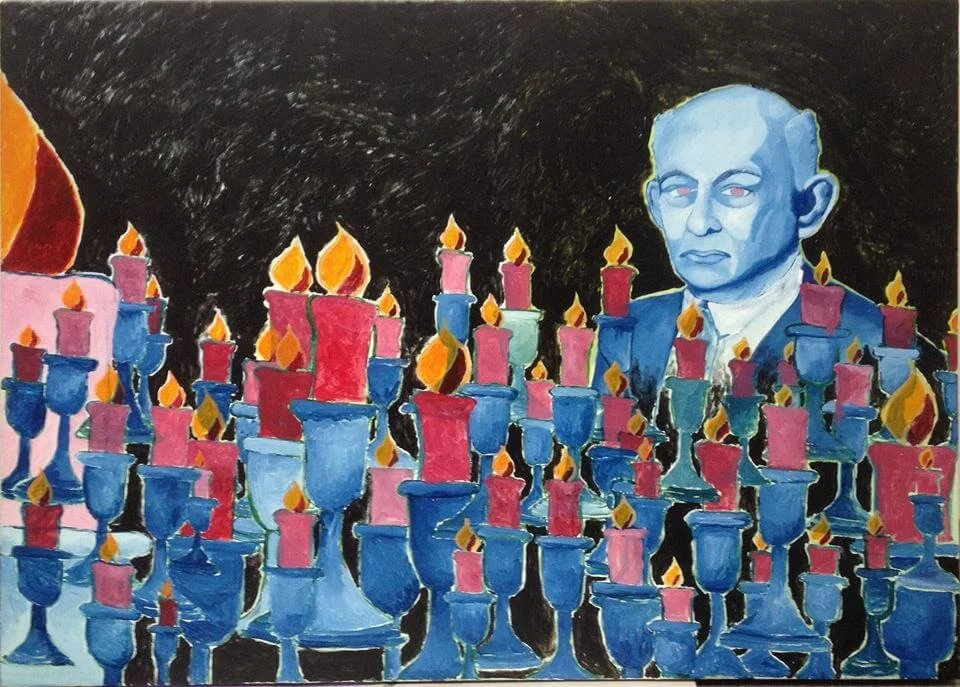
Hugh Leeman: Your gallery's first show was titled Maiden Voyage — a clear nod to the gallery's debut, but also a subtle nod to your great-grandfather, who has an incredible story as a Jewish businessman of passenger ships whose assets were seized in Nazi Germany. Who was he, and how has he inspired you and the gallery?
Kevin Ivester: He's my grandmother's father. His father was a business owner too — selling alcohol and animal feed, I believe, though that business wasn't doing well. I don't know exactly how my great-grandfather got into shipping specifically, but there's an entrepreneurial spirit that runs in my family on both sides. My grandfather on my dad's side was a business owner, my parents were business owners, and my great-grandfather was too. I find so much inspiration in all of their stories.
But my great-grandfather had something really special. He had many ships — large freighters and cargo ships — and he was on his way to being incredibly successful. He already was incredibly successful. And then, simply for being German and Jewish in 1937, all of it was taken from him. I think that injustice has made me a very justice-seeking person, interested in learning people's stories, and innately service-driven. I actually think that runs in my family too — providing service and being community-minded. And there's something about what happened to him that led me to abandon my own art career as a painter and focus on other people's stories instead.
Hugh Leeman: You told me in a previous conversation: what I have to say with my art is not as important as what the artists I'm showing have to say right now. In a world where the arts can often feel self-centering, you're taking a very different angle. What are the stories these artists are sharing that feel so urgent?
Kevin Ivester: It's a wide variety. The exhibition coming up next in the gallery features Carlos Ramirez and Emilio Villalba, both artists from California. The show is called Redacted, and it's a direct reaction to what's going on in the world — focused specifically on ICE raids. Carlos's work centers on that, while Emilio's work addresses the dissociative feeling so many of us are carrying right now — how we're supposed to continue going about our daily lives despite all of the stressful, sad, and destructive events happening nationally and internationally. The show is outwardly politically charged, but it also has a deep psychological dimension.
Alongside that, in my project space, Alexandra Bose-Einstein — a UT professor here in Austin — has an exhibition looking back at post-World War Two nuclear testing in the American desert. I always pair my main exhibition space and my project space distantly, looking for a connection without telling the artists what each other is doing. I want them to make the work they need to make, but I'm excited to see the dialogue between nuclear fallout and what's happening today. I do think they're connected.
I'm also showing artists speaking directly to immigrant identities, to conversations around queerness, to finding our place in the world. Right now, Eli Durst — a photographer who just won a Guggenheim Fellowship — has a show called The Children's Melody about how kids join the cheer squad or ROTC and have to sacrifice a part of who they really are to belong to those groups. It extrapolates out into conversations about indoctrination.
Austin Art Agency: Supporting What's Already There
Hugh Leeman: Going back to this idea of being service-driven — beyond the gallery, you're on the board and chair of the Austin Art Agency. What does A3 do?
Kevin Ivester: A3 started as something called the Texas Fine Arts Association — Austin's oldest nonprofit — which evolved into Art Alliance Austin, which Austinites may recognize more. We transitioned that into A3, a local arts agency, in 2024. It's a really new iteration of a very old nonprofit.
Why we made that shift: we moved away from trying to run our own events and instead focused on supporting the art organizations, nonprofits, and artists who are already working really hard in Austin and just need sustainable support. I have a pet peeve about people who move to a new city and say, "We really need to have this type of event for artists" — when somebody's already been doing that for twenty years. What if you just supported them?
I still view myself as something of an outsider to Austin. A lot of people — rightfully — look at all the change that's happened and ask what happened to their hometown. I don't want to warp or ruin the city. I want to celebrate what's always been here. Austin has always been incredibly creative. There are world-renowned artists who live here — Deborah Roberts, Claire Oswalt, Tyler Hobbs, Nadia Waheed. There are amazing organizations like CoLab, Women and Their Work, the Contemporary, and the Blanton. And then organizations like Big Medium, which was around for twenty-five years and recently lost the funding and ability to continue.
So A3 supports all of that. We give micro-grants, we give funding directly to arts organizations, and we access funding from city grants, federal grants, businesses, and individuals — then distribute it to organizations we identify as genuinely needing it. We have board members and advisors who are deeply active across visual arts, music, and performance in Austin and can help us identify who needs the money and why.
The Broken Grant Writing Process
Hugh Leeman: You've said to me that the art grant writing process is, quote, horrible, confusing, and doesn't always find the right people — it finds the best grant writers. How does the grant writing process actually function?
Kevin Ivester: It changes every year, which makes it really difficult to track and stay current on. If you learned how to write grants ten years ago, you might have some success, but you might also miss out on great grants because your method isn't current. One of the things A3 does is go to city council meetings and track what needs to be included in grants to access the money.
The Trump administration began specifically targeting words they deemed woke — marginalized, activism, social justice, equity, BIPOC, LGBTQ+. If you use those words in federal grants, they get flagged and the proposal is usually denied. That's just one striking example of how grants change over time. And it completely goes against what grants are supposed to be for — which is not supporting good grant writers, but supporting artists and organizations that genuinely need it. The process needs to be made more transparent and easier to access so the right people get the money.
Hugh Leeman: You've mentioned that this flagging may be algorithmic — that in some cases there isn't even a human reviewing the language. Can you talk about that?
Kevin Ivester: Honestly, I don't know with certainty whether it's purely algorithmic or whether there are people doing a manual search for certain words. And I know the Trump administration cut a lot of federal workers, so maybe it is an algorithm now — a computer program running through proposals and selecting for humans. Which would be even worse. I can't confirm the inner workings. I just know what words we're supposed to avoid.
Hugh Leeman: Who are the people making these decisions — the ones deciding who gets grants in the arts?
Kevin Ivester: I've met with a few of them about projects downtown. I think a lot of people who work in the city are interested in the arts, but they're not coming from a specific art background. They may not have much experience making artwork themselves, or understanding the grind of running an arts nonprofit. It's always so much work, and the financial reward doesn't always make sense. We do it out of passion.
And that gap in understanding shows up practically. Murals are really big in Austin right now, but I know what muralists get paid. You want to do a twenty-foot-by-twenty-foot mural? Here's fifteen hundred dollars. Well, you have to rent a scissor lift. You have to buy supplies. A lot of muralists walk away with nothing. The people making that decision have never gone through the process of renting equipment, driving it to a job site, planning it all. A lot of people who haven't made artwork before think it just appears magically. It's mentally taxing and time-consuming. Things are not fast. There's just a gap in understanding at the city and state level — not only about why the arts matter, but about how art gets made and how much it would really take to build a sustainable arts ecosystem.
The Exploitative Bargain Between Big Tech and Creative Cities
Hugh Leeman: The ideal version of what A3 is trying to do — what would it actually take to get there?
Kevin Ivester: It would take a lot of buy-in from local corporations. Samsung, Dell, Facebook, Google — all these really successful businesses coming to Austin are benefiting from the creative nature of the city without investing back into it. That feels exploitative to me.
I would like to see more corporate support for the arts, because these companies benefit from it — they're able to attract talent, they're living in a city that's beautiful and exciting. I also think the state viewing the arts as an important economic component is an essential step. Between those two things, I think we would start to see enormous cultural change.
I can't even imagine the city we would live in if arts organizations had the money they really needed — to retain their own employees, to continue their visions, to meet their long-term goals. I see what artists and arts organizations do with pennies, and it's impressive. If they were financially sustainable, most of them would reinvest the majority of any gains right back into their work. It would just feed itself.
Hugh Leeman: That word exploitative is something that comes up in arts conversations but often stays the elephant in the room. We're in San Francisco, and we see it here too — a booming economy with no corresponding boom in the arts. Historically those two things track together. What do you make of that disconnect?
Kevin Ivester: It's one symptom of a larger political and economic issue in the United States. Inflation is going up. It's difficult for people to support their families and buy a home. When big corporations come into a city like Austin that has historically been relatively small, it shocks the system. It forces long-term residents out — not just artists, that's too narrow a frame. It stresses a system that really can't absorb it.
And there's a marketing dimension too. Small local arts agencies that have spent years reaching an audience in a city of five hundred thousand people now exist in a city of a million, and the way they've historically reached people doesn't work anymore. They don't have the dollars to run ads in growing cultural magazines. Bigger companies absorb all the attention because it's a rounding error for them. These corporations are coming to Austin specifically for tax breaks — they're very intentionally not trying to invest in the infrastructure that's supporting them. It's an issue.
Building Friends Fair: One Weekend, Five Galleries, a City That Wants More
Hugh Leeman: Among everything you're doing — A3, the gallery, the community building — you started Friends Fair, which just took place in early May. Starting an art fair is a massive undertaking. What inspired it?
Kevin Ivester: An appreciation for and friendship with other gallerists in Austin started a collaborative effort between our galleries. Ivester Contemporary, McLennan, Pen & Co Gallery, Martha's, and Northern Southern and Grey Dog — five Austin galleries. We started recognizing that the city was growing. People were moving from LA and New York and all over the country, especially during Covid, and these were people who had been used to walking to their local gallery to see world-class artwork. They just didn't know where to go in Austin.
So instead of all working individually to promote our own programs, we decided to pool our resources and our contact lists. About three years ago we started inviting people to events under a group we called FOG — Friends of the Galleries. Monthly events — meeting at a wine shop, artist talks in our galleries, studio visits, demos with process-driven artists like printmakers. It was an attempt to build community and specifically to bring newly arrived collectors into the same room with each other, because they were all coming from different cities and didn't know one another.
But what we found was that monthly events put too much strain on everyone's social calendars — mine included. Running my own program, having my own exhibitions, my own artist talks. So we stepped back, put our heads together, and consolidated everything into one weekend a year: Friends Fair.
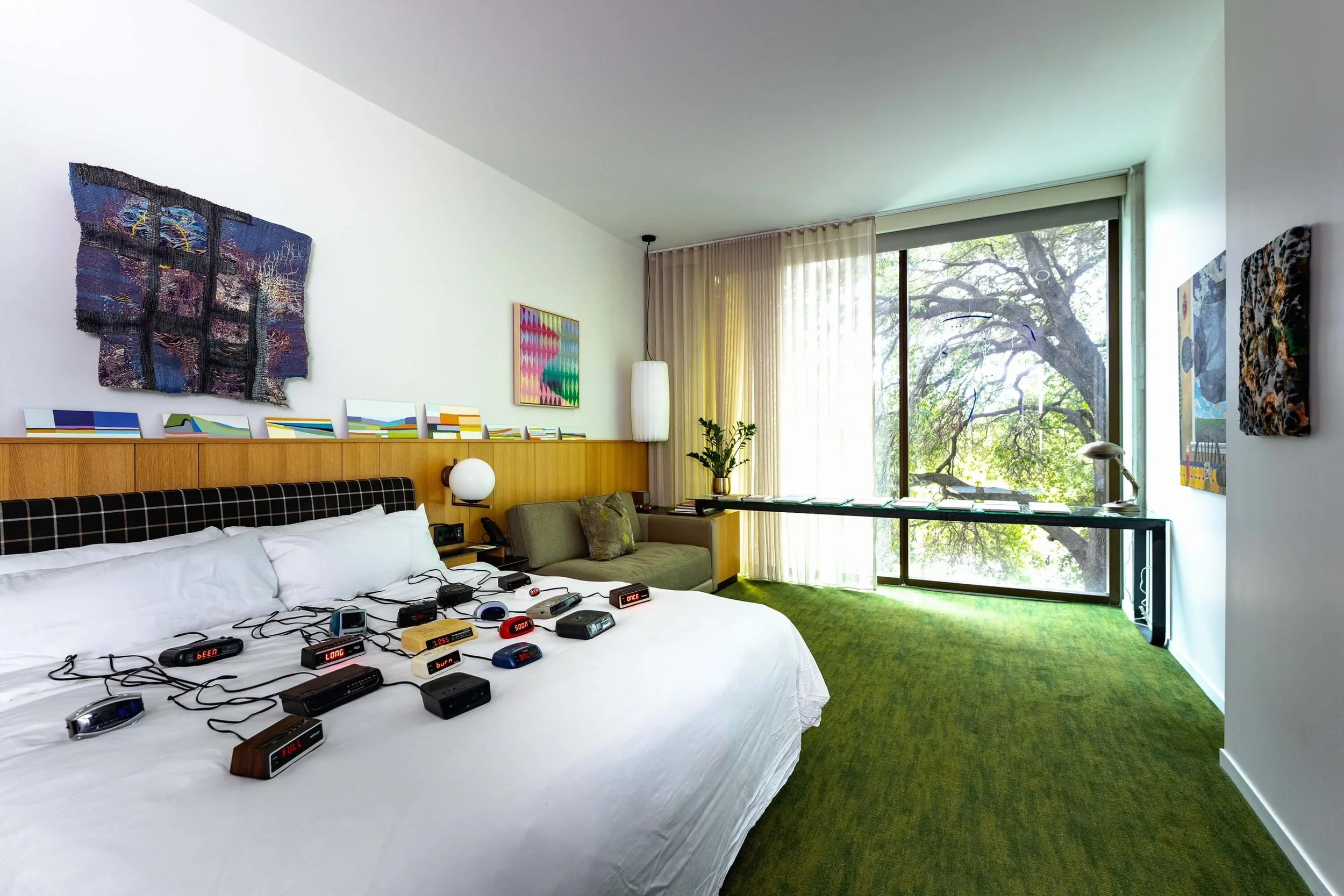
This year it was May 7th, 8th, and 9th — just our second year. It takes place in a hotel, similar to Felix in LA or the Dallas Invitational. We rent out a floor of a hotel right on the river in Austin. Each gallery gets its own hotel room, artwork on the walls and in the bathrooms, and the freedom to play with the space. It's intimate. You can actually see the whole fair, talk to everybody, and not feel completely exhausted after three hours.
We had great sponsors this year — Chrome Horse Tequila, Volvo, Frost Bank, which hosted a great afterparty. The Contemporary in Austin threw a huge launch party on the rooftop for us. The community buy-in was real, and I think it's a direct result of people genuinely wanting the arts to do well in Austin. There's a huge desire for it.
We had galleries from Austin, Houston, Dallas, San Antonio — and galleries I really admire from New York, Miami, LA, Chicago, Atlanta, and Taos this year. Having galleries from those cities come to Austin to show with us is genuinely flattering. And it sends a message to the Austin community: you've moved here, but you're not disconnected from the national conversation in the arts. My gallery is only six years old. The galleries I built this alongside are also relatively new. But we want to make the argument that we can hold our own alongside any of those cities.
What Success Actually Looks Like
Hugh Leeman: To pull things full circle and close out — you've said: "When I made my first sale of an artwork and called the artist, it showed me that this is what I'm supposed to be doing with my life." Let's say you dedicate your life to this for the years to come and look back at Maiden Voyage and everything that followed as a great fulfilling success. What stories do you need to continue telling through your gallery to feel that it was?
Kevin Ivester: Rarely do I step back and celebrate anything. I'm constantly excited about the next project. But taking this moment to look back — I feel so lucky. I feel so lucky that I've found something I love to do.
At the end of the day, if I hadn't gone into the arts at all, it would always have been about people for me — learning about people, celebrating people. We have so much to learn from each other. Real success is being able to support my community and the people I love, and lift the stories that matter. I want people to leave my gallery feeling like positive value has been added to their life, that they've learned something about somebody else, that they can be a more empathetic person. Pulling back the layers of hardness we need to carry around just to exist in the world, and really seeing each other eye to eye — that's complete magic. It takes a lot of vulnerability.
And the absolute best thing that happened during that first transaction was being able to call the artist and tell him I'd sold something — and just hear the joy in his voice. Seeing how excited the collector was to have acquired the piece. Yes, it all centered around a product. But it was really about two people connecting.
Hugh Leeman: That's beautiful. Thank you for doing what you do, Kevin. I appreciate you making time to share today.
Kevin Ivester: Thank you so much.
