

Miguel Novelo, Inframundo, ICA San Jose
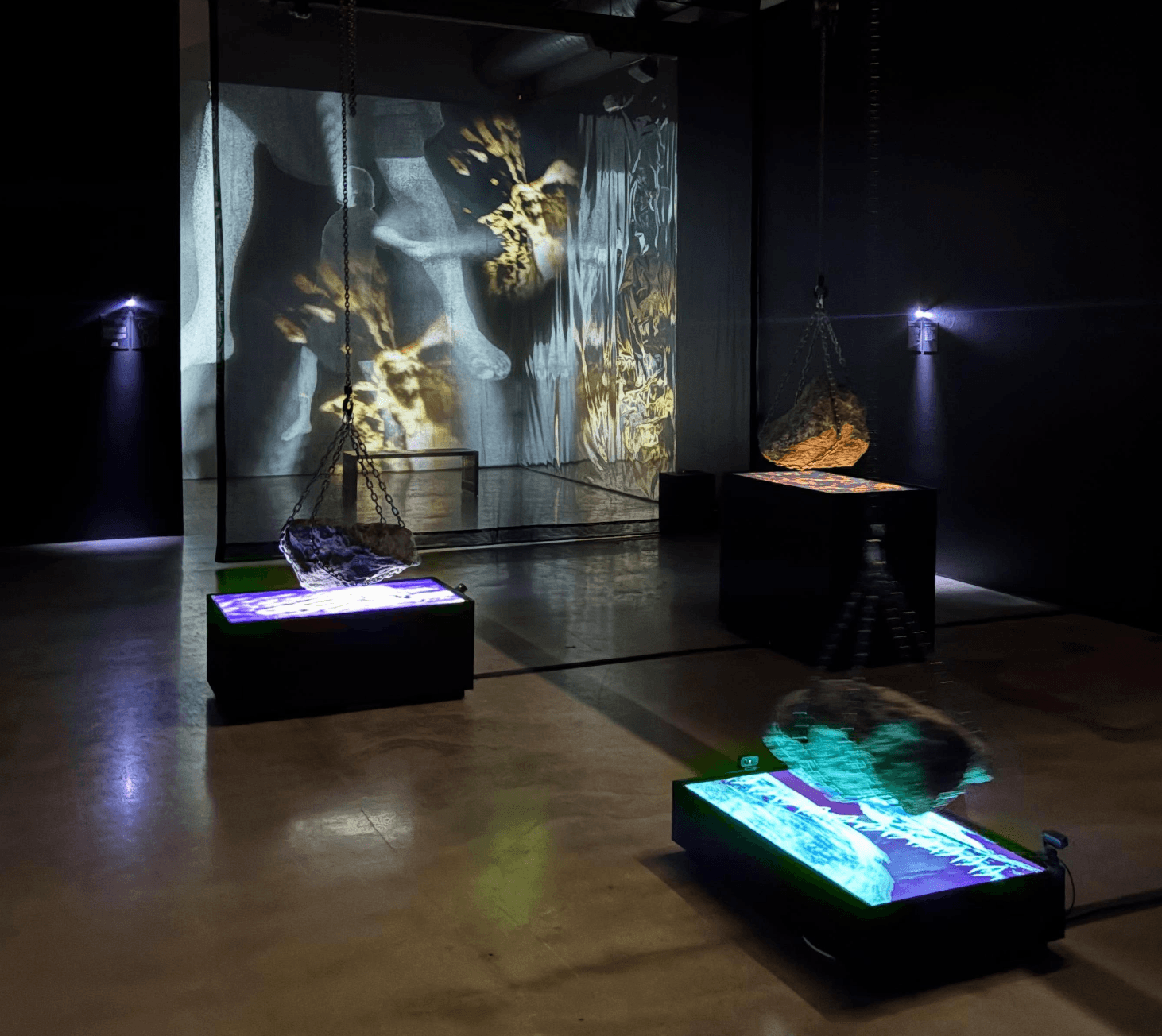
Inframundo installation at ICA San Jose, photo Svea Lin Soll
Inframundo, Miguel Novelo’s solo exhibition at the Institute of Contemporary Art San José, is at once an underworld, a cenote, and a dreamscape. An underworld, as the exhibition unfolds entirely in darkness, immersing viewers in blacked-out galleries where scattered lights glimmer intermittently, some stable, some moving. A cenote, because the exhibition takes inspiration from the sinkholes that scatter across the artist’s home region, the Yucatán Peninsula, which the Maya regarded as portals to the underworld. And a dreamscape because the machine-assisted visual effects render the exhibition spaces strangely oneiric: color patches flicker through the dark, reflected grids glow faintly across the floor, and a constellation of lights drawing viewers in. Throughout the exhibition, technology functions less as an opposite to the sacred or ecological references than as another way of mediating them.
To enter the exhibition, you lift a set of thick curtains and wait for your eyes to adjust. The sudden darkness pauses your steps. On the left, an infrared silhouette catches your attention, and it takes a moment to realize the figure is your own. Just as you try to discern yourself more clearly, the red-black footage shifts into grayscale footage of bats spiraling in silent formations. A wall label identifies this as the first artwork of the show: Vórtice-en-la-zona-silencio (2022–26). The bat footage was filmed in a cave in Calakmul and now spans a roughly circular field of light, as if seen through binoculars or a hole in the rock. According to the wall text, the intention behind the artwork was to render the bats visible only once the viewer remains still. The work thus turns stillness into a condition of seeing, asking viewers to slow down and look beyond themselves.
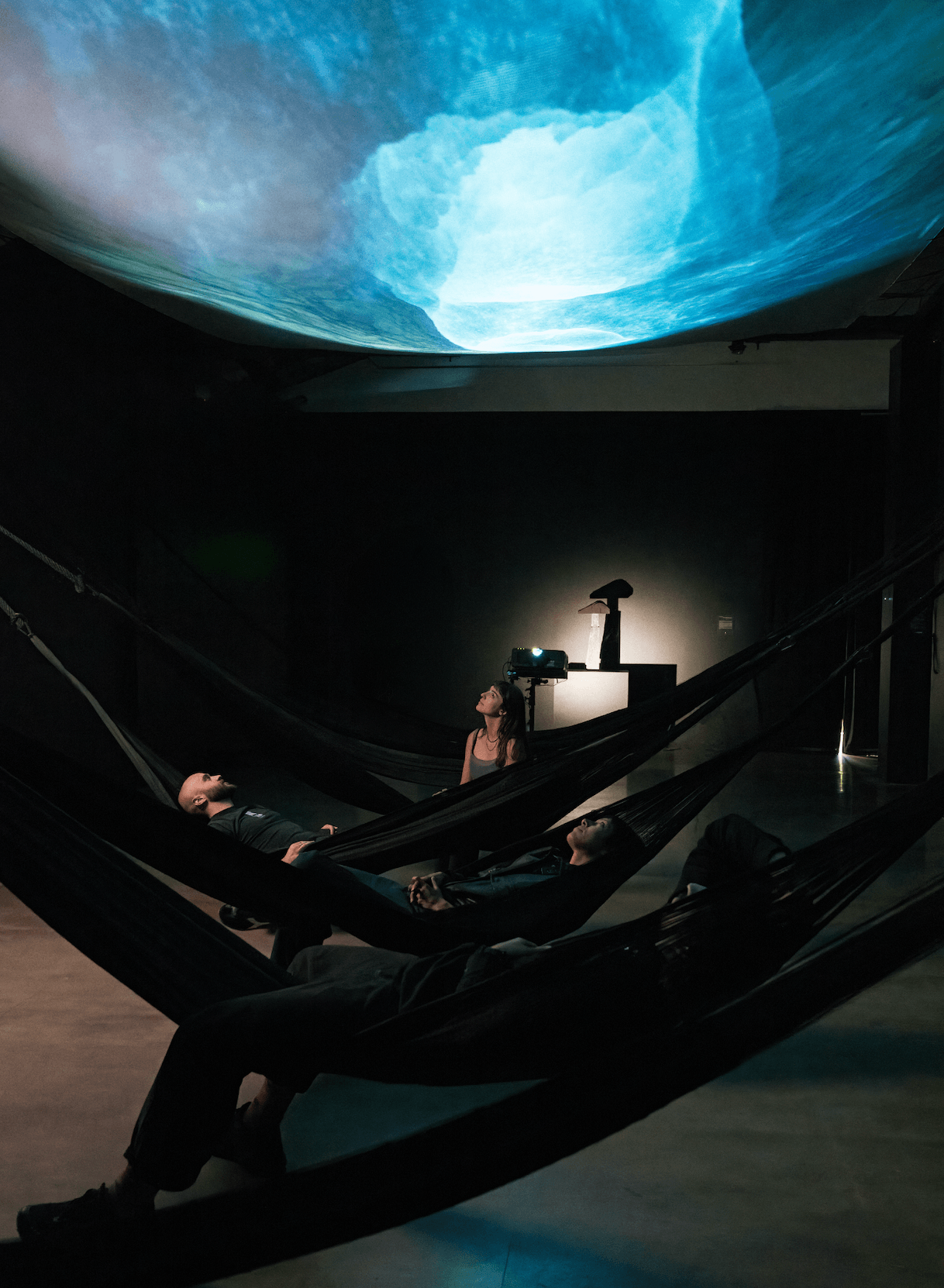
Sueños del inframundo (2026), Photo by Shaun Roberts .
The work establishes a pattern that recurs throughout the exhibition: technology shapes what can be seen. Ahead, in sueños del inframundo (2026), simulated movement through subterranean rivers are projected on a ceiling screen, and hammocks are suspended beneath the screen, inviting viewers to lie down and watch. You lay down, sway a little, and let your attention drift into the blue. The projected image resembles a passage through underwater caves, though the gentle movement of the hammock periodically returns awareness to the body watching it. Low ambient sounds breeze by, whether they belong to this installation or another work nearby remaining unclear—but the uncertainty hardly matters here. Your physical comfort assures you that you’ve been taken care of; all that remains is to follow the view wherever it takes you.
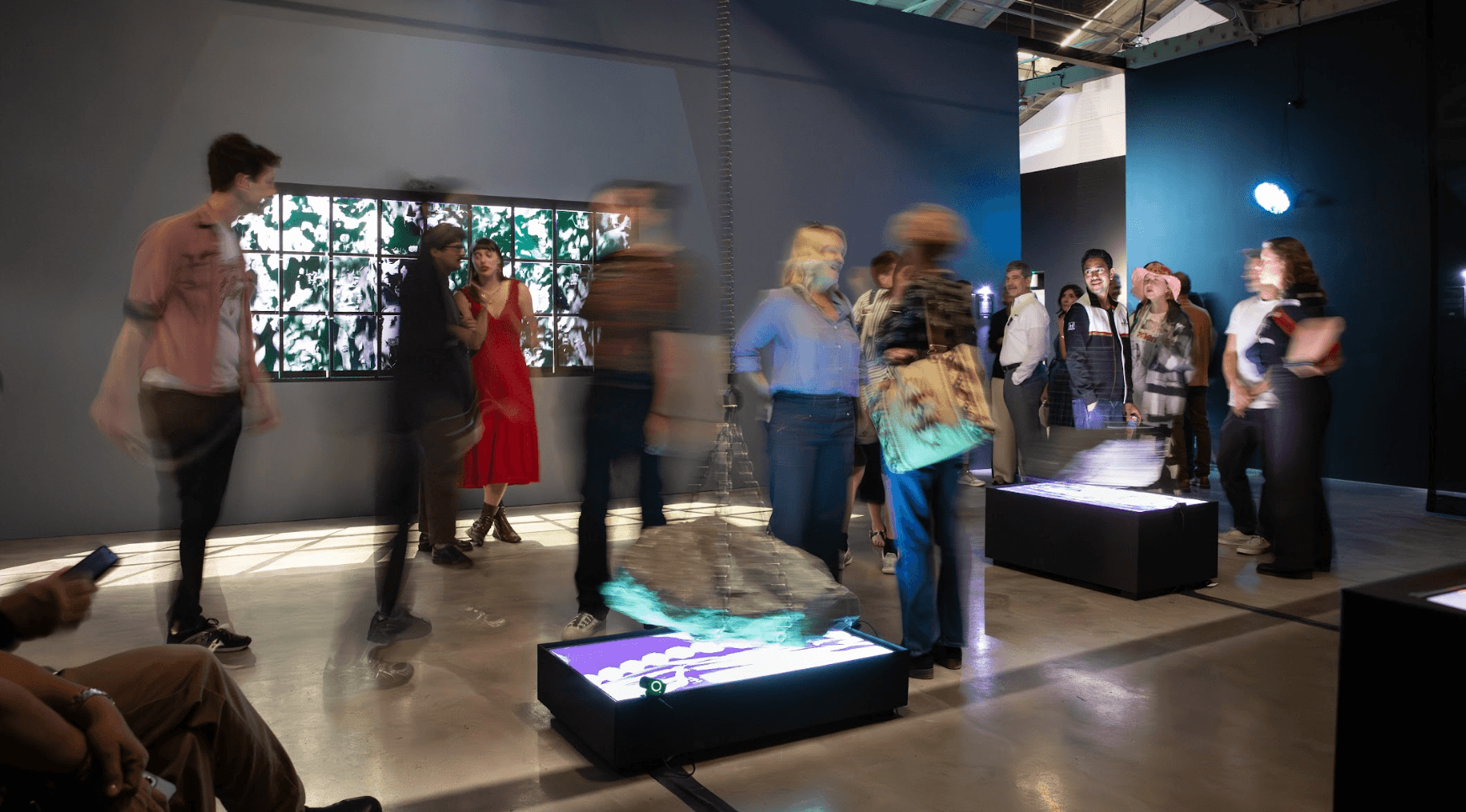
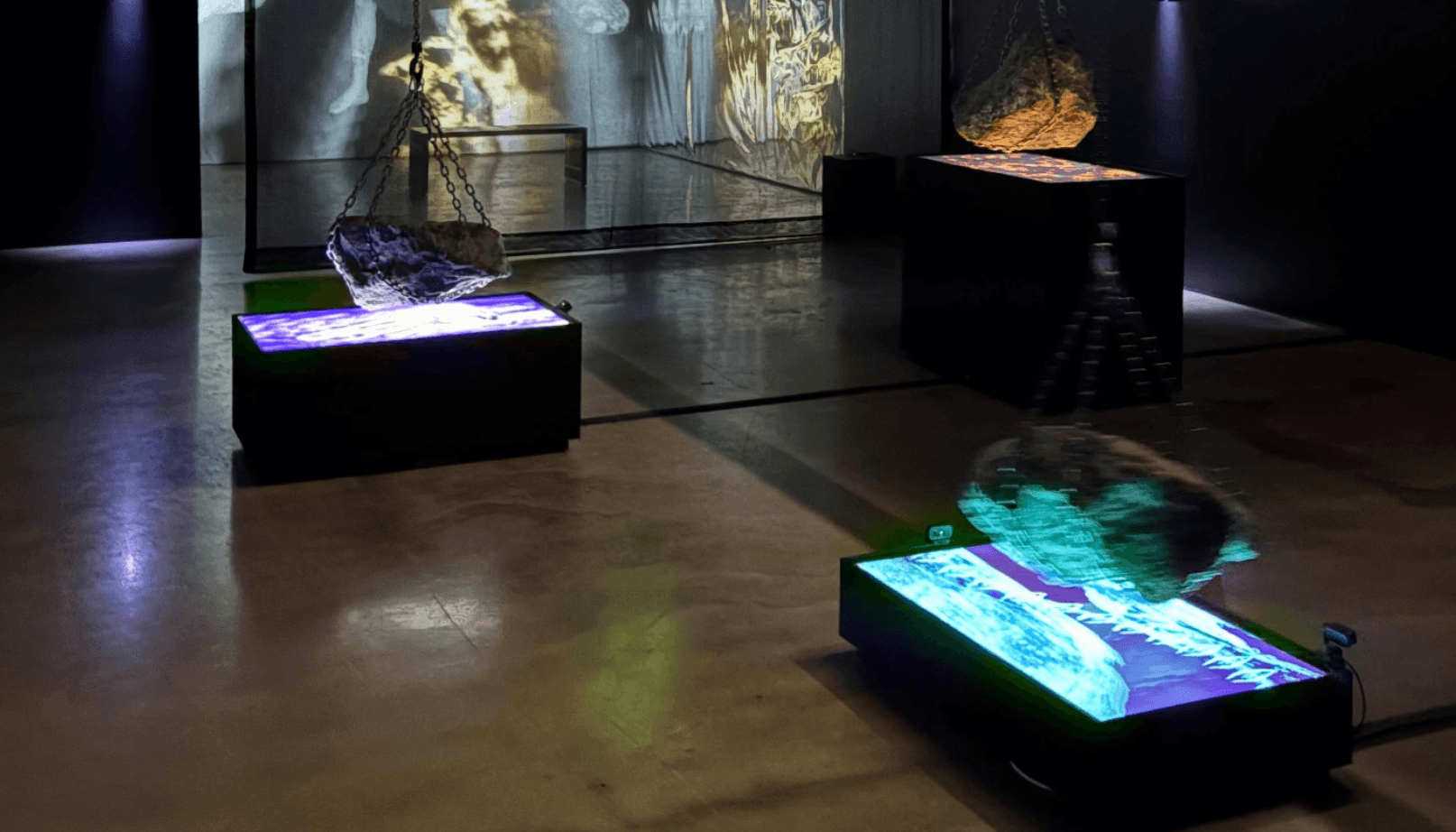
[murciélago, jaguar, serpiente y cocodrilo] (2026) Photo: Nicholas Lea Bruno
The next gallery feels more animated. In rocks [murciélago, jaguar, serpiente y cocodrilo] (2026), four serpentinite rocks hang from the ceiling beams above screens positioned close enough that every sway, rotation, or rebound triggers motion detectors below. The screens then translate these motions into abstract moving patterns overlaid with patterns associated with the title animals: reticulated forms for the serpent, rings of dots for the jaguar. Because of the darkness, the surfaces and textures of the rocks themselves remain difficult to fully make out, and attention shifts instead toward the relationship between the stones and the shifting projections beneath them. Compared to the earlier works’ emphasis on stillness and contemplation, this installation introduces an interactive and playful mode of viewing, encouraging viewers to move around and watch motion become image.
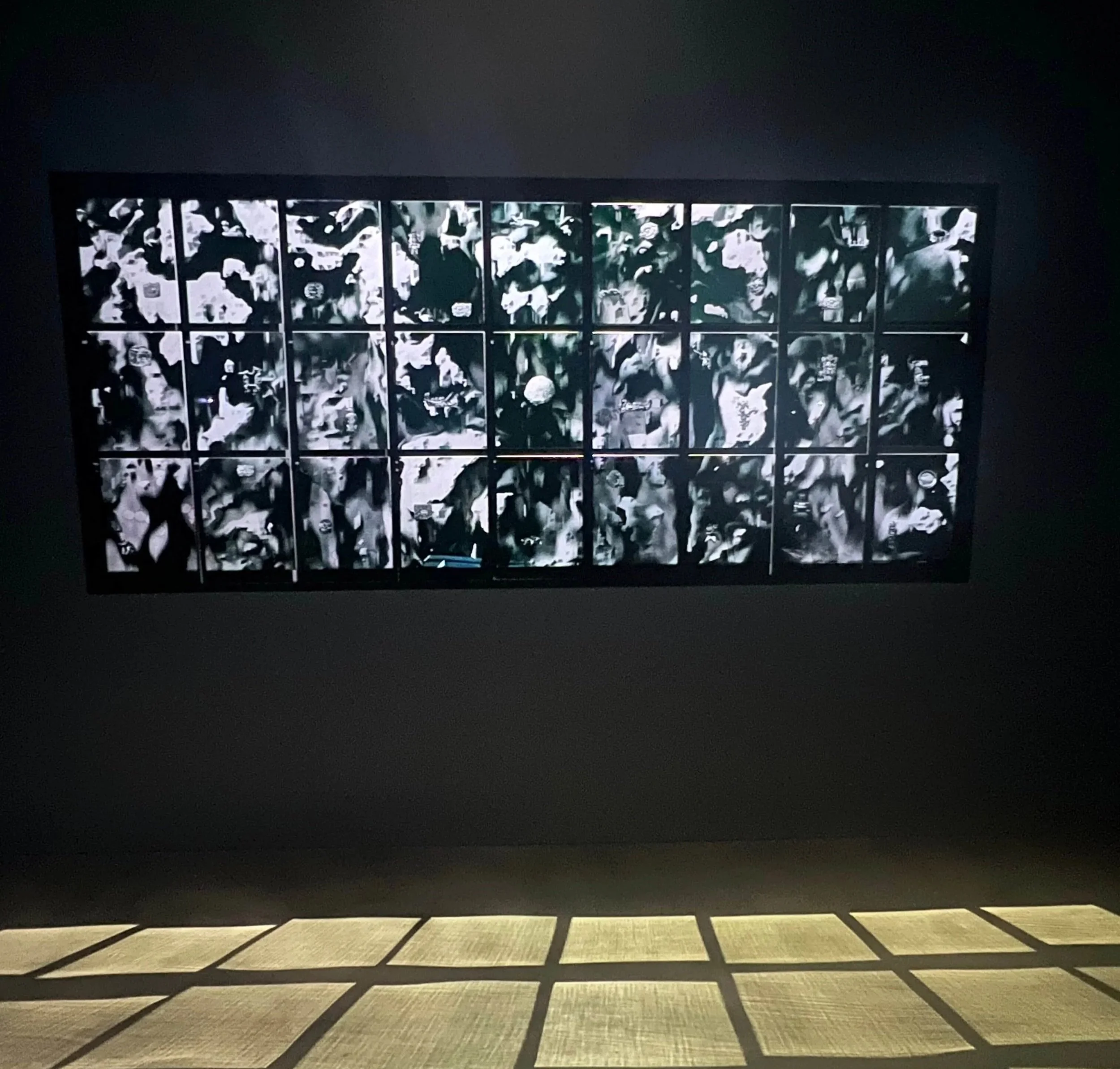
eekcheen [cenote negro] (2026)
Nearby, eekcheen [cenote negro] (2026) presents twenty-seven aluminium prints arranged in a grid and lit from above at an angle, casting reflected light across the floor. Together, the reflections and prints resemble moonlight entering through a wide window. The images themselves resemble aerial photographs or shaded-relief maps of unfamiliar terrain, though the wall text explains that they combine digital drawing, photography, and computer-generated simulations. Maya signs and glyphs, such as the “death bat” and serpent head, are embedded within these images at a smaller scale, requiring viewers to stand close enough to discern them. While this close looking reveals additional details, it does not fully resolve the relationship between the glyphs and the surrounding terrains.
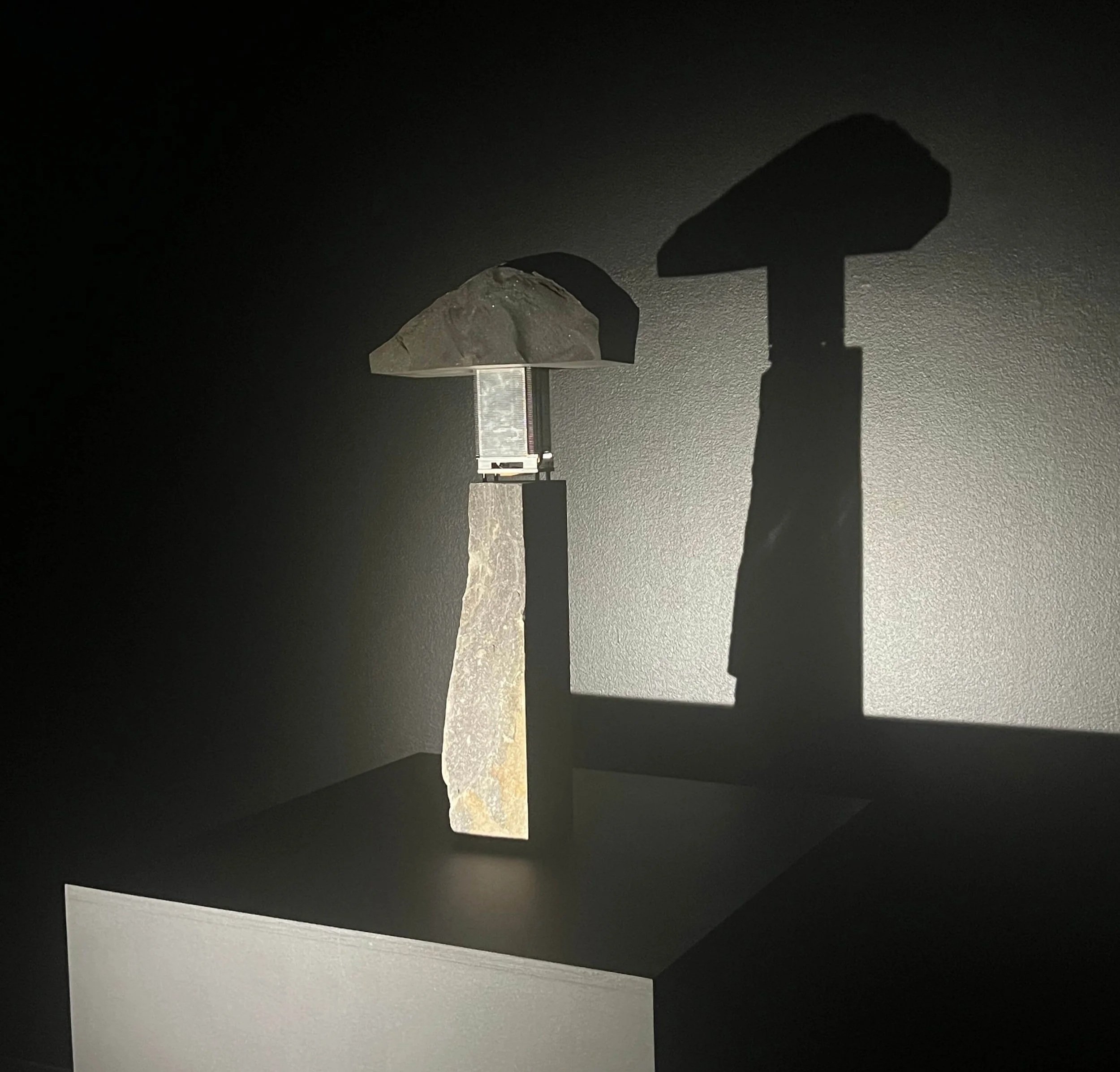
Ik, negro, noche (2026)
That sense of unexpected recombination continues in Ik, negro, noche (2026), where the juxtaposition of disparate elements suggests connections otherwise difficult to perceive. The work is a small, T-shaped sculpture made of two basalt rocks separated by a computer heatsink. Lit from below, the sculpture draws attention to the grain of the basalt, whose striations resemble currents moving within the rock itself. Positioned between the rocks, the heatsink appears to channel this latent energy from one to the other. Its ordinary function as a regulator of thermal flow accentuates the basalt’s striations, making them appear less like static markings than currents within the stone. The work references the Maya glyph Ik’, associated with wind and vitality, though the relationship between the basalt, the heatsink, and the glyph remains suggestive rather than fixed.
Overall, in Inframundo, darkness becomes less a limit on vision than another way of organizing it. The exhibition succeeds because its immersive atmosphere reorients attention toward what emerges slowly, partially, and at the edge of perception: bats, grids, simulations, shadows, stone. Even in the dark, there is so much to see.
