
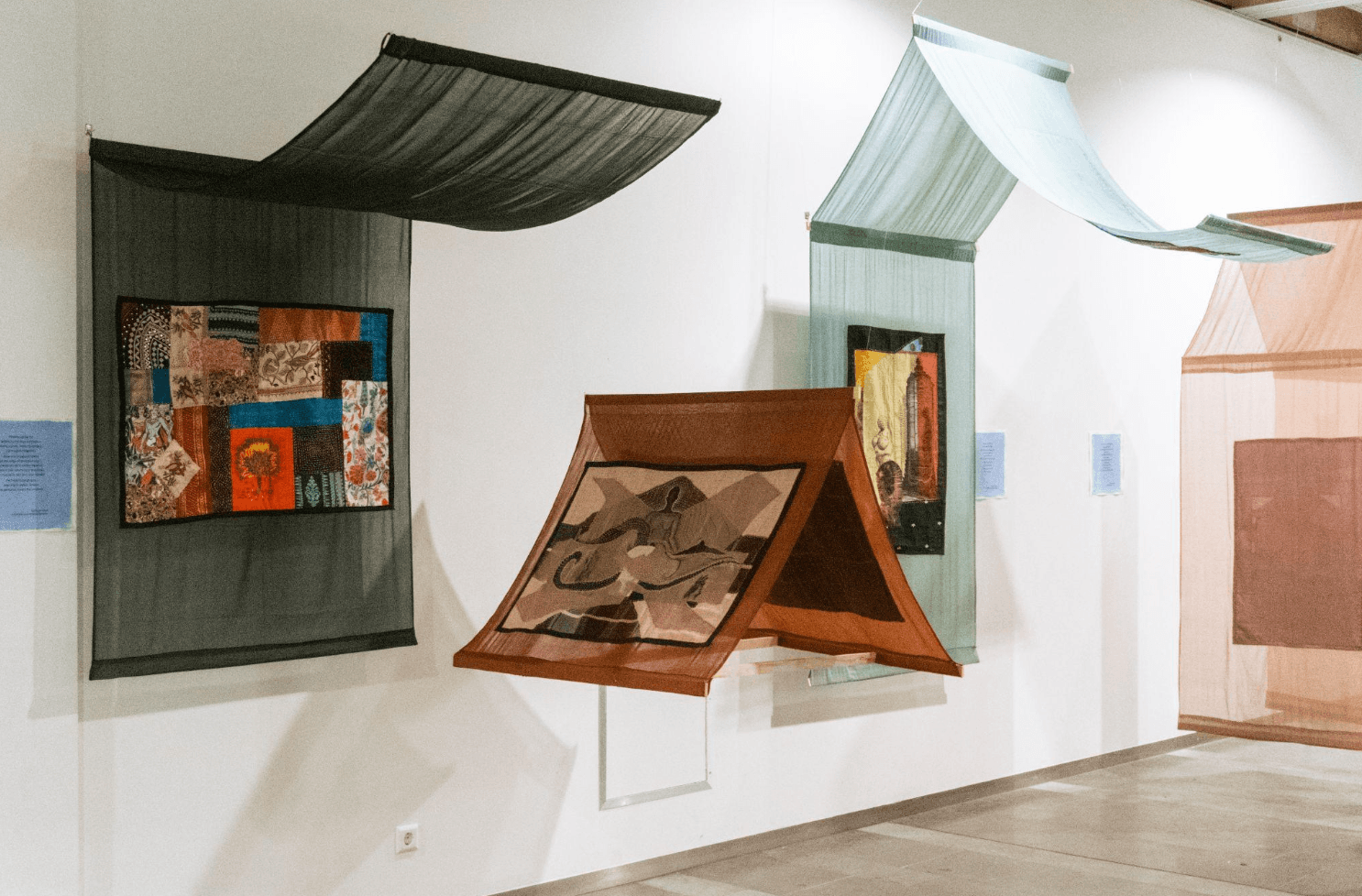
Bonds Per Stitch. Image Credit: Framer Framed, Stadsloket Oost, Amsterdam.
Bonds Per Stitch is a show by Rucha Kulkarni, an artist of Indian origin who lives and works in the Netherlands and India. Large quilts are tactfully displayed within a space at the municipal office of the East district of Amsterdam. Textiles, memories, stories, emotions, materials, movements, people, boundaries, homes, artistic traditions, and numerous introspective narratives feed into Kulkarni’s works as she navigates a diasporic culture and environment, constantly blending and battling opposing pulls of various kinds. The quilts in this show are the result of these plural perspectives informed by listening, sharing, and contemplating migration histories, centered around people in an attempt to understand the concept of home as an immigrant.
In Kulkarni’s previous work, Quilt Culture, she worked with the godhari makers, the traditional quilting communities of women from India. Creating a shared safe space for conversations, talks, and skill-sharing, keeping a generational form of craft alive while building trust. Working in small groups and sharing stories facilitated a support system that grew into a micro-financing project until COVID-19 hit, when it had to be shut down. Hence, the concept for Bonds Per Stitch was born not of an epiphanic moment but out of a methodological approach that the artist has strengthened over a decade, rooted in the innate character of a traditional quilting practice. Women speak, share, and build trust as they sew.
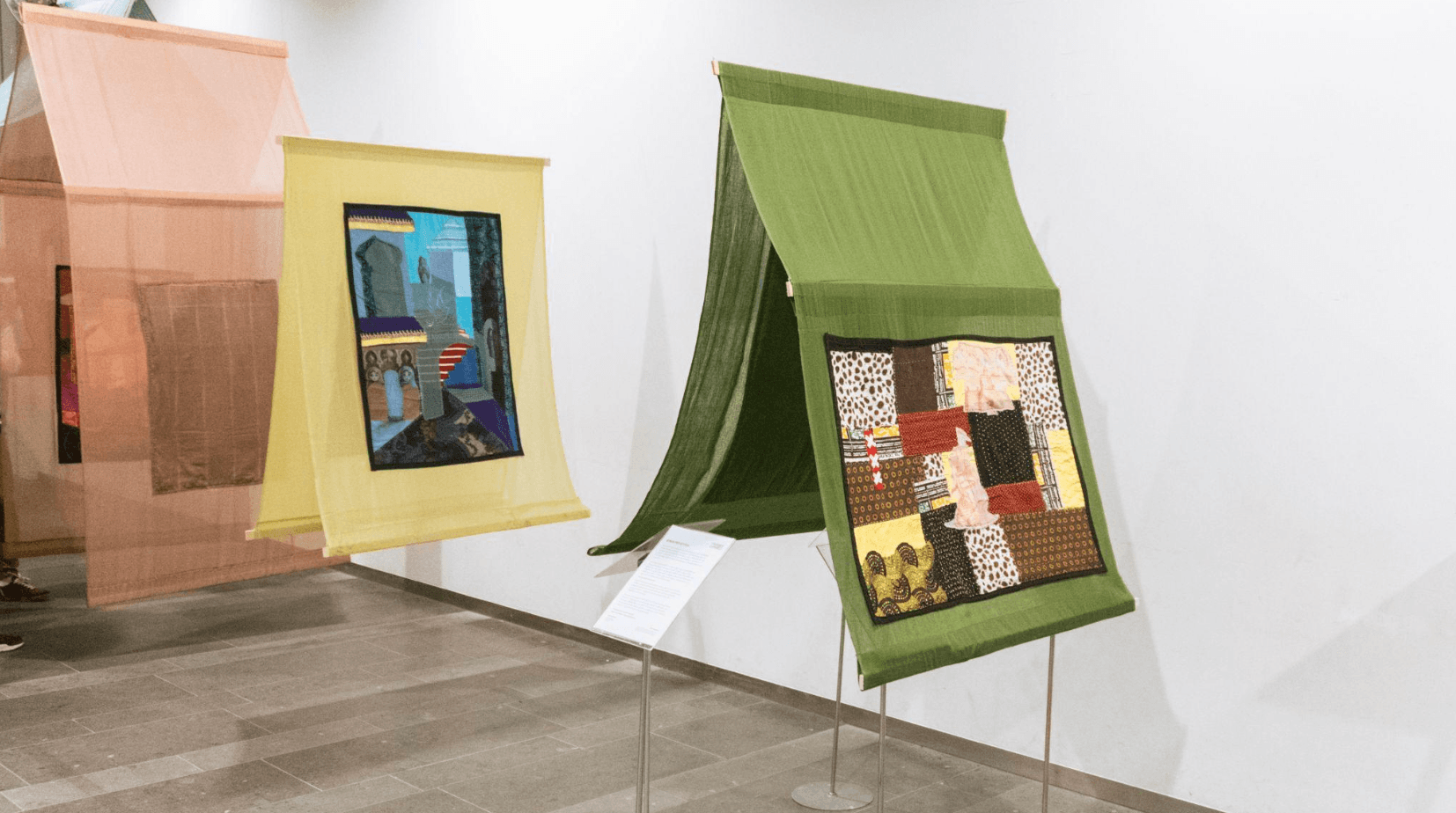
Bonds Per Stitch. Image Credit: Framer Framed, Stadsloket Oost, Amsterdam.
After moving to the Netherlands, the artist constantly faced the ambiguity of redefining the concept of home, which previously was not as complex, until boundaries, skin, language, accents, tastes, and numerous other unconditioned factors came into play. Further, she missed being amongst women like her quilting community. The artist says, “I wanted to understand different migration histories, especially of what a home meant for immigrants.” The integration programs from the neighborhood centers helped her connect with other women like herself. The initiation talks transformed into a discursive space, interestingly establishing trust-based bonds. This eventually helped her develop her method of the quilt-talk methodology. Kulkarni adds, “These talks opened a plethora of interpretations of a home, from a small piece of cloth, a shop, food, home as a stride, the now-ness of life, a mother, a heart, a motherland, of a world beyond, an imagination, etcetera.”
The conversations and the sewing process progressed in stages. A primary quilt made by the participants was followed by a response quilt made by the artist. Here one needs to explicate the notion of authorship, as the artist provides due credit in the show to the participants, namely Mo Chen, Neyde Lantyer, Ijlal Taous, Regina Kelly, Linnemore Nefdt, Pradnya Parasakar, Ossa Kierkegaard, and Dejana Vuckovic Simovic.
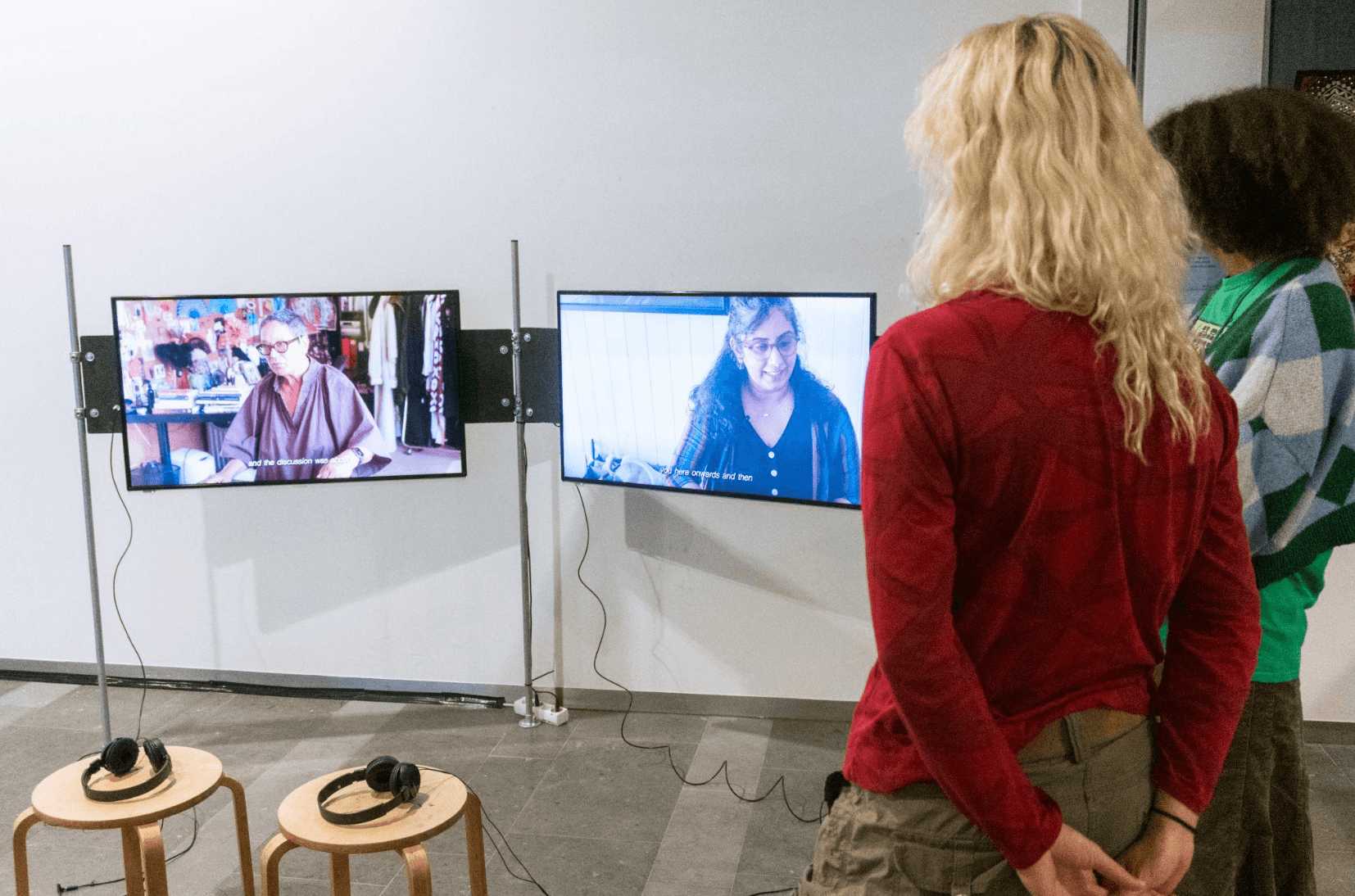
Bonds Per Stitch. Image Credit: Framer Framed, Stadsloket Oost, Amsterdam.
The correlation between the primary quilt and the response quilt stands as an active conversation. The participants, over a period of time, collected images, material references, and various visual inputs that facilitated the composition. Developed by gathering, blending, and contemplating the past and the present, the intangible and the tactile, these works build on the primary premise of quiltmaking, which is rooted in ‘re’-purposing, or ‘re’-thinking, while, in this context, stringing in the existential essence. Each work calls for a closer look, as micro-narratives reveal themselves or tease through conjured layers. The artist recalls her trepidations of initially approaching people, believing that, “Would people want to share their personal lives, feelings and fears, knowing that we come from different backgrounds, yet what came forth, and further strengthened my belief in the power of a social and community-based art practice, is that we are much more similar than different. Once a sense of trust is established, the differences barely matter.”
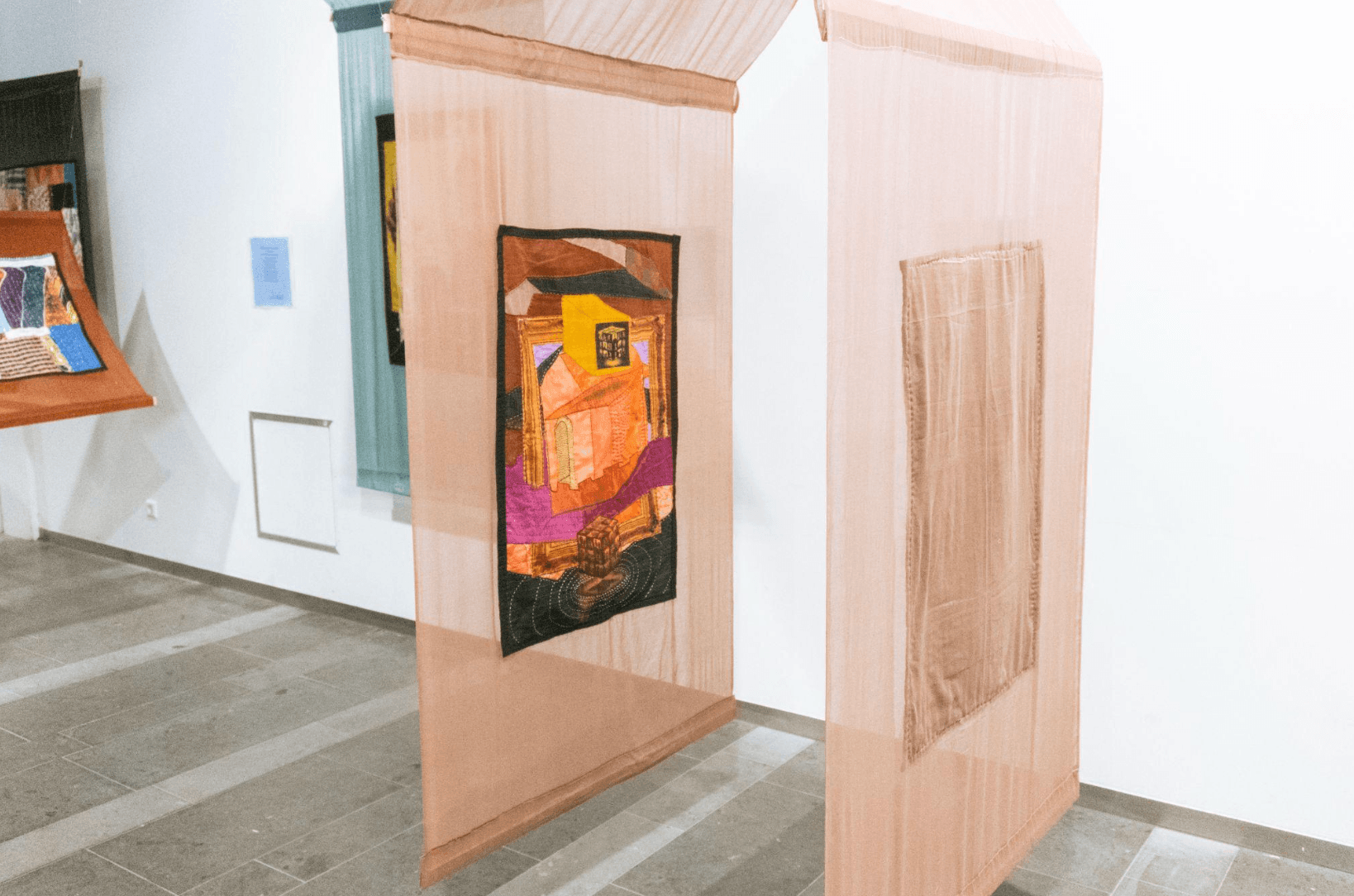
Bonds Per Stitch. Image Credit: Framer Framed, Stadsloket Oost, Amsterdam.
The show brings forth two major aspects. One, which directly correlates to the space of display, the gallery Framer Framed, Stadsloket Oost, Amsterdam, and the other, on decolonizing a form of craft practice. To begin with, the huge exhibition space is part of a government building, where people come to verify their legal documents in the hope of getting access to a new life in a new place. Evidently, inducing a sense of anxiety. Elke Uitentuis, who leads the Community and Learning Projects at Framer Framed, mentions, “These quilts, through their soft material, connect with people who come in. We see people sitting there, with their documents, seeing the work; maybe they feel less alone.” The soft, mentally comforting, and a known soothing effect of a quilt is barely unknown to anyone and helps break the opacity of the work. Calling the viewers to take a closer look as they flow through the space. Also, collating the political and practical processes and pressures of immigration with the personal and private sensitivities. This efficiently breaks the mundanity and redundancy of the concept of the home into a renewed context.
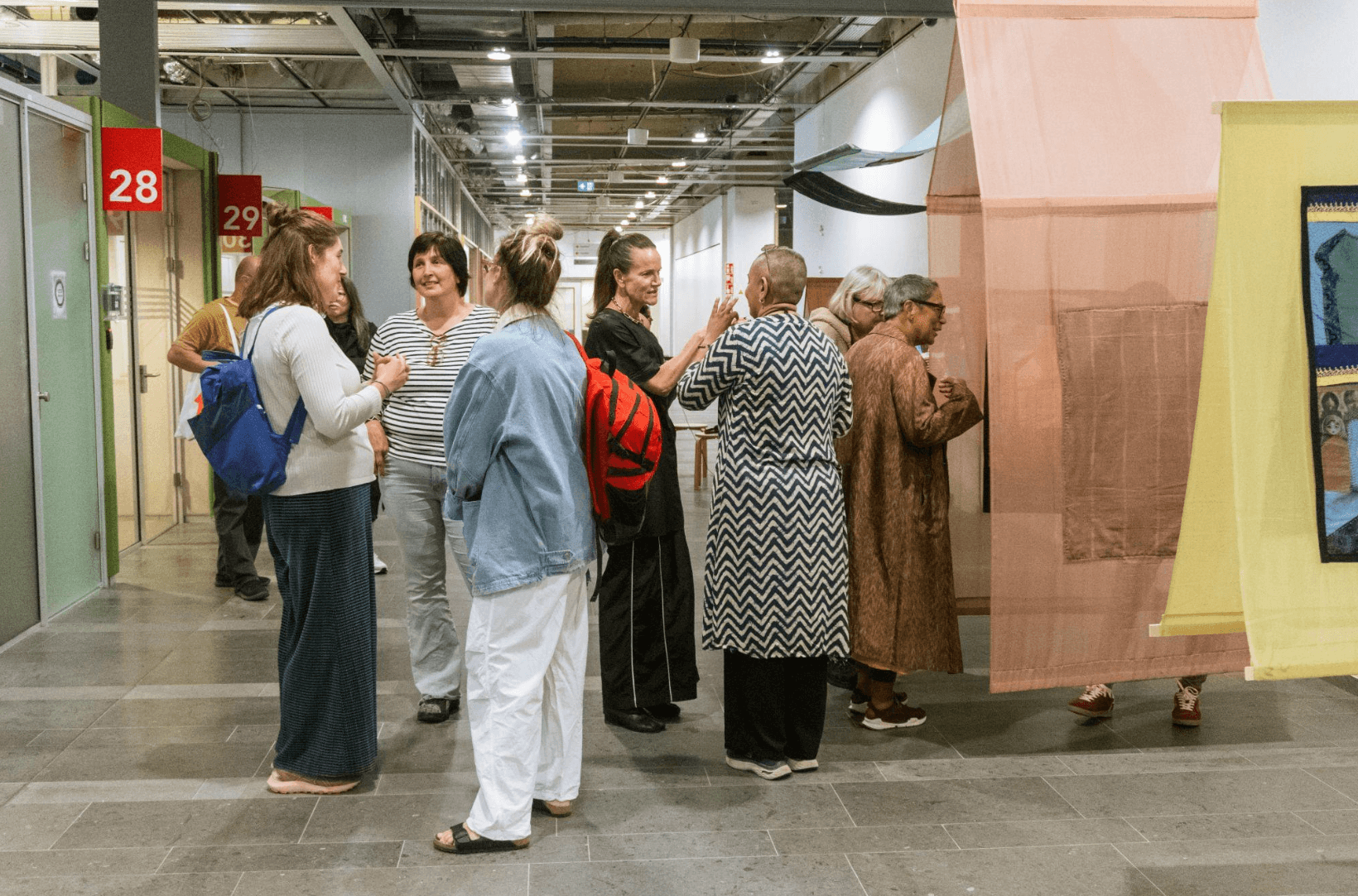
Bonds Per Stitch. Image Credit: Framer Framed, Stadsloket Oost, Amsterdam.
Further, Kulkarni’s use of the hand-sewing technique of the godhari makers is a statement in itself. Once relegated as a purely skill-based craft, the technique never received the status of a discipline within the high arts. Many of the traditional quilting communities have been exploited as laborers by designers and brands who designate these rightful artists as laborers. Asserting the innate community-based social aspect of the godhari makers Kulkarni within her contemporary practice, she achieves a successful merging ground to rethink the fluid concept of a home.
The show is open till Nov 13, 2026.
