
Ruth Pastine, Colorscape, Scott Richards Contemporary Art
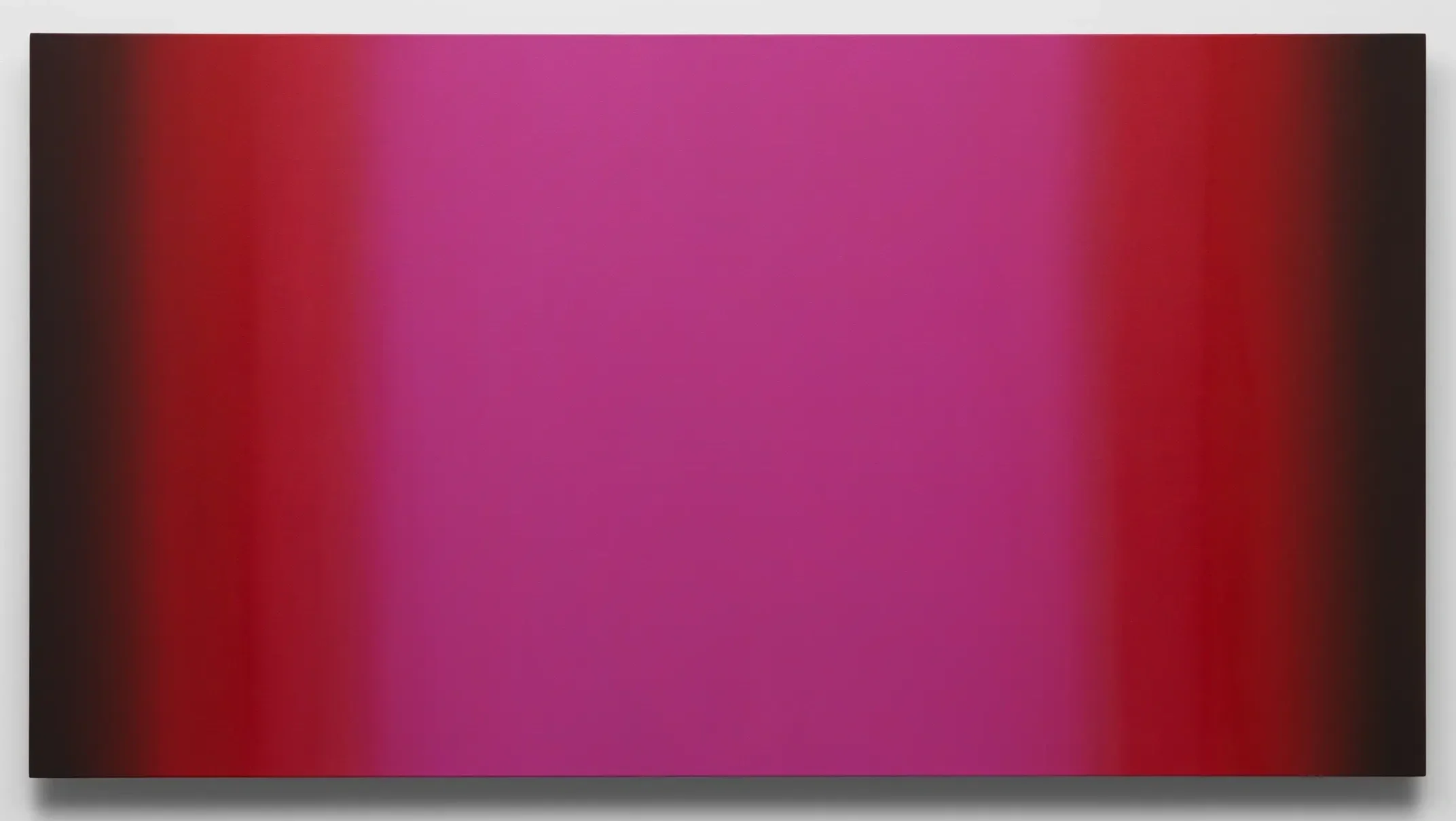
Red Magenta, Colorscape I, 2026
oil on canvas on beveled stretcher
48 x 90 x 3 inches
By Hugh Leeman
What would happen if our screens stopped functioning tomorrow? Would we experience the noun of attention transform into the verb of focus? Would we rediscover the sensory experience of being a human, but come face to face with how disconnected we'd become from the profundity that was always there, seemingly parallel to here, but nowadays more distant than ever?
California artist Ruth Pastine's Colorscape at Scott Richards Gallery offers a sensorial experience through engaging, vibrating colors on tonally graduated, allover canvases that evoke a sense of intimacy and wonder at color's ability to alter mood. Pastine's paintings construct an environment adjacent to the piece by beveling the artwork's back edge, casting shadows around the work, and creating a subtle sense that one has approached an object framed by the very shadows it casts. Such shadows enhance the sense that light comes from within the canvas itself, turning the paintings into places that could be entered as if perceptual portals into another world.
While Pastine's colors appear to hover or vibrate by stimulating the rods and cones in our eyes, causing asynchronous stimulation that forces our eyes' photoreceptors to adjust between the signals of light and color and the brain's ability to process them, her results are more spiritual than scientific. Sitting in front of her canvases and staring off into their space creates a sense of motion that summons descriptions of audio-visual hallucinations shared by patients in psychedelic trials, which carry them to states characterized as "my thoughts wandered freely", "I felt a general sense of gratitude", and "I felt open to all emotions".
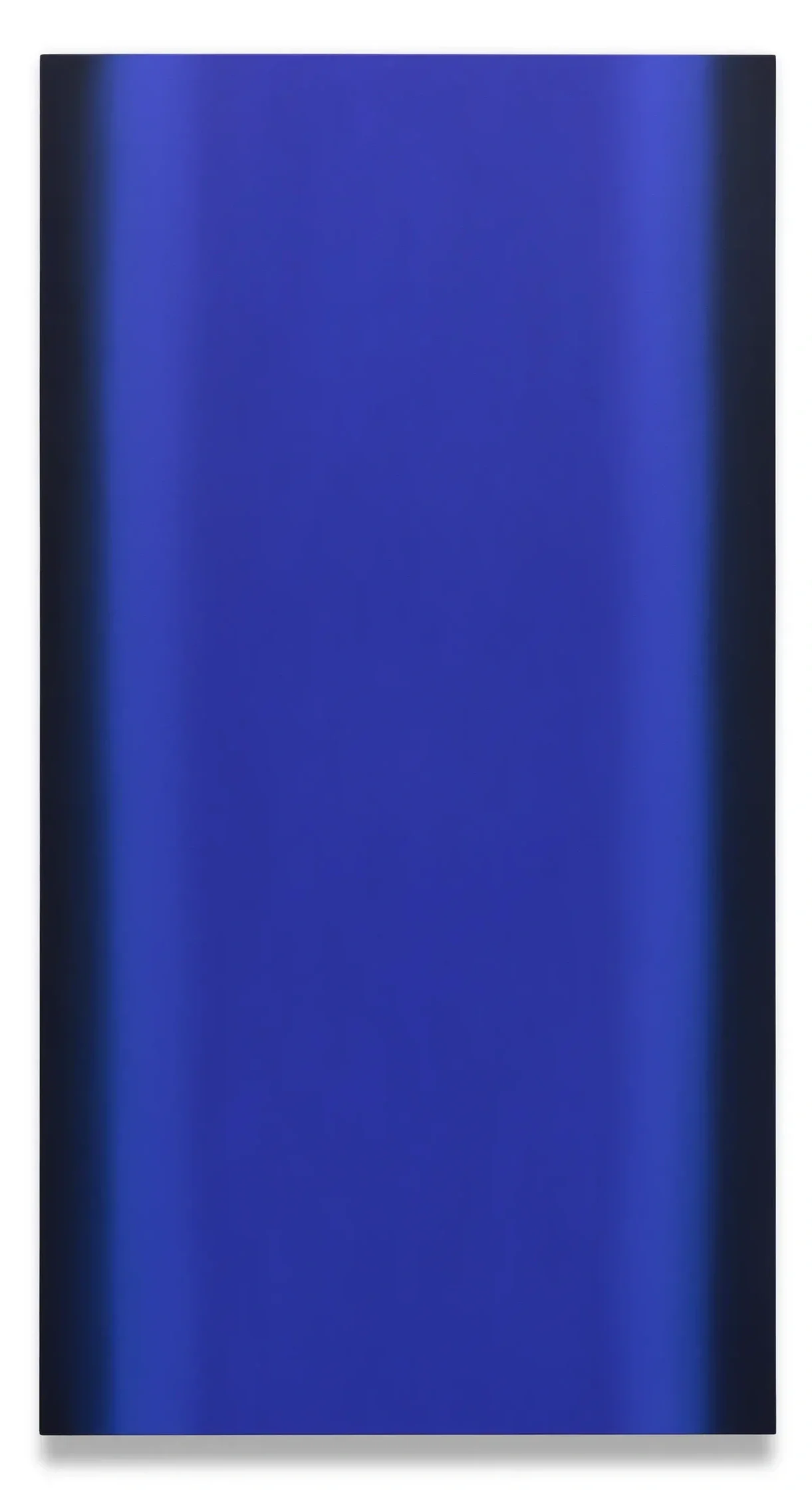
Blue Deep, Colorscape I, 2026
oil on canvas on beveled stretcher
90 x 48 x 2.5 inches
Colorscape's canvases evoke mythology's rich history of entrances situated amidst the mortal world, which lead to the beyond. These openings in legendary recounting are said to be accessed by chance, through screen-like veils of foggy mists, where the otherworldly resides parallel to here and now.
Pastine's canvases act like such screen-like veils, opening into a space parallel to our world of attention-grabbing, dopamine-drenching content, through her colorfield mist, entered with the payment of focus. The artist describes the experience of their creation as "Being in the present moment for the sublime is an understanding of both a terror and a beauty, being confounded by an awe, something much greater than ourselves."
20th-century art critic Clement Greenberg once noted that, "The superior artist is the one who knows how to be influenced." For Pastine, those influences call forth modern artists who abstracted light, layered color, and similarly stimulated the rods and cones in our eyes to create spaces both real and metaphysical. For the viewer with imagination and the time to pay focus, the trip is awarded a passage to the phenomenon that could carry us toward the sublime she experienced in making them.
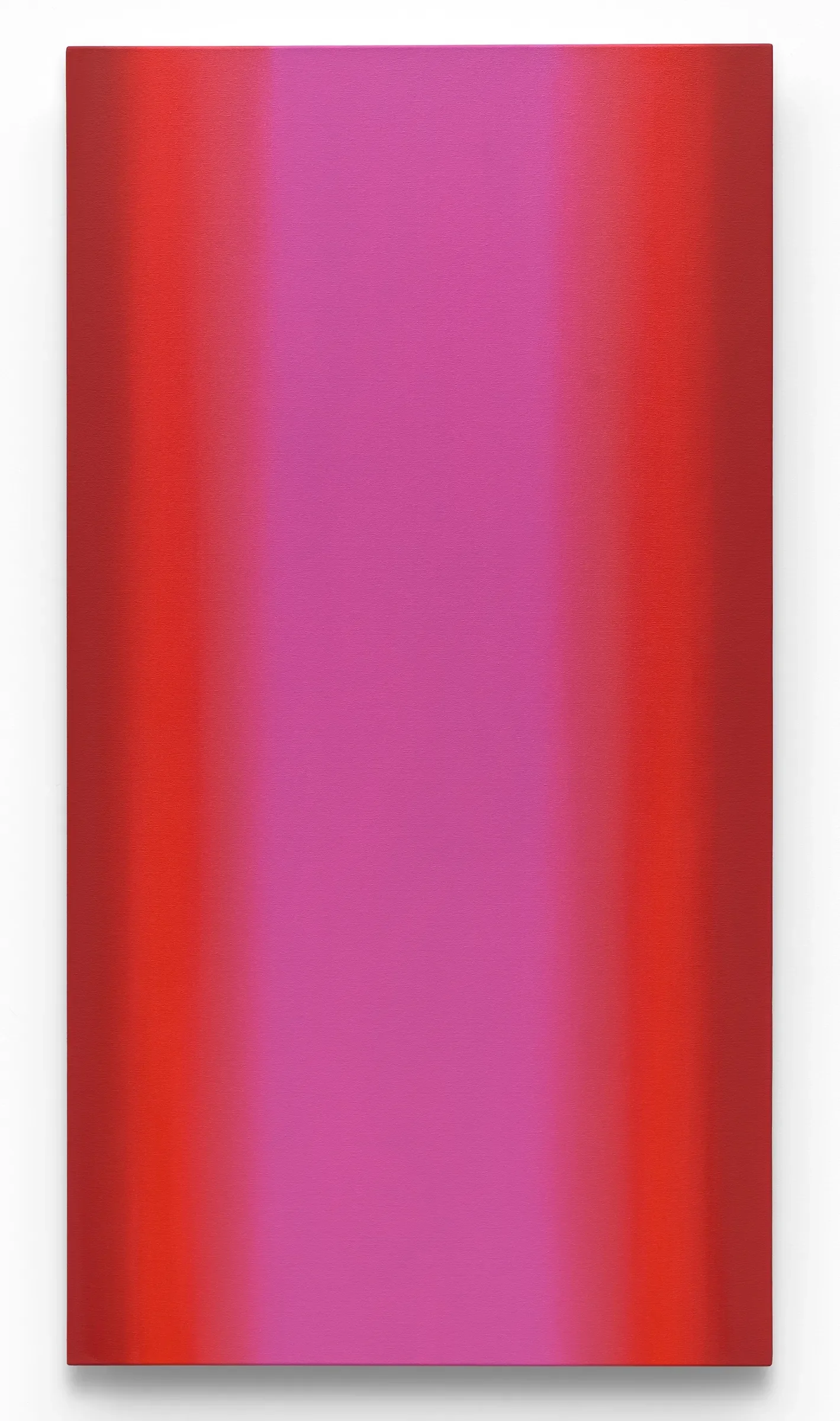
Red Magenta, Colorscape II, 2026
oil on canvas on beveled stretcher
60 x 32 x 2.5 inches
Red Magenta, Colorscape II, 2026 recalls minimalist light artist Dan Flavin's homage to color field painter Barnett Newman. Flavin's piece, untitled (to Barnett Newman) two, used fluorescent lights to frame a corner where two gallery walls met, constructing a spatial bath of light, distorting our sense of place. In doing so, Flavin pulled the banality of a room's corner towards the realm of a mythological portal. For Pastine, the light ballast appears as blurred streaks of purple that equally frame the viewer's focus towards a levitating magenta colorfield that falls away from the red edges of the artwork, offering us entrance into the distant corners of perception.
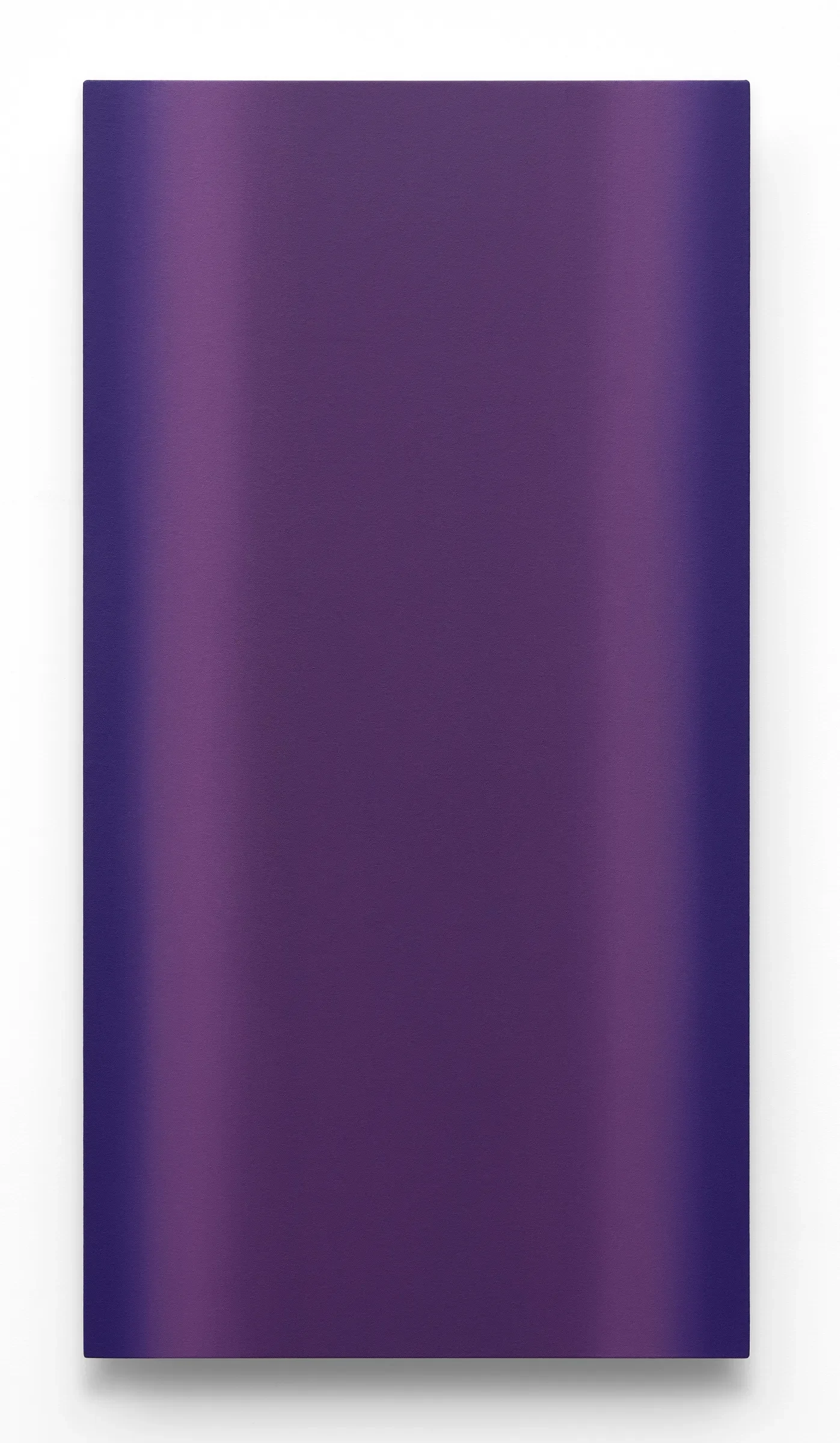
Violet (Yellow), Colorscape, 2026
oil on canvas on beveled stretcher
48 x 25 x 2.5 inches
VIOLET (YELLOW), COLORSCAPE, 2026 summons the viewer's attention to its center by framing the artwork's edges in violet, then layering nearly imperceptible yellow that optically blends with the violet to create a hazy purple that skirts the edges of gray. The spatial effects from afar recall light artists James Turrell's construction of space, while her layering of paint to achieve sensorial effects recalls Mark Rothko's allover color field canvases, where color hovers over the artwork as if a misty screen we penetrate to pass from our world into one illuminating the present moment's ability to confound us with awe.
In 1943, Mark Rothko and fellow abstract expressionist Adolph Gottlieb, with the support of Barnett Newman, co-authored a letter to The New York Times stating that "art is an adventure into an unknown world, which can be explored only by those willing to take the risks." That same year, in a draft manuscript, they waxed equally poetic, "we deny that the world of art has any objective appearance. The world is what the artist makes it." Pastine has made a world that, if we engage, leaves behind the noun of attention captured by the screens of our hands to experience the verb of focus, where the passage through her mist-pigmented screens into the adventure of an unknown world, parallel to here, is unencumbered by any time but the presence of now.
