
Maria Jenson
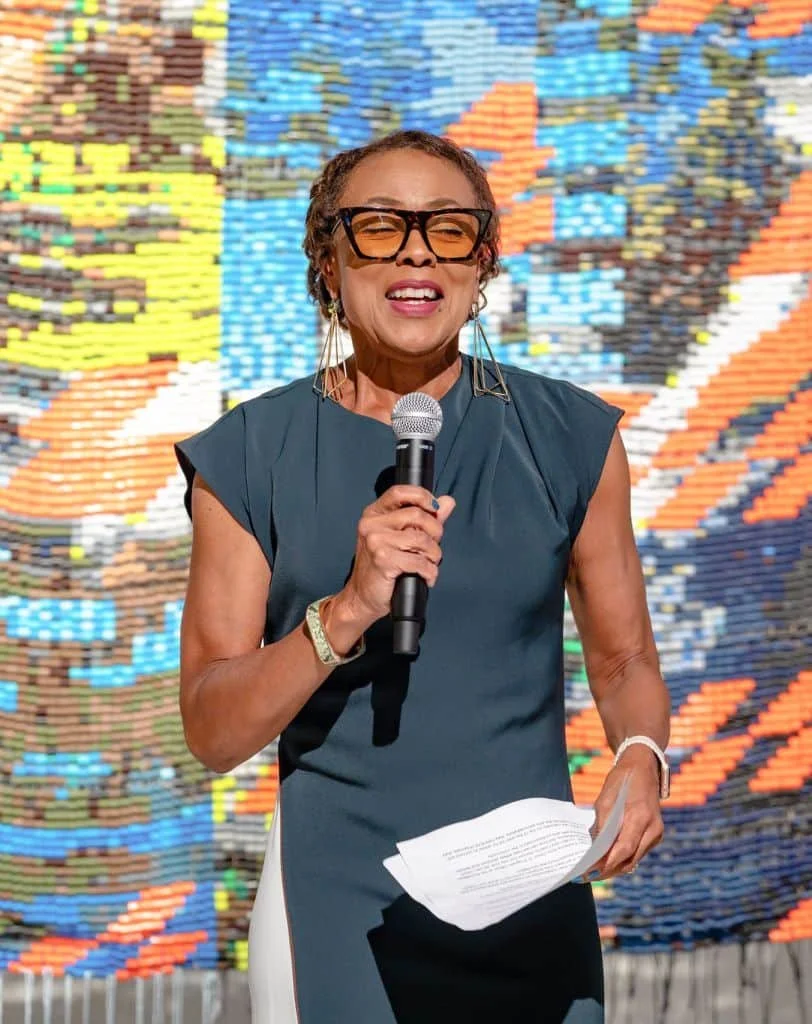
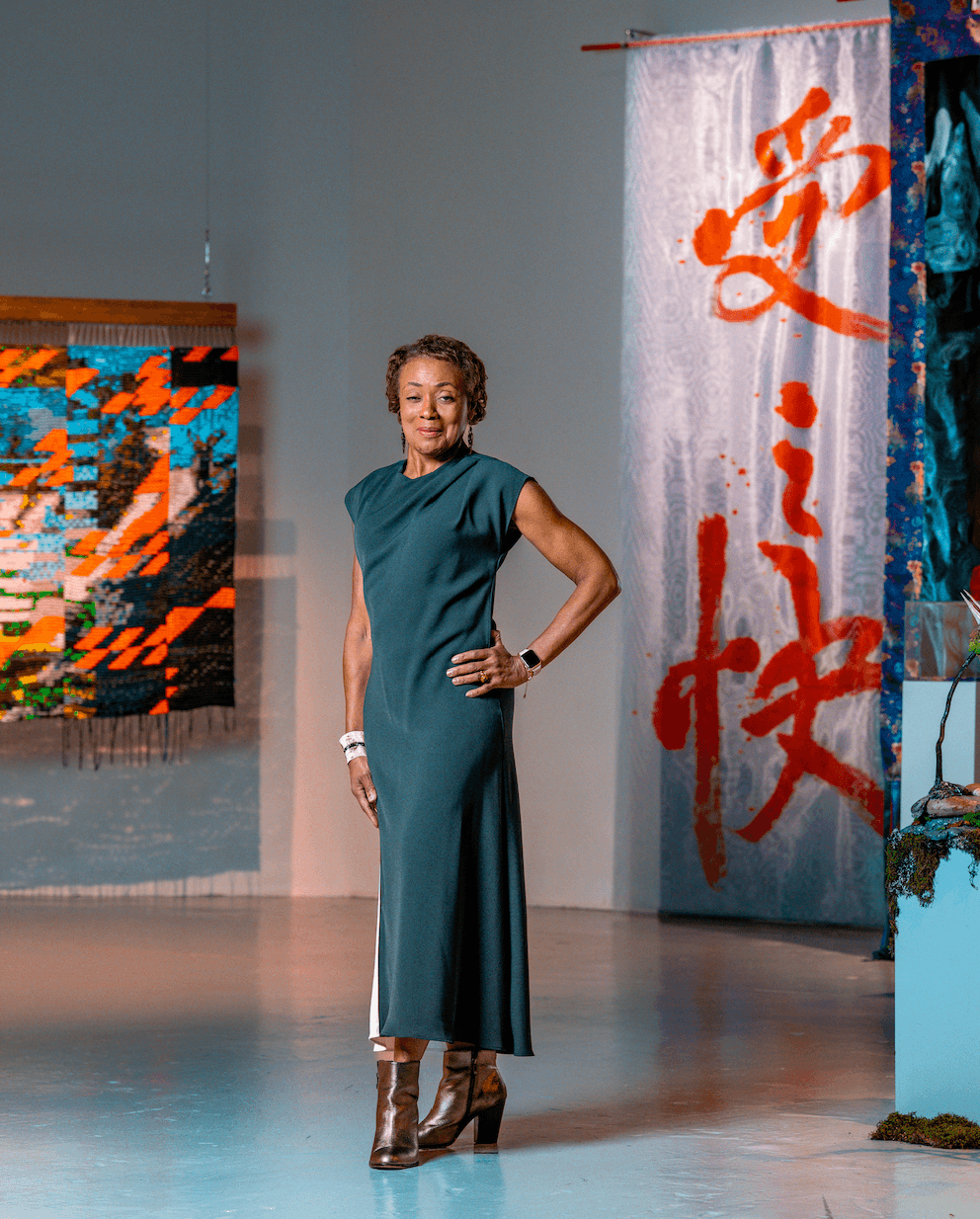
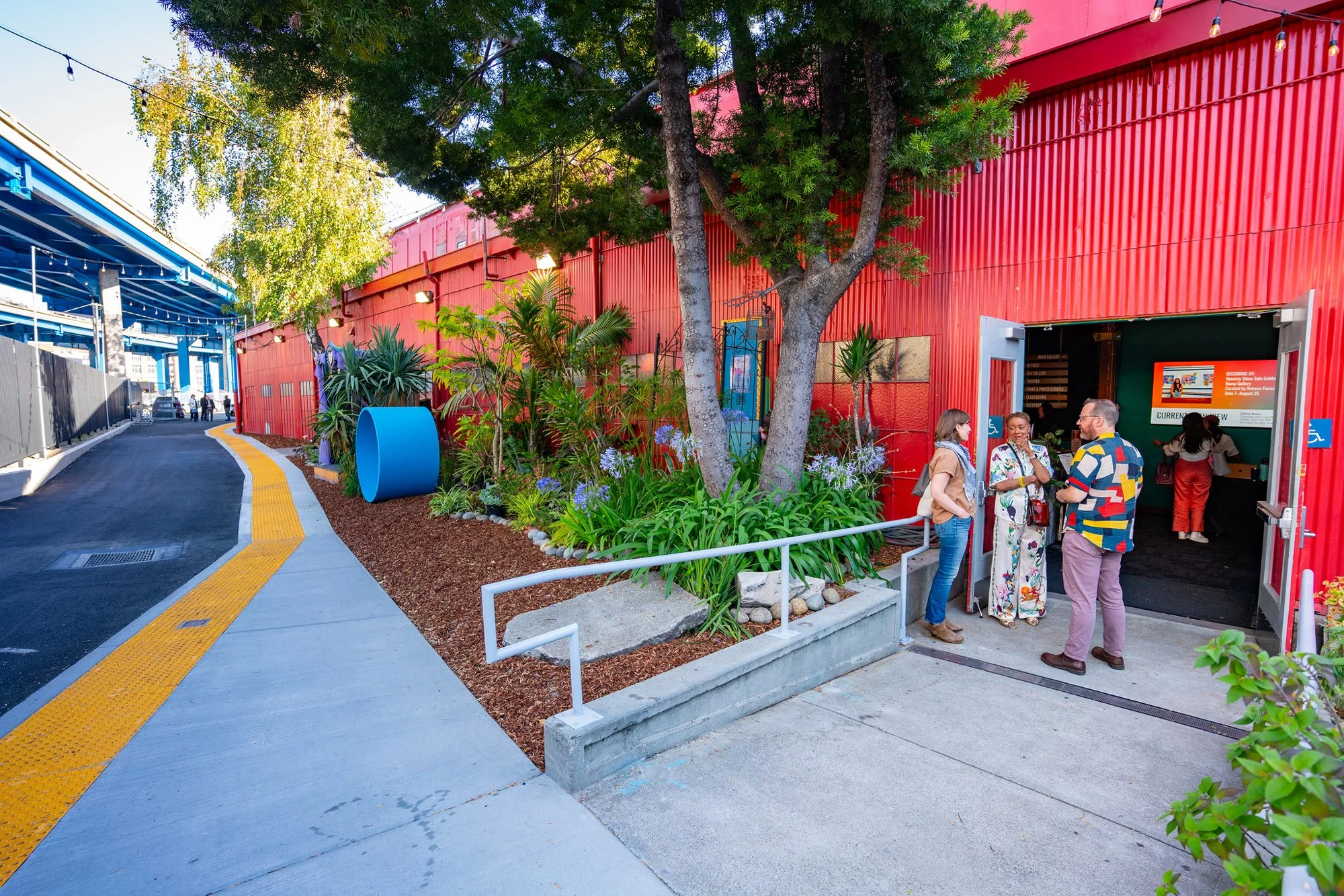
Maria Jenson is a San Francisco arts leader and the Creative and Executive Director of SOMArts, where she has led the organization since 2016. Under her leadership, SOMArts has expanded public programs, strengthened racial-equity commitments, built public-private partnerships, and presented influential exhibitions such as The Black Woman is God and The Third Muslim: Queer and Trans Muslim Narratives of Resistance and Resilience. Before SOMArts, she founded ArtPadSF and worked on SFMOMA’s External Relations team. Jenson is also a visible arts advocate: she serves on boards including Californians for the Arts, SF Arts Alliance, and Arts for a Better Bay Area, helped push for San Francisco’s 2018 Proposition E arts funding measure, and in 2026 has organized and hosted Artists Live Here convenings to mobilize artists around cultural policy, funding protections, civic participation, and anti-displacement efforts in the city’s arts ecosystem. She pairs institutional stewardship with grassroots advocacy throughout San Francisco.
The following are excerpts from Maria Jenson’s interview, as conducted by Hugh Leeman.
Editor’s Note: 180 letters were mailed to San Francisco’s Mayor Daniel Lurie at the first Artists Live Here event, and nearly 50 at the second event.
San Francisco's Art Ecosystem in Crisis
Hugh Leeman: Maria, you've become a vocal activist in the face of an art scene in San Francisco that is in a dramatic tailspin — closing museums, arts non-profits, multiple galleries, two landmark art schools over the last handful of years. For people who don't know, what is going on with San Francisco's art scene?
Maria Jenson: I had to start with a chuckle because I'm still trying to figure out what's going on with the San Francisco art scene. And I think every other person I speak with — whether they're an arts administrator, an activist, an artist, or people at City Hall or at commissions — it is a time of tremendous change. Currently it's been ushered in by new leadership at City Hall, but I also think this trails back to the pandemic, when that fabric of arts and culture began fraying with each organization that wasn't able to financially hang on. Then there was this long period of recovery for the arts and culture scene in San Francisco that seemed to last longer than most other urban cities, what we would call arts destination cities. Some of the secondary cities — Dallas, Detroit, other places — seem to have rebounded more quickly than San Francisco has.
In this current moment, I think it mirrors what we're feeling nationally — a tremendous amount of change ushered in within the same window of time. That level of complexity is perhaps more than most of us can manage or comprehend. These are interconnecting pieces, especially when you look at what's happening in San Francisco between charter reform, the commission restructure, hiring a new person to manage the merger of three commissions like the Film Commission, Arts Commission, and Grants for the Arts. Just those things in a sentence alone is overwhelming. Cities move very slowly generally, and sometimes we've complained about that and it made sense. But when things are moving at an accelerated rate, it's problematic because we can't catch up with the changes enough to understand what they are.
It reminds me of why we marvel at skilled jugglers who start out with three balls, then add a fourth — you think, oh my god, they can't possibly add another one — then a fifth, a sixth. Those are very skilled people with that talent. But if you think about each one of those balls as a change being introduced, it becomes more difficult to hang on to all of them, and they're all most likely going to fall. What we're looking at right now is how are these balls going to land, and what is that impact going to be?
Charter Reform, Commission Restructure & the Loss of Public Voice
Hugh Leeman: Coming back to that juggling metaphor — you mentioned a restructuring of the commission and charter reform. Can you give a bit of context to what the charter reform is and what the commission restructuring means?
Maria Jenson: I want to say at the start that I am no expert on either. The commission reform follows a fairly reasonable logic — there are too many commissions in city government, too many commissioners, and if someone wasn't making this up, there was actually a commission about commissions. So I understand the need to streamline and to sunset commissions that are not active or functioning.
However, the challenge in the overlap between the charter reform and the commission restructure is this: in the case of the San Francisco Arts Commission, the best part of these commissions is that they provide public access. There's transparency into policy and procedure, and an opportunity for the public to comment on governance — why certain people are getting grants over others, what the criteria is. There's a view into the actual practices and policies of an arts commission.
With the charter reform, the desire is for the Arts Commission to move into what they call administrative code. The difference with that designation is that the public side of the commission's affairs goes away. There's not a public forum for that. For some commissions, maybe that makes sense. But certainly for a commission that is serving the public, anything touching the public deserves the public's voice, opinion, and critique — because that's how the best policies are shaped. If you bring in those that the policy is supposed to serve, they become part of the creation of the policy.
The city charter, as I'm told, is hundreds of pages thick. To wade through all of it would require a certain amount of time. And that's another problem — how much time do we have to really dig into the policies and practices to see exactly what's going to be most beneficial? That's what the arts community has been trying to weigh in on and have dialogue with our city partners about.
Evolution, Broken Models & Who's Missing from the Table
Hugh Leeman: Coming back to the juggling metaphor — the entertainer can't entirely control everything. These balls represent things in society, and change is taking place much faster than the institution can manage. It seems like lots of other industries have recovered, but the arts have not. It speaks to the idea that our institutions and the frameworks we've structured on for more than a century are not evolving with the times. Maybe the real question is — should some of them go away? Should we find some idea of evolving rather than mourning? What does that evolution look like?
Maria Jenson: It's a popular frame of thinking to say everything's broken. People are saying the nonprofit models we've inherited are broken, our funding mechanisms are broken, the way we go about fundraising is broken. This kind of motif has been floating around, and I'd say it caught fire around the pandemic. When you cease operations because of a health crisis, there's suddenly time — and ironically, organizations were able to evaluate what their budgets really looked like, whether they needed that staffing, what different assessments needed to happen. Those were very organic conversations because they involved the whole organization, the whole team, the whole board.
The challenge with what's happening right now is we're missing certain players from the negotiating table. And in the center of that squeeze — the one that never makes it to these conversations — are the artists. We're not leading these conversations with who are generally supposed to be the beneficiaries of a lot of this work, and who are also the ones we point to when we say the arts are going to recover our city. But arts aren't going to recover the city without artists. So why aren't we bringing the artists in to also have some of these conversations?
I think the very process itself needed to be evaluated before entering into an evaluation process — to create enough runway so that the structure for these conversations has the right people involved. Instead, the desire to collapse government, to shrink it, to streamline it has been more of a framework, but not necessarily anything connected to actual people. On paper it looks great, but in execution it's not going to go well because the people who should be sitting at the table are still largely missing.
The State of Emergency Summit & Letters to the Mayor
Hugh Leeman: In February you hosted a State of Emergency Summit for the arts community in San Francisco and the Bay Area. What was the outcome, and what actions have taken place from the conversations that emerged?
Maria Jenson: SOMArts has a history — in fact I think its history was founded on such gatherings and happenings. It has an advocacy heart and was founded by arts activists, artists, and citizens who looked at the idea of a commons as a way of equitably approaching problem solving for a community. I mention that because SOMArts was more of the event host than the lead for this. I just happened to mention to a writer at KQED that it was a state of emergency because CCA had just closed. Then we learned of a cultural center closing. I did receive a little flak from certain people for calling things a state of emergency, which I found a little ironic given that we really were in what I feel is a crisis. And the idea that we can have a crisis and a narrative that we're recovering at the same time — yeah, that's exactly the tension.
The outcomes were better than we expected and more than we had hoped. It was more like a resource fair. Our goal wasn't so much to disseminate talking points or positions — we just set up a lot of different opportunities for people to find their way in, in the most meaningful way to them, to get their voice out there. The letter-writing station was probably the most successful — over forty letters were written to the mayor's office, to the chief policy officer Ned Siegel, to the Pisces Foundation, to Downtown Corp. The letters went out into the community, and I started hearing back from some of these entities that letters had been received.
This is how you create that space where the commons can actually impact and influence these conversations. Most importantly, I think the city and all of these other entities had a chance to get a real, visceral sense that there is a very vibrant, vocal community in San Francisco that needs to be seriously considered as thought partners. I've been seeing how this effort has slowed the roll a little bit on the rush to make all of these decisions around the charter and commission restructure. We are seeing a slight slowing of the process and a little more listening. Getting the people who hold the big tent poles of capital — the stakeholders who drive a lot of the decisions in a city — to actually listen to the arts and culture ecosystem was a takeaway I hadn't really considered deeply, but seeing the response from the people who received the letters was very impactful.
Meeting the Mayor & The Most Immediate Policy Priority
Hugh Leeman: It's impressive, the organization you did on such short notice. I was there that evening — several hundred people, a very passionate crowd. You mentioned the letters written to the mayor's office. Subsequently you had a meeting with the mayor himself. How did that conversation go?
Maria Jenson: I think the letters actually paved the way for that meeting. City mayors are exceptionally busy and getting on their calendars is virtually impossible, especially in a city of this size. So having the entrée of those letters meant I felt like I walked into the meeting with the community present. That meeting went very well. I've never actually had a meeting with a mayor in San Francisco — it was more of a group meeting, on the heels of the Mission Cultural Center closure, so it largely focused on the center directors who had physical buildings. It was an opportunity for face time. I walked in with a proposal of what I felt needed to be addressed most immediately. And I'm really relieved to say that we were listened to. I have heard that there's already been some movement on one or two of the proposed ideas I put on the table that I felt were very important for the city to focus on as soon as possible.
Hugh Leeman: The arts in general have a bit of an over-romanticization with the idea of raising awareness — and raising awareness doesn't do a lot if you don't have people willing to take action. People like yourself have clearly been taking action. One of the biggest words that comes up in this realm is policy. Hypothetically, if you could push a magic button and get any policy passed for the most immediate and pressing needs you're speaking of — what would that look like?
Maria Jenson: The interesting thing is it's not a new policy. Sometimes we think new policies need to be made, and they do — but the city of San Francisco, going back to maybe 1945, has this document organized with the SF Planning Department that laid out the objective of evolving the city from manufacturing into being more of a tourist destination. It's long in this community's history. It's basically a thirty to forty page document that really breaks down all of the different strategies to evolve the city into this cultural destination. We have a lot of roadmaps already — really thoughtful roadmaps. I look back at that and think, this is pretty striking in its resemblance to what we would want to create in this moment.
One of the things most important in terms of policy had to do with getting the hotel tax fund reinstated. The hotel tax fund was first initiated in 1961, I believe, and then changes came and it went back into the general fund. Around 2016, myself and a group of arts organization leadership across the city — all budget sizes, with artists present as well — formed a coalition to reinstate the hotel tax fund, which was overwhelmingly approved by voters in 2018.
So in this moment, what policy needs to be created? I would say what policy needs to be sustained and upheld. That is one of the strongest policies for arts and culture — the funding mechanism. As a city, we don't really have a designated line in our budget that truly articulates a certain amount of money is going to the arts and we're not going to touch it. The only challenge with the hotel tax fund is that it's dependent on the forecast of how well the fund is doing — how many people are booking hotels and coming to conventions. That makes it slightly unreliable, as we saw with the pandemic, when nobody was coming to the city. We did receive a ten percent cut then, but the mayor at the time found a way to backfill that deficit so grants were still whole. We did not have that experience this particular fiscal year when our property grants were cut by ten percent. There was no backfill. It was just a hard landing.
If anything, it's worth doubling down efforts to shore up the policy around Prop E — because it also became a funding source that was tapped for administrative needs from the Arts Commission. We want to make sure the money coming in from the hotel tax plan is going out directly to artists and arts communities, and not used to fulfill deficits the Arts Commission might be experiencing. We're investigating that to get clear on what it looks like.
Tourism, Attention & the Art of Getting People to Show Up
Hugh Leeman: Going back to the policy — the city moving from manufacturing to tourism, funding tied to hotel tax — we're ultimately talking about attracting tourism, and that's where so much of this funding comes from. My understanding is that in the last quarter tourism is almost back to where it was before the pandemic, if not slightly above. But here's what I'm curious about: the arts are often clumped in with the entertainment industry, and I don't know that the arts can continue to compete with entertainment. I can sit in my hotel room and be endlessly entertained by YouTube and social media. What can the arts do to catch the attention of tourism, and of society more broadly? What can artists and administrators do to capture people's imagination?
Maria Jenson: That's a very broad and interesting question, because the same issue you cite for tourists is the same that residents face — the competition of streaming all of your entertainment. But I want to throw in something a little disruptive here, which is that I'm sensing — from my small window on the world — that people also have a growing desire and appetite to be out more, to go out in public. We're seeing attendance levels at events reaching maximums. SOMArts, on average, has a minimum of three hundred people coming to an exhibition. Artists Live Here had over four hundred. What was interesting and instructive about that is that people felt compelled to come out not so much because they wanted to light a torch and burn down City Hall. People needed to congregate with each other — in some ways to mourn some of these losses, but also to think about what we could do together. There's a growing appetite for togetherness.
In terms of what the arts can do — I'm not sure that's entirely the question for arts organizations or artists, because step into any gallery or arts organization across the city and you'll find an incredible exhibition, without comparison. I think it's more about how the city communicates with the rest of the world, telling the story of what exists in arts and culture spaces. One small civic idea: having kiosks where information is found publicly around the city. Some cities are great at that — you're walking down the street, you don't have any plan, something pops up on a screen that tells you tonight this is happening at this place. So much gets lost on a website. No one's really going to websites. If the city could think about even gamifying that — how do we make that part of it very interesting, how do we help people find what's happening in different neighborhoods — I think more visual communication about what's happening in our city would help enormously.
Hugh Leeman: I like that idea. It sounds like an incredible business opportunity — gamifying this, so that if you've come into SFO or you're going to Moscone, it's easier than ever to target people with information, and it serves both the consumer and the producer, in this case the arts.
Maria Jenson: Yes. And what you mentioned about SFO is great — I think those discussions exist somewhere around SF Travel and other organizations. A more overall calendar for the whole city has been discussed. Whether it's at SFO, at BART, wherever people are accessing transportation to get around the city — it'd be great if something said, what's on tonight? It could even be a QR code people grab as they're disembarking from a plane. We're the most technologically advanced city, so we should be able to figure out how to gamify getting people navigating around the city.
The Lightning Rod: Activism, Union Roots & Finding a Voice
Hugh Leeman: In 2019, Maria, you wrote on SFMoMA's online journal Open Space: "I'd like to even be more of a lightning rod for the local arts community. I have learned how to conduct energy from the lofty heights of capital to aspiring artists up and down the avenues of our region. I believe that the Bay Area is the most radical but undercapitalized cultural market in the world." This is a powerful statement. I want to start with the lightning rod element — where does the activist in you come from? Who inspired this?
Maria Jenson: I have no idea. I wish I knew. Eventually, how you were brought up will show up in your life. My dad was a United Auto Worker — I come from a union family. One of my brothers was an attorney who bargained contracts for teachers in a Michigan statewide district. I spent a lot of time at the dinner table listening to either one of them talk about their various strategies and challenges and what they were going to do. My dad used to take me to a lot of union meetings when I was younger, and I was surprisingly interested in them.
But I never really connected the two. I never thought, I'm going to be a union rep, I'm going to be someone who bargains contracts. I went to LA and did anything but that — became a true Angeleno, really only cared about going from spin class to yoga, getting my wheatgrass, checking out an event, next day repeat.
Then moving to San Francisco — I think the difference is LA is a vast geography. I didn't know any of the district heads or anything. I knew who the mayor was; I didn't know who a deputy mayor was. Most people I knew in LA didn't either. And so I moved here, just when the recession was still simmering. I had a gallery in Venice, California for about five years. I started it because I was going to a lot of art events in LA — I'd joined MoCA LA at some fancy membership level because I thought, if it gives you more access to artists, this has got to be interesting. And I was always fascinated when I'd go to these events that everyone was terrified of asking a stupid question, because it's LA and you've got to be cool. The coolest thing is to act like you don't care. So everybody wouldn't even look at the art. But here's an artist actually asking, does anyone have any questions? So I would ask all the stupid questions — how did you get into this, why did you choose that palette?
When I moved to San Francisco and asked, what do I like doing? I love these low-threshold events for people to experience art. Art Pad immediately brought me into city politics, especially around partnerships — I wanted to partner with the Arts Commission, the museums, various groups. Then just getting permits. And I started getting more and more involved. Then I moved to SFMoMA, which was a whole different level of interaction with those same commissions — more policy conversations that I was becoming privy to, put on point to attend certain policy meetings on behalf of the director. Because I was proxy, I wasn't allowed to weigh in, so I did a lot of deep listening — listening to this group of arts leaders fight for funding. I thought, I didn't know that people at the museum level had to fight for funding. So then ABA started up and I became a member.
Hugh Leeman: Tell people what ABA is.
Maria Jenson: ABA — it's not the band, just want to be clear on that — stands for Arts for a Better Bay Area. It's not really a non-profit organization. It's a collectively run group of folks who pay attention to the policies happening at City Hall or the policies that need to be created. It serves to inform the public via white papers, opinion papers, town halls, mayoral debates. So I was toggling between those two things, and somewhere in that window of time I just started getting surprisingly interested in how this city functions and what it really requires just to do something as simple as be an artist or be an arts administrator.
The Most Undercapitalized Cultural Market in the World
Hugh Leeman: In that same 2019 piece, you mentioned that "the Bay Area is the most undercapitalized cultural market in the world." Seven years later, here we are — amongst the richest cities and regions in the entire world, but the arts sector doesn't seem to reflect this. What do you make of that?
Maria Jenson: There are a couple of ways to look at this. One is to look at what the art market in San Francisco actually is. When I arrived, we were at another one of the boom-bust cycles — the bust side of things. When I launched Art Pad, it was in response to that time when the smaller independent galleries — the really cool galleries that make up what's vibrant about San Francisco — were starting to shutter. Along with that, the really awesome artists coming out of those spaces.
Art fairs are economic engines. The reason I liked doing a smaller independent one is because, in my thinking, it wasn't about the fair and how great it is — it was more like, it's great to create a platform where the commons can engage. I'd gone to Art Basel Miami for maybe twelve consecutive years, almost studying it as a hobby. Not so much watching how the main fair grew, but what happened in the surrounding areas and neighborhoods as a result of having this fairly well-capitalized project. What I've discovered is collectors and people who buy and deal art love a public arena to do this work. It's sport for some of these people — it's a treasure hunt.
San Francisco lacks a sustained feeling that there are collectors actively going to galleries. We don't have, in my opinion, what's known as an art market — who's really buying art here comes down to just a handful of people.
When I launched Art Pad, one of the things people thought might happen was the launch of Twitter, which had launched about a year and a half before Art Pad. I was told Twitter should become a partner, so I knocked on their door and had a meeting. Something very telling — when I set foot in the office area, there was no art on the wall. Gigantic walls, and I only saw one piece of artwork. In looking back, there wasn't an embrace of arts and culture by tech. There wasn't any type of brokering of a partnership — they got their tax-free deal, and that was it. Tech's not known for their embrace of arts and culture. Since then, certain inroads have been made, but it's still not a full embrace, not championed enough.
There's a moment right now where, with the launch of the Downtown Corporation — largely focused on downtown recovery — one of the things I've been thinking about is that line needs to extend beyond downtown and start including arts and cultural organizations outside of that particular zone of interest. If we can be part of these larger public-private partnerships, we might be able to create more of a market. Market making is not easy — it's a false thing in a way. How do you organically or intentionally make that happen? These are conversations that need to happen at the city level, at the very top. The people who hold incredible relationships and partnerships need to broker conversations between those in the arts and those who can capitalize and fund this. For one part of the city to recover is not a full recovery — it's a partial recovery. And the smaller things launching in different places need to feed into a much broader, healthier ecosystem. That isn't going to happen the way we're doing it right now. We need a public-private partnership relationship, somehow.
Matchmaking: Who Owes a Responsibility to the City?
Hugh Leeman: I like the idea of partnerships — a collaboration that's symbiotic. I want to go back to when you started at SOMArts. You've talked about Art Pad, working at SFMoMA. In 2016, you did an interview just as you were taking over as director of SOMArts, and you asked rhetorically: "How do we make collaborators and partners of those people who we feel owe a responsibility to the city?" With ten-plus years of hindsight — how could you answer that today?
Maria Jenson: I believe these things need to initiate from the top and tunnel down. Because it's at the street level where there's all of this incredible art production taking place — the literal creation of paintings and all kinds of work. It's very active. But when you think about city governments, you think about the hierarchy and the power structure. I'll speak for myself — we don't always have access to name-your-building billionaire here. We don't have access to name-your-well-financed equity group here. But the city holds those partnerships and relationships, especially the current administration. And so it is a responsibility of the city to do what I like to call matchmaking. What are the needs of the arts community and who are the aligned partners that we can broker relationships and conversations with?
For most of us, our emails would not get read by the people we feel could be great partners — we don't have access. This is fundamentally a question of access. I've mentioned publicly on a panel that this is something the city really actively needs to be engaged with. Call it partnership, call it collaboration. I say matchmaking because you really are trying to match the capital and interests of someone with organizations and artists.
If we could get the city on board with understanding that public-private partnership comes with access, comes with an introduction, comes with the understanding that yes, the city can't fund all the things that need funding, but it's engaged with so many people who are so well-capitalized that it should be able to broker those conversations.
And here's the thing — for too long in San Francisco there's been this self-consciousness that constantly looks at New York or LA for measuring itself. But how did LA become LA? How did LA become an arts destination? When I lived in LA, no matter which neighborhood — Silver Lake, Venice, Santa Monica — there was always a geographic tug of war about which side of town had the coolest art things happening. What changed all of that was when the Gettys launched Pacific Standard Time. That was the game changer that made LA an arts destination year round. It softened the idea of boundary and borders. No longer was there a geographic tug of war. It was the greatest equalizer — they flooded the field with capital, and that gave everybody a chance to produce and create, with very few strings attached.
What we're missing in San Francisco is akin to that — not a Getty person, but an institution, a collaboration between institutions and those with equity funds, to put together that type of funding that says, let's create our own thing here, let's support as many people as we possibly can. Something like that would really create what we're looking for in terms of market-making, in terms of being a tourist destination, in terms of moving away from art being viewed only seasonally.
Radically Transforming the World
Hugh Leeman: I want to ask one final question. I was reading a piece in preparation for our interview, and at the end you cite Angela Davis's quote as a source of personal inspiration: "You have to act as if it were possible to radically transform the world, and you have to do it all the time." If you succeeded in radically transforming the world, what would it look like?
Maria Jenson: Thank you for bringing up my favorite quote of all time. To start — it would look accessible. It would look accessible and open to all, and it would be creating the type of commons that we're currently missing. Our common spaces are actually deteriorating. It would be a place where you have multiple points of entry, a place where you can shapeshift — you can go from writing to painting to producing. It's a very free and open space.
It would feel like maybe San Francisco did in the sixties and seventies, which we're always trying to get back to — that place of fluidity. Things would be more in flow. There would be fewer restrictions and more possibilities for the city to feel more like a bit of mercury — it can break off and atomize and go in different directions, and it can collect itself in wild interpretations somewhere else. That would be a radical change for the city in this moment, especially as we're feeling it move more and more towards private art, private spaces, private restaurants. Everything's private now.
Hugh Leeman: Maria Jenson, thank you so much.
Maria Jenson: Thank you, Hugh. This was great.
