
Nancy Mona Russell, Open Geometry for Emotional Use, Nelson Duni
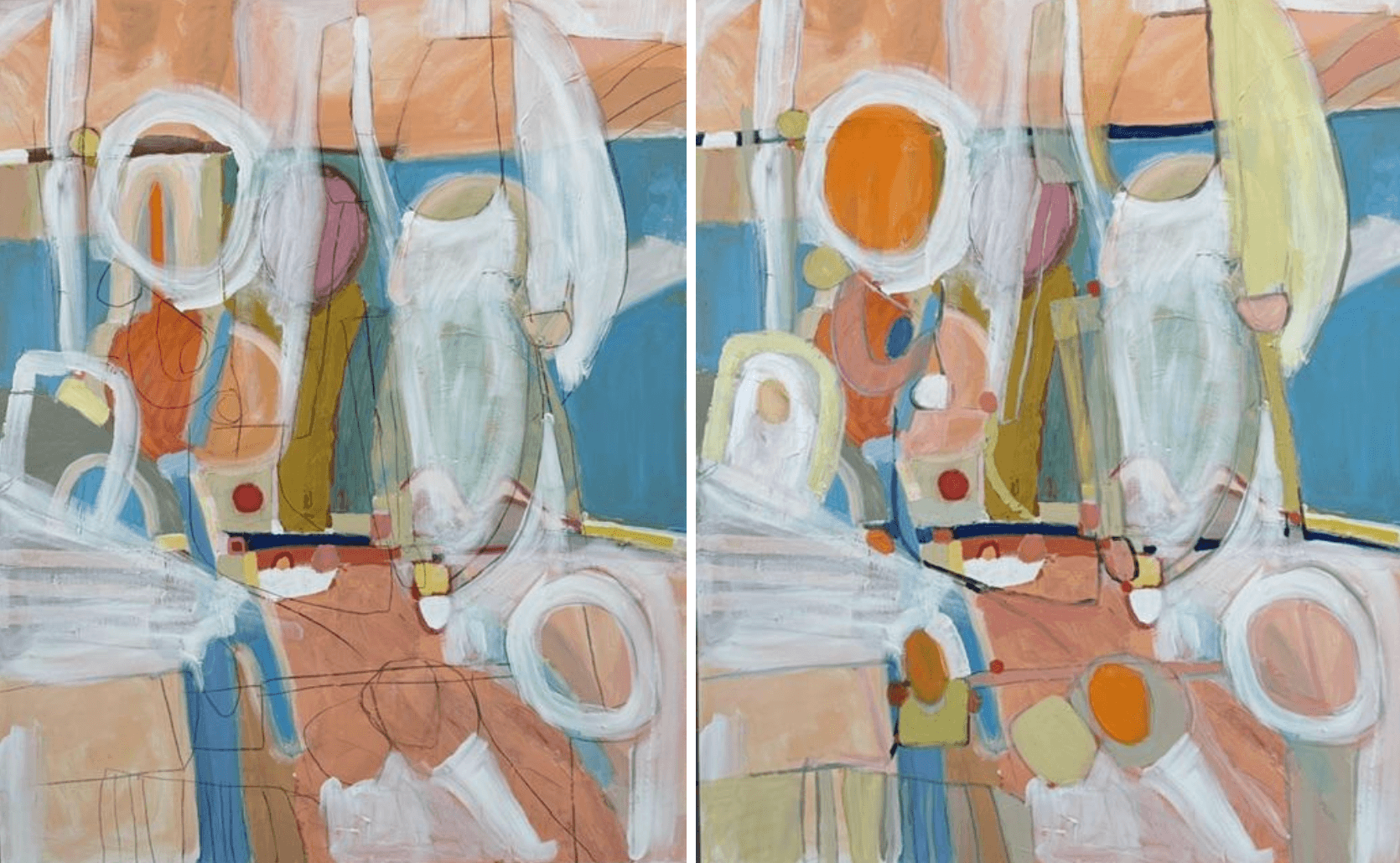
Flying Through a Dream (Progress of the painting), 2026. Acrylic on canvas 60 × 48 inches (152.4 × 121.9 cm). Image Credit: Nancy Mona Russell
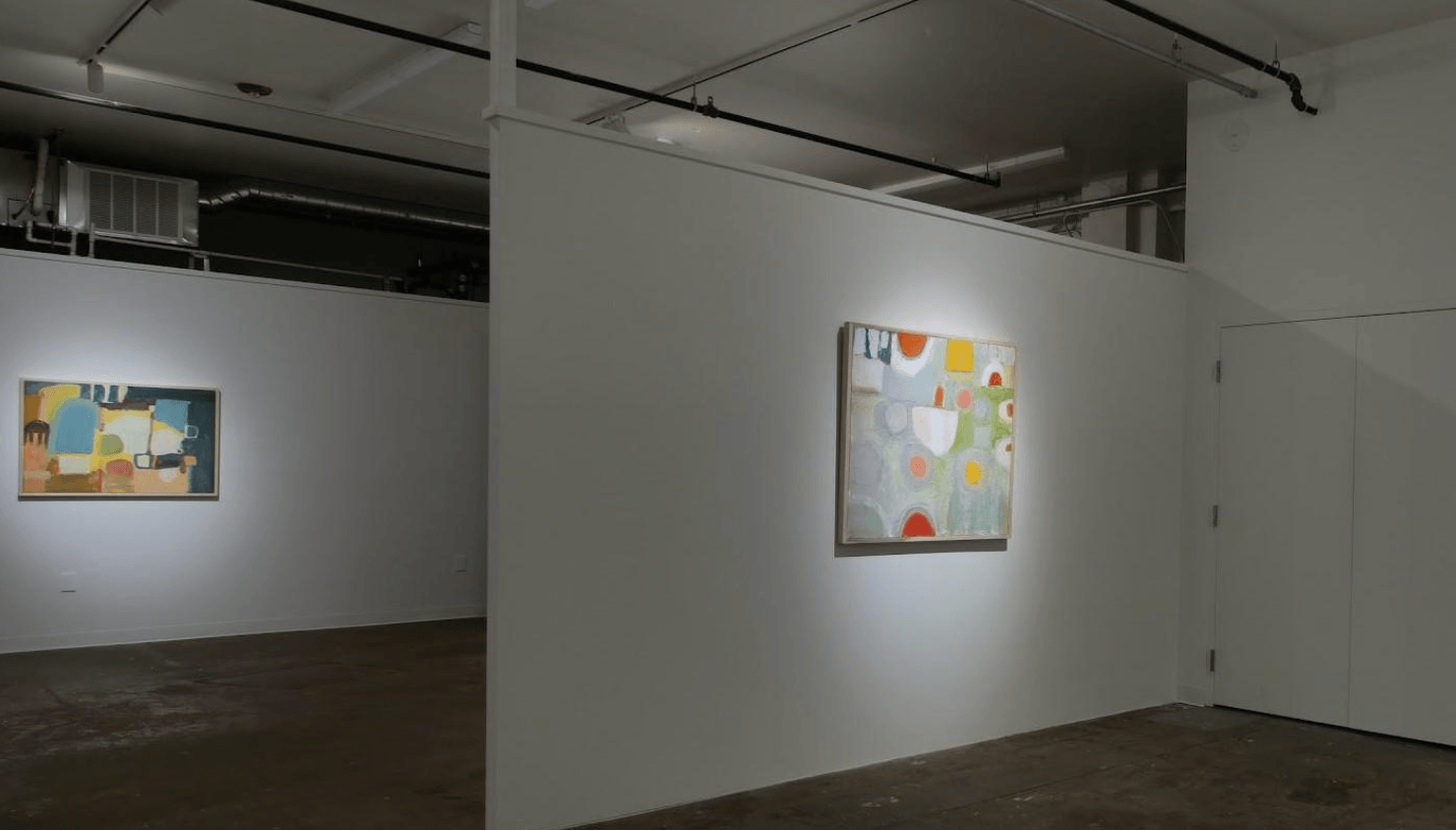
Open Geometry for Emotional Use is Russell’s second solo at the Nelson Duni, San Francisco. Remarkably, all but three of the works in the show, including at least one canvas of mural-sized proportions, date from 2026. The three small pictures from the 1960s act as anchors for the artist’s trajectory, attesting to Russell’s consistent vision and her unwavering belief in abstraction as an artist.
From impasto that builds up, or layers that can be visually excavated, colors that radiate, or strokes that guide dimensions, engage the viewer. Spaces that seem to be both mental and physical, emanating forms, and some constricting lines are possibly suggestive of the ‘emotional’ from the show’s title.
Flying Through a Dream, 2026, presents what could be a collective, collated story of circular and other connecting shapes. Charcoal lines transition from laying out the composition into structural components that hold the colors to forms. Complementary hues embody a sense of playfulness and a spontaneous possibility of movement, as though a stage is set for a performance.
In Forming, Russell’s bold, solid flat spaces/shapes attain balance. Each part of the canvas, blank, layered, colored, or flat, eludes the idea of centrality or a focal point. Every element contributes to a sense of tandem and harmony.
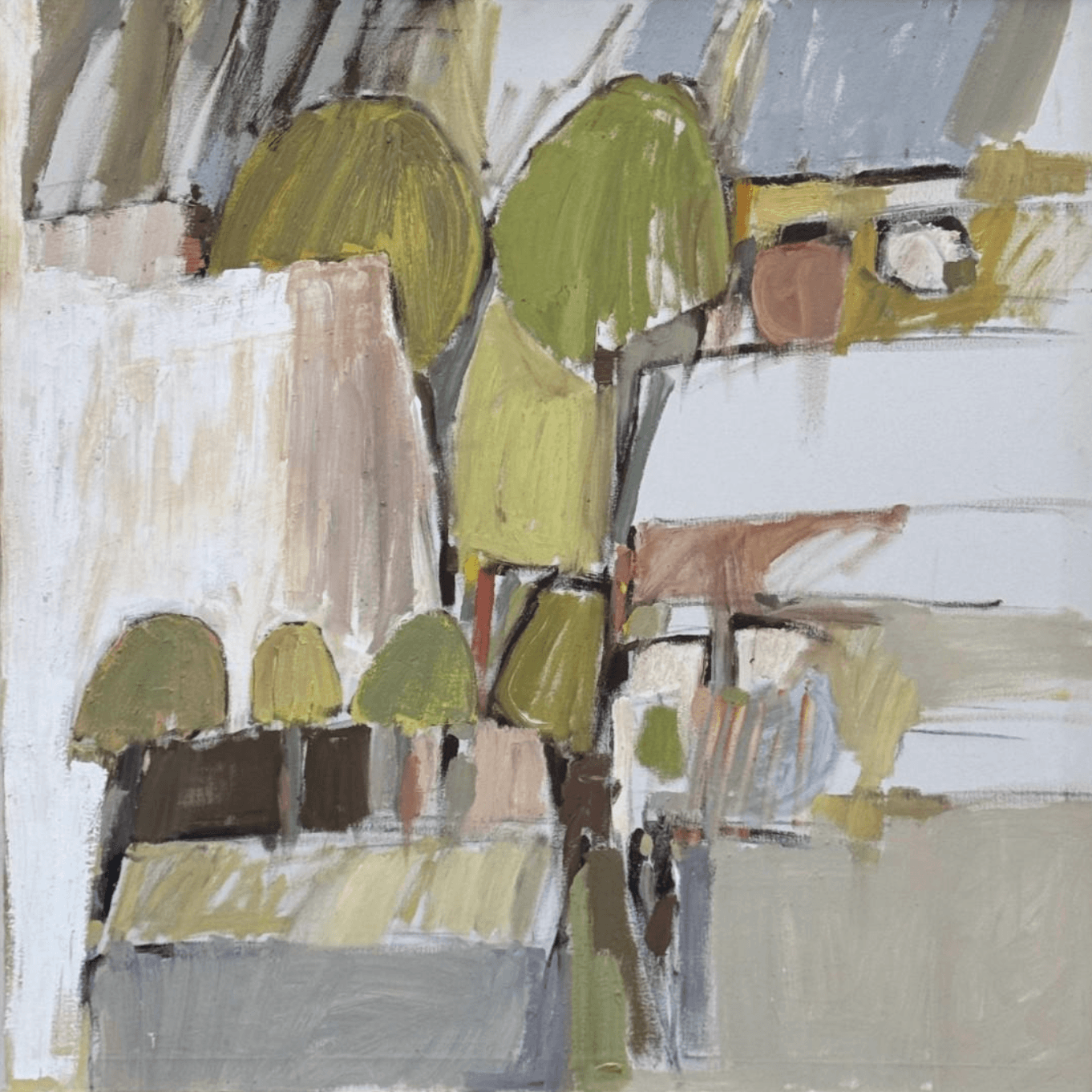
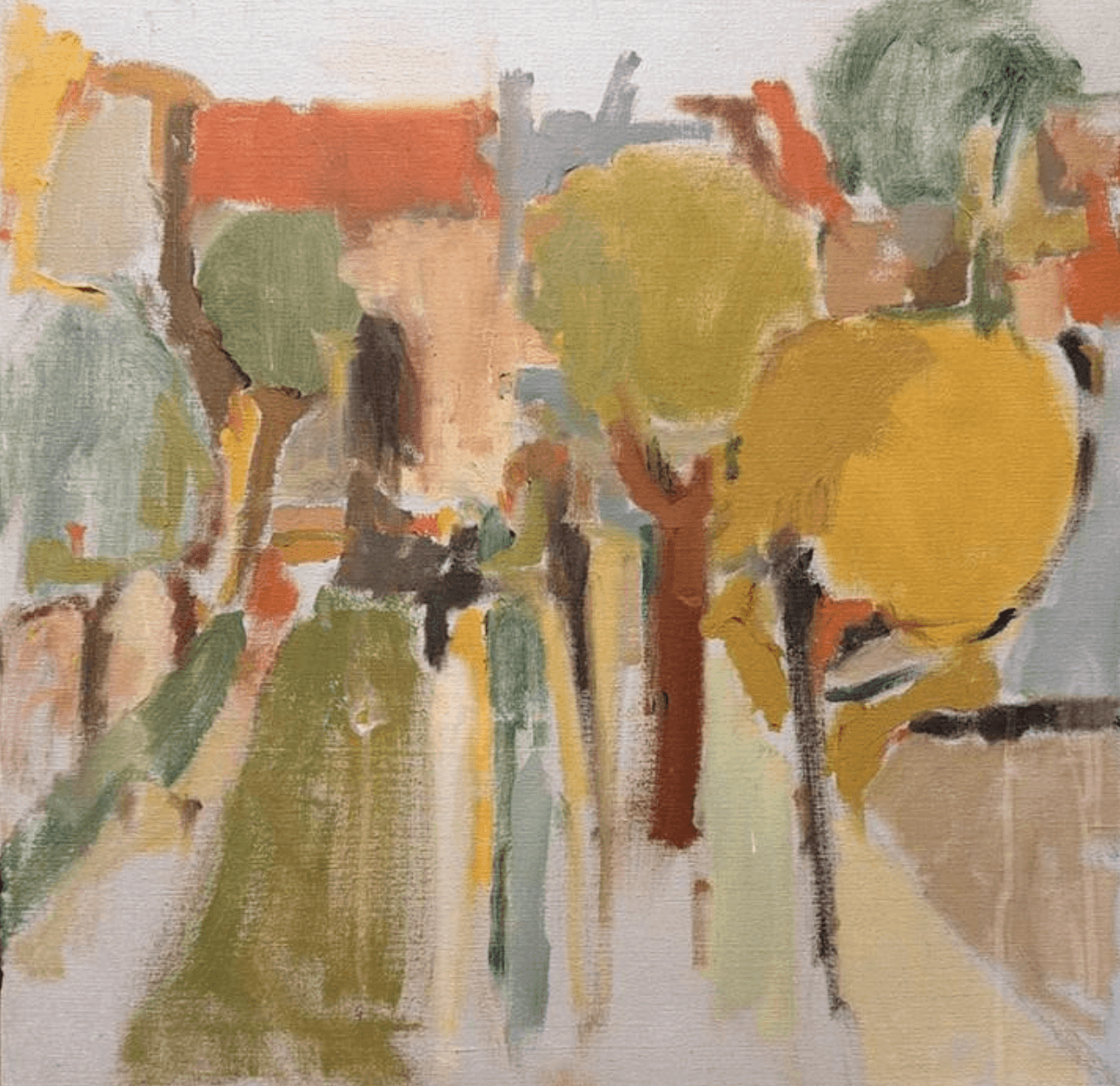
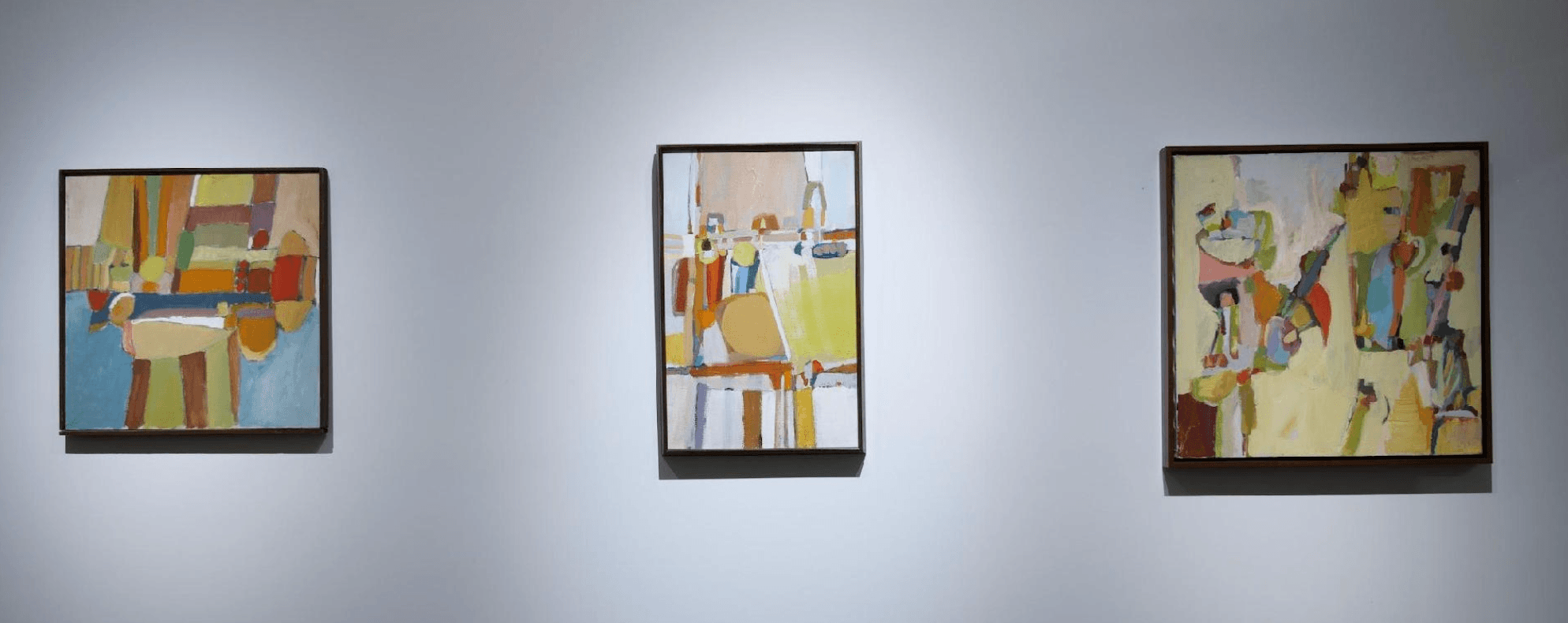
Russell’s engagement with nature, observing and experiencing has clearly been innately inspirational. The glorious golden luminosity of Southern Californian skies, the idyllic landscapes in and around Scripps College, the sea mist seen from Pacifica’s beaches, and the clouds of San Francisco are some of the experiences reflected in Russell’s pictures. The Dark Afternoon, with its bright yellows and a contrasting shadowy side, evokes light and shadow. In contrast, Cirque and Saddle capture a frostiness, as heavy strokes of white are transformed into powdery light floating dust.
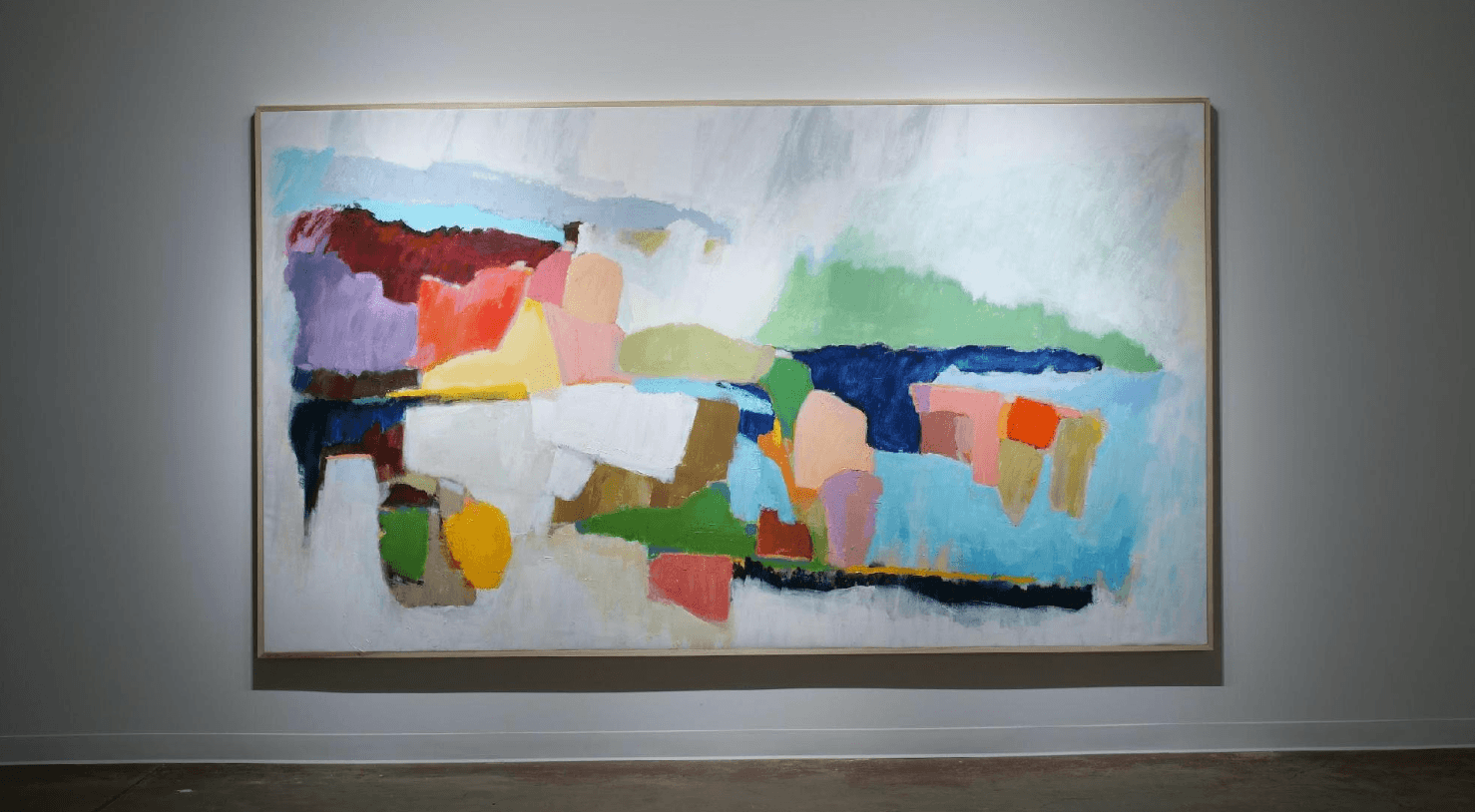
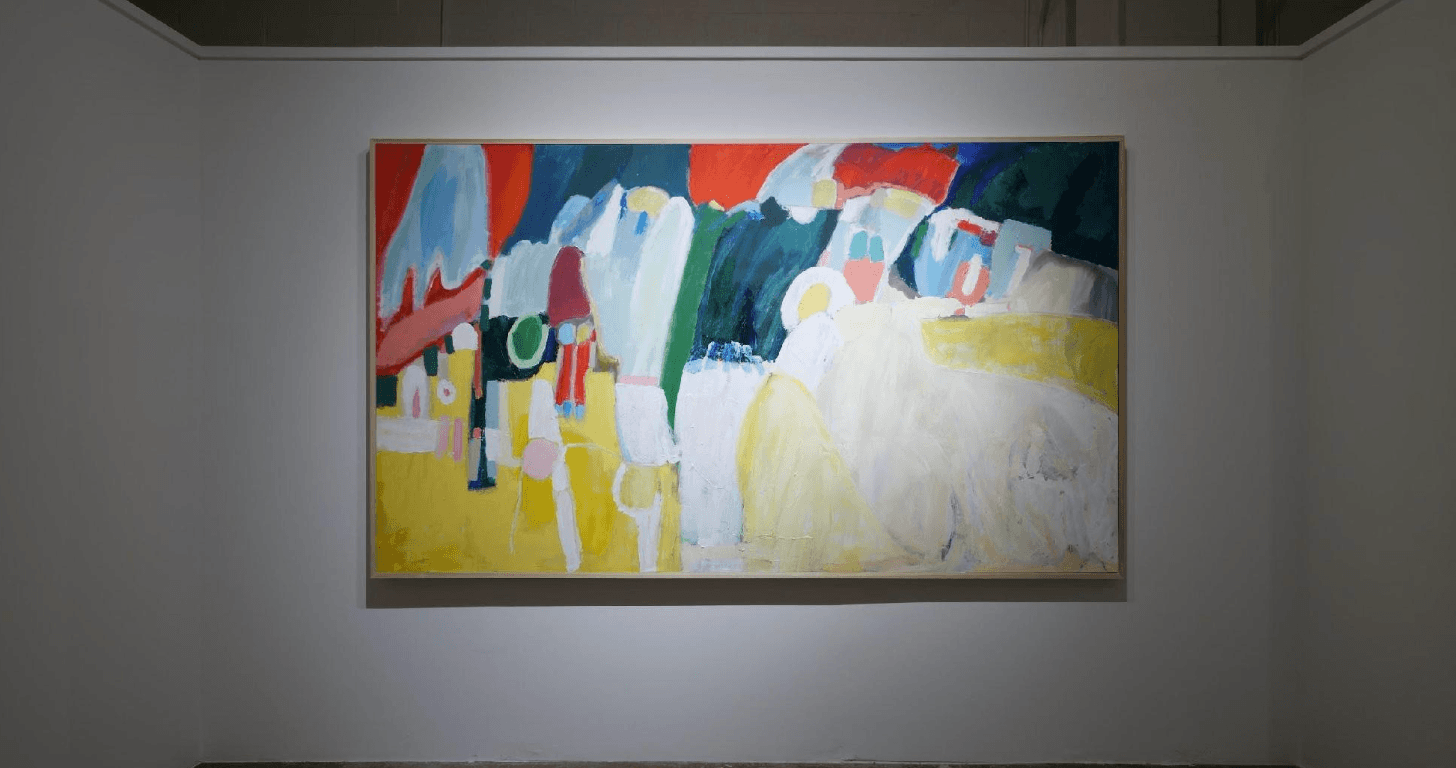
The two large works of the show, Confluence of Possibilities and Big Dream, seem radically different from each other yet still related. In Confluence of Possibilities, colored masses coalesce across the horizontal axis. Underlayers of nearly concealed colors can be seen through the white boldly stroked around the perimeter. Similarly, Big Dream expresses the freedom with which Russell structures her paintings. Akin to human emotions, the paintings possess a sense of spontaneity and caution. Colors, forms, and their intended (im)balance characterize the works and their artistic identity. Further, these works could be considered as stories, if one may say, of a different kind. Where the expressive and the concealed do not engage in telling or representing, but aim for the experiential.
