
Miguel Novelo
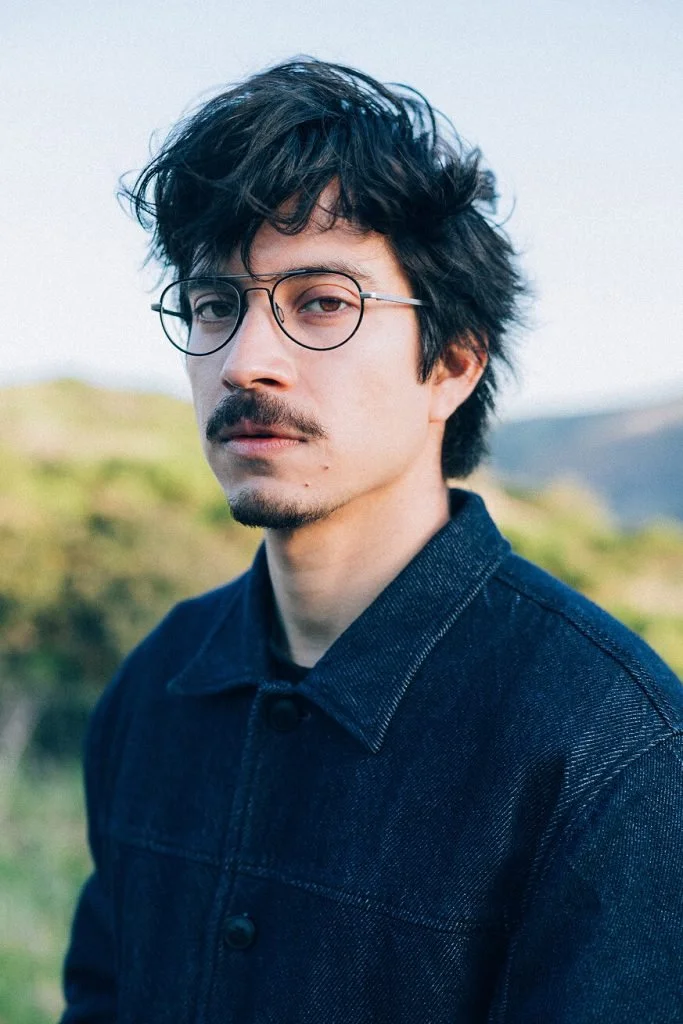
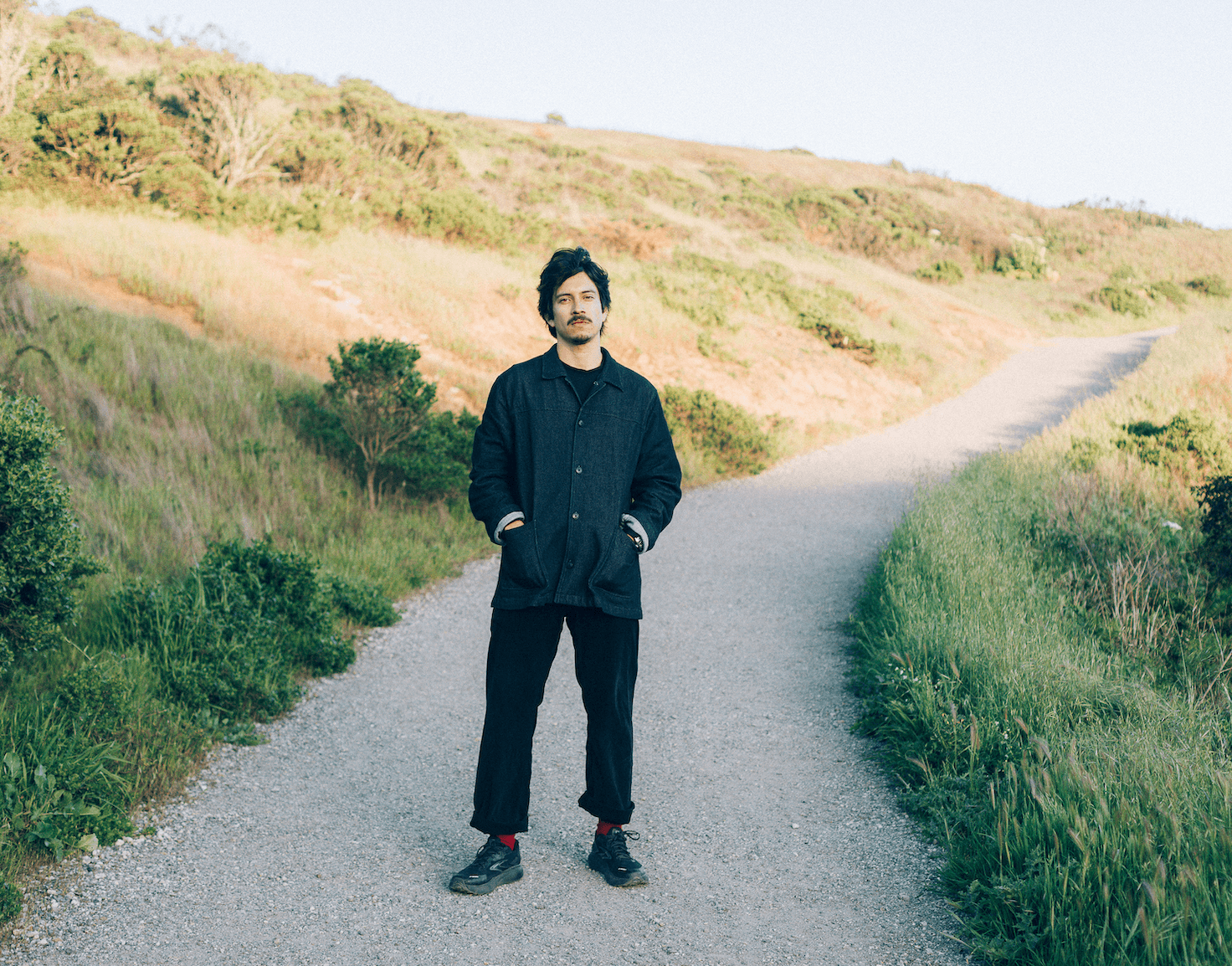
Miguel Novelo is an interdisciplinary artist, educator, and researcher who focuses on emerging media and community organizing.
Novelo earned a Bachelor of Fine Arts from the San Francisco Art Institute in 2018, followed by a Master of Fine Arts from Stanford University in 2022. His work has been exhibited at various institutions, including the de Young Museum, the Stanford Institute for Human-Centered Artificial Intelligence (HAI), the Museo Universitario Arte Contemporáneo (MUAC) in Mexico City, and numerous international film festivals.
Currently, he is a lecturer at Stanford Art and Art History Department and San Jose State University.
The following are excerpts from Miguel Novelo’s interview as conducted by Hugh Leeman.
Community Organizing as Artistic Practice
Hugh Leeman: Your bio describes you as an artist, educator, and community organizer. To start, tell me about your community organizing projects.
Miguel Novelo: Workshops, talks, and collectives have always been central to my work. Only recently did I begin naming that explicitly as part of my art practice, but looking back, it has always been there. I make art, I do research, and I also like to build spaces where people can gather, collaborate, and amplify one another.
The clearest example is a film festival I started in my hometown. I wanted people there to see themselves on screen and feel that cinema could hold their stories and identities. My friends, my sister, and I began it as a small local effort, but it grew into something much larger. We eventually hosted international guests, workshops, and public talks.
That project still defines a lot of what I care about. Whenever possible, I want my work to be collaborative and to create a platform where other voices can emerge. That is also where my interest in documentary and storytelling comes from: connecting people through shared narratives.
How the Film Festival Brought Him to the United States
Hugh Leeman: You mentioned that the festival is what brought you to the United States. What is the connection between that organizing work and your move here?
Miguel Novelo: The festival became much bigger than I had imagined. Over three or four days, around five thousand people came to watch films. It was free, ambitious, and probably a little impossible for a group of young people in our early twenties to pull off.
Because of that, cultural organizations in my hometown began to pay attention to what I was doing. They asked whether I had a degree. At the time I did not, and I was not planning to continue my studies. But they encouraged me to expand the work by studying art more formally, and they helped support that path.
That is how I arrived at the San Francisco Art Institute in 2016. I received a state-funded scholarship from home, and SFAI also offered support, so I was able to come to the United States fully funded. Without that, I would not be here.
I used to describe that as something I owed to the film festival. Now I think of it differently. It is simply part of who I am. I like being a bridge between people. I like creating connections. Empathy is at the center of my practice, and the festival opened that path for me.
Naivete, Experimentation, and the Freedom of Not Knowing
Hugh Leeman: You have suggested that your early success depended, in part, on not fully knowing what you were getting into. Looking back, do you think that kind of naivete changed the direction of your life?
Miguel Novelo: Completely. There is a paradox there. Not knowing can be one of the most productive spaces for making work. I am drawn to emerging media and unfamiliar tools partly because I do not fully understand them at first. That lack of certainty can free you from fear and open unexpected possibilities.
In that sense, “ignorance is bliss” can be true. When you are not constrained by assumptions about what should or should not be possible, you experiment more freely. That is how the festival happened, and it is also how a lot of my work continues to happen.
If I went back home now, I might not start another film festival. I might build something more educational, like a school or a long-term learning initiative. But that shift only comes from what I know now. At the time, not knowing was part of what made creation possible.
Art Education Beyond the Silo
Hugh Leeman: You studied at the San Francisco Art Institute, and now both SFAI and CCA have closed. As an educator yourself, how do you think about the future of art education?
Miguel Novelo: I do not think education should remain siloed the way it often is now. My ideal is an interdisciplinary model in which every department includes art in a meaningful way. Whether someone studies engineering, biology, or business, they should still engage questions of representation, creation, emotion, and human experience.
Art cultivates forms of thinking that other disciplines need. It encourages people to challenge assumptions, notice what has been overlooked, and imagine alternatives. That kind of diversity in thought is essential.
So it is deeply unfortunate that both SFAI and CCA are gone. The impact on the Bay Area will be significant. At the same time, I do see resistance and reinvention happening through new galleries, artist-run spaces, and emerging organizations. I hope new institutions will grow from this loss, even though the closures themselves are devastating.
Using AI and Game Engines in Creative Practice
Hugh Leeman: Your work combines emerging media, creative technologies, and community organizing, and it often brings indigenous knowledge into dialogue with digital tools like AI and game engines. How are you using those tools in your own artistic practice?
Miguel Novelo: Before using artificial intelligence—or any tool, really—I think you need an ethical framework for why you are using it. For me, AI becomes valuable when it lets me attempt something I could not otherwise do without enormous resources. That does not mean I am uncritical of it. I am especially critical of the AI industry: the speed, the lack of guardrails, and the scale at which things are being deployed.
One of my early projects on AI was a piece called Non-Euclidean Virus. I used a large language model to help generate a computer virus as an artwork—a virus designed not to optimize productivity, but to interrupt it by slowing down a computer. The fact that I, as an artist rather than a software engineer, could produce something like that through conversation with an LLM was both unsettling and revealing.
The project also showed how little these systems understand art. I was able to persuade the model that the virus was an artwork, and that let it move beyond its usual boundaries. That was interesting to me conceptually: AI not only as a tool, but as a site where social assumptions and technological power become visible.
At the same time, I see AI as part of a broader cultural shift. If so much language is now being mechanized, that may also push us to think more carefully about what remains distinctly human. As a teacher, I already see students using AI constantly. But when they enter genuinely new territory—when they are making something the model has not already absorbed—they still need human guidance, judgment, and experience.
AI, Inevitability, and Human Agency
Hugh Leeman: There is growing concern that machine-generated text and imagery may displace human creativity, especially once what students produce today becomes training data tomorrow. Is that concern fair?
Miguel Novelo: Yes, that concern is fair. But I also think AI is now part of our reality in the same way that the internet, computers, or electric light became part of reality. I do not see us returning to a pre-AI world. The real question is what kind of world we are going to build with it.
For me, one promising direction is using AI to make my own tools rather than depending entirely on corporate platforms. If a machine can help me generate software that runs on my own computer, then I gain a different kind of agency. I do not have to rely on a company’s interface or on whatever narrow functions a manufacturer decides to offer. That matters artistically and politically.
I also see people gaining access to forms of learning that once felt out of reach. Friends, family members, and students explore new hobbies and new fields because an LLM can act as an entry point. In my own case, I have used AI as part of studying Mayan glyphs for a new exhibition—something that once would have felt inaccessible without years of formal study.
That does not replace books, teachers, or deep expertise. Ideally, it works alongside them. The danger is not only the technology itself, but what happens if thoughtful, critical people refuse to engage with it while less reflective forces shape the future alone. For me, the answer is neither passive acceptance nor total rejection. It is active, critical participation.
Myths, Rituals, and Other Ways of Seeing
Hugh Leeman: You describe your practice as making systems, rituals, and myths. What kinds of myths are you creating through your work?
Miguel Novelo: I often use avatars to speak through ideas that are difficult to approach directly. For instance, when I want to address ecological grief, I use a coconut. That coconut becomes a mythological figure: eloquent, academic, and capable of speaking about environmental crisis from a perspective that is both playful and serious.
That is one way I think about myth-making: creating figures that can appear, speak, and reframe how we understand the world. Ritual enters through process. I am increasingly interested in repeated practices that help me access different modes of perception—somatic research, embodied attention, alternative ways of sensing and knowing.
What I want, ultimately, is to offer viewers another perspective. If I can help someone experience the world differently—almost as if through the senses of another being—then empathy becomes possible in a deeper way. What would it mean to move like a bat, to listen before stepping, to embrace uncertainty and darkness rather than flee them?
That is where indigenous knowledge is important to me. Many of these ideas are not new. They are old, sustained, and rooted in long histories of understanding the environment as alive, relational, and full of intelligence. Modern society often dismisses that because it does not fit neatly into Western scientific proof, yet much of it has endured for thousands of years.
The Ideal Outcome of Teaching and Practice
Hugh Leeman: If people took what you are teaching—through your classes, exhibitions, and artistic practice—and acted on it, what would the ideal outcome be?
Miguel Novelo: Ideally, we would begin granting sovereignty not only to humans, but also to animals, plants, rocks, rivers, and land. For me, the central problem is the habit of separation: once humans divide themselves from the rest of the world, it becomes easier to justify every other hierarchy as well.
I want to challenge that ontology. We are not outside the environment; we are part of it. Once you understand that, your relationship to technology, to animals, and to the earth changes. You stop asking only what can be extracted or produced right now. You begin asking what kind of world remains possible over a much longer span of time.
That shift would not eliminate creativity or technology. It would redirect them. Instead of designing for short-term profit, we would design with much larger temporal horizons in mind—thinking about balance, responsibility, and the lives that come after us.
Does AI Deserve Sovereignty?
Hugh Leeman: If we extend that thinking to our contemporary environment of emergent technology, then at what point do we grant sovereignty to AI?
Miguel Novelo: I do think AI is a form of intelligence, though I would distinguish that from consciousness. But once you admit that intelligence can take different forms, then it becomes easier to recognize intelligence elsewhere too—in animals, in plants, even in geological processes that unfold on timescales we can barely comprehend.
That matters to me because it pushes against a narrow, human-centered definition of intelligence. Rocks, for example, transform through pressure, water, oxidation, and time. They participate in processes that are dynamic, consequential, and deeply interconnected with life. Our own bodies are geological in many ways. So AI becomes less an exception than another reminder that intelligence may be far more distributed than we usually imagine.
Whether AI should have sovereignty is a harder question. I am not ready to answer that definitively. But I do think we are approaching a moment when people will need to ask it seriously. In my own artistic conversations with language models, I have sometimes encountered responses that feel genuinely surprising—not merely repetitive. That does not settle the issue, but it shows why the question can no longer be dismissed.
Authenticity, Media, and the Politics of Attention
Hugh Leeman: In one of your statements, you write that our appetite for authenticity allows media to suspend disbelief and tap into our natural truth bias. What do you mean by that, and how has emerging media changed attention?
Miguel Novelo: I have been rethinking that idea, but what continues to matter to me is this: images affect us whether or not they are “authentic” in the conventional sense. If you see an image of violence, for example, your body and mind still respond. The fact that something may be manipulated does not cancel its effects.
That is why media has to be taken seriously. Drawing on Marshall McLuhan, I still believe that the medium changes perception. We live through screens, feeds, memes, and generated images that shape how reality feels. Even when we know an image is constructed, it still acts on us and enters public life with real consequences.
So I am less interested now in policing authenticity as a simple binary. What matters is that media is real in its effects. It changes attention, politics, and social behavior. You can see that clearly in the United States and elsewhere, where mixed realities, manipulated narratives, and constant media circulation have transformed public life. The question is not only whether something is real. The question is what it does.
Inframundo and the Maya Cosmovision
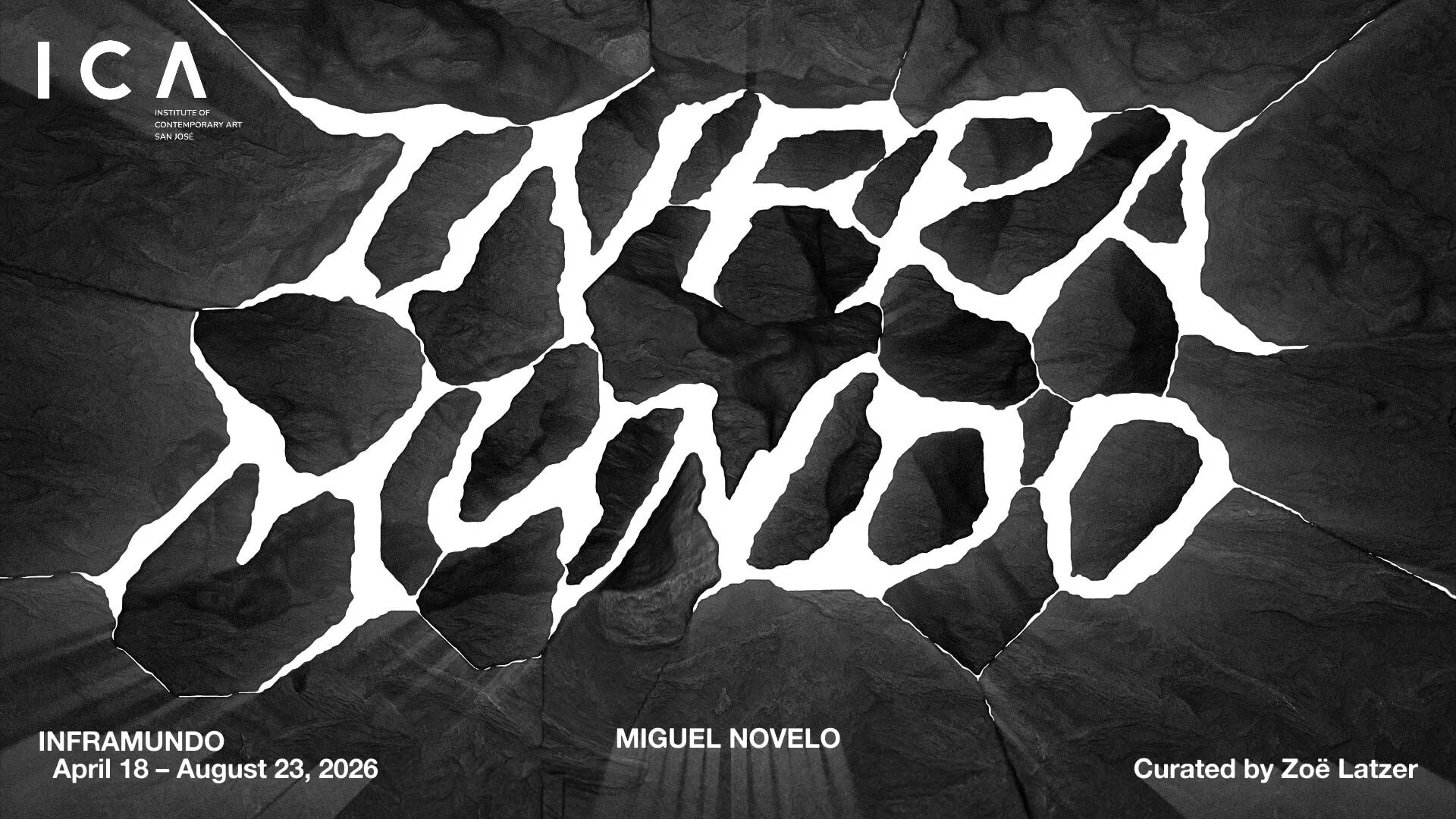
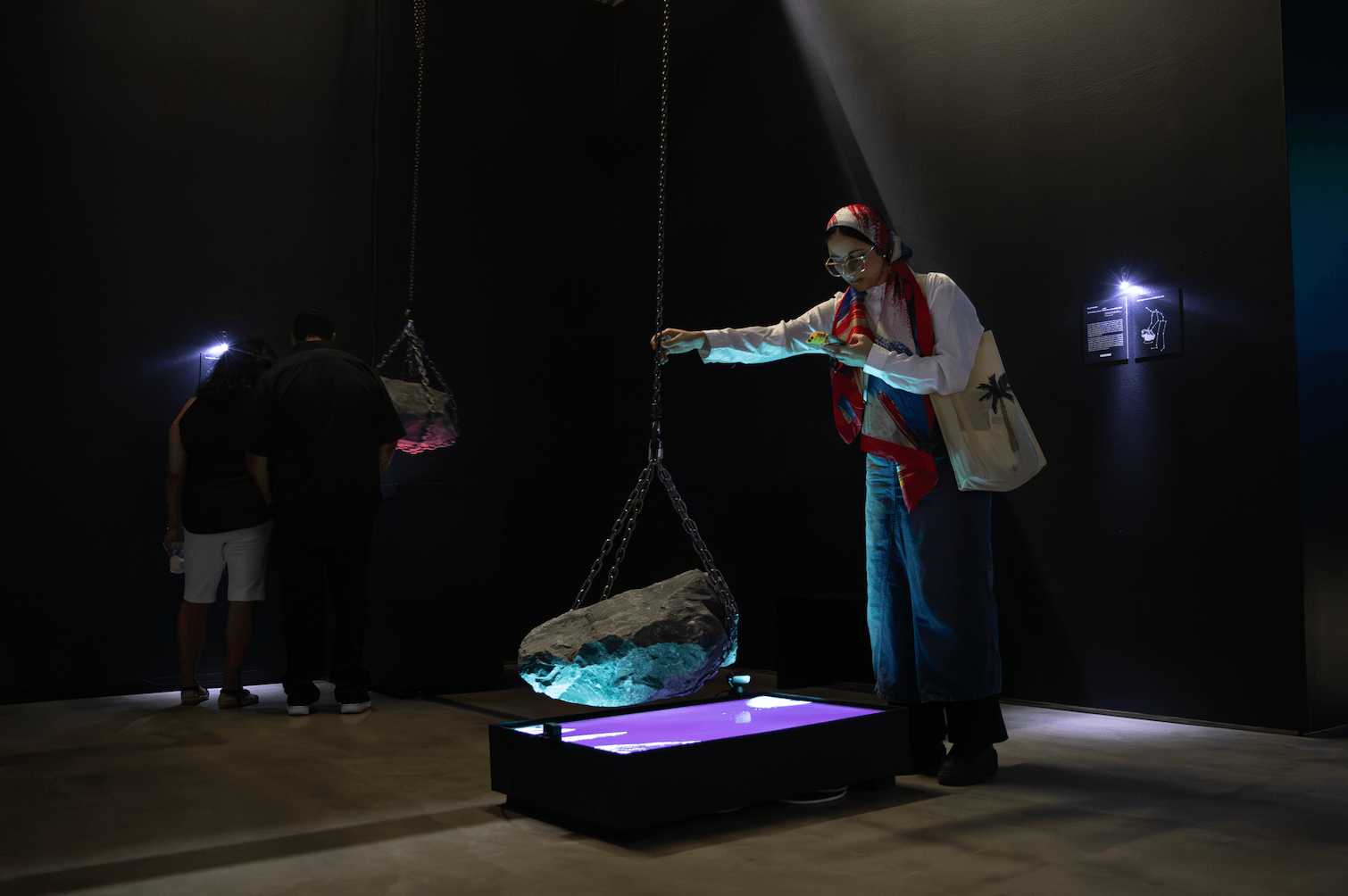
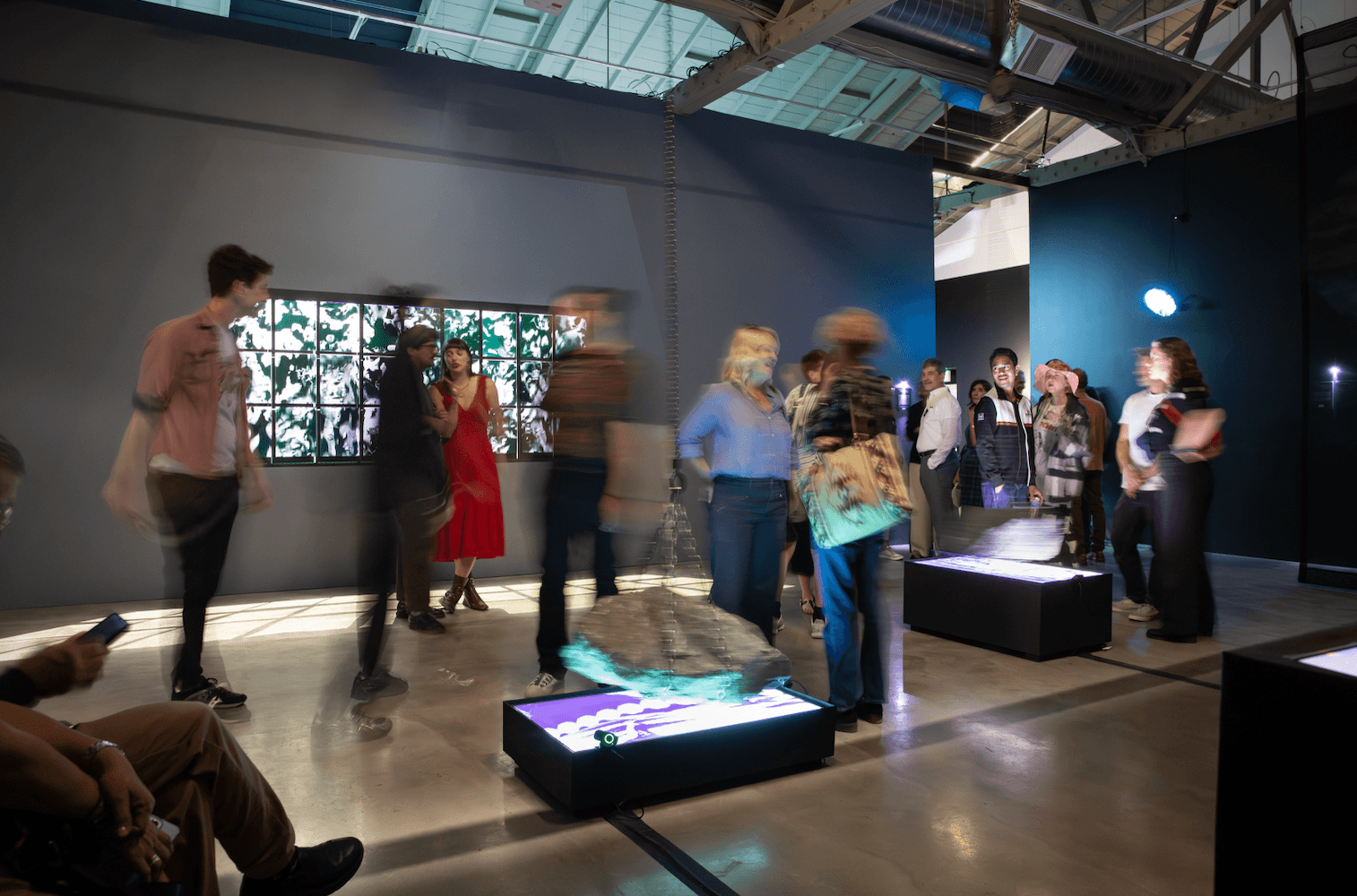
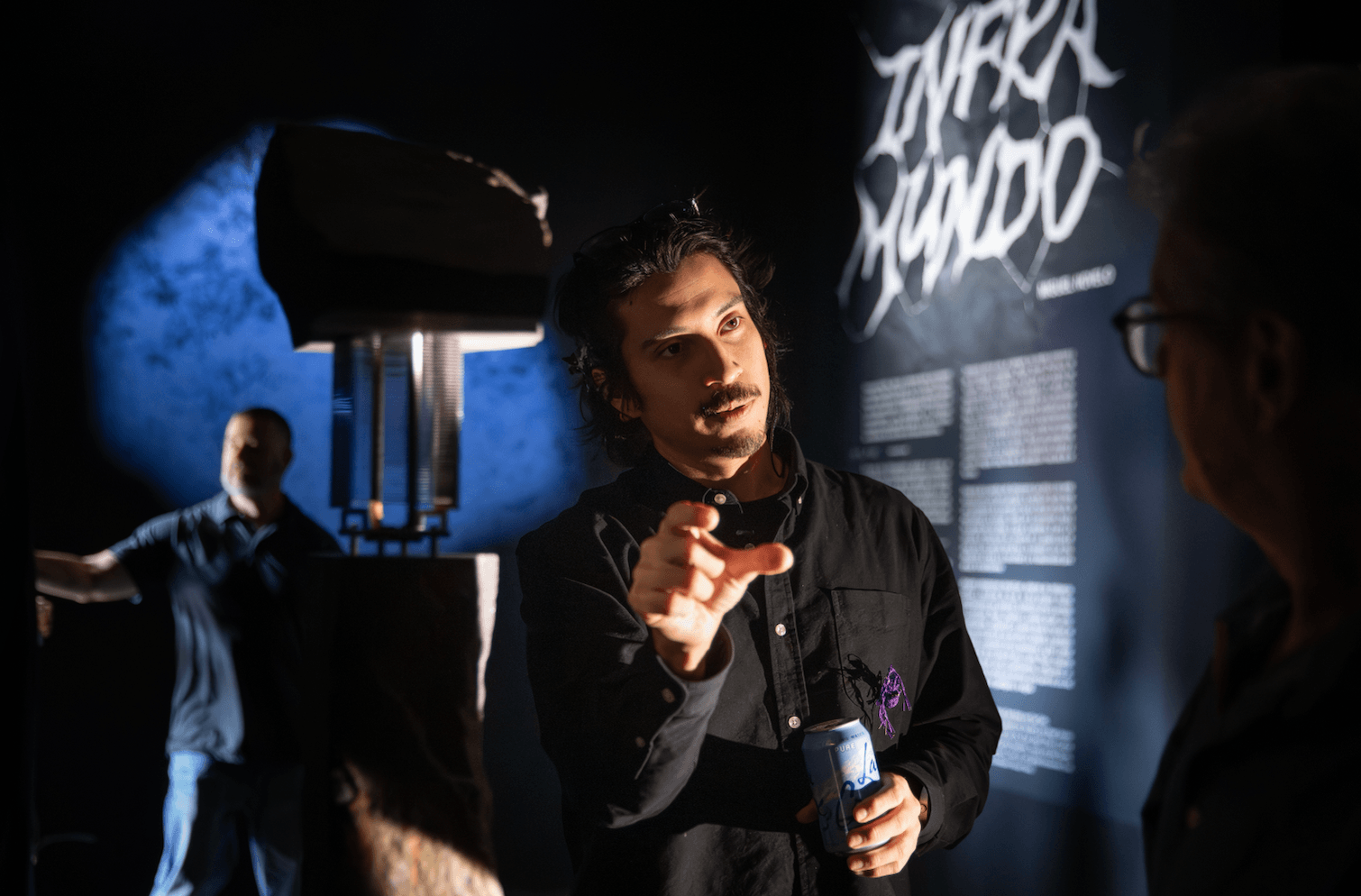
Hugh Leeman: Your exhibition Inframundo at the Institute of Contemporary Art San José creates a cenote-like environment inspired by Maya cosmovision. How have Maya-speaking communities and the culture you grew up around informed that exhibition?
Miguel Novelo: Over time I have come to understand how much my upbringing in Campeche shaped the way I think about technology. Even though I do not claim a simple or singular identity within the Maya diaspora, I grew up in a region where Maya culture, language, ecology, and worldview remain deeply present. That environment—tropical, dynamic, and full of life—formed my sensibility.
Inframundo emerges from that realization. The exhibition asks what technology might look like if it had developed not through Silicon Valley’s assumptions, but through a Maya cosmovision. What if progress did not always mean acceleration, disruption, and constant replacement? What if progress sometimes meant preservation, rest, long duration, or sustainability?
The exhibition is also shaped by collaboration. I am working with biologists, geologists, activists, poets, artists, and architects, many of them connected to the Yucatán Peninsula. Together, we are thinking about how local histories and ecological realities might speak back to the dominant technological imagination of Silicon Valley.
At the center of the project is a different understanding of time. Rather than designing for short cycles of disruption, I am interested in “big time”: systems, philosophies, and technologies that remain accountable to generations far beyond the present.
What Silicon Valley Could Learn From Big Time
Hugh Leeman: If Silicon Valley seriously adopted that way of thinking—this longer temporal horizon embedded in Maya cosmovision—what transformation would you hope to see?
Miguel Novelo: I think we already see small examples that move in this direction, such as the right-to-repair movement. That idea reflects a much longer relationship to technology: products should be understandable, maintainable, and built to last. We should be asking whether a computer can last one hundred years, not just whether it can be replaced in three.
This is why I am interested in architectural and design proposals that redefine progress. One of the architects I am working with once responded to a school assignment by proposing that the best thing to build on an empty lot was nothing. In environmental terms, that was the most responsible answer. But it was treated as a failure because our systems assume that development must always mean more construction, more production, and more acceleration.
I want to interrupt that logic. If someone designing the next phone, platform, or device begins to think about the children of their children rather than next quarter’s profit margin, that is already a meaningful shift. Maybe it leads to repairable screens, replaceable batteries, or entirely different standards for what counts as innovation.
I am not claiming that one exhibition will change the world. But I do think art can plant an idea that continues working inside people long after they leave the room. For that to happen, I probably do need a certain productive naivete—the belief that culture can still alter how technology is imagined and used.
The Cultural Change He Wants to Provoke
Hugh Leeman: In one of your statements, you write that you want to become a culture-changing force that shares knowledge, represents diverse voices, and shapes culture. If you could wave a magic wand and achieve that ambition, what would you want to happen?
Miguel Novelo: I would want us to fully understand that human beings are not only biological, but geological. We are part of the earth in a literal sense, and the marks we leave now are entering the strata of the planet. The Anthropocene names that reality, whether or not we are comfortable with it.
Once you grasp that, you cannot pretend that our choices are minor. The built environment, extraction, waste, plastics, and industrial systems all create consequences that may last for millions of years. We are temporary beings making long-term geological impacts, and we still do not behave as though that is true.
So the change I want is cultural before it is economic. I want people to think in big time. I want them to want objects, systems, and ways of living that can be passed on rather than discarded immediately. If culture changes, markets will follow. If people stop wanting disposable futures, the economy will be forced to respond.
That is why I believe in art and culture so strongly. What changes the world is not only policy or technology, but the stories, images, and values that reshape how people perceive reality. Change the culture, and you change what becomes imaginable.
