
KAWS, Family, SF MOMA
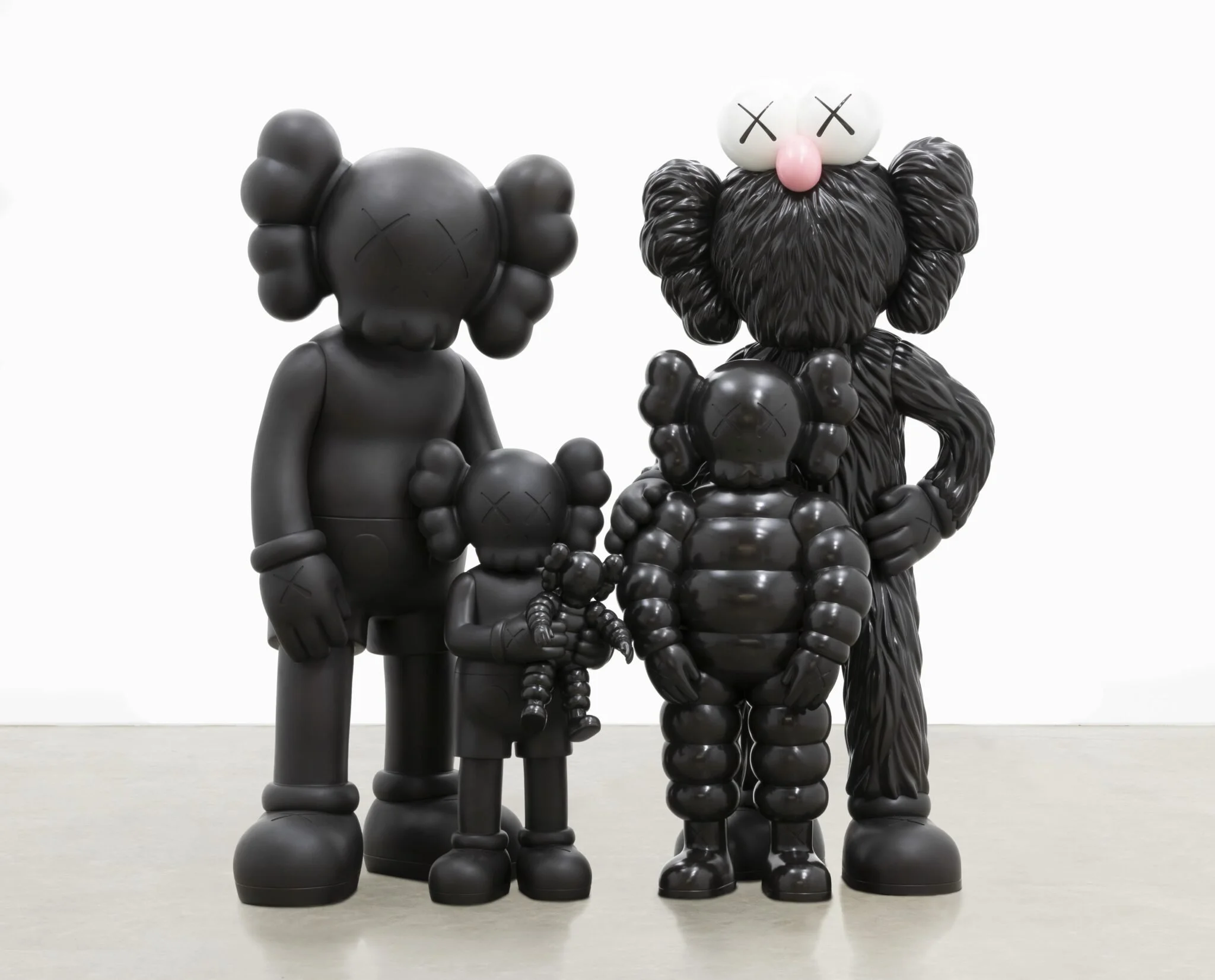
KAWS, FAMILY, 2021; courtesy the artist; © KAWS
To see KAWS is to see nothing at all. Of it I can say this much to be true: It is an exhibition. There are objects. They are large. Many of them are round. Something vulgar has happened. I feel as though I shouldn’t bear witness to it. Thought is lost between sight and sound. Sign and symbol recognition enter stop and go traffic. There is a crash. I say to myself: Think of KAWS. Think of KAWS. Of it I find only void. Everything else becomes more real. The woman next to me. Where her scarf might be from. How she feels about her husband. The man sitting languidly on the floor. How it is he sits so freely. The SFMOMA employee who fiddles with her badge. How she feels about my being here. How she feels about being here. How she feels about the big being here. I am confused and distraught until I see a child. He is standing with his father in front of a glass case wherein lies enclosed a tiny bedazzled moon man. Its shining surface hits me like revelation: The truth. I cannot see it. I'll never see it. This is after all: KAWS Family. I realize. It's f-o-r k-i-d-s. I came here neither with child nor child-like spirit. I came as discerning eye. Arbiter of aesthetics. And so, I was made blind.
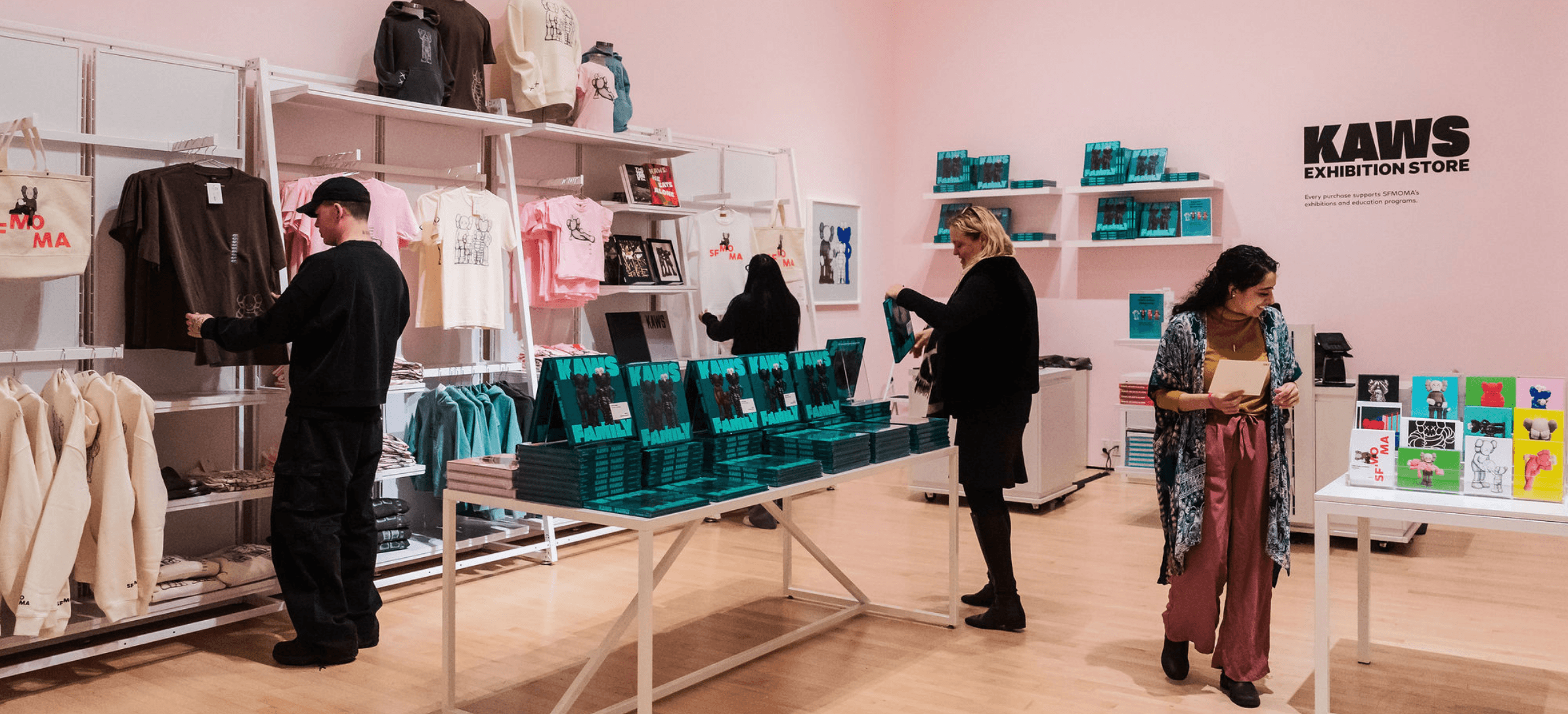
KAWS SF MOMA gift shop
It ends in a room of objects. This gallery is hollow and fragile; set-like. I see the same nothing as before, but shrunken. There is a subtle change in materiality. It seems I’ve stumbled upon facsimiles. Yet, they emit stronger auras than their models. I smell the essence of pure plastic when again it happens. Like vision, I see it: a cash register. I can buy these tiny sculptures. I feel great relief. In this simulacra storefront, there is something more true to my mind than the original blobs and forms of which I have already forgotten. Sweet commerce. Loving language of goods and credit. I know her well. I approach a table covered in neat stacks of books. I hope to learn. To grow. To buy. To give meaning to my experience. I turn over the book and remember I am broke. So I carefully photograph each page of text. Employees in view, I contemplate the ethics of stealing text. I feel mild stress. They say nothing. I say nothing. It’s done. I leave. Weeks go by. I do not read the images. Each time I think of the text, my mind becomes frenzied by more opportune clicking. An invisible hand reaches out. It swipes at glass. Guides me to another topic. Some other muse. Everything, again, feels more real. I try as hard as I can to come up with words to describe my experience. I am finally delivered an adage: It is that in which we do not see (KAWS) in which we might find great truth.
So here it is: If KAWS: Family is meant for anything other than k-i-d-s, it is to show us how bad things really are. The function of art is many. It can aspire to more (greatness, justice, transcendence) or it can reflect a fundamental reality of what it means to be in the world. KAWS does the latter. If we consider it through this lens there is no greater, no more opportune curatorial choice for SFMOMA. KAWS is good because it is bad. These forms which I can't place, or describe, or entertain in my mind, feel disturbingly similar to how it feels moving through a city being rapidly shaped by the arbitrary vision of a group of select people with influence and power; and a perverse predilection towards everything becoming smooth, flat, and hybrid-human. This is, of course, not so different from the past. What is different is that the new people with money and power don’t care about what the old people with money and power find important. This exhibition shows us how powerless the arts and their beloved institutions have become in San Francisco. It is what happens when resources are so limited, and interest so dismal, a museum with a storied history must continuously choose between tourist traps and glorified inventory shows.
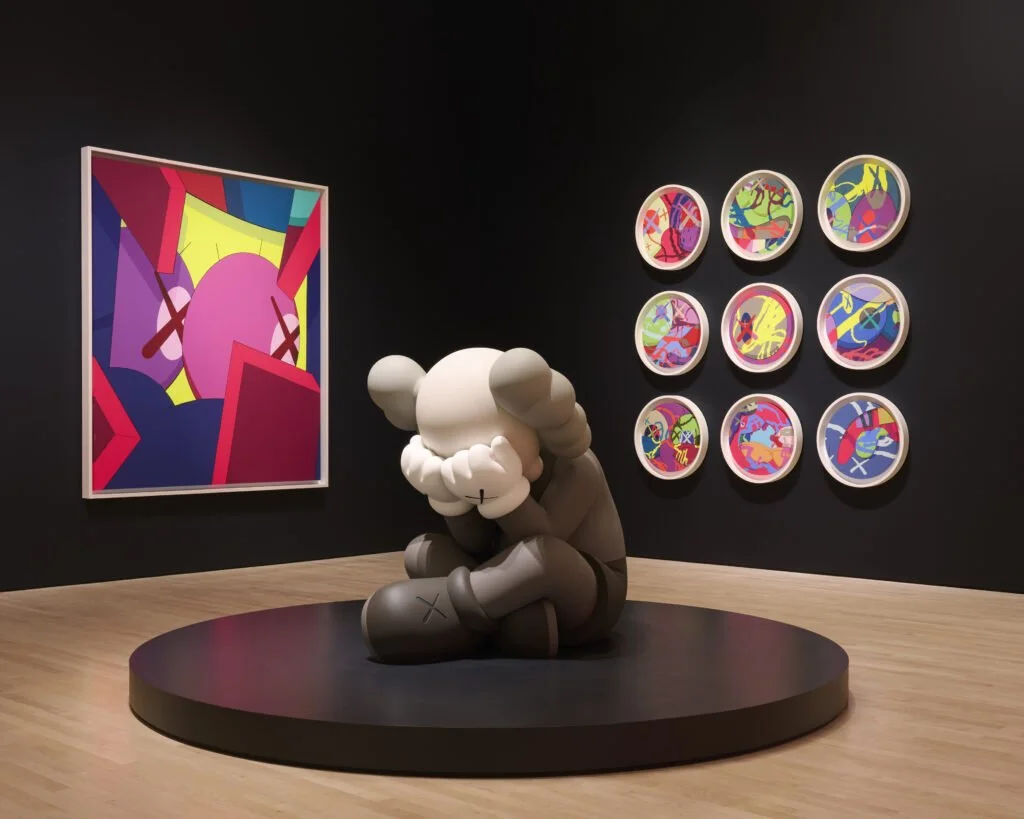
If KAWS disgusts you, if it leaves you feeling empty, if it leaves you feeling that you’ve seen nothing at all, you might think of it as the world which is becoming very empty, feeling very much like nothing at all. For this we should thank KAWS, and the curators valiant efforts in showing us the nothingness that we are approaching. What it feels like to live in San Francisco amongst a collective dream-state of work and reality, which is: I do not see, or think, I move. Just as I’ve now spent all these words talking not about KAWS but around KAWS (I still have no idea what the art is about, but just a general sense of feeling wronged by it.) through KAWS, for a moment I inhabited what can feel like the mind of this city. I am moving through it, but I have no grasp of it. When I try to think of it, it escapes me. I am autonomous, and I literally swear I’m approaching sentience. I have no regard for beauty with a capital B. I could not identify it if I tried. Are we not all KAWS in a way? Are we not all sitting crouched with our hands over eyes, heads lowered between our knees?
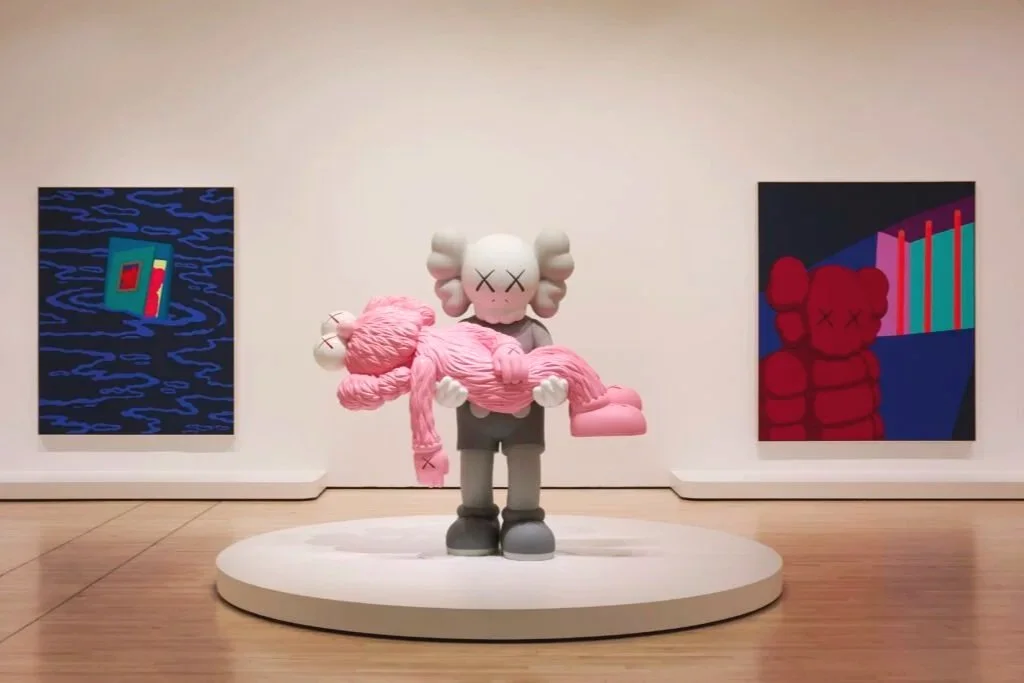
KAWS: FAMILY (installation views, SMOMA); photo: Jason Schmidt
