

Jim Campbell

Jim Campbell (b. 1956). Campbell’s work has been exhibited internationally and throughout North America in institutions such as the Whitney Museum of American Art, New York; the San Francisco Museum of Modern Art; The International Center for Photography, New York; The J. Paul Getty Museum, Los Angeles and the Museum of Contemporary Art, Sydney, Australia.
His electronic art work is included in the permanent collections of the Museum of Modern Art, New York; the Smithsonian American Art Museum, Washington, DC; the Whitney Museum of American Art; the Metropolitan Museum of Art, New York; the San Francisco Museum of Modern Art; the de Young Museum, San Francisco and the Berkeley Art Museum. In 2012, he was the recipient of the San Francisco Museum of Modern Art’s 13th Annual Bay Area Treasure Award.
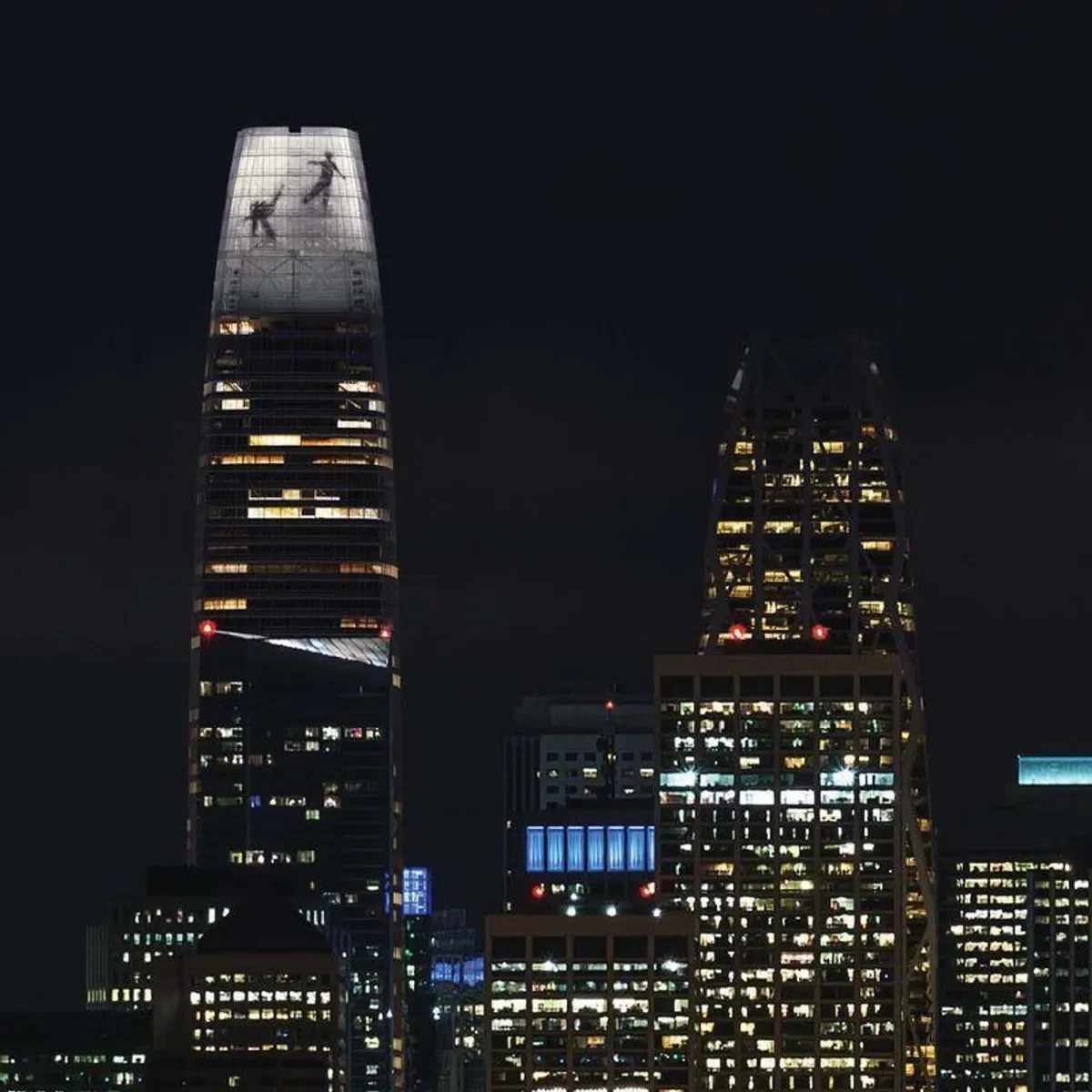
Previous honors include a Rockefeller Foundation Fellowship Award in Multimedia, three Langlois Foundation Grants and a Guggenheim Fellowship Award. He has two Bachelor of Science Degrees in Mathematics and Engineering from MIT and as an engineer holds nearly twenty patents in the field of video image processing. His 2018 piece ‘Day for Night’ is a permanent LED installation that comprises the top nine floors of the 61-story Salesforce Tower in San Francisco. His artwork has been shown at Hosfelt Gallery in San Francisco for more than 25 years.
The following are excerpts from an interview with Jim Campbell by Hugh Leeman.
Chicago, MIT & Finding Art
Hugh Leeman: Jim, you're a Midwest guy — born in Chicago, moved to the East Coast for school, then spent much of your career on the West Coast. What experiences from those early chapters were most formative in leading you to become the artist and person you are?
Jim Campbell: My dad was an audio engineer at the PBS station in Chicago — WTTW — and that's really where my interest in electronics came from. I went to work with him quite a bit, and at the time, the station was actually part of the Museum of Science and Industry. It was a wing in the same building. The TV station was essentially an exhibit — you could look into the control room as they were recording a show and see the engineers at the control panel. My father was one of those engineers you could look in at. So I did that a lot, and it got me interested in electronics, which probably led me to get a degree in electrical engineering from MIT.
Hugh Leeman: At MIT you've said you were pretty depressed for four years. What was going on?
Jim Campbell: It's kind of hard to describe, but I was pretty neurotic when I went there, and MIT at the time — probably still does — kind of breeds neuroses. So I only got worse while I was there. When I was done, I left and came to California. Drove out with a friend in my Bug in 1978 and got a job in Silicon Valley.
Hugh Leeman: There's a narrative — maybe a stereotype — that the schools historically producing great engineers, MIT, Carnegie Mellon, still produce a similar kind of pressure-cooked environment fifty years later. What do you make of that?
Jim Campbell: I would have no idea if that's true or not. But it kind of makes sense. Engineers tended to be introverted. And so you go to a place where everyone around you is like that and everyone around you is a genius — it's just a weird environment. Which is why I wasn't real happy there, which is why I left.
The Tenderloin, The Phone Call & A Career Begins
Hugh Leeman: You've told me a story about being rejected by countless art galleries, and your first actual show was in an apartment you rented in the Tenderloin with your then-girlfriend. What's the long version of that story?
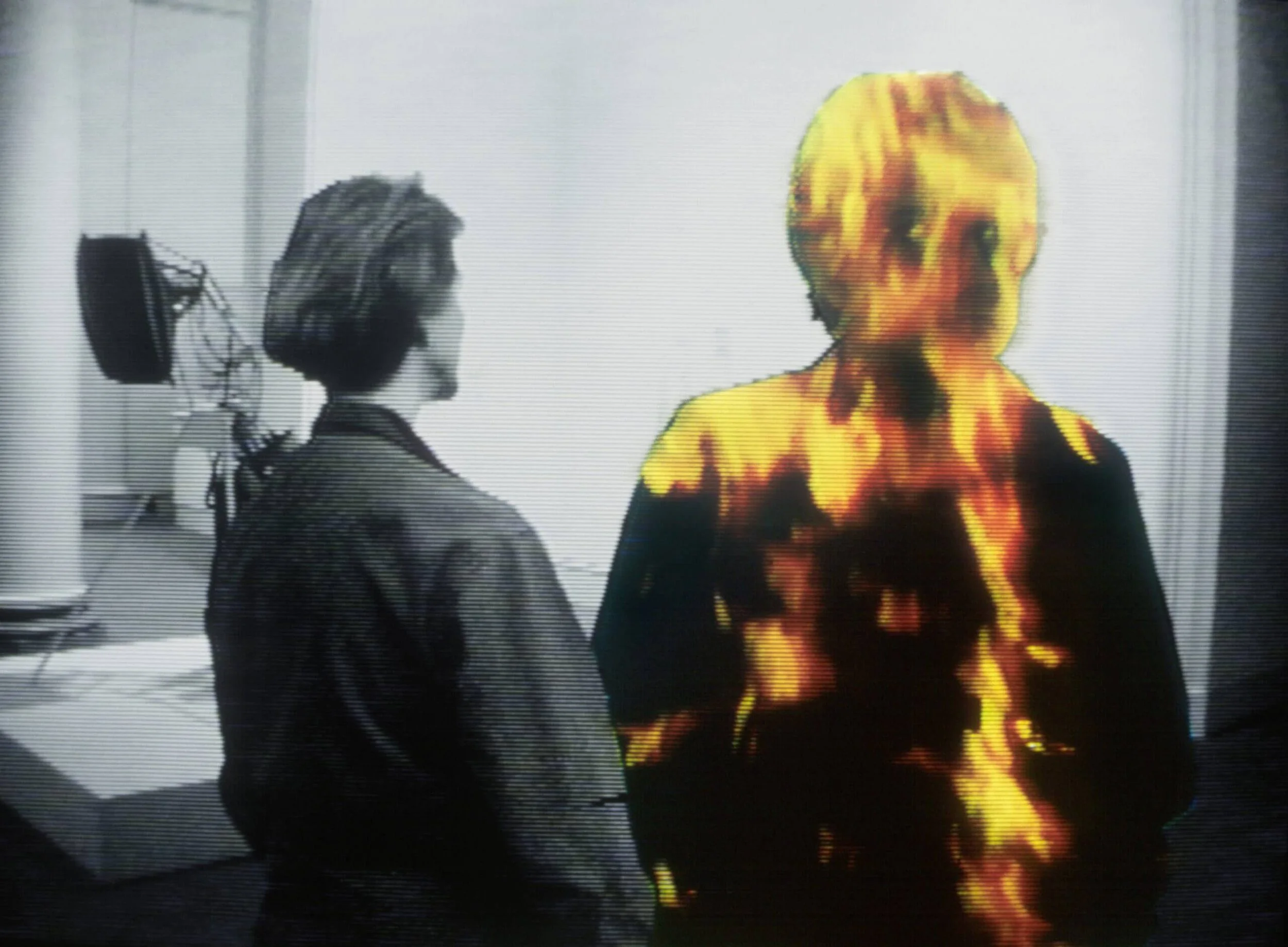
Jim Campbell: It's how I started making art, really. A friend of mine — actually an ex-girlfriend — needed to get her master's degree, and to do that she needed an exhibition. We were both interested in art that dealt with the theme of mental illness. So we started trying to sell a show to different nonprofit galleries around San Francisco, and because neither of us had any history, no one wanted to show us. So we rented an apartment in the Tenderloin — cheapest neighborhood — where we could set up our own exhibition. The hardest phone call I ever made was to call the curator at SFMoMA at the time, a guy named Bob Riley. This was 1988. And he said to me — and this gave me so much respect for him — he said, I saw a film you made as an undergraduate at MIT ten years ago. So sure, I'll come. I was just blown away. A two-minute video I made as an undergraduate, and he remembered it. He came to the exhibition in the apartment in the Tenderloin, and he really liked a piece called Hallucinations — an interactive mirror work where you see yourself on fire. He put me in his next exhibition at SFMoMA with that work.
Hugh Leeman: You're probably the only person in the history of humanity to show an artwork in the Tenderloin and then have it go straight to the Museum of Modern Art.
Jim Campbell: The San Francisco Museum. And I was ready to give up art at that point. If nobody gave a shit, I was probably not going to give a shit myself. His believing in me really changed my direction.
Hugh Leeman: Between those three works in the apartment, it seems like if it's not for that ex-girlfriend and that collaboration — that you don't become an artist. That's almost the end of the story.
Jim Campbell: I think that's probably true. Her need for the degree really made it happen, and I kind of tagged along.
Hugh Leeman: Then there's the phone call. Walk me through it — this is the era of landlines. You pick up the phone and call SFMoMA. What happens?
Jim Campbell: I don't remember how I got the phone number, honestly. But people were less filtered back then. You didn't have to go through ten places to get to someone. I think I just called the museum and asked for him. And he answered.
Hugh Leeman: It's powerful to think that perhaps none of it happens if this guy doesn't pick up the phone.
Jim Campbell: That seems very likely.
Mental Illness, Personal History & Angry Art
Hugh Leeman: Mental illness was the theme of those early works — Hallucinations, Obsessive Compulsion, Shock Treatment. What was the inspiration behind focusing your artwork there?
Jim Campbell: My brother had schizophrenia. He had obsessive compulsion, had shock treatment, had hallucinations. So all of those themes just decided to work with. If you look at the work I've done over the years that you might call political — how people treat people who are mentally ill, the Motion and Rest LED series looking at how disabled people are viewed — those might be my most political works. But for me, they're both personal. Pretty much any political work I've done has actually come from a personal point of view.
Hugh Leeman: Among the most touching is the thirty-minute film addressing your brother after his death by suicide. Before it became a public work of art, how did those conversations go with your parents who incorporated their own voices into it?
Jim Campbell: They knew I was interested in filmmaking, and I think we were all on board with doing anything that would be cathartic with regard to my brother's suicide — to talk about it to the screen. A lot of my work in those days was really about expressing myself because I was so bad at it any other way other than with film or eventually art.
Hugh Leeman: What did having your parents' voices in the work change about it, compared to if they had said no?
Jim Campbell: Having them on board kind of validated the whole process of making it for me. Otherwise maybe I was just making it for myself.
Hugh Leeman: These points of validation keep appearing — the SFMoMA curator, your ex-girlfriend, your parents. It sounds like there was a younger artist thinking, the hell with this, it might not be worth it — and these moments kept saying, no, keep going.
Jim Campbell: Absolutely. I had a pretty profound sense of self-doubt back then.
Hugh Leeman: How does one overcome that?
Jim Campbell: Friends and experience and, honestly, relationships.
Hugh Leeman: What was the anger coming from in that early period? The Tenderloin show, those early works — you've described yourself as an angry artist then.
Jim Campbell: The anger was motivating, for sure. A lot of it was anger at myself as much as anything — at how the world treated people who were mentally ill, including myself. Shock Treatment, for example — you'd sit down and it would capture an image of your face. There'd be a button in front of you. You'd press it and your image would slowly erase pixel by pixel until you were gone. That was a metaphor for shock treatment at the time, which randomly erases memories. It's why Hemingway killed himself, because he didn't have access to those memories anymore. And I was kind of blown away — being an engineer — that even in the eighties, shock treatment was done with an essentially unregulated power source. If there happened to be a surge in the wall outlet, the surge would actually make it to the person's head. So there was a lot of stuff that made me angry. Which was why it was kind of funny to see the little kids waving at themselves when Hallucinations was installed at the museum.
Low Resolution, Perception & the Primal Image
Hugh Leeman: One of the things your work is noted for is its low resolution — which is striking given that early in your career as an electrical engineer you were working on developing high-resolution screens. You went in the complete opposite direction. The idea is that low resolution becomes a kind of tabula rasa — a screen onto which viewers project their own imagination. When you look at your own works from years ago, what does your imagination fill in?
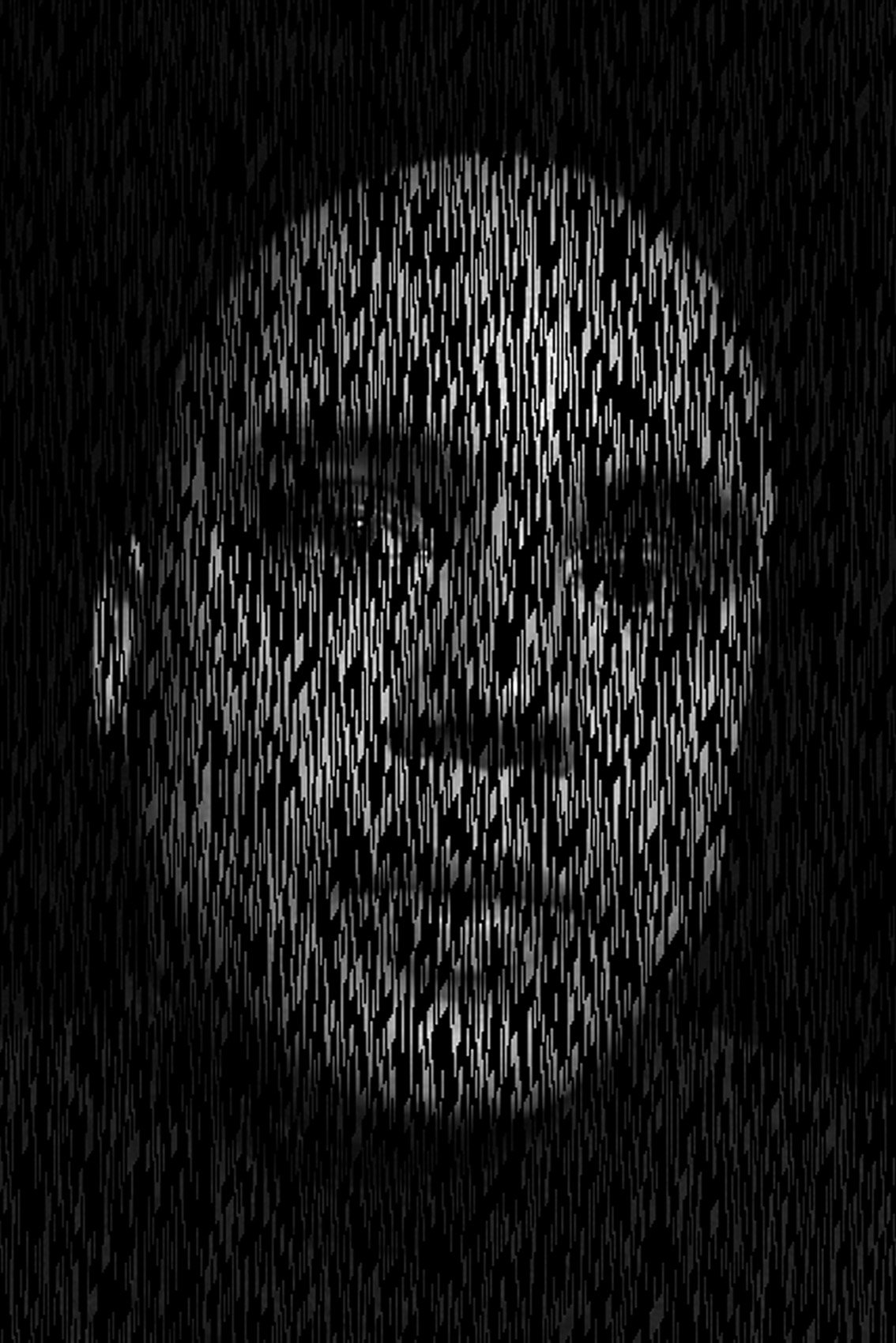
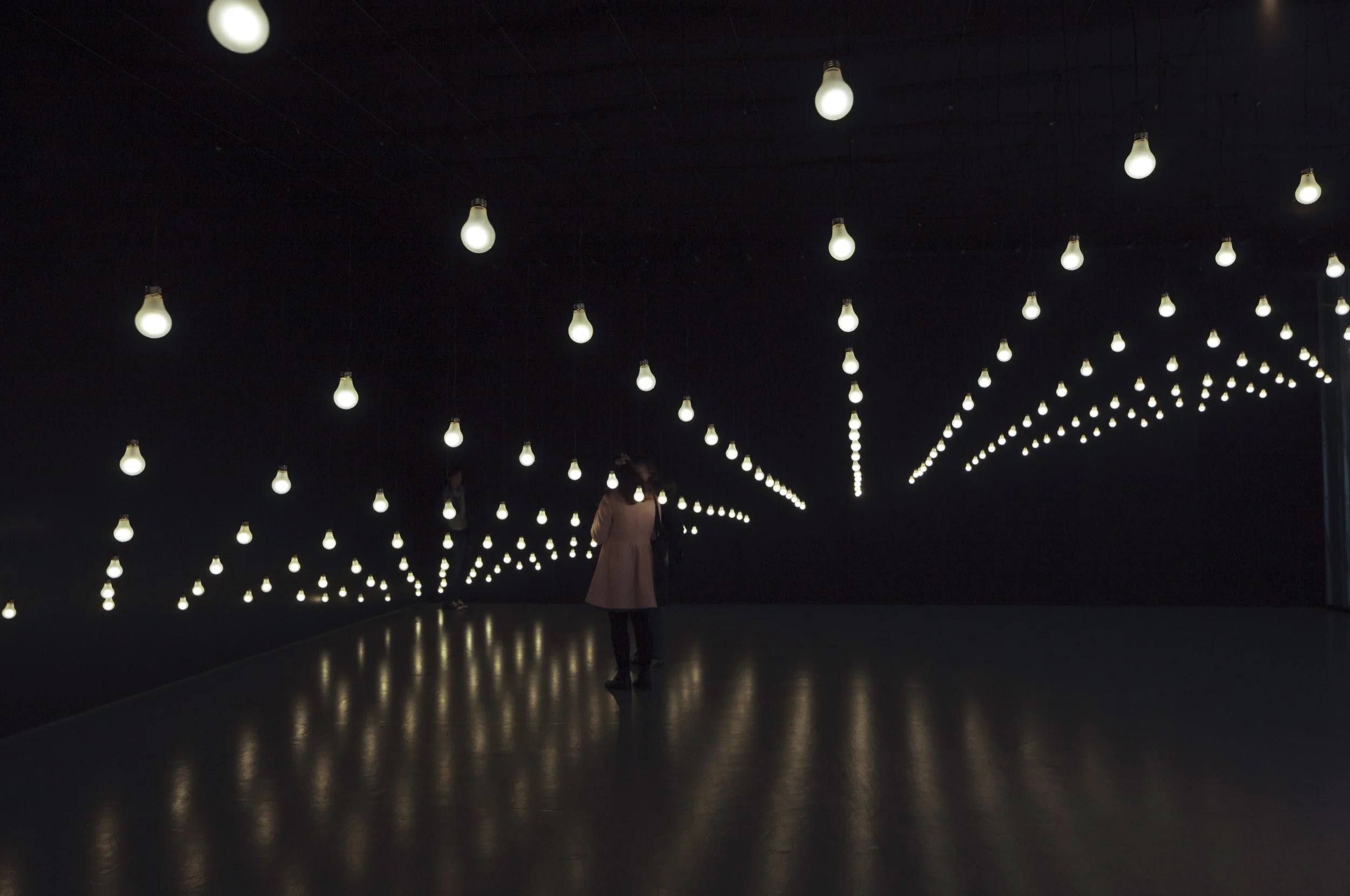
Jim Campbell: I'd put it slightly differently than imagination. What happens when these works are successful is that there's what I'd call, pretentiously, a primal perception. Your brain is looking for details, looking for edges, looking for closure, looking for — is this a man or a woman? — and it can't see any of that. So it opens up the image to flow into you beneath the analytical processes of the brain. It's almost like music or peripheral vision — you're receiving it, but you can't analyze it. Somebody once said to me, after seeing a work, something I had never thought about: you learn how to look at these works by looking at them. Because the imagery you're looking at doesn't really exist in the real world. Low resolution images don't really exist.
Hugh Leeman: The idea of giving space for the viewer's imagination and learning how to look as you look — that sounds like a cathartic experience. Taking that together with what you've shared about how personal some of these works are, do you ever feel misread in a way that hurts?
Jim Campbell: What it usually makes me do, as opposed to feeling hurt, is to try to look at it from other people's perspective. I do my best — as I'm sure every artist does, unless you're working with the Hollywood model — to not think about how the work will be received while I'm making it. You can't do that with public art, because you've signed a contract and the city or the building has expectations. But with other work, you don't have that obligation. My wife, Tessa Wilcox, is my best critic. I have a small studio in my backyard, and before a show I'll invite her out to look at work and give me feedback during the process. What commonly happens is she'll critique something and by the end of the conversation she'll say, did you want my opinion or not?
Hugh Leeman: Which way do you go on that?
Jim Campbell: What she's saying is you're not listening to me at all. Usually she'll leave, and then I'll think about what she said for a long time. So it's very helpful.
Disability, Parents & the Memory Works
Hugh Leeman: Your Motion and Rest series films people with disabilities — looking at the way they move. You mentioned that this is personal, referencing your own parents. Tell me more.
Jim Campbell: My mother, before she died, I had already had this series in mind and she was going to be the first one filmed. But in my usual way, I probably didn't have a deadline, so I didn't film her. Both of my parents were disabled, and this series refers to that. I was interested in not just how people view people who are disabled — because when I was a kid, there were far more prejudices against disabled people — but I was also embarrassed as a kid by my parents, at certain times. Making these works, having people be able to just stare at these moving figures without that awkward glance — that was a way of dealing with that. They're not just critical of our culture. They were self-criticism too, at how I dealt with it as a child.
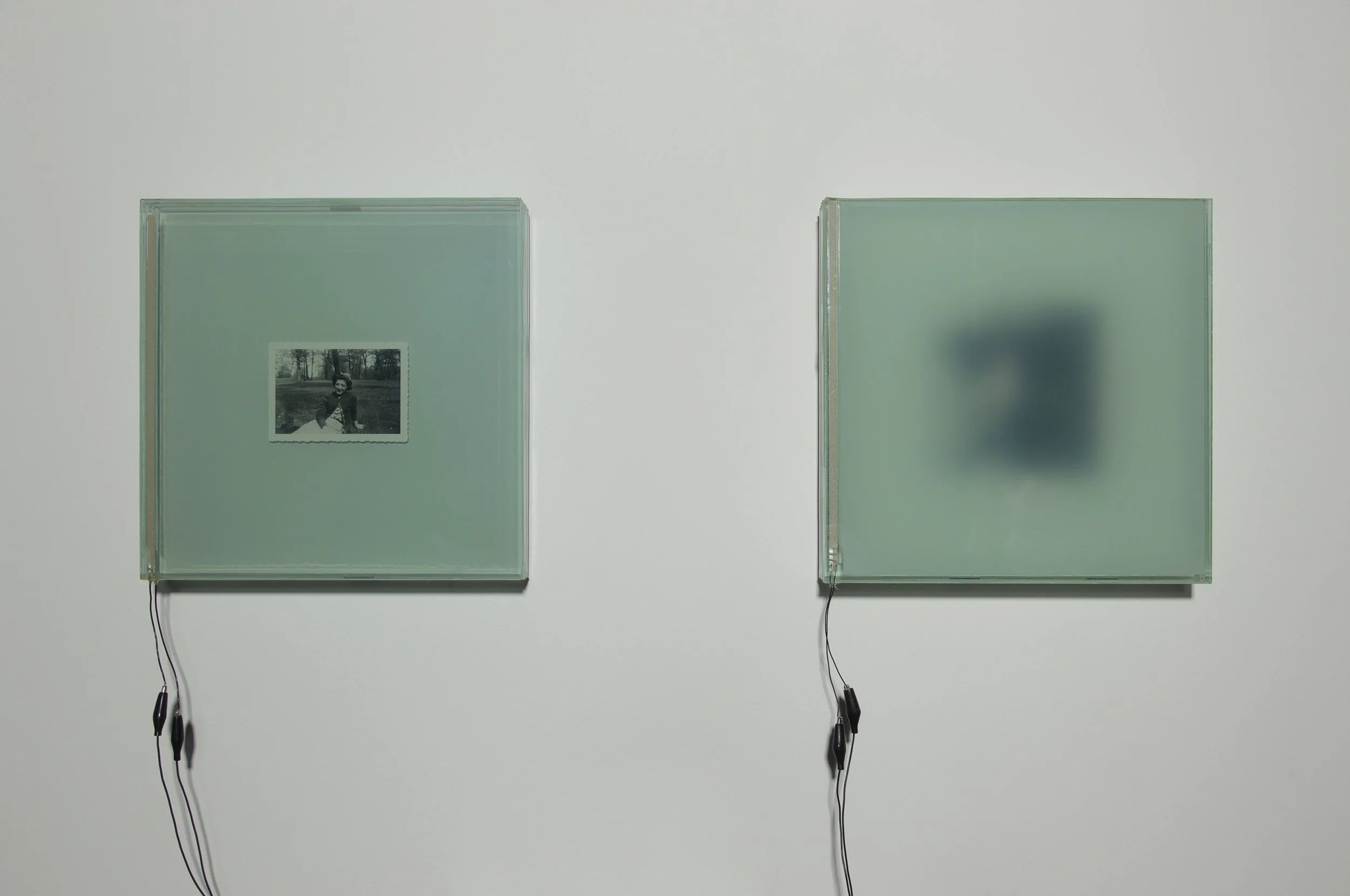
Hugh Leeman: The memory works — Portrait of My Father, One Photo of My Mother — use your heartbeat and your breath to modulate the image. You can see the portrait clearly and then it disappears into opacity. What did it mean to let your own body govern how your parents appear?
Jim Campbell: That whole series of memory works is really about the fact that memories are hidden. Just like ideas in our heads are hidden — you have to get them out by writing them down, explaining them to someone, doing a painting. They're in your head and you have to spit them out. I was using these works as metaphors for that: memories are hidden and need to be expressed. I remember I was literally up all night for a show at Rena Bransten's where I showed Portrait of My Father. And a friend came over, and very suddenly I saw it as violent — his image comes and goes so fast. I started thinking, I can't show this. It's too violent. But you look at the work and you don't see it that way. No one has ever said to me, this is a violent work.
Hugh Leeman: The exhibition I curated switched them — your mother became the heartbeat and your father became the breath.
Jim Campbell: Yeah. I think you just showed the one — my father, with the breath. And a friend came over and said, absolutely show it, you're nuts.
The Salesforce Tower & Giving Back
Hugh Leeman: You've created arguably the most iconic modern public artwork in San Francisco — atop the Salesforce Tower, visible from miles away by potentially millions of people. When you look at that project, what do you see?
Jim Campbell: Salesforce Tower is a complicated one because it ended up being very different than I preconceived it. A lot of my recent work has been about perception — how you see things from close up versus far away, what you take in from an abstract image. The tower doesn't really have any of that. It became, in a funny way, too representational for what I've been typically doing. And because it's essentially a video on the skyline, people have all these expectations — almost like it's a television, like what's on tonight. That's when I started inviting a CCA class to put their imagery up for a weekend. Then I hired someone to help curate — Emma Strebel — and she had this great idea of working not just with universities and high schools, but with emerging artists. So every month we put one emerging artist up on the tower — from midnight to one a.m. and then all night for a long weekend. That's been a lot of fun to see what other people do up there.
Hugh Leeman: I was at a dinner the other night and a gentleman pulled out his phone to show me he was going to be on the Salesforce Tower. It was such an important part of his identity. It seems like this has come full circle from that phone call to SFMoMA — you're doing for others what that curator did for you.
Jim Campbell: It gives me more pleasure than just about anything when artists who have been up on the tower say it's been instrumental in moving forward to the next stage of their career. What could make me feel better than that? Helping emerging artists. And the high school students — you can imagine being a junior in high school and seeing your imagery up on the tower.
Hugh Leeman: You just became the coolest kid in school.
Jim Campbell: All the parents come to the screenings. There are usually little screening parties.
Hugh Leeman: Your daughter once looked at one of your installations and said, "Daddy, can you make it turn green?" How has being a parent impacted your artwork over the years?
Jim Campbell: I've made a lot less. It's made the work a lot less personally reflective in a way — because that personal reflection typically stemmed from being depressed, whether it was the Hallucinations era when I was an angry artist, or the earlier work. Whereas now I'm basically a happier person, with a wonderful child who's about to graduate from college.
Monet, Giverny & Seeing Anew
Hugh Leeman: Most of your work is rooted in perception. You've recently been making work from Monet's garden at Giverny — which is interesting because you've said you were never really a fan of Monet or Impressionism. What happened when you got there?
Jim Campbell: I began to notice I was thinking about Monet in a completely different way. I started thinking about him as one of the first abstract painters — him and Turner. If you look at a black-and-white reproduction of a Monet painting, you can't tell you're looking at flowers. So it's the color that gives you all the information about what you're looking at. If you take a black-and-white photograph of flowers, you can still tell it's flowers. The color was the most important aspect of those works to inform you of what you were looking at. So I made works that go back and forth between color and black-and-white — oscillating between completely abstract and flowers.
Legacy, Perception & Half a Century of Work
Hugh Leeman: You recently showed at Bitforms Gallery in New York, and the works spanned several years of your career. You walk in just before the doors open, and in many ways you're looking at close to half a century of work. How did you perceive yourself?
Jim Campbell: One way I perceive myself is — damn, I'm still doing the same old shit. And then another way, looking at the progression of the low-resolution works, I'm genuinely moved by it. I do often have that feeling of doing the same old shit. Not all the time. Not while I'm working on them and finishing them.
Hugh Leeman: From the Tenderloin to Bitforms — close to fifty years. When you jump ahead another forty years, what do you hope people understand and take away from this body of work?
Jim Campbell: If you think about what I was saying about the successful low-resolution works — this experiential flow of abstraction that touches things in your brain that a normal photograph or normal video simply doesn't, because it eliminates so much — I would hope that that still works on people in that meditative way. If it doesn't, the works will be meaningless. Because that's really what they're about.
Hugh Leeman: There's something fascinating about that — the idea that the viewer gets to project their own world into what they're seeing. That's where the work gains its meaning.
Jim Campbell: Yeah.
Hugh Leeman: Jim Campbell, thank you for sharing your ideas, your stories, and your artwork.
Jim Campbell: Of course. It was my pleasure.
