
Griff Williams
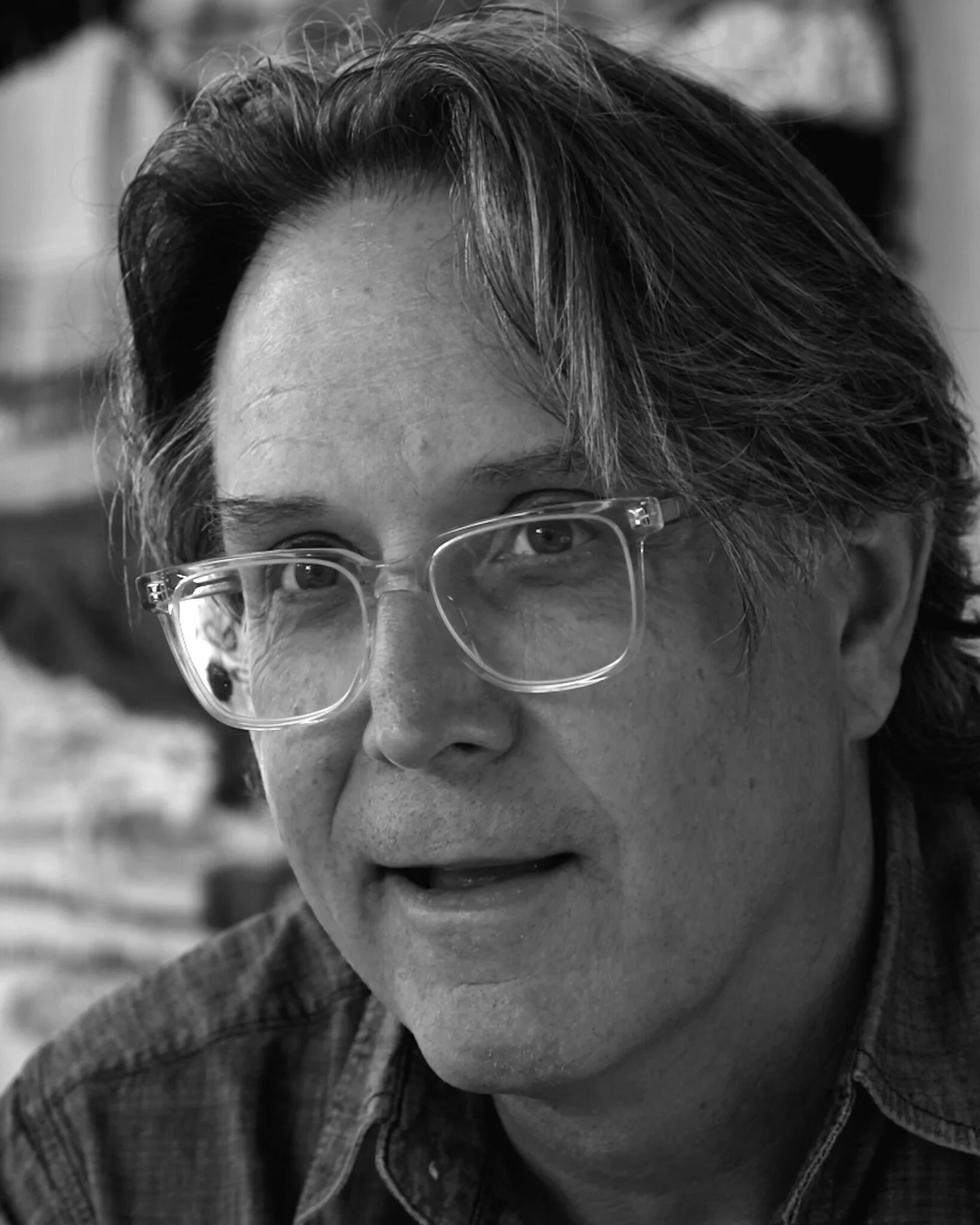
Griff Williams is an American painter, gallerist, publisher, and filmmaker whose career has been defined by a deep commitment to artists over commerce. In 1993, he founded Gallery 16 and the pioneering fine art printmaking workshop Urban Digital Color in San Francisco, building an institution that has collaborated with hundreds of artists and institutions, including SFMOMA, the Whitney, and LACMA. He has lobbied Congress on behalf of the National Endowment for the Arts and taught at SFAI and CCA. In recent years, Williams has become one of the most outspoken voices on the erosion of San Francisco's creative community. His award-winning documentary Tell Them We Were Here chronicles Bay Area artists and how they extend the historical legacy of Bay Area activism — offering an alternative worldview that emphasizes creativity and community over capital.
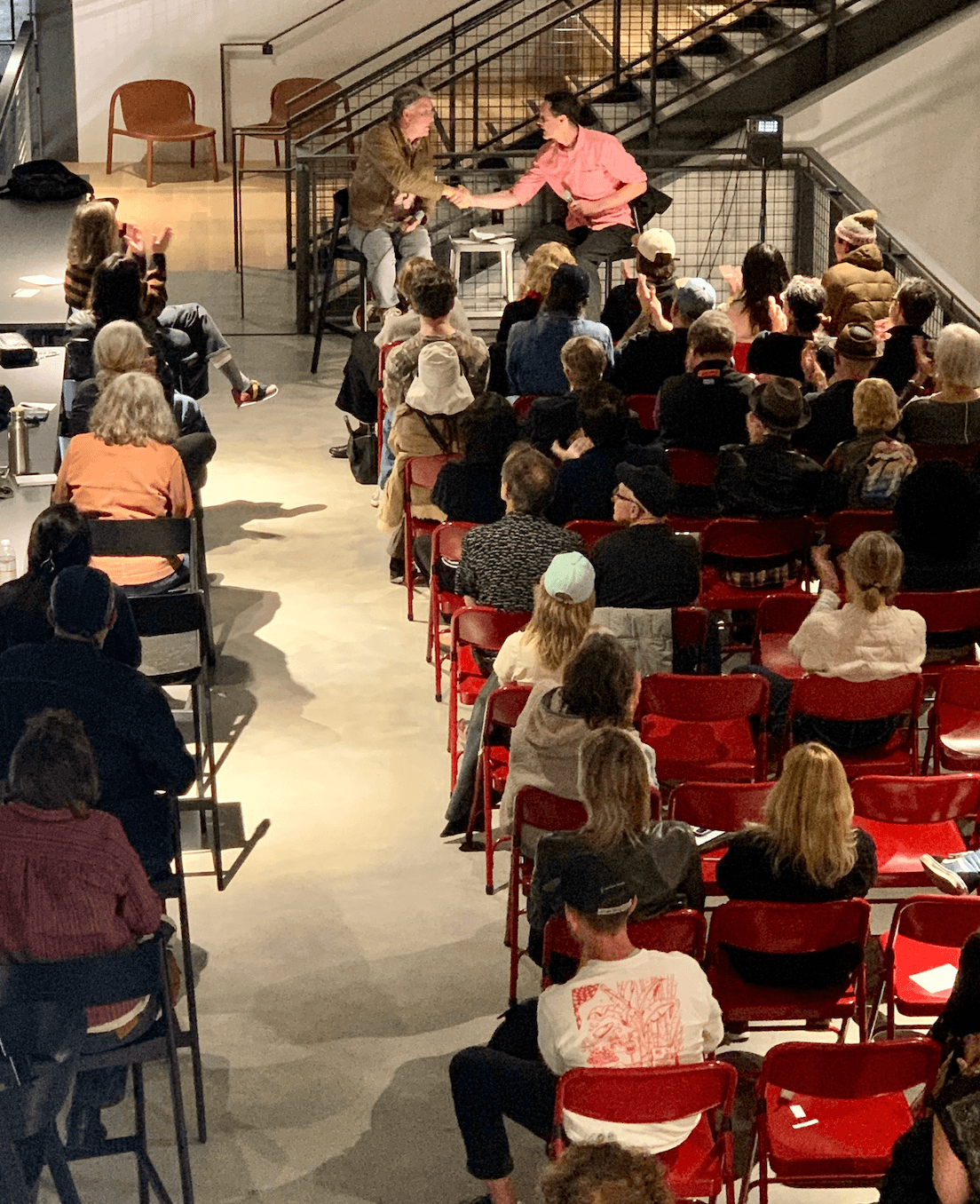
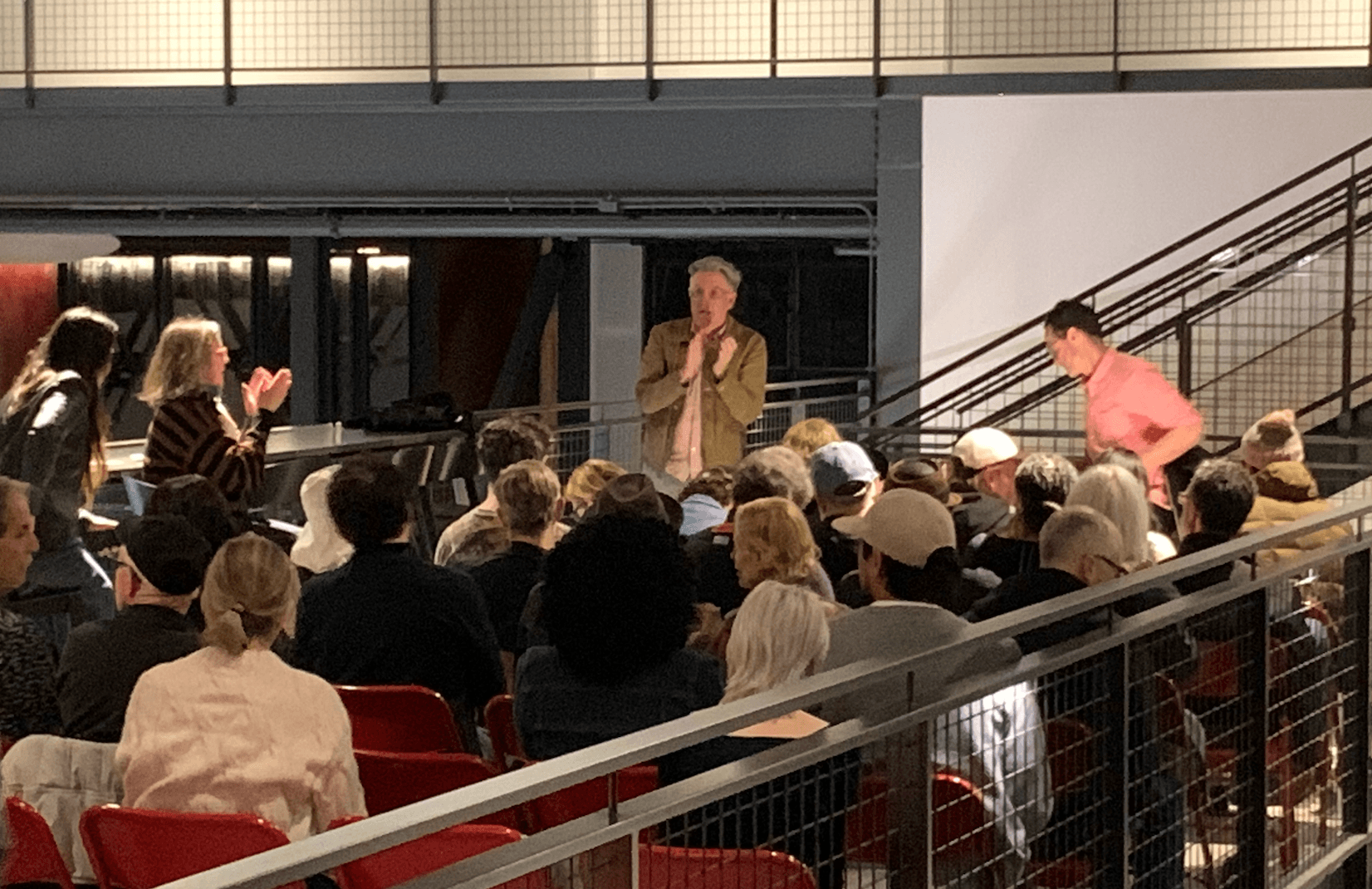
The following are excerpts from Griff Williams’ interview conducted by Hugh Leeman.
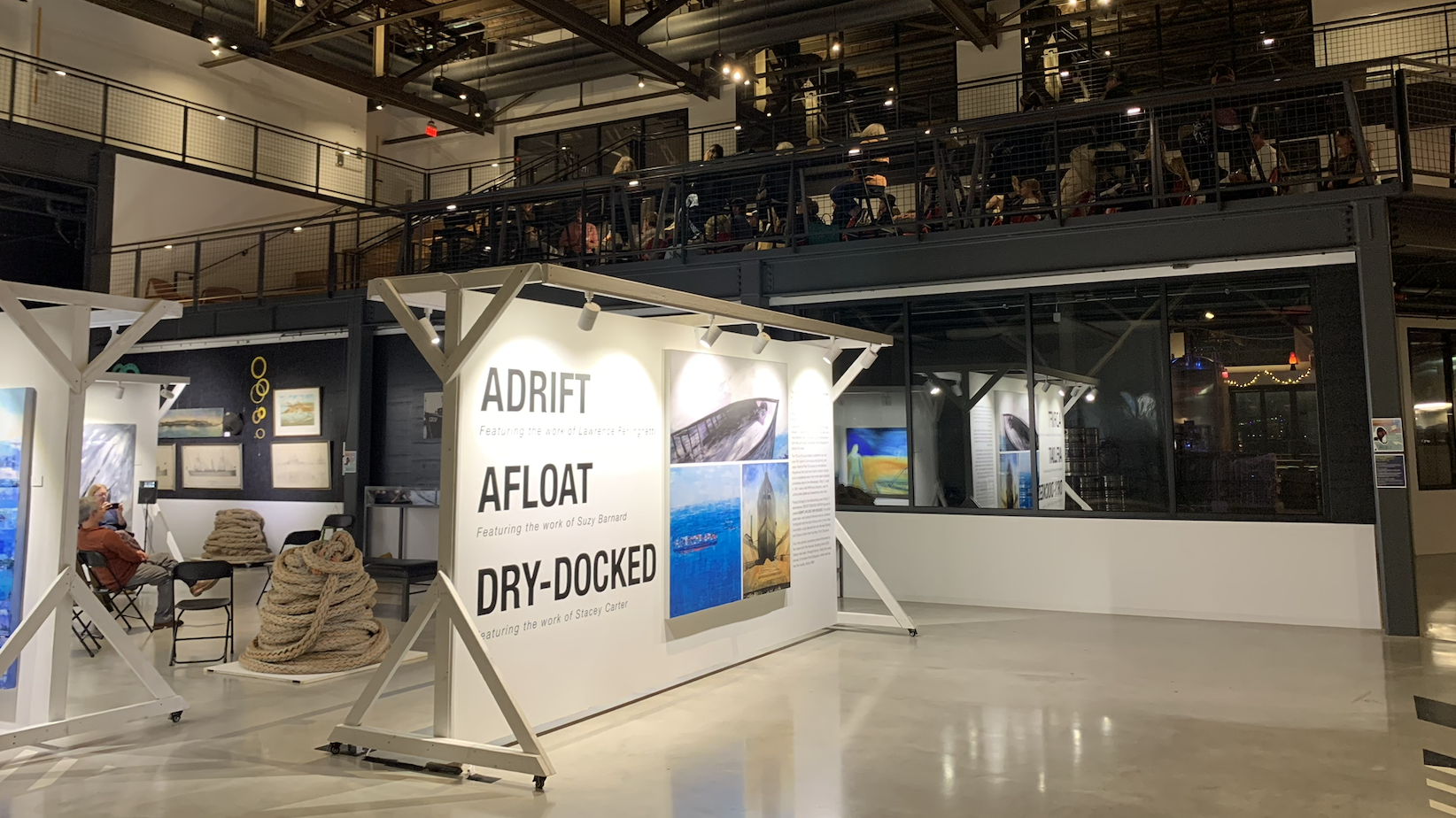
Editor’s note: this interview was recorded in front of a live audience at Pier 70 in San Francisco, California. This event was presented by 3RD ST CREATIVE ARTERY
The Collapse of San Francisco's Art Ecosystem
Hugh Leeman: We have an audience that's deeply connected, if not affected by the headlines that have been grabbing San Francisco artists and arts professionals' attention. The closure of CCA, your alma mater SFAI, multiple galleries closing, the Mission Cultural Center for Latino Arts closing. With those ideas in mind, we have the attention of people on the surface level — but beneath the surface, what is going on that is contributing to these closures?
Griff Williams: Did you guys come here thinking I was going to have those kinds of answers for questions like this?
I'll answer the question by way of reminiscing. What's happening in San Francisco currently is a function of a long time coming — events that have been sown here for many, many years. The real estate crisis, the fact that around the first dot-com bubble, artists were moving out of San Francisco in the early two thousands because it was too expensive. The idea that artists are still here is quite remarkable to me. One of the reasons they continue to be here — aside from the older generation getting lucky and being grandfathered into home ownership or rental properties they could afford — was that we had art schools bringing young creative people here. The fact that SFAI was this wild, dysfunctional, beautiful, chaotic thing that existed longer than my home state of Montana was a state. Mills College, CCA, the Art Institute — they had this magnetic quality for young people who wanted to come study and be immersed in a community of creative people. I can't tell you what the loss is ultimately going to mean for San Francisco. I think it's catastrophic, and I don't think we've even begun to witness the fallout.
I know there's faculty from CCA here tonight. I taught at both CCA and SFAI after graduating, and there was this community. I'm in the process of writing a book about Richard Shaw, and the strength of the communities that were developed through these art schools is remarkable. They were also a stepping stone, a mentorship program, an opportunity for people to find employment in other industries. When Gallery Sixteen started in the early nineties, San Francisco was at the nexus of all of these creative enterprises — commercial photographers, graphic designers, nascent web designers, folks working in curatorial practices, non-profits, illustrators. These were opportunities for people to come out of art programs and find employment, stay in the area, and mentor the next generation of creative people. The strength of that is quite remarkable. I am the recipient of that kind of generosity and largesse from the community of people that preceded me. The exhibition I just curated of Jim Melcher's work — I felt deeply moved and honored to be able to platform the work of somebody who had done so much for my own career. These are the kinds of small, real human gestures that build art communities. And the center of those communities were the art programs. Without them, we're in trouble.
Hugh Leeman: I want to pull on that thread a little further. You mentioned the early two thousands and a big displacement of artists. There's a long-running narrative — if not something almost clichéd — that San Francisco has always been a boom-and-bust town, always been expensive, always been precarious for artists, and that this time is no different. But from what you're writing and saying, it sounds like a very different set of circumstances.
Griff Williams: I don't think we've ever seen anything like this. We've never seen a collapse of all of the major art school programs and museums simultaneously. The de Rosa announces it's going to sell its property. The Contemporary Jewish Museum. You go through the list of losses in the last couple of years, and I don't think anybody with their eyes open can see it as anything but a magnificent collapse of an ecosystem.
The beauty of San Francisco was that it was never a commercial center for selling artwork, but it had this remarkable ability to nurture creative people who wanted to make a home here and live outside the context of the market-driven concerns of New York or LA. That's a gift — for artists who decide to choose a different sort of path through the arts. San Francisco was a remarkable incubating, nurturing community. Yes, it was expensive. Most big cities are. But this one had a remarkable diversity in terms of the communities of creative people who lived here, all of whom had signed up for a slightly different route through a creative life. Anybody that really wanted to make it big commercially was not going to stay here. It was a self-selecting environment.
Trickle-Down Never Reached the Arts
Hugh Leeman: Something particularly compelling about this moment compared to previous displacements — anyone who's been investing over the last several years knows the Nasdaq has been booming, and most of these companies are based right here in San Francisco. Historically, regardless of the era, when you have a booming industry it almost always trickles into, if not floods into, luxury sectors and cultural and arts sectors. We're not seeing that. What do you make of that?
Griff Williams: Well, that was what Ronald Reagan wanted us to believe. It never trickled down. It never does. The truth is we have private museums being built all over the nation, all over the world, on the back of private wealth. We aren't publicly endowing institutions anymore — they're being built by private donors. The Geffen Center. Our museum's expansion is based on the development of a collection around private wealth. It's not really a question of whether the trickle-down effect reaches the arts community — it never has.
My conversation with Mayor Lurie recently was basically to suggest that the arts community was invisible to him. And I think this is an important conversation to be having about what the future of San Francisco should look like. The idea that giveaways to corporations and tax benefits — the allowances of a city that would let forty percent of its commercial space lay empty since the pandemic — seems appalling to me.
The Chronicle asked me to write an op-ed when CCA announced it was being consumed by Vanderbilt. The piece was framed around the mayor's announcement that it was a great day for San Francisco — that we were going to trade twelve hundred art students for twelve hundred STEM students. That basically tells you all you need to know. The art students are invisible to the powers that be. These kids are going to come out of school without job prospects and without being visible to the people who claim the only way a city grows is to grow or die. There has always been another route. The route was set many years ago when I moved to San Francisco because it gave you the allowance to be weird, to find your own way. This corporatizing of everything has become the real problem. The fact that we're witnessing a mayor announce the closure of a hundred-year-old esteemed arts institution as a great day for San Francisco tells you a whole lot about who's in power and what their value systems are.
The Op-Ed, The Mayor's Call & The Art World's Invisible Community
Hugh Leeman: I want to dig into that a little deeper. You wrote an op-ed published by the San Francisco Chronicle directed at Mayor Daniel Lurie. Almost immediately after it publishes, he calls you. Walk us through that conversation and how it affected the way you understand the mayor, the city, and this crisis.
Griff Williams: If you really want to know the story — I was in bed when he called me. Walking around in my underwear. He literally called almost immediately after the op-ed was published. To his credit, he called. I grew up in a political family. My father was a congressman from Montana — a Democrat winning in a red state, serving Montana for twenty years in a place where Democrats weren't supposed to win. I know what it means to take responsibility. It's difficult to be the constant brunt of public vitriol, and he could have ignored the op-ed and moved on. He didn't. For that reason he deserves some credit for facing the dissent in the community. There was a fair amount of it. Through the outpouring of comments on social media in response to that article, it was clear it had tapped a nerve. The mayor's office thought so too. We've had a couple of conversations since and are planning to meet.
What specifically needs to be addressed with the mayor is an important question, because the arts ecosystem — and this isn't news to anyone here — is a varied thing. It's not one entity. What works for commercial galleries does not work for non-profit entities. The folks that don't have gallery representation and those who do move through the world in very different ways. The political reality tends to look at the arts as a monolith, as if there's going to be one person who speaks for all of it. But the film industry and the studio painters are doing entirely different things and need entirely different conversations with the powers that be. It's a complicated system.
The mayor's decision to announce this new position overseeing all the arts agencies — my phone was blowing up with people saying I should apply for it. Does everyone who texts me hate me? Is this the worst job in the history of the universe? At a time when the mayor is laying off staff and non-profits around the city are losing significant portions of their operating budgets, the arts are going to be low on his priority list. That's just the reality.
The Mythology of the Glamorous Art World
Hugh Leeman: You've said that despite all the glossy magazine coverage, very few dealers and very few artists ever make any significant money. Yet this mythology of the glamorous art world is remarkably durable. Who does this mythology serve, and why does it seem like there's no real puncturing of it — and now it seems like this ignoring of reality has started to implode around us?
Griff Williams: The luxury market in general is the same thing — whether it's a Gucci watch or a Tiffany ring, they're advertising to the same small audience. Art Forum does that very thing. Everybody in this room who raised their hand as an artist or art professional knows the glossy magazines don't reflect their experience in the arts. The commercial business of the arts has always functioned in this little bubble. You see it at the art fairs — galleries desperately trying to keep up with the next guy.
The art fair became a phenomenon in the early days of Gallery Sixteen. We were participating in fairs around the world, in many of the major ones, and felt as though we had to keep doing them to stay relevant and keep our artists visible. What we realized was that we were making the fair organizers wealthy, and they didn't really care whether we were there or not. They were going to fill the booth with the next guy. We also realized there's way too much supply and way too little demand. There's a million kids coming out of grad school thinking that Art Forum is proving to them there's a market for the work they're making in their graduate programs — and there just fucking isn't. It creates this hamster wheel that everybody's on, trying to feed a perspective-buying public that really doesn't exist.
I was thirty-two years in with Gallery Sixteen. All those years of going to art fairs — we would see clients from San Francisco in Miami. They could have easily bought the work from us at home. They never walked into Gallery Sixteen. They would buy work but send their art consultants to make the decisions for them. What we realized was that we were creating a forum for all of you — for artists and for people who needed a community to gather and commune around difficult ideas, hear live music, do all the things. That was the real audience. Not some imaginary buying public. Sooner or later that stuff trickles down to collectors, because they're always wanting to participate in whatever happens to be fashionable. But to be honest, we make our own scenes. What is required to make a healthy arts community is more interesting to me than what is required to find a buying public.
The fact that Gagosian and all these dealers pop in, dip their toe in San Francisco's gold rush mentality, and when they realize there aren't buyers here they bail — what is left is all of us. And there is strength in numbers. San Francisco has always had this thriving, youthful mentality of trying to make something out of nothing. Storefront windows and garages. This punk, DIY ethos that has driven the community here. It drives all healthy arts communities everywhere.
Wondering why the billionaires from Palo Alto aren't buying from your gallery — Dave Hickey used to say it's like asking your mother's garden party friends whether your artwork is good. Why do you care? The extreme wealth in the Bay Area is never going to find its way to Bay Area galleries. The dealers they're going to buy from are the vetted dealers in New York. It's like the stock market — if you want to be in the stock market, you're not going to go to Fred down the street to trade stocks.
Modernizing the Gallery Model Without Selling Out
Hugh Leeman: I want to tap into some future-forward alternatives and potential ideas for action. You're describing a gallery model based on scarcity and the manufacturing of value and prestige, while today's economy functions on access and attention. What needs to change, and how do you modernize this model without just turning every gallery into a content production machine?
Griff Williams: Not every gallery is going to be a content production machine. Every gallery is going to be a reflection of the artists they work with. Galleries function best when they're advocating for the artists they work with, and not basing those decisions strictly on what's financially in their best interest. We used to show artists for years and years and never sold a thing — ever. But we were committed to what they were making, one hundred percent believing in their creative voice.
There's always been this mythology that there's one horse in the stable that pays all the bills for the rest of the gallery artists. To a certain extent that's true — there is a little bit of a Ponzi scheme system in the gallery universe. But the main thing is that the voices of these creative people are heard in the gallery programs.
San Francisco has had an interesting community of art dealers. When I came up, it was largely women who drove the gallery program here — Paula Anglim, Rena Bransten, Ruth Bronstein, Diana Fuller. I was really lucky to be mentored by some of these women. They all had a sense that they were tending a garden — that they were not operating in the same spheres as New York galleries. The clients trafficking in Manhattan galleries were not buying in San Francisco. If you think about tending a garden, your responsibilities are different. They treated it that way. There were legendary artists in those programs. But most of them would probably have told you they made the choice to stay in San Francisco not because they were making a lot of money doing it.
Art and Water, New Models & What Can't Be Replaced
Hugh Leeman: The potential for a new model — New York Times bestselling author Dave Eggers has a new project called Art and Water, and you're listed on the website. I went and listened to a panel discussion. What exactly is Art and Water?
Griff Williams: I don't know. I honestly can't speak to it because I don't fully know. I've had conversations with Dave, and Dave and I have kind of different opinions about what's needed in art school right now. I think he looks at it as a revival of a kind of academic model, a sort of apprentice-artist format with academic training that he sees as valuable in ways I don't entirely know. What the big picture is going to look like, I can't say. They have incredible people involved — really amazing artists. But what it's ultimately going to evolve into, I don't know.
What I do know for certain is that it is not a replacement for the loss of SFAI and CCA and Mills College. It's not a replacement for those things — nor is whatever Lorraine Jobs is doing with the Art Institute. These are residency programs. They're going to be beneficial to a very small, select group of people. And that's great. I'm all for people trying stuff. Good for them. I hope it's fantastic. I hope it becomes extremely successful. But it doesn't replace what we're losing.
Is SF Back? Permits, Robots & the DIY Ethos
Hugh Leeman: I want to go back to something you mentioned — the conversation with Mayor Lurie starts in your underwear, in bed. You've since had another conversation, you're getting ready to meet. He seems very energetic, at least at creating Instagram content with "SF is Back." I want to go to that idea for you. Is SF back? And if not, what would it take? I want to add that it seems like a bit of a "Make San Francisco Great Again" thing — maybe going back to a romantic past isn't what we should be looking to.
Griff Williams: It's sloganeering, and it's fine. Maybe he sees his role as a booster and that's it. I'm sure the cafes and burrito shops he's standing in front of are benefiting in some way, and that's all great. The mayor's out there rallying attention for small business, and I think that's terrific. But at the end of the day we still have these big gaping holes.
This is a bit of an aside, but last weekend I was with Mark Pauline from Survival Research Laboratories. I was reminiscing about the difference between San Francisco during the heyday of SRL and now. We're probably sitting on a site where they did a robot war. The idea that you could do those remarkable public events — here we are in the age of microaggressions, and these unsanctioned events where a gigantic robot is slinging hot meat into crowds and breathing fire under the highway would absolutely not fly now. Those were the events that defined when I first arrived in San Francisco. I wasn't necessarily a great fan of robot wars, but I was a fan of the fact that the fucking thing was happening. The energy that required — all the machinists and gearheads who had to get together to make this happen, that Pauline would go out and present in this dystopian, Mad Max kind of performance under the highway — it was a remarkable and thrilling thing.
Art doesn't get made by getting a permit from the city. It gets made by somebody going in and turning their garage into an exhibition space that somebody from the local art school is going to write about, and some magazine is going to pay attention to. It builds from the ground up. It's not a trickle-down system. It's community based. It all comes from young people trying to do something on their own, just following their ideas.
There are definitely aspects of that that still exist in San Francisco. There are young people starting places all the time. The vibrancy of the San Francisco Art Book Fair at Minnesota Street Project will tell you a little about where the energy is. But San Francisco doesn't look much like it did. The fact that we're sitting in this building — I think that robot breathed fire on me in this parking lot at some point.
Galleries as Community Centers & the Grow-or-Die Philosophy
Hugh Leeman: You've said previously that galleries at their best function as community centers. What can these do-it-yourself, garage-type, community-center-type aspirations do now that larger institutions focused on permitting aren't able to do?
Griff Williams: Don't just ignore the institutions. You have to find your people and serve them — you work for them. The only thing I wanted to do when I started Gallery Sixteen was be around other artists. That was the whole motivation. Nowadays we'd have tech guys come into the gallery asking, what's your exit strategy? What the fuck is an exit strategy? I'm in a brick-and-mortar art gallery. This is a life. It's not a career plan. I don't have an exit strategy. There's no parachuting out the back door when I sell it to shareholders for more money than I paid. It's insane.
There's one perspective that everybody tries to bring the art world up to — this grow-or-die philosophy. What if it wasn't that? What if it was about healing? What if it was more about attending to the community that is there and the needs of that community? Wouldn't that be a more remarkable way to approach civic responsibility?
Even in the arts, we're always aspiring to something else. When I first got here it was, oh, we're not New York, we need to be more like New York. Now you've got the largest contemporary art museum by square footage in the nation here showing K-pop. Is that serving the art community? We need to demand more of the people in institutional authority — whether that's the mayor, whether that's the director of the museum. If it's not serving the folks, say so.
When I got into it with the mayor on my cell phone, the conversation was about: you don't see us. The creative community is invisible. He grew up as a billionaire. His family has done some amazing philanthropic work, no question. But how could he know what's going on here? He wouldn't. So we have to explain it. We have to be more vocal, more precise about the requests.
The things that are good for the art community are also the things that are good for the working poor. This isn't really about what's good for artists as much as it is about what's good for people in need. If you believe the luxury brand magazines like Art Forum to tell you what the art world looks like, you don't know what the fucking art world looks like. Go to the Noonan Building, go to those studios. Most of the people — even the ones known by name — probably have a side gig and are thrilled because they make enough to continue doing it. That was the only thing that mattered to me. I wasn't trying to get rich with the gallery. I was trying to get my artists paid and keep going, because it had an important role in the creative ecosystem. If galleries are showrooms for high-priced shit, they're not doing their job.
How the Arts Community Organizes as Civic Infrastructure
Hugh Leeman: Earlier in our conversation you mentioned the word monolithic — that's effectively how City Hall and the mayor treat the arts. And then we're talking about K-pop at SFMoMA and the luxury sector. How does the arts community organize itself as essential civic infrastructure and not a luxury sector that's asking to be saved?
Griff Williams: The organization part is a tricky one. I grew up in a political family and I know what it takes to organize people, and the arts don't do it well. Most politics on the left don't do it well either. Part of this is because they're thinking people — they all have slightly different views and they don't follow in lockstep. They don't speak with one voice. The things that are important for the arts community — the lay person would look at it and go, okay, the arts is everybody that makes art. But most people that make art require different ways to exhibit the work. Maybe they don't exhibit the work at all. Maybe it's grant-based, maybe it's education, maybe the side hustle is teaching. The idea that everybody needs one thing out of a civic organization is hard, because it isn't one thing.
There have been some efforts — the folks at SOMArts and others have been trying to organize, using themselves as a central location to build a larger conversation. I think that's helpful and I hope it continues. I'm certainly willing to help. But it's difficult because there are so many competing interests. We're not really speaking with one voice.
The Side Hustle, the Schools & What Comes Next
Hugh Leeman: You've mentioned this idea of the side hustle, and the so-called big-name artists who so many of them have a full-time job teaching other artists how to do what they do. We've created a system that's self-replicating — making more people who have debt, making more people who teach other people how to do this. And now these institutions are going away. What's going to be the side hustle for some of these people, and what happens?
Griff Williams: I don't know. It's all so new. The fact that all of the schools are gone — we're just in shock. I don't know what the answer is. The obvious reality is that people are going to move. The artists who were working at the art schools and who need to continue working and aren't at retirement age are going to have to find jobs elsewhere. What I started out talking about — the era of San Francisco I came into — there was an opportunity to find work across many different disciplines. The side hustle was much broader than it currently is. For young people now, it's just going to drive people out. They're going to find their way elsewhere.
The film I made a few years back, Tell Them We Were Here, we were finishing the edit during the COVID pandemic. At the time I was deeply, deeply disappointed with San Francisco. I saw a lot of folks in the creative community — friends, artists, writers, musicians — decamping for other cities. We were editing this very dark ending to the film. Tucker Nichols' voice appears at the end, and Tucker was talking about this really beautiful thought — I don't care if San Francisco isn't the place anymore. I just want it to exist somewhere for creative people. If it's not here, it should be wherever it is. Find that place where you can show up without a plan, where you don't have to have your career path mapped out, but you can go and figure it out. And as long as that place exists, we're going to be okay.
My son, who was helping me with the film, said you can't end it this way — it's too dark, people are going to walk out. And at that time, CCA was still a thing. The Art Institute was still a thing. They hadn't closed yet, and I was already feeling that way. He said it's got to be hopeful. We have to turn it. And we did. We found this way to end the film that I think is beautiful. But that sentiment was there five years ago.
What gives me hope is places like Graham's Last Straw — shout out to Last Straw — and all the young people trying to make interesting things happen with their community here. We should be pulling for them and supporting them. For everybody who can spend money in these institutions, these little local spots, artist-run spaces — do it. Show your support with your resources. It's the only way they're going to continue to exist.
Art as a Gift to the Future
Hugh Leeman: Griff, as a final question before we go to the audience — I want to read you a quote and ask you to speculate going forward. You've said: "The best thing human beings have ever done with their time on this earth is to make music, art, and culture. Art is a gift to the future." So if someone listening to our conversation in the future hears this ten years from now, what do you want them to know that we did?
Griff Williams: San Francisco has been home to so many remarkable, creative, beautiful people. The history of San Francisco's art community is rich and varied and incredible. The young folks that are here and trying to make their voices heard give me hope for the future. What we don't do well as a community is recognize our past — learn from it, understand who we are now by virtue of the relationship to what previously existed and the folks who have been here.
The last few projects I've been working on have been retrospectives, and I've really had to dive into the history of the Bay Area. It's heartbreaking and beautiful. It's a place that carved itself out — despite the fact that the commercial realities were against it, despite the fact that the critical attention was against it — and made community despite all of that. That's the biggest gift we can take from it. To remind ourselves that we have the power to do whatever we want. We can control these things. All these little corner shops and little art galleries and little events that get developed by young people need to be supported. They are gifts to the future.
The Internet, Community & the Death of Presence
Hugh Leeman: This pulls into the thread of what you're hitting on with young people and new culture. In a previous interview, I asked you what you would recommend young artists do, and your answer was essentially — put the damn phone down. Someone here is asking your thoughts on the pros and cons of the impact of the internet on the current art world.
Griff Williams: I think it's a disaster. I think it's the worst thing that's ever happened to the art world. The phone and the internet are the death of creativity. I say this while sending missives out on Instagram, but the thing is that stuff goes out into the ether and you have no connection to who's responding to it or who saw it. That is not a community. A community is built around people who show up — like you guys in a room, having conversations with human beings, whether you agree with them or not. You network face to face. My kid asks me, how did you ever find your friends? We had a phone on a cord attached to a wall and you actually talked to a human being.
Pre-internet in San Francisco, there were ten weeklies in the Bay Area. Two daily newspapers with two full-time art writers, a full-time film critic, a theater critic. All the weeklies had art writers. Dave Eggers started out writing art reviews for the SF Weekly. So what does that mean? You're a weekly newspaper. You work for the Bay Guardian. You have to go to the place you're reviewing. You have to introduce yourself to the person who runs it. You have to have a conversation about the artist. You have to find out what's coming up next. You might eat at the place next door. That's the way communities get built. That's how you understand how people's trajectories through time evolve — and they went on to do this other thing, and then that. The internet and Instagram have become what young people think is a replacement that offered more possibility. The unlimited nature of the internet was going to provide more possibility and more opportunity for writers. And it's done exactly the opposite. All the weeklies and newspapers are gone.
The beauty of Roborant Review starting in the midst of all this is a shining example of what I'm talking about — people just deciding it's needed and doing it. Maybe it isn't going to make any money, but here's what's going to happen: it's going to put all of these people in motion. Folks who have a desire to write or get more connected to the art scene have a reason to do it because they're going to be writing a review for Roborant. It rallies a different kind of real-life community in the face of all of this other stuff.
Real Creativity Is Political
Hugh Leeman: There's a quote you've shared — real creativity isn't performative, it's political. Someone's asking: what is the role of the political and politics on art? Are they related?
Griff Williams: Of course. People think politics is just going to vote. Politics is the fact that we're here right now. We're all choosing to be here because of a value set. The politics are the fact that I had a gallery with an open door, free, that allowed people to come in and vent and rage and listen to things. These are all political acts. You're platforming ideas. Any time you advocate for or platform ideas that are obscure, that's a political act. It isn't simply about red states and blue states — it's also about your PTA. These are choices we're making on a local level.
If you're an artist, there has to be somewhere in there — even if you don't feel this way as a person — an optimism. In order to get through making the thing you're making, you have to feel optimistic about the possibilities. The fact that this is going to go off into the world — maybe it's going to be a failed experiment, maybe a dead end — but there has to be an optimism built into it to be able to get through the thing. Every aspect of the arts is based on this internal notion that we all believe in something. And that's political. Our belief systems are driving all of our decisions, whether they're artistic or political. I don't see any separation between the two.
Expanding the Map: East Bay, Davis, Sacramento & Beyond
Hugh Leeman: This person is asking about inclusivity of other places. Part of the problem and part of the solution we've been discussing tonight — could part of that solution be to include the East Bay, Davis, Sacramento, San Jose, and beyond, given some of the cost challenges and beyond?
Griff Williams: Of course. When I talk about the Bay Area, I honestly don't know exactly where the demarcating lines are. But this is the thing about the Bay Area art scene — personal space in Vallejo, all these little spots that pop up in the most unlikely places doing the things you're rooting for. Maybe they move there because it's cheaper, maybe because they believe in that community. Larry Rinder, who used to be at BAM/PFA, used to say the problem with the art scene in the Bay Area is you can't see the forest for the trees because there's so much going on — but it's all kind of hidden and very much driven by specific identities. It's not a movement-based art community. Everybody's kind of doing their own thing. That's the beauty of it, but it also makes it extremely difficult to codify. Nobody in Oakland or Vallejo or Berkeley — I'm in Sonoma — is excluded from this. Cool things can happen wherever there's energy and commitment to make cool things happen.
What to Do When You Leave This Room
Hugh Leeman: As a final question — this person is asking about organizing, about political action. In an hour this event space will be mostly empty. Most people will be back home, and the statistics tell us most of them will be looking at their phones. What should people do? If you could push a magic button and say, everyone leaves here tonight and starts doing this one thing to organize in their community — what does that look like?
Griff Williams: In the old days we'd go door to door with leaflets and send things by mail — a strategy everybody used to employ. It certainly doesn't work anymore. But being part of a list — my gallery's mailing list was a platform for news, information, ideas, and directions. Connect with the organizations you believe in. Give your email to Sarah. It doesn't matter which one — there are so many arts organizations, and the ones that appeal to me might be slightly off-putting to you. But you're going to find your scene, and those are your people. Organize those folks.
This event right here is a good start. The fact that this is happening — this is the maiden voyage for Sarah on this lecture series. I think it's a great idea. I hope more of them happen. It's also a way to start to mobilize political discourse. So you're already doing it by being here.
Hugh Leeman: Griff Williams.
Griff Williams: Thank you. Thank you guys.
Hugh Leeman: Thank you all very much.
