
De Chirico, Duchamp, and The Infinite
“Contemporary Art in Context”
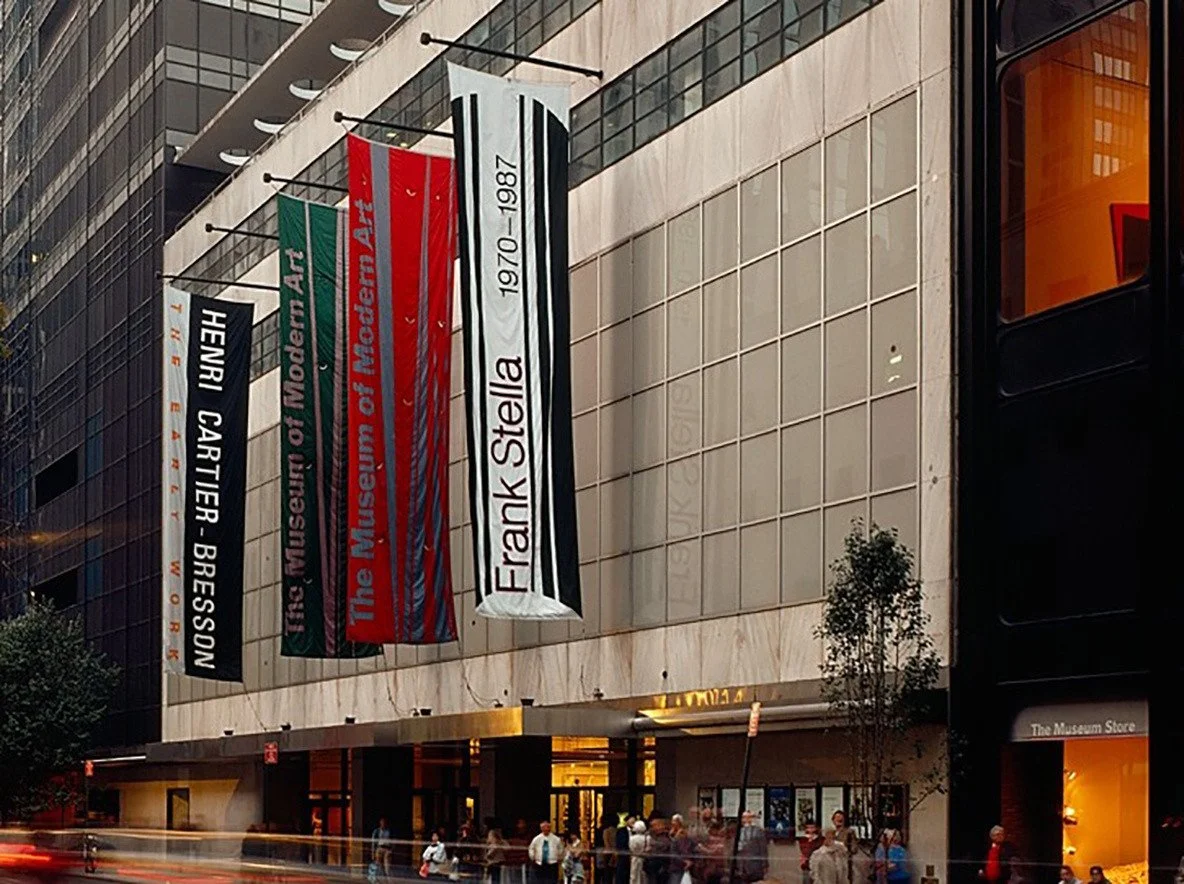
The following is a transcript of Ken Feingold speaking inside the permanent collection galleries of the Museum of Modern Art, NYC, March 1, 1988. Transcript (2026) courtesy of the artist.
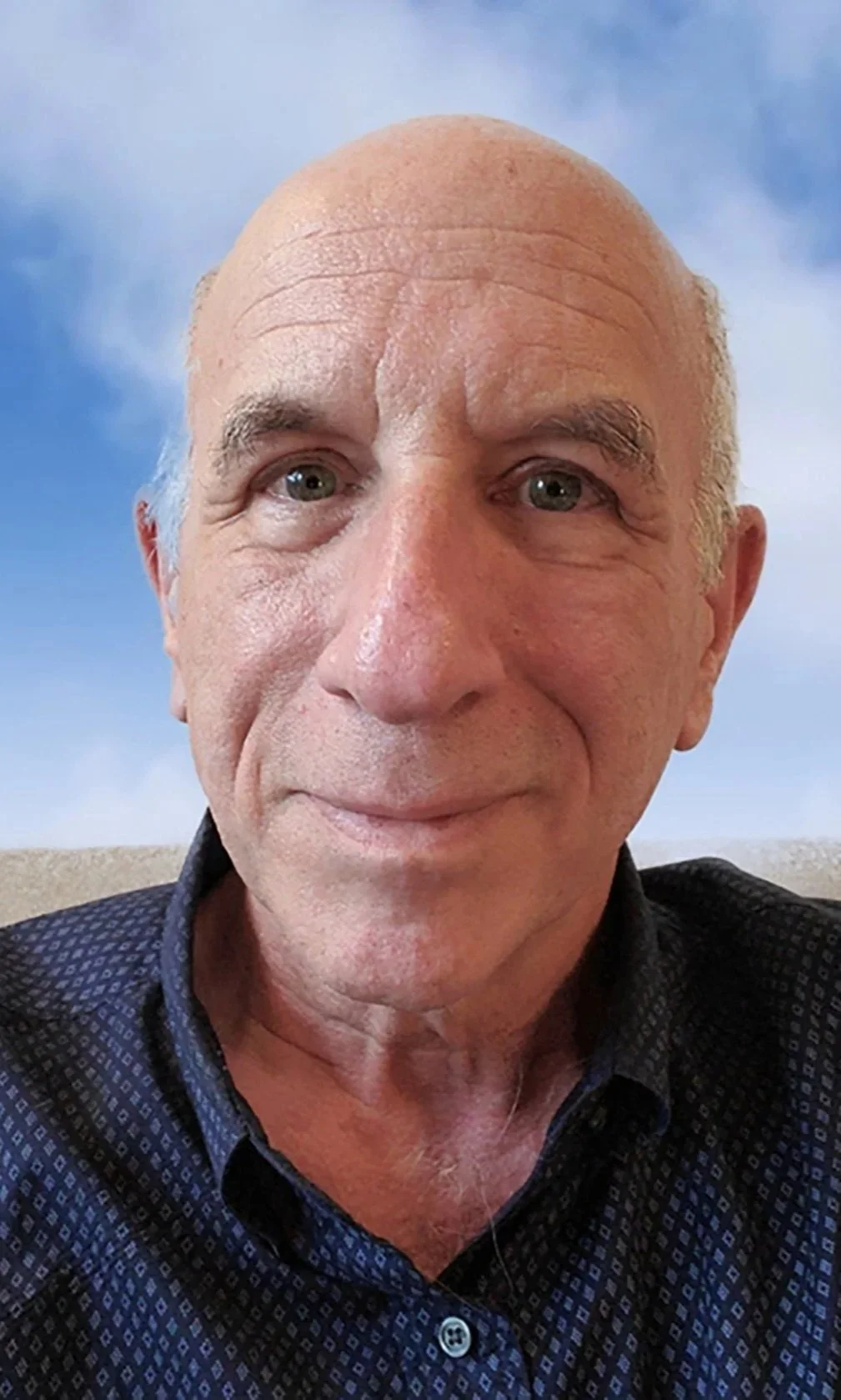
This talk sat on cassettes in MoMA’s archives until now. Ken Feingold's artwork is in MoMA’s permanent collection. He is a licensed Freudian Psychoanalyst. Here, he analyzes the artwork of Giorgio De Chirico and Marcel Duchamp.
Due to licensing, images of the artworks are not displayed; instead, links to the artworks are embedded.
Artist Ken Feingold
MoMA : My name is Margit Powell, I'm a member of the Contemporary Arts Council and I want to welcome you to one of the events in this week-long program of Contemporary Art in Context. Our speaker today is Ken Feingold and I'm just going to give you a brief introduction to his work. Bear with me, but the most important thing is the words he imparts to us today.
Ken Feingold is a video artist who works for his innovative and rich montage of disturbing, lyrical, and resonant images and sounds. It is in the surreal juxtaposition of these images that we are confronted with the choice of, “Is this fiction or documentation?” His weaving of these images creates not only a distance between the viewer and the video, but also a multiplicity of meanings which in turn make it difficult how to invest our emotions. Is this our vacation or what we saw on television? In Feingold's works, illusion takes on a new perspective. Just to briefly tell you about his work and where they've been seen, the Museum of Modern Art has just recently acquired some of his work, and his exhibitions range from the Whitney to the Walker, from the Berlin and Montreal Film Festivals to the Kitchen, Artists Space, as well as exhibitions in Brazil, Italy, Germany and Holland. His works include “India Time”, “5dim/MIND”, “Irony (The Abyss of Speech)”, and “The Double.”
Ken Feingold: Thank you very much. It's a great honor to be here today and I'd like to thank Barbara London from the video department very much for inviting me.
It's a very unusual thing to speak in this interval. This is the place that we often consider one of the great reserves of silence and to move across this interval and to move across it in language and speaking is in a way very similar to the act of making art and bringing art into existence. It's a movement from the interior to the exterior and moving across the distance between the subjective experience of the individual to the public and social form of the imagination. Language is unlike painting, but I'm going to talk today about two artists who both have a complex relationship to that notion of the difference between their interior selves and the world in which their forms are manifested. I don't want to compare Duchamp and De Chirico, so I'll talk about them separately, and I think that the differences and the similarities are as much a part of what the work is about as anything I could describe.
On De Chirico
So, to begin to talk about De Chirico is to talk about the movement across that interval of desiring to express something from very deep inside in a very structured symbolic representation. I think it's important to think about art not as a production of commodities or as the manufacturing of objects, even though those as metaphors can serve to talk about significance, but to think of it in an anthropological sense as a symbolic system, and each artist creates in their own universe a symbolic system for expression. For De Chirico, I think the metaphor can be taken from the earliest painting, which is here, this tower behind you, which is called “The Nostalgia of the Infinite.”
What is expressed in this work is the desire to speak to the Other, and the Other has many forms, and I think that all art in one way or another is about the expression of the Other. The Other in some cases is God, in some cases it is the Self, in some cases it is family, it is the lover, it is poetry. In De Chirico's case, the complexity is expressed through, I think, his notion of the infinite. These paintings are about eternity and about the infinite, not in the sense that we have in our culture represented as heaven or hell, but in a new sense, in the sense of eternity in the present tense, the infinite in the moment, the heightening of self and awareness that comes at the time of day when shadows lengthen and the light is moving so quickly that one is aware of every fragment of every second that has passed. These works are power sources, they amplify one's existence. As when [one is] in the presence of any work of art which has a great depth, it has an ability to renew itself perpetually.
I've had the privilege of coming to this museum since I was a small boy, and many of the paintings here have changed for me quite a bit over time. The ones which have the greatest strength are the ones which are different every time one returns to them. They have an ability to speak over and over again more complexly, more personally. And in this work I find so many things about the self, the discovery of the self, so many metaphors, that I want to talk about individual ones a bit, just to extend this a little bit further. Actually I'm going to wander back a little bit. De Chirico has certain words, certain key words [describing the space] between appearance and work. One of them is metaphysics and others that have more emotional values like enigma or melancholy or anxiety.
This particular work, called “The Great Metaphysical Interior” has an expression of many of the things which I find most powerful about this work. It is at one time an interior, and an interior in the metaphysical sense or the metaphorical sense depending on if you see the body as a membrane between the inside and the outside, or if you see it as walls, concrete brick walls. The ways in which things move in and out of us, in and out of our consciousness, our self, our ideas are metaphorically expressed through that notion of inside and outside. But in fact, what we have is a kind of continuum with simultaneous overlapping images and impressions. So with De Chirico, to make an interior which also contains an exterior, which contains within the exterior of other interiors, is an expression of that sense of infinity. It continues that there, in these shapes, in the forms, in the light which is in this work, in each of those things there is a distance which is opened up by the artist in one's inability to level them out to a singular meaning, so that they remain at that slight distance for however long one regards the work. An interpretation of that is only an interpretation of self. One becomes very aware of reading a work of art, of one's own ideas and thoughts mapping onto this. There is no logical literary form for describing the emotional effect of this grouping of forms. And their formal value has a certain charm, but for De Chirico things were close to being religious. They're such highly involved forms that they speak about their infinity by way of their inapproachability.
I could continue on about many of these paintings for a long time, but I think I would rather talk about this larger idea and try to focus on ways to get at it. This sense of the infinite is again here very clearly that within the painting there is a schema, a plan, a sort of sketch, a dream within the dream of another world, another painting, another horizon, with his language expressed through the images that he often uses, the trains, the figure, the castle, the tower with the flags, the arches, and the recession of the landscape into the distance with the figures sort of there and being conscious of the experience of being within the space that they're in so that this infinite recession here is expressed as a dream within the dream.
And any of us, whenever we have this experience of dreaming that we're dreaming and the experience of waking up from the inner dream and thinking that you're awake and realizing that you're still asleep at the point where you move to what we consider waking consciousness. That through this work it suggests that it continues across many, many different levels. So that in fact at this moment we could be dreaming and wake up at a certain moment and become aware that we had been dreaming when we felt we were awake. And this is something which has been taken up by many writers and many poets, and in fact one of the literary forms of Hindu writing is the metaphor of the dream within the dream, as in the present theme.
But again it expresses that infinity, the infinite regress and the infinite recession of possibility which places the self at that moment of eternity in the present time. That in seeing across that perspective, and be careful where there's always some kind of perspective shift, one’s feet are never quite on the ground, there's a kind of hovering in your space and it's that kind of hovering which is the mental hovering of consideration, of perspective, of regard for the question rather than being firmly planted with the understanding of reality.
And that imagination is here again in the painting of “The Seer” and this representation of something which has more than a casual appearance in many, many works of art and it will carry over into discussion about this show. Perspective itself is a grand metaphor. It talks about one being able to stand at or remove from the world and make some kind of grand plan with which one can regard it in another dimension. So the perspective is, in a sense, a movement from the third dimension to the second dimension. For many artists the movement between the third dimension and the higher dimension was the topology of being an artist.
So here it's expressed as a kind of shadow and the shadow image is very important. It is the projection from the third dimension into the second dimension. It is the trace of the infinite that speaks about, okay, if this is a shadow and it is representation in some form in another dimension of this body, then this body is in fact the shadow of a higher being which exists in other dimensions, ad infinitum. And that thing continues in so many kinds of sacred considerations of being as I think every religion has some notion of the higher self. But De Chirico made a very beautiful statement. He said there is for him “more enigma in the shadow of a man walking in the sun than in all of the stories of ancient religion and mythology.”
And this is the great strength of this artist is that his belief in the individual, that moment of heightened awareness where one becomes aware of that eternity in the present tense, is very much of an outsider idea in contemporary art. For example, this painting is for me the great painting of being in the wrong place. How many people have gone to the trouble of being in the wrong place and [communicating] what that's like?
Or this painting of “The Anxious Journey” is again this feeling of being in the wrong place. And actually I wanted to suggest in relation to these two paintings that while people are here today, you should go to see Vito Acconci's “Bad Dream House” [currently on view], which I think shares quite a lot with this painting. I think that this sense of the disturbed self, of that eternity where it could be an eternity of pain, is as much about De Chirico's possibility of hell as the grand metaphysical interior could be his possibility of heaven. Heaven is a beautiful mansion with a fountain in front of it. Hell is being on the wrong side of the train station. The train's coming right at it. There's something about light in De Chirico, which has that infinity as well. As I spoke about it, there's light at dusk where it's the lengthening of shadows, the drawing of the other dimension from the body to where it could suggest itself as becoming infinitely long, but instead becomes dark. I think speaks about one of the difficulties of moving across that gap from the Unconscious and desiring into the world representing oneself to other people. That it's always partial, it's always somewhat fractured, that artists make the next painting and the next work, the next video, the next sculpture, because the last one was imperfect. It cannot succeed, but it can only move across the desiring and create something which approaches that infinity, so that the artist lives out a myth, in a way, the myth of the creator, the myth of the being who takes things from one sphere of being and brings them to another sphere of being, being a conduit, in a sense, for whatever their sense is of meaning in life.
On Duchamp
For some people, meaning is a religious construction. For some people, meaning is a narrative, literary construction. For some people, it's strictly a tangible material construction. But in any case, the artist expresses through this [what Duchamp called] mediumistic activity a sense of what their meaning is about, that they perceive to be meaningful in life. So, it's important, I feel, when one regards a work of art, to try to understand that symbolic system that creates meaning, that produces meaning, where the works of artists are not just about being beautiful or being mysterious, but that they actually have significance that they're here in the world to give significance to our existence, and that our coming to the art museum is about having art being increased by a dialogue.
For a long time, Duchamp was trying to de-aestheticize his production, to, in a sense, remove the kind of seduction by way of beauty from the work. He succeeded, nonetheless, in creating very beautiful works of art, which, in fact, have a very deep content, even though many people regard them as being strictly conceptual in nature. And this being really one of the most conceptual works of art that anyone has ever made, I want to speak about what I consider to be psychological and metaphysical characteristics, as well as its conceptual value. To continue from the point where I was speaking about the artist as a conduit, Duchamp himself spoke about the idea of the artist “as a mediumistic being who, to all appearances, reaches beyond the realms of time and space” to bring things back to express.
This work has a story, and the story isn't here in the museum. It's one of those things that one has to learn about. And in the case of Duchamp, one almost has to become a scholar at this point to learn about Duchamp, because so many of the books about him are out of print. So many ways of his work having been interpreted have become obscure. But the story about this particular work [“3 Standard Stoppages”] on a conceptual level, and on a level of action, is that Duchamp took a one meter long piece of thread and dropped it to the floor from a height of one meter in order to produce these forms, these shapes. Now these are templates which were drawn by the three droppings of the thread, and the thread itself was lacquered onto this board by Duchamp taking drops of varnish at little tiny intervals along the thread and fixing it to this panel. Now, on a conceptual level, that would seemingly be as dry as an action of art could possibly be, yet on a metaphysical level, it has the same kind of significance, I think, as a drawing out from the interior, but it's not an expression of self. In this work, Duchamp is trying to express the self as a pure conduit, a pure vessel, where in this moment of taking the thread and dropping it, the forces of nature, gravity, the movement of the air, the tension of muscles in his body, the moment at which the fingers are released, and whatever other forces come to bear physically in that, creating a work of art without any ostensible content becomes about creating a work of art based on the infinite in the tiniest, tiniest thing, rather than in the moment, in the interval. Duchamp was very much involved with the idea of what he called the “Infra-mince”, which is like an infra-thin as it's been translated, and he made a couple of examples which are very informative; that infra-thin is like the warmth on a seat after someone has gotten up. It's something which is a slight difference that has a trace of another happening or another reality. So in this work, then, this infra-thin, the idea of the infinite being expressed through the thinnest of gestures, the slightest of differences, that the difference between the shape of the thread having fallen this way and the thread having fallen this way is produced as a higher order abstraction as one could make from any intentional act of being.
In fact, he referred to this work as “canned chance”, so that the production of the object itself was about, in many ways, the transformation from his own perception of art as a romantic activity to one in which a higher being became the active artist and that one de-aestheticized the work in order to bring out what he, I believe, felt were the deep aesthetics in the art-making process. That is that art is a way of life. Making art is about bringing oneself as an oracle between what could be and what is. So in the sense of many cultures have this notion of divination or oracle. For example, many people are familiar with the I Ching, where coins are tossed or straws are picked. In some societies it was a reading of entrails of a sacrificed animal. And actually in some other cultures it really much uses thread very much. And thread is something which has been in many cultures as a very highly evolved representation of the self. From the sacred thread of the Brahmins to the thread in which the soul is placed in tribal culture in northern Thailand and southern China. It's a very complex work. And this complexity is about the invisible. The infra-thin is more about sensation of being than something which presents itself to you. So this sense of things, the difference between things, the distance between things is, for Duchamp, produced in the infinite expressed in the tiniest, tiniest space. So rather than being about moment or time, I think it's about space and physical movement.
And in this painting, “The Passage from Virgin to Bride”, Duchamp, I believe, was working with something which he never solved but became increasingly more of a complex problem for himself. And this was the question of the Other as it encountered the formal questions of 20th century art.
And that is, unlike de Chirico, who retained certain constructs about representation and used something resembling lifelike images to represent notions of the Other. One could say that De Chirico's paintings are literary in that sense, that they have the ability to be read like a language. Duchamp's work presents itself [as if it is] without representation. In fact, this work is quite representational. And for Duchamp, it is a picture. And this was the problem of his work in the sense that, when he began to deal with the infinite, with his sense of getting through the fourth dimension to other dimensions that he often wrote about, it had to be embodied in some kind of object image for him in order to retain a kind of personal mapping of the Other from within himself. So for Duchamp, it was the Bride, the image of the Bride. But the Bride, in fact, is not a beautiful woman in a long white gown. The Bride was a machine. And the psychological complexity of the work is really beyond what I can talk about today. But I just want to suggest that in this work, which is called “The Passage from Virgin to Bride”, it is again about that infra-thin. It is about the reading of the work by the viewer. Duchamp always felt that the work did not exist until someone saw it. That the relationship between the viewer and the work of art was of ultimate significance. And so that that infinity, which I wanted to suggest again, exists in the gaze of the viewer and the regard of the title for the subject. Because I think it was very clear for Duchamp that even as a representational painting, that this was not going to never become a picture for most people, but that the language was there as a superimposition between the viewer and the picture that was being seen creates this sensation of desire to produce the narrative that the title speaks about. It says “passage from virgin to bride”. How do we see that in this? Even knowing Duchamp's mythology, it's very difficult to see that in this. One has to be aware of the distance in my being and his having posited this as a significant work of art. And in the distance that opens, it comes about that desiring. And that desiring is in that space, again, infinite. There is no consumption, there's no flattening out of it against the pane of fixed meaning. But it's always completely open. And he was an artist who took a lot of trouble to create a textual entity that went with his work. But one regards it as poetry so that it stands next to the work as another infinite passage into someone trying to make, in a symbolic form, their idea of what is significant.
And it also existed on a much more banal level in this work, which is [this work] called “Fresh Widow”.
He deals with the idea of the pun, the pun between fresh widow and French window. And also that he's taken the pain to make the panes of the window in black, to talk about the difference between a window and a widow, or someone who is in mourning and having pain. And this kind of “bad” humor is also about the interest in it. There is something in that. It is almost, as Duchamp described, that irony is a joke that happens backwards, in the sense that you realize when you have come across a pun or a bad play on language, that you have gotten the joke before the joke existed, in a sense that it hurts, or there's something inside out about it. And that disruption of the normal is about, again, also that moving across that distance.
The last work that I want to speak about is this one, which is, I think, one of the most unusual works that is in the museum. And I think one of the reasons why it's one of the most unusual works is that probably one viewer in 5,000 that comes to the museum actually experiences the work of art, although one is very plainly given instructions. “To Be Looked at (from the Other Side of the Glass) with One Eye, Close to, for Almost an Hour.” I have never seen anyone doing that, but I'm sure that people do, and I have, and I think other people must have. It can perhaps be a bit of a provocation to try to see this work and talk about it a little bit. On this very simple, on a visceral level, when one stands here, about here, and looks through this lens, which is fixed to the glass, there is an image, and at a certain point you find your distance by where it focuses for you, and you see what is beyond in the room, a sort of fisheye, upside down image. But the experience of watching this work for almost an hour is quite unusual. There is a real suspension of self. You become very aware of this image and the upside down face and the other side. And you also become aware of the fact that this pane, this pane of glass, as being a flattening of a dimension, other dimensions, again this dimension here, where this is not a pictorial representation of what's here, but in front of perspective rendering of an abstraction which itself is a perspective rendering of something beyond. So in the sense that an object, a three-dimensional object, can exist as a shadow of something which happened to the fourth dimension, this suggests, on several levels, a movement from the person who's here looking to what looking is about and what regarding oneself in relation to the world is about.
