

David C. Howse
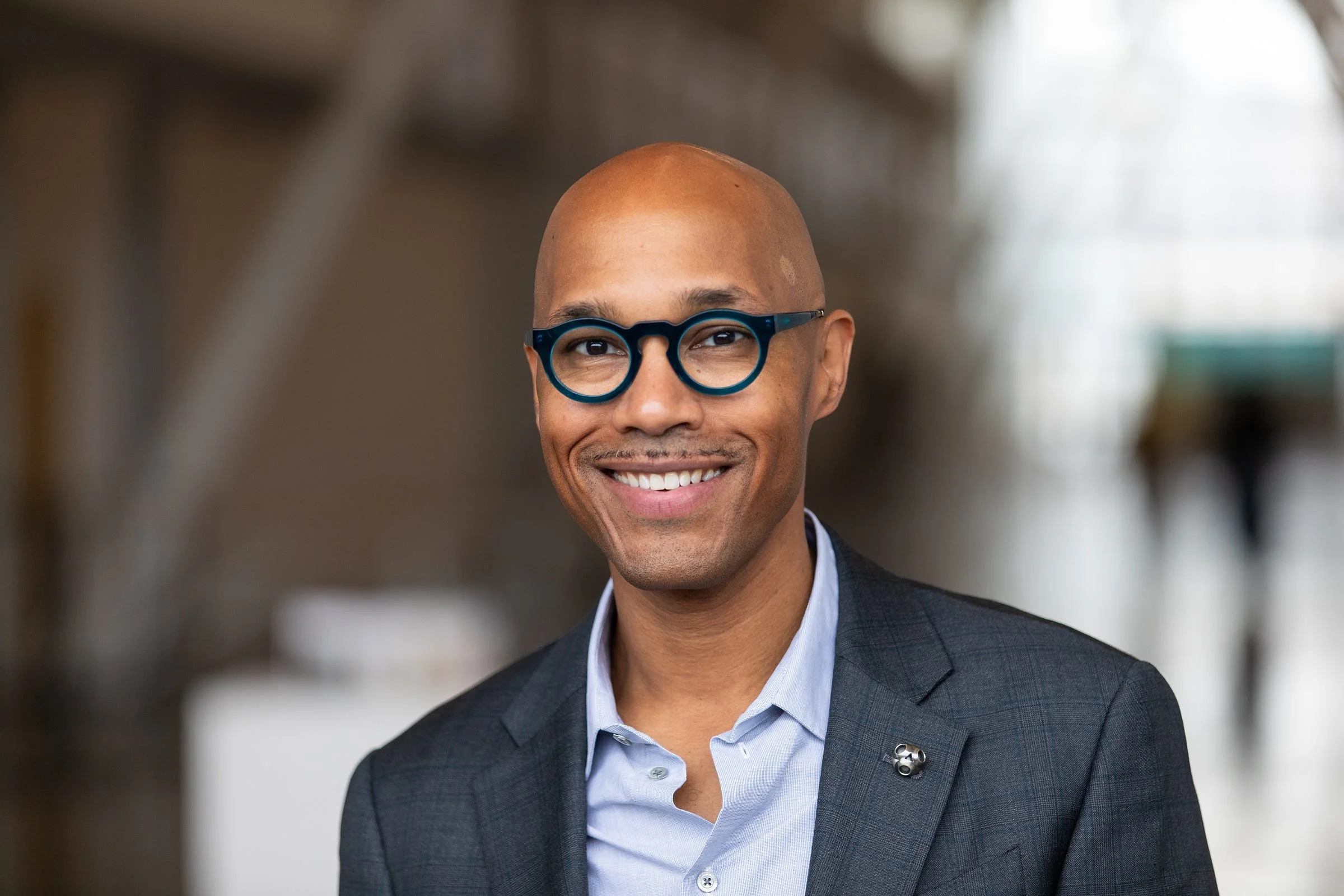
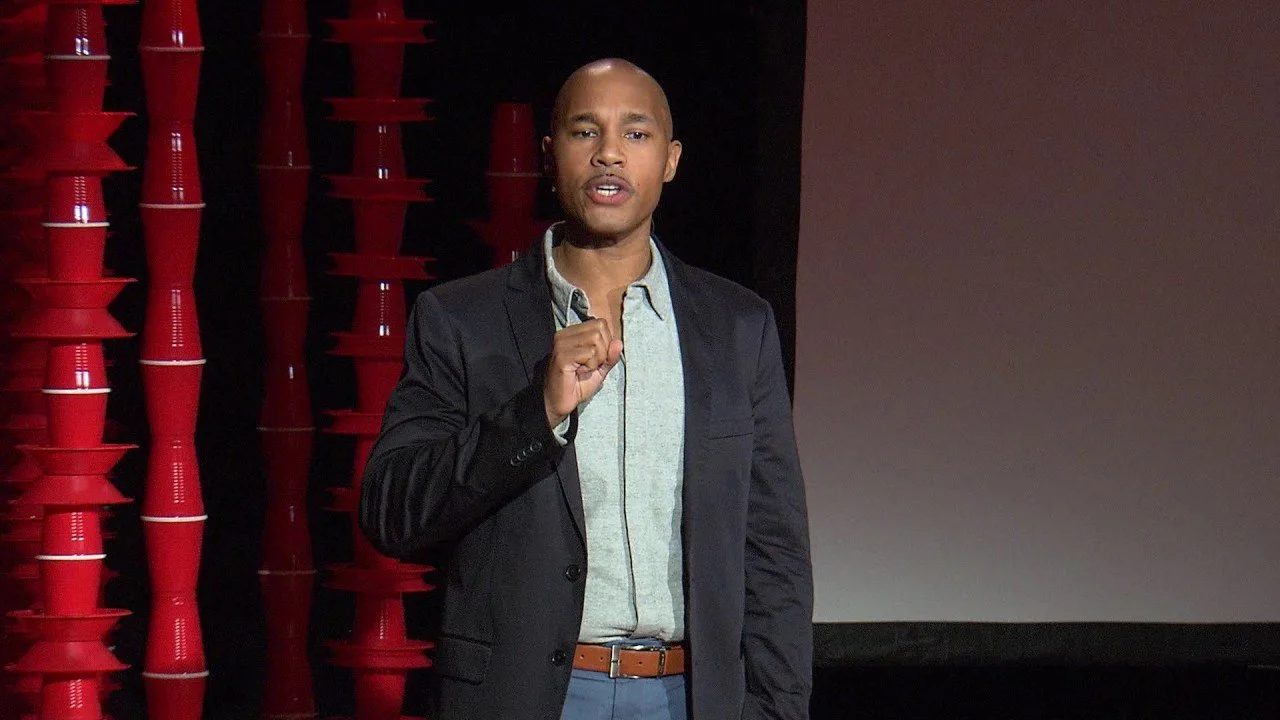
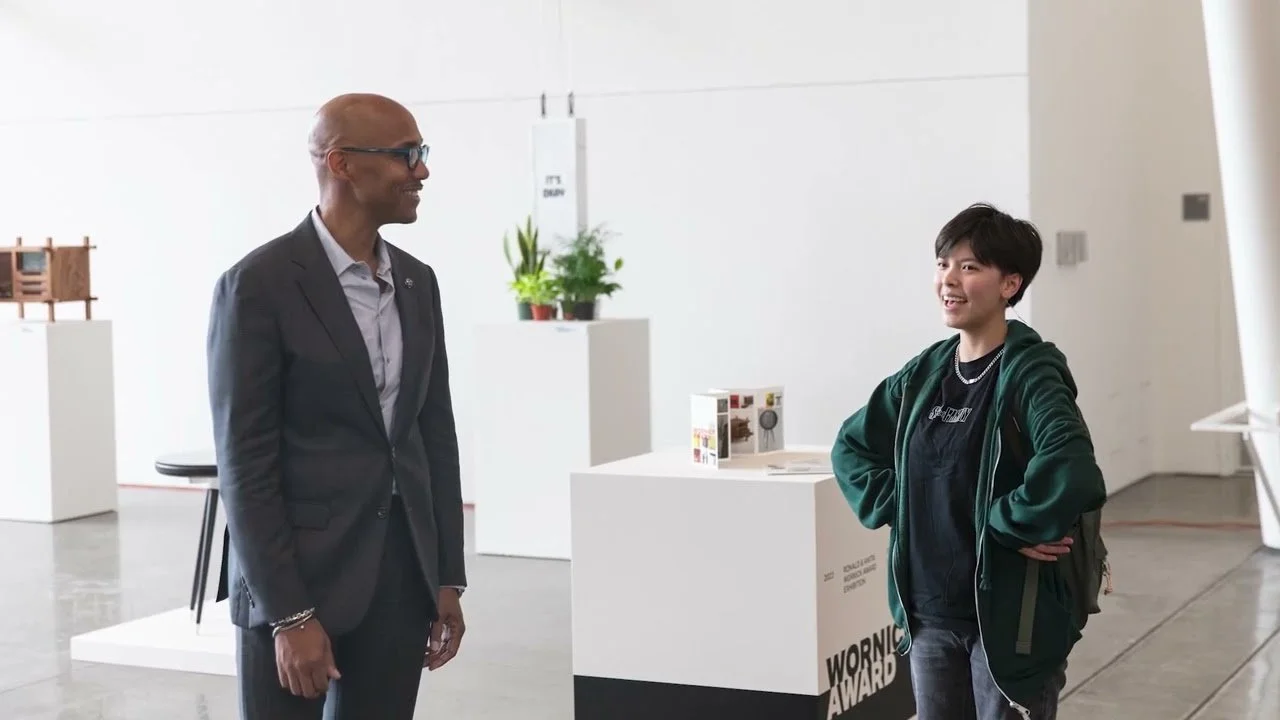
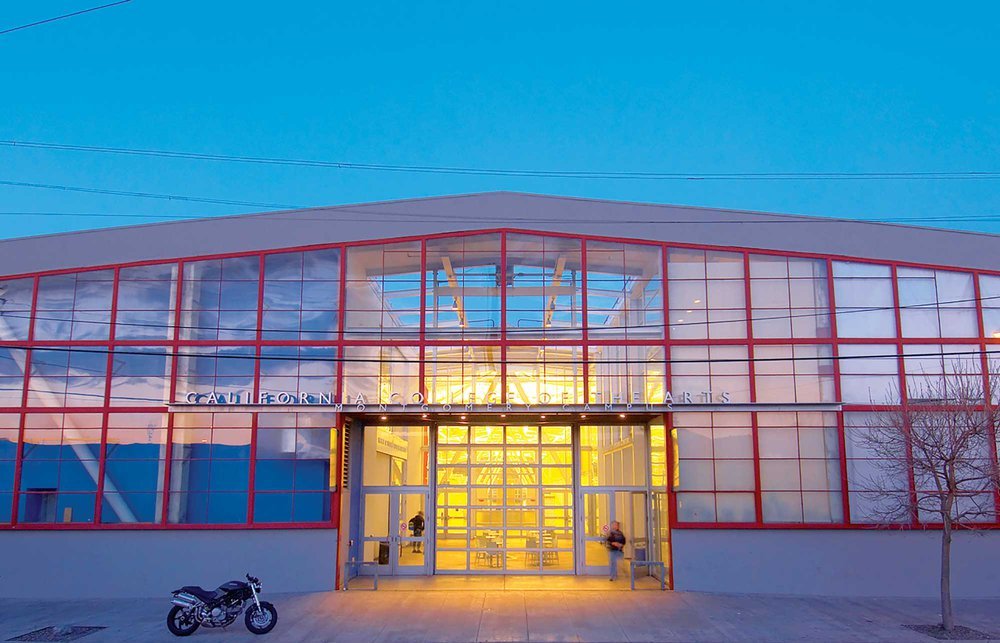
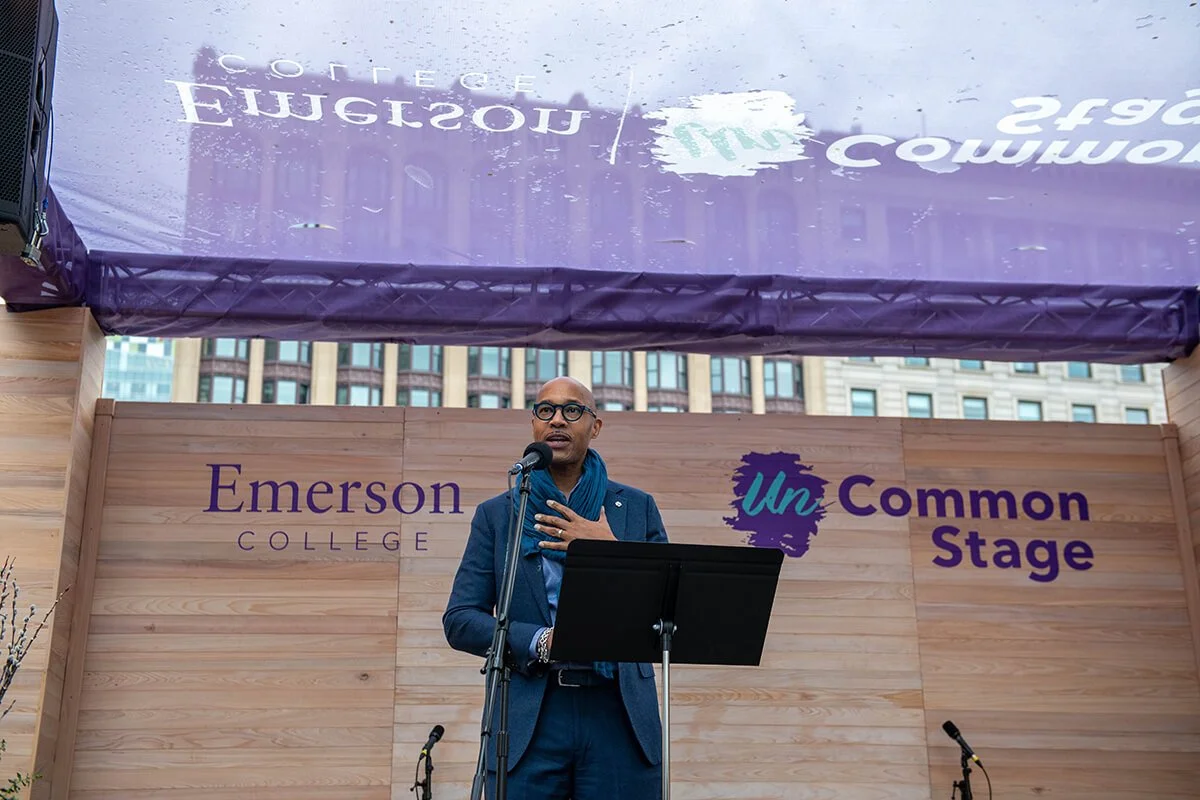
David Howse is the 10th president of California College of the Arts (CCA).
Before assuming the role of president, Howse served as Vice President of the Office of the Arts at Emerson College in Boston and concurrently as the Executive Director of Arts Emerson. Howse has dedicated over two decades to strategic visioning, fundraising, and community building within arts organizations, particularly in educational settings. At Emerson College, Howse spearheaded fundraising efforts, securing over $40 million to support core programs and establish innovative initiatives like the Gaining Ground Fund.
In recognition of his significant contributions to the arts and cultural diplomacy, Howse was honored with the title of Chevalier de l'Ordre des Arts et des Lettres by the French Government in November 2023. He is a trained operatic singer.
The following are excerpts from David C. Howse’s interview conducted by Hugh Leeman.
Punching Above Your Weight: Boston Children's Chorus & Early Leadership
Hugh Leeman: David, I want to start with your journey and stories before arriving at CCA. You're a formerly trained operatic singer and musician, and a founding staff member at the Boston Children's Chorus, helping it grow from 20 to 500 singers. What were the vital leadership lessons that you learned during that period of rapid organizational scaling?
David C. Howse: It's a good question. I should say that the Boston Children's Chorus was really my first sort of official nine-to-five job. Before that I had tried my way on the operatic stage somewhat — had some success, but small success, success with a lowercase S. So when I heard about this opportunity, the Boston Children's Chorus, I thought, well, let me see if I can get a job. I came and I remember being interviewed by Hubie Jones, who is my mentor. I remember him asking me a series of questions and he hired me on the spot and I thought, "Oh my god, I've tricked this man into thinking that I can do something." And clearly he saw something in me that I didn't see in myself. So before I even got to leadership, I have to say that I am here because people like Hubie saw something in me that I didn't see in myself. And I continue to this day try to live up to that expectation of what that might look like. A lot of that leadership was learned through trial and error and making a lot of mistakes.
I have always been inspired by this notion of punching above one's weight — going beyond one's safety net, really challenging oneself to get beyond that. And Hubie inspired that in me. We had this small little children's chorus. By the way, Hubie is a social worker. He loved music but had no formal training, and had this notion that we could use the power of music to connect children across differences — more deeply to themselves and to each other. Boston has its history of racial discord and so this was yet another strategy to sort of heal some of those wounds in the city. This notion that we could start this children's chorus with 20 kids and figure out how to make a real impact was something that was super ambitious and super exciting. And so we went at it, really thinking about what it means to put youthful voices at the center of civic dialogue. I had no experience in doing any of these things, but I was always curious — and that's another aspect of what transformation looks like, always being curious about what's possible. It's really looking at what's real and then trying to do the impossible. That's kind of how we moved in that direction and just continued to punch above our weight, doing things that were unexpected by a children's chorus, unexpected by a new organization with very little resources, unexpected by an African-American founder. That push just kept us going.
As we started to see some success, we'd ask, what's the next thing we can do to punch above our weight? And so transformation really was having a big vision, a bold vision, trying as much as we could to get there, and once we got closer, pushing the goal further. Just continuing to do that, all grounded in the fact that there was something we were trying to accomplish that was bigger than ourselves. This was not about how do we just become the biggest children's chorus in the country, but how do we actually create impact and create ripple effects so that what we're doing here might inspire another city, might inspire another movement. It was both the ambition but also the deep aspiration for change that kept us going.
Hubie Jones, Writing & the How's Notes Blog
Hugh Leeman: I want to hear more about Hubie. This is someone that was clearly a very impressive person that left quite an impression on you in your life. Hubie Jones told you that you quote need to write something that matters. How is the act of writing your How's Notes blog helping you process the vulnerable spaces of being the CCA president?
David C. Howse: I have to share the story. When I was a younger person, a younger leader, I was doing a lot of writing for business purposes — for board meetings, etc. And I received feedback that I wasn't a great writer. And that crushed me and I stopped writing. I was like, "Oh god," because I lost any confidence that I had in the words that I was trying to put down on paper.
And then Hubie was saying that you could be doing incredible things, but if you're not present and you're not visible, you don't exist. He always suggested: you should be writing letters to the editor, you should be writing articles, you should be doing speeches, you should be showing up in places where you're unexpected. I always had that in the back of my head. And I also had the fear of, I'm going to expose myself because I'm not a great writer. So part of the series that I started on Medium was trying to push beyond my comfort zone — really making myself vulnerable and actually committing to doing something that was going to hopefully advance the cause of what I was trying to do, but also as a personal challenge to get better at something I felt I wasn't good at.
The act of writing is really for me a cathartic process. It is one of the few places where I can both get inside my head and get outside of my head, and try to make sense of the world and my thoughts about the world, and to communicate that clearly in a way that was moving the dial on whatever we were trying to do. It's become a daily practice for me. I don't publish everything that I write, but I write most mornings in a journal — it's a way for me to make sense of the world and myself in it.
Hugh Leeman: I love this. That is a crushing thing to hear. It's one thing to hear that you're bad at anything, but particularly writing, because writing is such a crystallization of thought. It's a way of discounting someone's thoughts and sense of being. That's powerful. That's rare.
The Ordre des Arts et des Lettres & Arts as a Force for Change
Hugh Leeman: You were conferred the Knight of the Order of Arts and Letters by the French Minister of Culture recognizing your dedication to cultural exchange. Can you tell the story of how this came to be?
David C. Howse: It's a good question. I was so humbled by that recognition. After the Boston Children's Chorus — after having done that for maybe 11 years, my first real job — I thought to myself, was this a fluke? Could I actually try to do something somewhere else? Around that time I had been invited to consider joining Emerson College, leading or co-leading Arts Emerson, which is an international presenting theater organization embedded inside the college. As part of that work we were using theater — much like we had used music at the children's chorus — to think about how do we actually elevate stories that help us see each other more clearly. There's a throughline there. We were presenting international theater in Boston, presenting works from all over the world. This is not something that Boston was necessarily asking for, but we felt it was an opportunity to see ourselves through the lens of artists who don't have the same lived experience we do here in America. Part of that work was presenting work from France and other parts of the world.
I think it was that energy and that effort to really elevate the arts more globally that the French consulate took note of. They asked if I would be honored, and it was one of those red-letter moments — because this is not something you seek. It's not something you apply for. It's something you're recognized for. In all my work, it's not about the recognition, but when you are seen for trying to create positive change in the world, that is such an honor.
It's more about the company that you keep with that kind of designation. There's no prize or gift — it is just the honor of a government recognizing you for work in your field. When I moved to San Francisco, the folks at the consulate reached out and I now have a connection with the French consulate here, which is a really special thing. For me that recognition was not about me as a singular leader, but the collective work that we had been doing — not only at Arts Emerson but at the Boston Children's Chorus — to use art and creativity as a force for good and for change.
Hugh Leeman: Does that collective work translate on a local level — within a small community where someone is doing work that you've done but on a much smaller scale? Can someone listening to this say, I could translate those experiences and that sort of uplifting of stories into my small town community, or in San Francisco, or wherever? Is there a translation?
David C. Howse: One would hope so. I don't necessarily set out to replicate, but I always say that if the work I'm doing in community is inspirational to others and there's something that can be gleaned or learned from that, that's a wonderful thing. I do know that the work we did at the children's chorus was inspirational and in many ways galvanizing for the children's chorus movement. I know that the work we were doing at Arts Emerson — really pushing the boundaries of what theater was in Boston — was inspirational and opened up minds and opportunities amongst our colleagues. I like to believe that work began to shift the narrative in how people saw new forms of making, how the community embraced new storytellers in meaningful ways. It's not so much that you set out for that, but it's super inspiring to see the ripple effects when that happens.
Vulnerability, Hidden Bias & the Personal Board of Directors
Hugh Leeman: Earlier you mentioned a beautiful testament to your candid and honest vulnerability — someone told you you weren't a good writer, and that this was crushing. There's a really great example of this honest vulnerability in your TED talk on race and self-awareness. You share this idea that you had a personal bias against white men with beards. This sort of candid, honest truth shared in a highly socially filtered era is impressive. What were the reactions like to publicly naming such a vulnerable truth?
David C. Howse: When I did that TED talk I was working at Emerson. We run theaters and at the time most of our stage directors, technical directors, sound engineers — most of those were white men with beards. When I came back, they were like, "Really? This is what you think?" And I said, "But look, I'm changing. That's the whole point." Sometimes we have to put our challenges out in front in order to address them. For me that was a level of accountability. But what it also did was invite conversation and allow people to lean in. We understand that when we are vulnerable, people actually lean into that — they don't run away from you.
I always want to acknowledge the things I feel strong at and also the things I'm not good at, and be able to work on those things. I have always had what I call my personal board of directors — the people who are mirrors to your blind spots, who are helping you become your best self. That vulnerability was all about being honest, wanting to get better, and wanting to be held accountable for the things I want to get better at. It opened up a new dialogue for me and people in my community, and also gave others permission to talk about some of the same things — to open up brand new conversations that may not have opened up in the same way.
It's something I don't shy away from. I try to be very honest with myself about the things I'm good at and the things I wrestle with. Some believe that when you assume levels of leadership you are above reproach, you don't have weaknesses, you have this kind of perfect existence. I want to be the first one to say that's absolutely not the case. There is imposter syndrome. There are fears. There are all these things that are very real, and it humanizes us to talk about those vulnerabilities. I think in some ways it allows me to lead more effectively — when I am showing that I am fully human, and not so very different from the same people I'm trying to inspire and mobilize toward a goal.
Hugh Leeman: I love this idea — it opens up the door for dialogue. The bearded white men who were the stage hands get to say, "Hey, really? I didn't know you felt that." And then it kind of gives them permission to start sharing too. I feel like this personal board of directors is a powerful concept. It seems like if all of us started doing that, you'd have a much different world in not too much time. With everything you've just shared, what advice would you have for other leaders on how to unearth and interrogate their own hidden bias?
David C. Howse: We are so focused on perceptions — the way we're perceived, that outer exterior strength, resilience, power, polish. We spend so much time focused on what that looks like on the outside. And I would say to myself, even as I say to others — think more interiorly. Think more about who you are. Spend more time with self as you think about leading others. Try to understand who we are first, before you try to take care of someone else, and be very honest with oneself in that interrogation.
We're not taught to be interior. Everything is about the external — exude strength. Particularly as young boys, you are taught sometimes to hide emotion, to portray this kind of strength of character. There are times when I push against that. I think that expectation is a burden that we don't actually have to bear. The notion that one can show emotion as a leader, one can be vulnerable, one can live inside one's truth — in a different way, I think that actually has its own sense of strength and power.
Artists as Gatekeepers of Truth
Hugh Leeman: There's a powerful quote that you shared that I want to hear your thoughts on because it becomes very prescient now more than ever. You said artists are the gatekeepers of truth. In a time of incredible political and social fragmentation, an era of increasing censorship, how can artists and art schools continue to protect their students' roles as these gatekeepers of truth?
David C. Howse: I want to be clear — that is a quote by Paul Robeson, the great singer and social activist. He said that artists are the gatekeepers of truth. They are civilization's radical voice. Civilization's radical voice. I believe that through and through. All my work has been putting myself in a position where I can create the conditions, as much as possible, for artists to go to work. I believe that artists have a sense and a view of the world that help us see ourselves and see the world differently, and to see each other differently.
As a society, we often prize artists as this incredible creative community that we love to put on a pedestal — and then starve them for everything else that they need. Particularly in places that we love, like San Francisco — an incredibly vibrant place but really hard sometimes to make a go at it as an artist, for all the reasons we know: the cost of housing, the resources, the access. It is my hope that we as a society will think of artists not only as important from an aesthetic perspective, but as real thought leaders as we tackle some of these intractable issues — issues of homelessness, issues of inequity. We think of artists as people to bring in toward the end, but what does it mean as a society to actually start with the artist — in the boardrooms, in the community dialogues — to actually hear how they would approach and tackle some of these challenges?
My work here at CCA has also been about creating the conditions for those artists to develop and transform so that they can be that radical voice that Paul Robeson talks about — so they can help us understand how to make this world a better place. And that's not what all artists are interested in doing. Sometimes you just go to work and as a result that work is inspiring and moving in different ways. My life's journey has been about creating space for artists to be successful, to guide us and teach us, and help us see how we become our best selves through the kind of reflection that they create for us.
Community, Belonging & the Student Who Couldn't Stay
Hugh Leeman: The idea of putting artists on pedestals and starving them for everything else rings true for so many people in the Bay Area — perhaps always. Maybe that's why we have the term starving artist. There's a piece you wrote on your blog, Giving Gratitude. You recount a story of a student who was concerned he couldn't stay at CCA due to financial constraints, and he comes to your office with letters, notes, drawings, supporters, and hopes of staying. What did that encounter with him and his cohort reveal to you about the kind of belonging students were finding here at CCA?
David C. Howse: I just got goosebumps hearing you recount that story, because I won't forget that experience — the deep sense of community that was revealed for me in many ways, but particularly on that day. It wasn't the young man who approached me initially. It was that beloved community that saw something in that student — something that student didn't have the capacity to speak for himself about. To see that young group of colleagues come around and advocate for him was transformative for me. It spoke to the importance that none of us have gotten to the place where we are in isolation. It does take a village. It does take a community of people to actually help us be successful. There are many people I encounter who say, I'm self-made, I got here on my own. But that was a moment that reminded me it takes a beloved community to actually best position us for success. And to allow ourselves to be loved in that way is also an intentional act.
That young man saw that he wasn't able to just go it alone, and to allow someone to support you and carry you in that way was transformative. When I walked away from that, I was even more committed to figuring out how to create those conditions for even more people on this campus and beyond.
Hugh Leeman: It's powerful. This seems like a really wonderful model of success — to be able to say in your life that you had so many people willing to go to bat for you, and they come to talk to the president to honor you and honor the work you've done. That's beautiful. That's touching.
David C. Howse: The fact that we need each other is a very simple concept, but one that drives me. We're better when we have those people to support us. And we're living in a time where more of us are doing it as a go-alone strategy. I think there's a different alternative. And if I can play a role in creating those alternatives, I want to do that.
The Rising Cost of Art Education & Universal Access
Hugh Leeman: Reflecting on a belief that you've shared — the arts belong to everybody. How do you, and how do we as a society, reconcile the rising cost of specialized art education with the goal of universal access?
David C. Howse: Say that again.
Hugh Leeman: Arts belong to everybody — I'm pulling that from something you had written, and I think it's something that we as people who love the arts largely share. How do we reconcile the rising cost of specialized art education with an ultimate goal of universal access?
David C. Howse: It's an important question. For me, art is many things, but more than anything it's a threshold. Art and beauty come in different forms and require different kinds of trainings. There can be art and beauty without a formalized training. For those who choose to go that route, it has become much more challenging — art and design education, because of the resources required: the equipment, the spaces, the studios. Those costs bloom, and it's something we have to address head on, because it is becoming a challenge for more people who have that instinct and that natural, innate desire to be part of a creative community. It's becoming less and less attainable because of cost.
But what I'm also inspired by is the fact that it won't stop artists from making. Artists will go to work — we've seen it in the most challenging conditions. The fact that some are not able to afford a very formal training does not mean the work won't continue. I think we have to find new ways of creating paths toward that training — in addition to the four-year degree or the master's program, we have to be more expansive in the thinking. I don't have the solution right now for how you tackle that, because we're seeing the trend go in the wrong direction as it relates to cost.
CCA's Closure, Legacy & Honoring 120 Years
Hugh Leeman: I want to focus on the legacy of CCA here with the recent announcement of closing. You described Vanderbilt University — who's going to take over the campus — as the most suitable fit because of its stated commitment to continuing art and design education in the city of San Francisco and honoring CCA's legacy. What did honoring the legacy concretely mean to you as you and the board weighed that decision?
David C. Howse: With CCA's 120-year history, deeply rooted in craft, starting in Oakland — there are stories, there are values, there are ways of being together with each other. There is a radical energy that exists in this institution, really expressed through the people who have called it their both creative and professional home. When you think about legacy, it's about seeing that continue beyond a finite time. It's about creating systems and structures that allow that spirit and energy to move through. When we were thinking about what it means to honor a legacy, it is both capturing and creating pathways for that to move beyond — even though the construct of the college will end. That responsibility is not one that's taken lightly, and the work to ensure that happens is a laser focus for myself and this community as we think about the winding down of the college.
Hugh Leeman: You noted that CCA's board explored several different options — budget cuts, real estate options, multiple partnerships — and that faster enrollment recovery or another major fundraising success might have changed the outcome. What does this process show us about the fragility and the value of arts education institutions today?
David C. Howse: When we made this announcement — after, as you say, herculean efforts to maintain the independence of the institution — I received calls from maybe seven to ten other college presidents who said, "How did you do this? We are not far behind you." And of those, three were art and design colleges. We are living in a very challenging moment for higher education, period. Let alone art and design education, where the value is being questioned in new and very challenging ways. The costs, as we've talked about, are rising in ways that are becoming much more out of reach for more people. We've got all the headwinds around the demographic cliff — fewer children being born, and so fewer children going to college. All these different headwinds are coming, and that level of fragility is starting to expose itself.
The models that we've been built upon — tuition-driven, reliant on philanthropy — are models that have sustained us for a very long time. But I'm not sure how relevant they are as we think about the future. It's really challenging to think about reinventing oneself, but I think this is what the moment is calling for. We're having to reimagine what it means to be a higher education institution right now, what it means to create pathways for art and design education. And we're seeing it not just in higher education — we're seeing it in the orchestra world, we're seeing it in museums. We're all being challenged to reimagine and create change. It's both a very vulnerable and scary moment. But I also like to believe there's opportunity in that moment.
No one wants to be the architect or the leader who is winding down a 120-year history. That responsibility is great and felt deeply. But moments like these are calling us to ask questions around what the future will be and how we are shaping that future now. This is not the story that I came to California to tell. And sometimes we don't know what we're being called to do in these jobs. But you look at the task, you look at the situation, and you try to do the best that you can with the resources that you have — to deliver something that honors the moment, honors the people, and is really looking toward what change needs to happen.
Leading Through Fire: The Personal Weight of This Moment
Hugh Leeman: It's incredibly powerful what you've just shared — this idea from the president's perspective of these challenges and the responsibility, the emotions that are involved, the history, the legacy. How are you dealing with all of that personally?
David C. Howse: Thank you for asking. I am doing as well as one might expect. I've said often about this particular opportunity — to be called to be the 10th president of the California College of the Arts — this was a calling for me. And sometimes when you're called, you don't know why you're being called. You don't know what you're being called to do or if you're equipped for the calling, but you just go. In this moment, while I didn't expect this was the work I was being called to do, it is the task that was put in front of me.
Sometimes one surprises oneself in moments like this. If you had asked me four years ago how I might navigate something like this, I'd have had no idea. But in the moment, you call on all the systems, all the people, all the experiences that buoy you to step up into the moment. The only way I have been able to continue is because of the people around me — both immediately around me on the team, but also all those forces who have encouraged me and challenged me. All that work has prepared me for this moment, even though it's not a moment I thought I was coming into.
Hubie would say to me, very few people run into the fire. I didn't know I was running into anything. But sometimes you just go. In the spirit of CCA — sometimes like clay put into a kiln, it's very hot in the fire, but it comes out stronger. My hope is that this journey I've been on is teaching me something that actually prepares me for whatever I'm called to next — that I can be more impactful, create more change for more people so that things are better. That's kind of what keeps me going. The notion that there is a challenge I'm navigating through, and I just have to keep going and do as much as I can to dignify the people who are living this experience with me.
Hugh Leeman: Earlier you mentioned a personal board of directors — people who help you see your blind spots. What have the conversations been like through this challenge in your life, and this challenge for CCA, with those people?
David C. Howse: They've been some of the most important conversations. My personal board of directors consists of a cheerleader — someone who thinks I can do no wrong. There's another person who thinks I do nothing right. And there's someone who comes at things from a more spiritual basis. I go to different ones depending on what I need. What I've learned from them is that they're helping me to see myself, reminding me of experiences I've gone through that I can tap into again, and reminding me to take care of myself in this moment.
No man — or woman, or person — is an island. I would not be in this position if there were not others. I don't take that for granted. I lean into it. I encourage others to do the same, because it's called me to be my better self. In life, you usually have maybe three or five people who won't let you fail. When you find those people, nurture those relationships, lean into them. These conversations have been so critical. This has not been easy, but it has been made a little bit easier because of the people who see me for who I am and for what I'm being called to do.
The Broader Crisis in Higher Education
Hugh Leeman: You mentioned the seven to ten presidents that reached out to you, and I think that really gives us insight into something much bigger than just CCA. The numbers are somewhere around 500 universities that have closed or merged in the last 15 years because they're going through the very same thing you're going through here. Seven to ten presidents reached out saying, we're not far behind you. For people outside of academia, it may not be as well known, but we are really heading towards a massive change. If you go back 15 or 20 years, whether you were red state or blue state, most people agreed we need a major change in education — this just isn't how we thought it was going to come or how we thought we were going to deal with it. What would be the advice you would share with an institution facing something similar? And perhaps better stated — what were those conversations like with those seven to ten presidents?
David C. Howse: When they called me and said, "Can I be helpful?" I said, "Not right now" — because I am in it right now. But what has guided me, our team, and our board is this: focus on the students. Go back to where we started — the people. The first priority is trying to create as much continuity for our students as possible, whether that's graduation or through a teach-out. The second is to dignify the very people whose lives will be impacted — our faculty and our staff. Focus on those things first. That's what I would say. There are all these other things that you have to do, but as an educational institution, students should always be at the center of your strategies and your efforts.
There's not a lot of playbooks out there for how you wind down an incredible institution with such a rich history as CCA. But for me it's really about going back to where we began — focus on the people.
Hugh Leeman: The reactions from the community have been significant — not just from those seven to ten presidents, but across the board. There's clearly a lot of emotion, a lot of sense of identity and ideology attached to the university and its history. Are there specific reactions you would like to address or correct?
David C. Howse: First, I validate people's experiences. I validate people's emotions. I validate the frustration and the anger and the confusion. All that's real. What I would say is that our announcement comes on the heels of so much other loss. People are not just reacting to the announcement of our closure — they're responding, rightfully so, to the challenges happening at museums, the closure of galleries, the closure of community centers, the shifting dynamic for artists who are trying to make their way. That is the energy in which we made this announcement. CCA was just another sense of loss for a community that has invested and had such pride in knowing that CCA was here.
There are a lot of narratives out there, and a lot of things that aren't so true. But I'm choosing to spend my energy on what we know is truth and the task at hand. I could be so easily distracted trying to address all the different stories. I'm choosing to be focused on getting our students through to graduation and teach-out, honoring our faculty and staff in this transition, and leaving a legacy that we could look back on in two to five years and be proud of.
Transition, Not Decline: The Future of Arts & Culture
Hugh Leeman: It seems like this is an example of an art scene in decline and a future that is very much in question, because the loss is being felt now. There was SFAI a few years ago, and it really begins to call into question the pipeline of 10 to 15 years from now — artists who are now in their early twenties that we may not see take off into galleries. It goes back to this new model idea. The future seems very much in question as you're laying it out. What does the future hold, and where should we be looking? You mentioned earlier finding opportunity in this, and I think of a famous quote by Napoleon — what is luck other than the ability to take advantage of a crisis. And there's the idea that science advances one funeral at a time. We're seeing collective funerals right now, and what we're seeing is leading to hardship — but in the near future, this is when there's a chance for a renaissance, a rebirth. What does that look like, David?
David C. Howse: We can choose to see this moment as a decline. We can also choose to see it as a transition. I'm choosing to see it as a transition. As things are winding down, new things are emerging. This is a transitional moment and we've lived through transitions before. They can be very difficult, but it is a transition — we will keep moving in a new direction.
I've always had this idea that the arts belong to the people, but we've created systems where there's a hierarchy. When you think about high arts and low arts, we see it almost on a vertical. I have always been intrigued by the notion — what happens when we put it on the horizontal? So it's not high arts and low arts. It's just arts. And it does belong with the people. The work that's happening in community, without the degrees, can be equally valuable and powerful as the Mozart symphony or the new installation at the local museum. This notion of how we honor it all and allow the people to take shape — because what's happening is we've created a hierarchy where most people don't even connect with the systems and institutions of art. Symphony, ballet, museums — things I love — they're just not part of most people's lived experience. So what does it mean to actually create a different kind of way of living in arts and culture? What would that mean for our institutions?
I don't know exactly what that looks like, but I'm intrigued by the notion that this change will happen when more people actually have a stake in our creative future.
AI as Medium, Not Just Tool
Hugh Leeman: I want to stick with the idea of the future for a minute. In the not too distant past, CCA took money from Jensen Huang and his philanthropic endeavors, which seems like a great idea — though there was a lot of emotional controversy around this within the San Francisco community. You wrote a piece in which you noted that AI is not just a tool, but it's also a medium. That's a powerful way of seeing it. We have to acknowledge that a lot of the challenges — the rising cost of living that you mentioned — are due in part to the AI boom, and there doesn't seem to be a lot of participation from the AI and tech sector philanthropically delving into the arts, especially at smaller grassroots levels. What would you say to creatives getting ready to graduate in some of these final classes from CCA about how to think about AI as a medium?
David C. Howse: Be curious. We can be — and I put myself in this — quick to make assessments about something that's new and challenging and unknown. There's a lot that we don't know. And so we choose to put ourselves in this position of I am for or I am against. What I would just say, particularly in the academy, is we just have to continue to be curious. We may decide this is not something I want to pursue, or this is something I want to lean more deeply into. But just be open to what the possibilities are.
This notion of AI being not only a tool but a material is an idea that one of our faculty members raised. We think about it like wood, like clay, like metal — AI is a material that has to be manipulated and shaped. And artists and creatives have a role in that shaping. The challenge is that sometimes it moves more quickly and takes advantage of the way that we've been working. But I believe artists can actually figure that out. We can be leaders in that space.
There's also this notion I keep hearing about — the tech world versus the art world. In many ways, I think we're all about creativity. What does it mean to tear down the wall that separates us? My understanding is that there are tech folks who see themselves as wholly creative and are creating their own museums and institutions. But is that siloing necessary? Yes, there are challenges when we come together — of being overpowered or overtaken or diminished. But some beautiful things might happen if we find ourselves more closely connected to each other. I'm super curious around what evolves and how it evolves. Less interested in the silos we create. I'm not suggesting one position on AI is better than the other — I am asking that we continue to live inside the questions being raised in this moment, particularly as it relates to students like ours who are moving into a world where this is part of their lived experience. We have to stay curious and continue to live inside the questions.
What's Next: Leading by Purpose, Not Momentum
Hugh Leeman: David, lastly, what's next for you personally?
David C. Howse: This is a question people ask often. I believe in being called to what's next. I want to be driven not by momentum, but by purpose. What is it that the world needs from me next? And what is it that I have to offer? For me, the most powerful ideas and direction come in moments of stillness. So I'm hoping to take some time to be still. To listen to where the universe is leading me. I don't have a plan. And there's something terrifying and exhilarating about that. But I do plan to take some time. This has been the most intense 2.2 years of my life. I think my greatest gift to the world will be to take a little time for myself and then figure out where I'm being called next.
Hugh Leeman: Lead by purpose, not by momentum. Follow purpose, not momentum. That's beautiful. David Howse, thank you very much for making time.
David C. Howse: Thank you for your questions.
