

Stone and Scene, Hilbert Museum of California Art
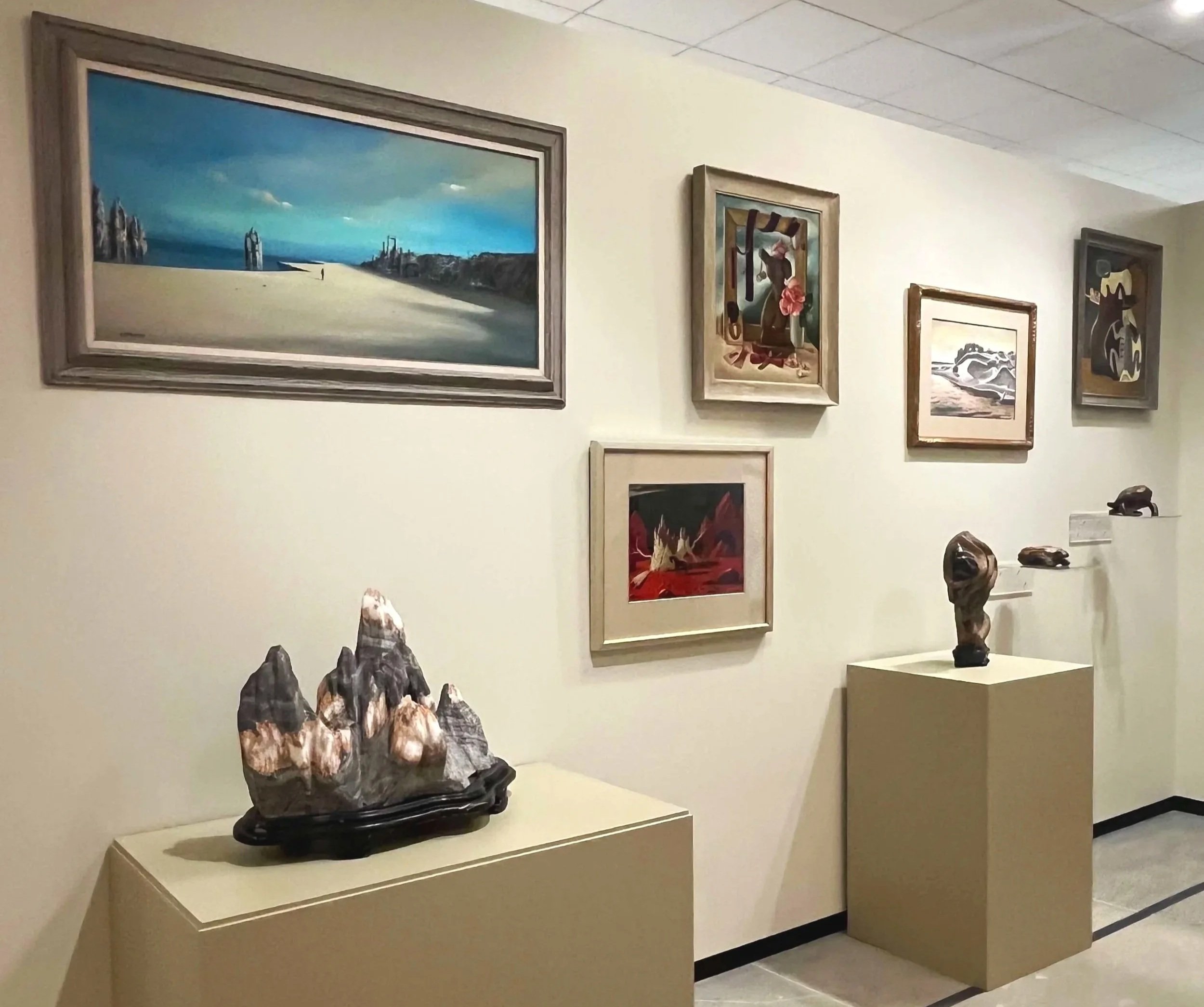
Stone and Scene, Installation view
By Liz Goldner
Richard Turner began collecting viewing stones more than two decades ago. These “found objects,” also known as scholars’ rocks, are carved, shaped and designed by natural elements, including wind, sand and water, over thousands of years. They are regarded by many collectors as pieces of art, with many stones evoking landscapes and other natural settings.
Turner soon joined stone-collecting clubs, learning that stones have been collected and displayed for centuries in the Far East, particularly in China and Japan, while reflecting these countries’ aesthetics. He joined the stone clubs’ collecting expeditions, searching for these treasures in deserts, streams and mountain settings throughout California.
Turner, an artist and educator, has been admiring the mid 20th-century California scene paintings displayed at the 10-year-old Hilbert Museum of California Art, near his home in Orange. Five years ago, he began considering curating an exhibition that would pair viewing stones with paintings from the Hilbert Museum.
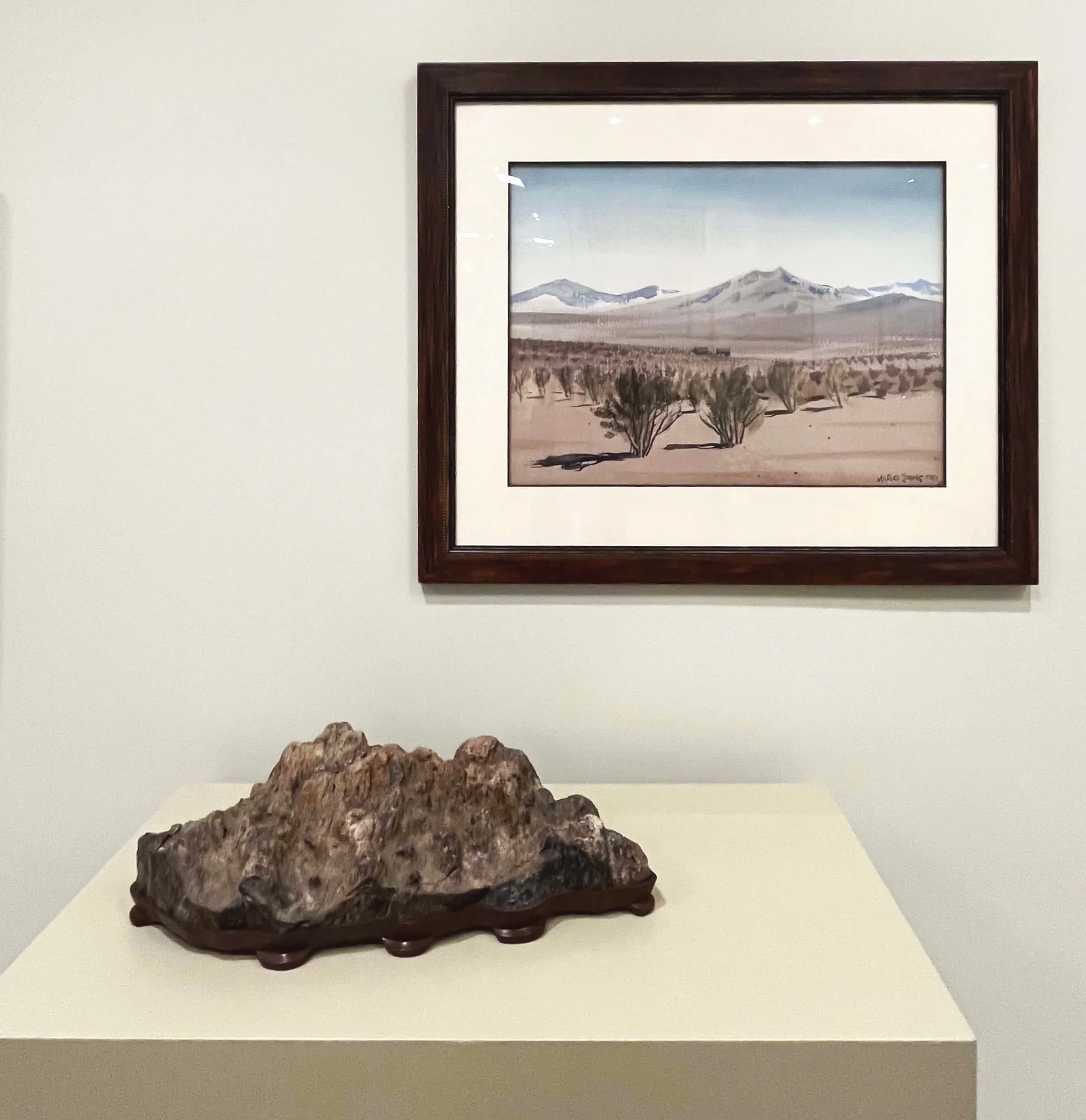
Desert Mountain Range stone, James L. Greaves, Desert Homestead, Milford Zornes
After the museum director Mary Platt approved of his proposal, Turner met with his stone collecting friends and borrowed 13 viewing stones to include in the show, with each stone reflecting different aspects of nature scenes, including deserts, mountains, streams and lightning. He added seven of his own stones to the collection. He also thoroughly perused the Hilbert Museum’s permanent collection of scene paintings, picking out 28 works to pair with the stones. The resulting “Stone and Scene” exhibition presents the beauty, symmetry and elements evoking nature in the stones and the paintings. The show also examines how landscape paintings reflect our natural surroundings.
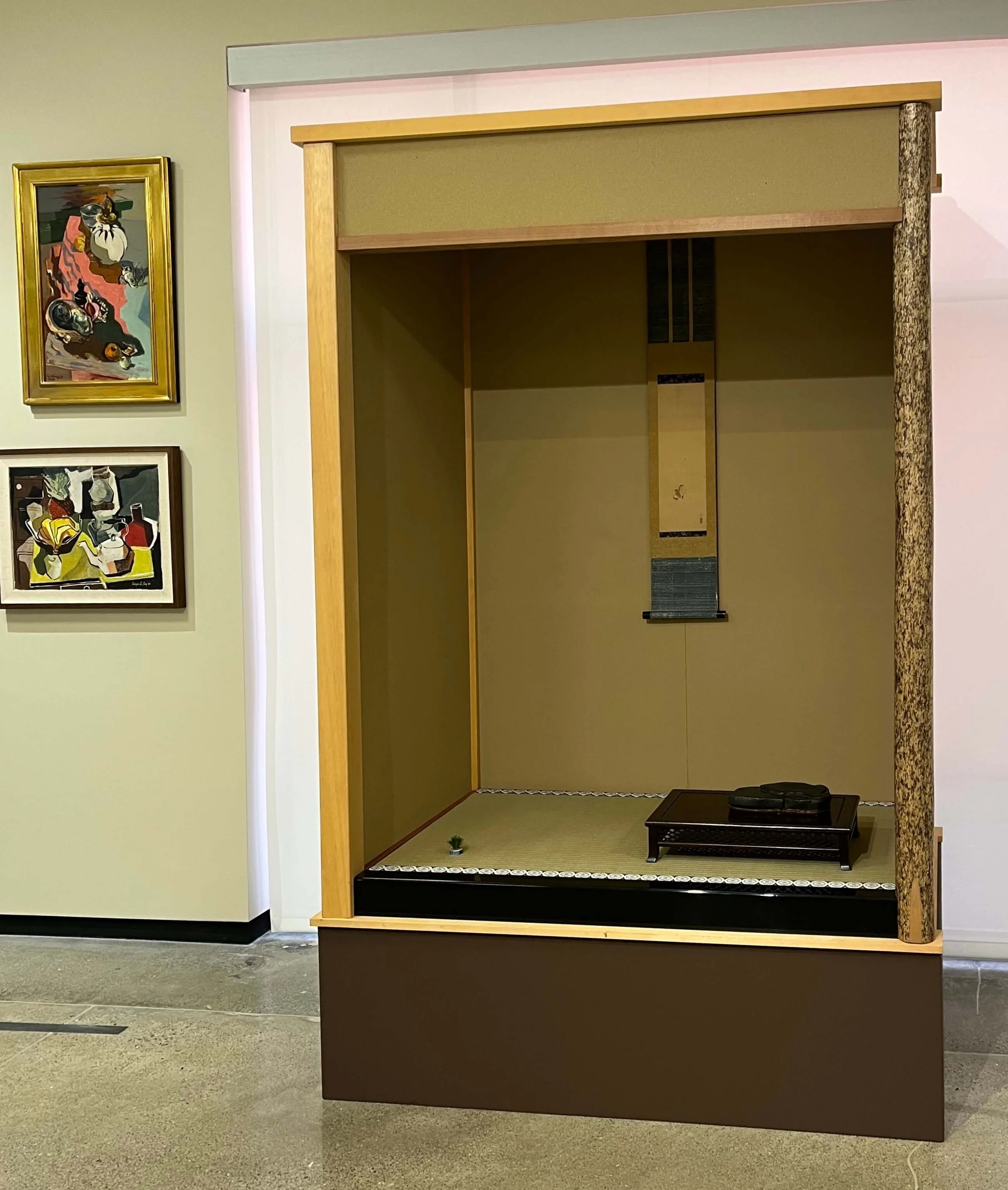
Tokonoma with scroll and stone
The premise of this exhibition is based on the Japanese tokonoma, which is an alcove in a home displaying a scroll, along with ikebana arrangements, bonsai trees, viewing stones and other contemplative pieces. Both the stones on display and the paired paintings are, “miniaturizations of the landscape,” according to Turner.
A stunning example of the pairings is the display of the painting, “Lightning Storm,” 1948, by Ruth Lotan, alongside the stone, “Lightning Strike.” The painting illustrates a farmhouse in a field, besieged by an overwhelming lightning storm. The dark stone on a pedestal has dramatic striations appearing like lightning, perhaps created by wind or sand, or both. Julie Polousky’s oil on canvas “Gnarled Tree (Methuselah),” 1940s is a detailed painting of an ancient bristlecone pine tree, alongside the equally ageless “Sentinel (Petrified Wood),” which has hardened to stone after several millennia.
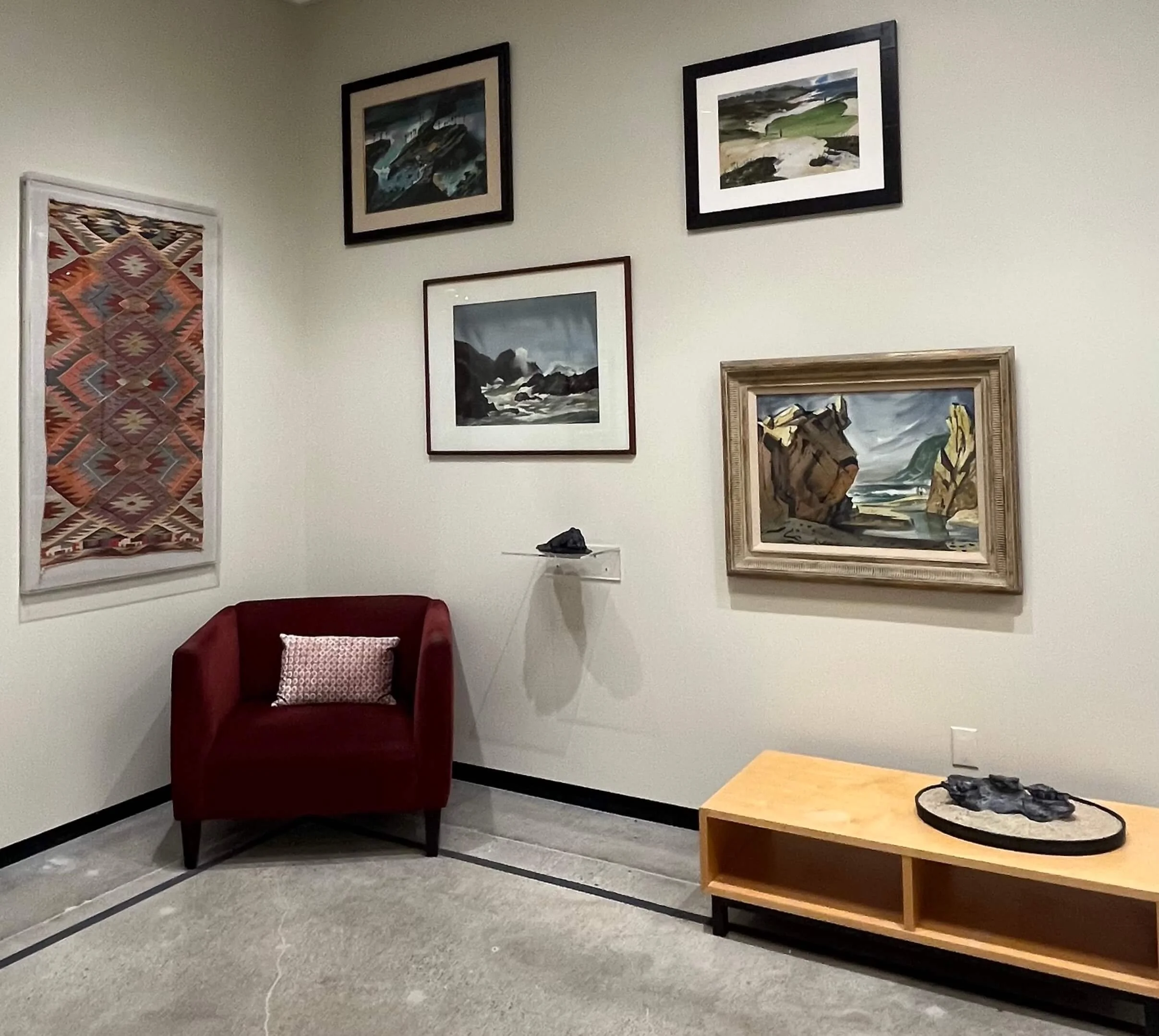
Paintings of the California coastline with shore and island stones
A dramatic installation on the gallery’s north wall features paintings that take viewers on a journey of the seashore, the desert and mountain ranges Noel Quinn’s watercolor “Woods Cove,” 1960s, depicts a favored Laguna Beach coastal spot with numerous bathers and bodysurfers reveling in the sunlit day. “A Stormy Coast,” 1960s, by Ralph Baker, takes viewers back to the ocean, but on a stormy day. Ralph Hulett’s “View of Death Valley,” c. 1950, displays the desert. And Conrad Buff’s undated “Capitol Reef, Utah” brings us to a popular tourist spot with its twisted stones, pillars and arches. Free-form stones on pedestals, enhancing these and other paintings, include “Lingbi Stone (China),” “Yuha Desert Stone” (from California’s Imperial Valley) and the twisted “Mojave Desert Stone.”
Two pairings in this show, flanking the doorway, are more cultural than visual. To the left of the doorway, Millard Owen Sheets’ watercolor “West Coast of Japan near Izumi,” 1967, is a meditative, abstract painting, illuminating the shapes and foliage that the artist admired in Japan. Just below the piece is the magnificent “Chrysanthemum Stone” from Japan, a free-form dark stone emblazoned with several lighter-colored chrysanthemum-like designs. To the doorway’s right is Arthur Burnside Dodge’s historic “Chinatown,” 1920s. As the only painting in this exhibition featuring people, it shows merchants and shoppers in Los Angeles’ Chinatown from 100 years ago. Turner joined the painting with his own artful, abstract “Taihu Stone (China).” “The paintings and viewing stones flanking the doorway reference the Asian origins of viewing stone appreciation," he explains.
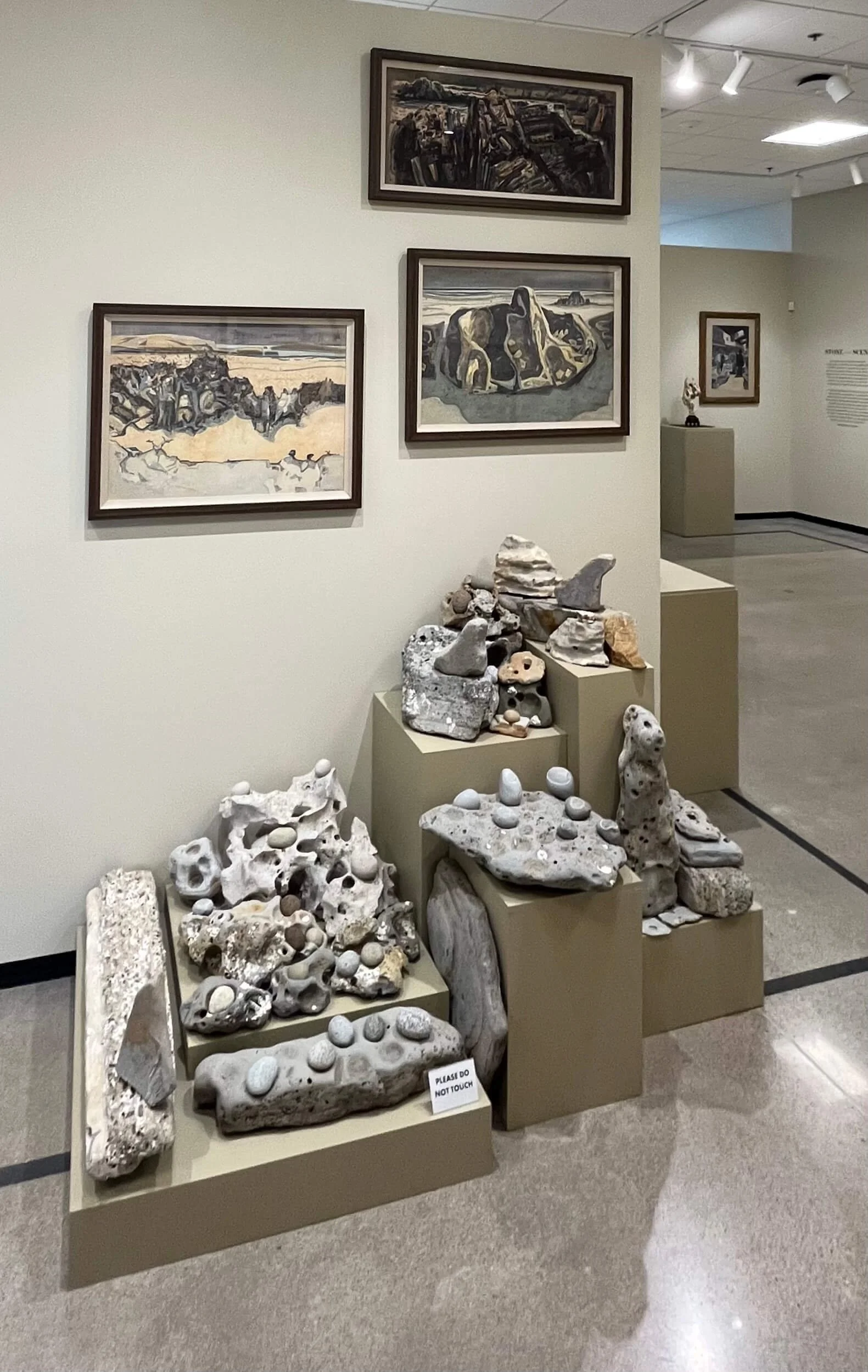
Tidal Shelves, Paul Harris
A clever pairing includes three semi-abstract watercolors by California native Phil Dike. The paintings, “Rocks of Cambria,” 1970, “Sea Images,” 1970, and “Malibu Set #7,” 1974-80, illustrate the beauty, aura and rugged quality of the rocks and outcroppings nestled near the California coast. Complementing these paintings is the installation “Tidal Shelves” created by artist and stone collector Paul Harris, who modeled it after his rock and plant arrangement in his own front yard. Turner explains, “It evokes an outcrop of coastal rocks crusted with shells and hollowed by boring clams, where perching birds watch over nested eggs. The stones were collected on cobble beaches along the Palos Verdes Peninsula. To the left are two stones on pedestals: one is a ventifact, shaped by wind-blown sand, and the other is a stone from the Eel River, formed by flowing water.”
As Harris told me a few years ago, these rocks express the geological passage of time, along with our role in preserving our planet.
“Stone and Scene,” the first exhibition that has ever paired viewing stones with paintings from a museum’s collection, according to Turner, will be open at the Hilbert Museum of California Art at Chapman University until October 4, 2026.
