

Daniel Arthur Mendoza and Daniel Alejandro Trejo, Neighbors, Et al. Gallery
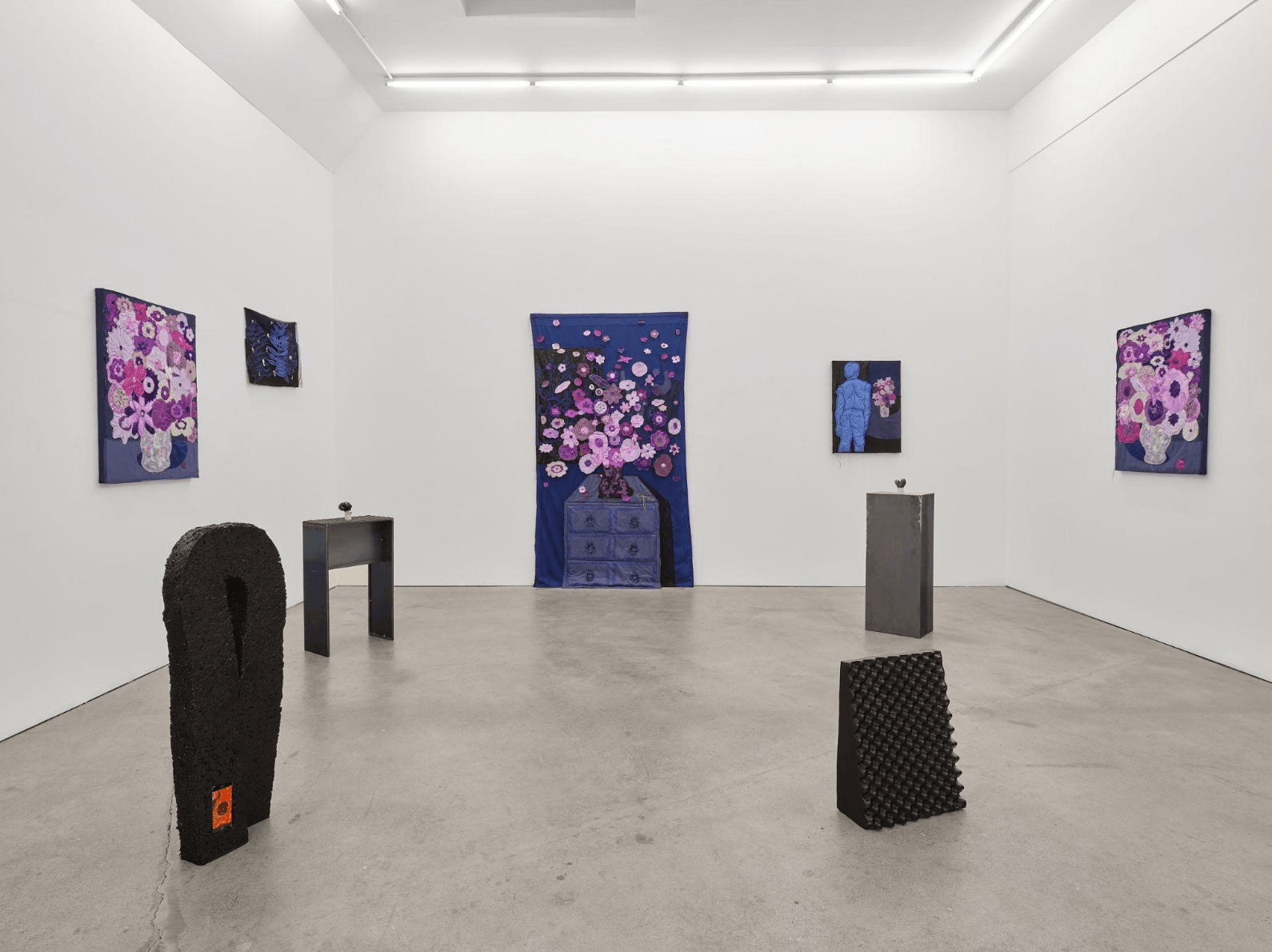
Neighbors installation shot. Courtesy of Et al. Gallery
The Wall That's Part of Us
In a loneliness epidemic, is “Neighbors”, an exhibition at Et al. Gallery in San Francisco’s Mission District,the spoonful of sugar that makes the medicine go down?
Weaving through the two-person exhibition featuring Daniel Arthur Mendoza and Daniel Trejo, curated by Justin Mata, my initial read is that it looks like a doll-house interior, in the colors of the night sky: Deep Indigo, Cornflower Blue, Soft Lilac, and Gunmetal. Disney-esque cartoon characters in states of longing are spaced across the walls, while rectangular sculptures vaguely suggest modernist design forms in our everyday lives, the refrigerator, architecture, a side table, and the smartphone, inhabit the floor space. The whole scene together suggests a cardboard toy house, parts dismantled. Narratives raced across my mind of the lives, of cartoon families, the Flintstones, the Simpsons, or the Griffins, ideal, devoid of true suffering, and filled with wacky, joyous memories. The curatorial juxtaposition of artwork reflects the exhibition's intent, a hopeful vision of cooperation and friendship, yet I found myself thinking about the binary of togetherness and loneliness. I am interested in how the artists in this exhibition utilize the shadows of the idealistic American home shaped by tech-minimalist aesthetics and gender norms as a catalyst for building real, meaningful connections.
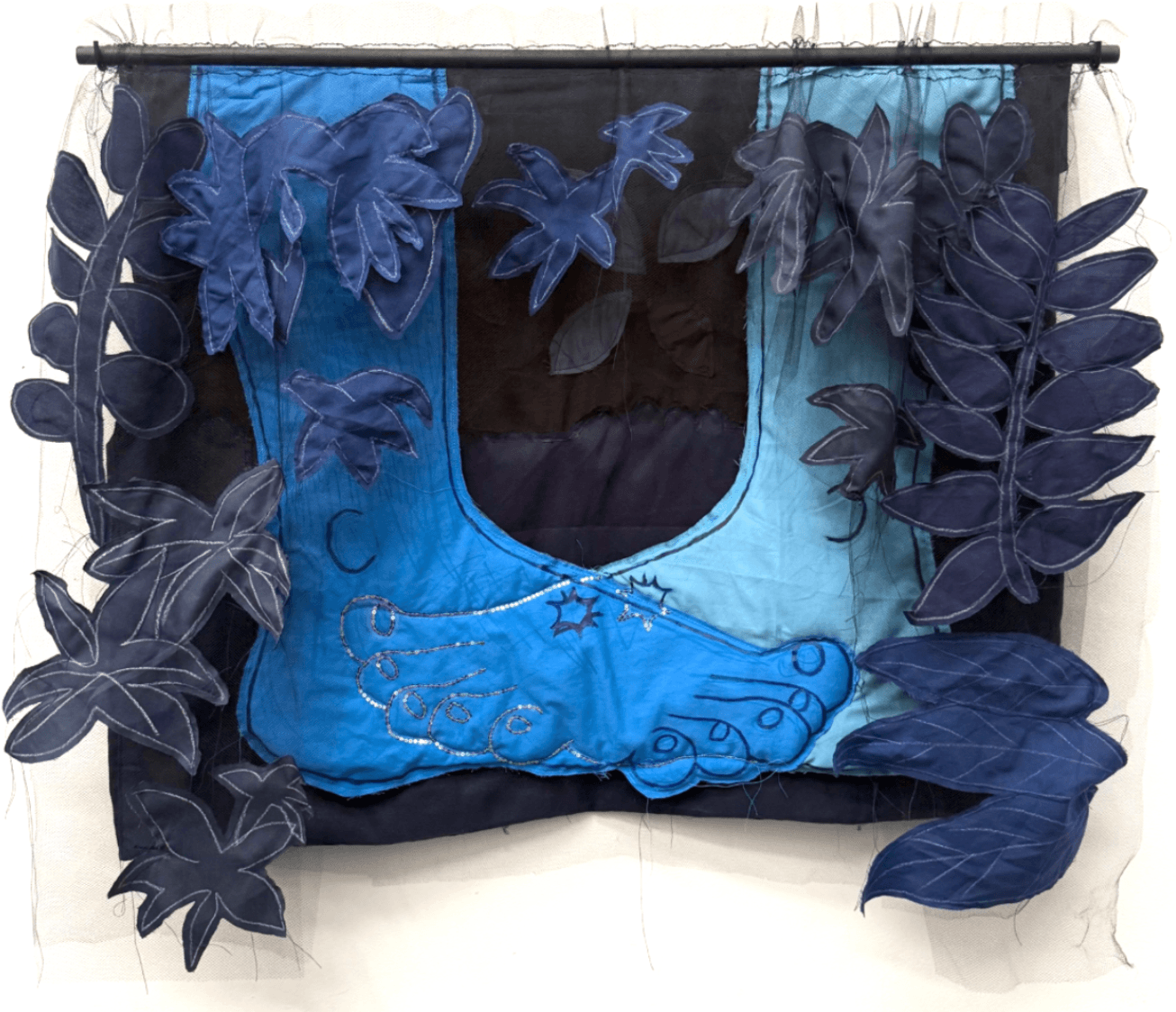
Daniel Arthur Mendoza, Under the Cover of Protective Darkness (2026).Courtesy of Et al. Gallery
Daniel Arthur Mendoza's contribution to the exhibition is soft, composed of bedsheets, floral patterns, sequins, and Disney-inspired imagery. Mendoza says, “I often draw from hidden or possible queer narratives in cartoons from animated films from the 1920s to 60s. These stories often were built to construct normative, heterosexual, social structures of daily life and to repress the “other” which was often assigned to queer-coded characters.” He hints at latent dreams and desires by injecting intimate moments into these narratives. For example, in Under the Cover of Protective Darkness (2026), Mendoza uses bed sheets to carry the sensitive emotional palimpsest of a private life. Two feet touch one another. A simple act, but loaded with sensual potential. The tenderness of the materials, creates a “safe-space” that imbues the viewer with a sense of privacy, safety, or vulnerability.
I questioned him about the inherent vulnerability of the materials in his work. He said, “I like repurposing second-hand fabrics so that they have a different life and they become another thing. Which is kind of a queer aesthetic practice in finding a new relationship with materials, labor, and the world in general.” Seemingly drawing on the legacy of Pattern and Decoration artists such as Miriam Schapiro, Robert Zakanitch, and Robert Kushner, he is performing craftivism with his “femmage” statements of sensitivity. Through promiscuous patterns, Mendoza's work resists the sterility often associated with dominant masculine ideals, such as the deep-rooted cultural socialization that discourages emotional vulnerability. In doing so, it offers a quiet counterpoint to the expectations placed on men to appear controlled and invulnerable—an archetype that continues to shape contemporary male life.
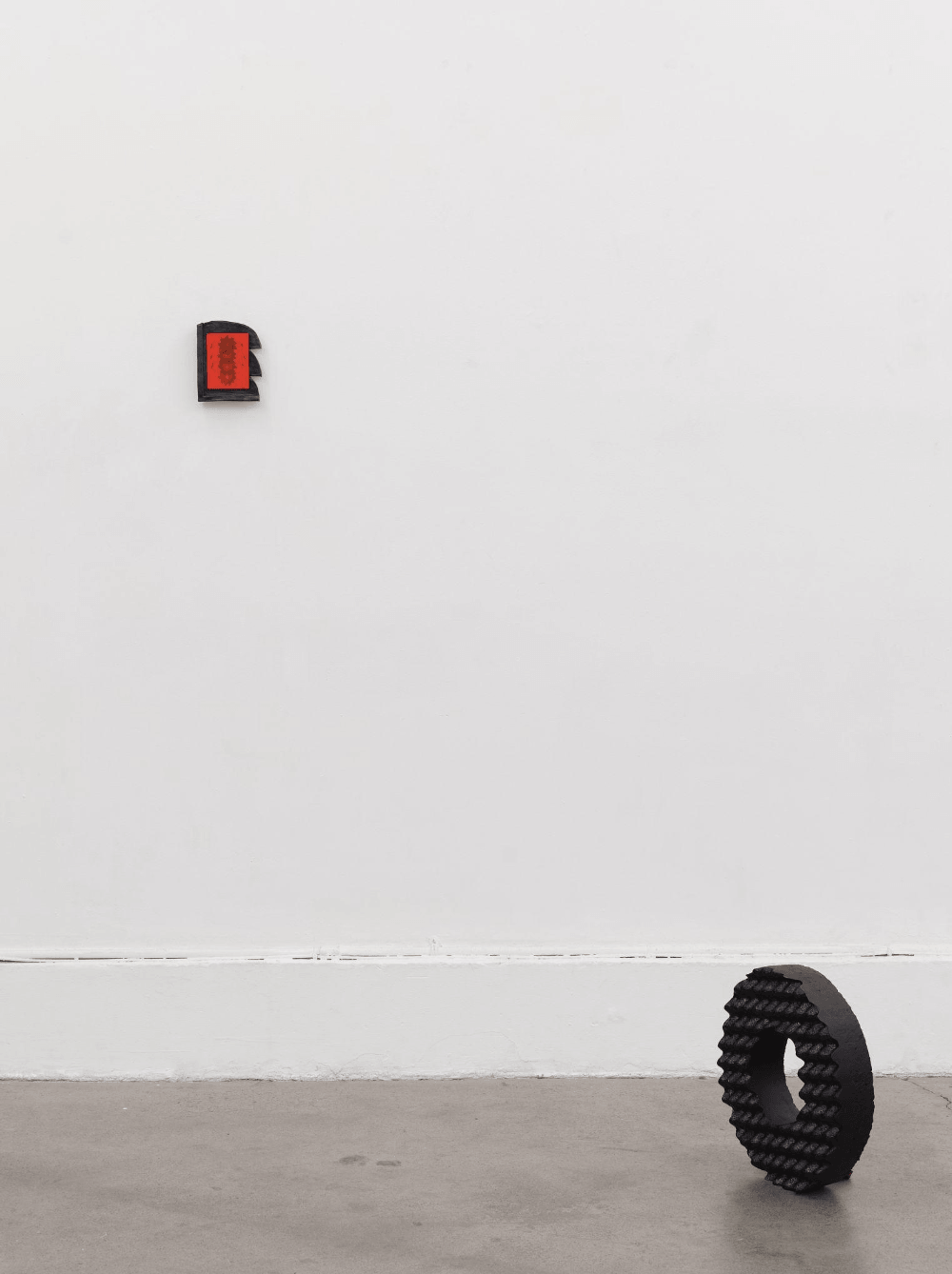
Daniel Trejo, Waning Constellation (2026).Courtesy of Et al. Gallery
Smartphones, smart cars, luxury condos, tech campuses, airport lounges, wellness brands — they all inherit a kind of Dieter Rams functionalist, tech-minimalist aesthetic prioritizing utility and cleanliness. If contemporary loneliness is partly a crisis of human connection, it is also a crisis of environments increasingly stripped of evidence of other people. Then Daniel Trejo comes along. His brand of minimalism reintroduces material contradiction and traces of the handmade, challenging the sterile, frictionless aesthetic of modern mass-produced design.
Like the post-minimalists Robert Morris, Lynda Benglis, and Scott Burton before him, Trejo revisits Minimalism not to celebrate its precision but to expose its limitations through material instability, anti-industrial tactility, and the refusal of Minimalism’s clean finish. In Waning Constellation (2026), a large foam wheel in the round appears almost proto-technological, now archaic and reduced to a prop. Leaning on its backside is a smartphone-sized ceramic tile, fragile and easily overlooked. Trejo handles materials: industrial foam, automobile paint, ceramics, nail polish, and fabric, with lyrical mastery—industrial, domestic, and cosmetic materials appear to collide. Its awkward physicality and palpable traces of the artist's hand resist the frictionless logic of contemporary "calm" design, which often seeks to erase evidence of human labor and minimize dependence on others. In contrast, Waning Constellation insists on material presence, vulnerability, and the imperfect residue of making. Throughout the exhibition, Trejos's sculptures produce similarly awkward encounters between handmade surfaces, bodily scale, and familiar forms that disrupt seamlessness. If contemporary loneliness is partly produced by environments designed for efficiency and self-sufficiency, Trejo proposes another possibility: spaces that acknowledge interdependence by preserving traces of the people who shape them.
Both societal diagnosis and antidote, the exhibition proposes forms of connection rooted in vulnerability, material presence, and attentiveness to others. Mendoza invites us into intimate emotional spaces where softness becomes a form of resistance, while Trejo suggests that relational failures are inseparable from the environments we inhabit. Mendoza and Trejo’s work, juxtaposed, creates a dual message: the loneliness epidemic is not merely a failure of personal relationships but a symptom of conditions increasingly engineered to minimize interdependence. In this sense, Neighbors is less about the people who live beside us than about the conditions that make genuine proximity possible.
