
Censorship, Art and the Nazis: A personal reflection

“Entartete Kunst,” Degenerate Art exhibition guide, 1937, featuring The New Man, Otto Freundlich
There are degenerates in my house. I am referring, here, to "degenerate art." Nazis – the Nazis of 20th Century Germany, I mean – called it degenerate, not me. I think it's great, and I hang it in my living room.
The motto "Never forget" apparently doesn't seem to apply to remembering what the Nazis did to the arts. I've found that many very smart people are not familiar with the term "degenerate art," as it was dubbed by the Nazis. Hitler didn't like art that was anti-authoritarian, too avant-garde, or created by Jewish artists. The Nazis went after it in a way that makes today's so-called culture wars look as vicious as jousting with pool noodles. Nazis publicly burned books, wrested Jewish musicians from their orchestras, tortured journalists for their opinions, and jailed cabaret performers.
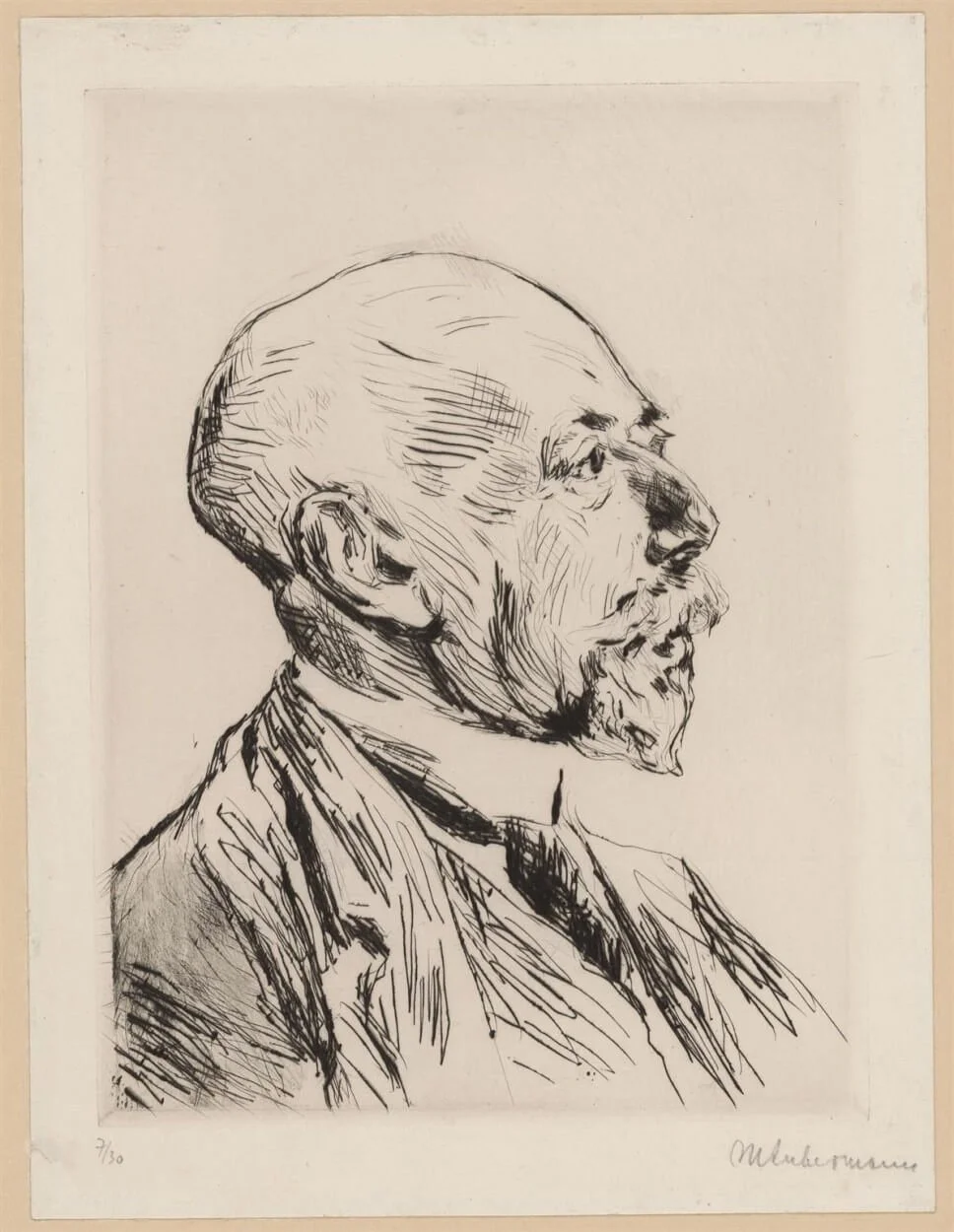
Portrait of Adolph Goldschmidt, Max Lieberman, etching, 1912, collection of the writer
When it came to visual art, they confiscated thousands of paintings, prints and sculptures. In 1937, the Nazis mounted an exhibit of hundreds of these works that they labeled "Entartete Kunst," degenerate art. Why would they show what they hated? Ostensibly to educate the public on the sick nature of modern art. They would also sell many of the works to fund their government, a predatory act akin to the way they later stripped gold and valuables from the bodies of people killed in camps.
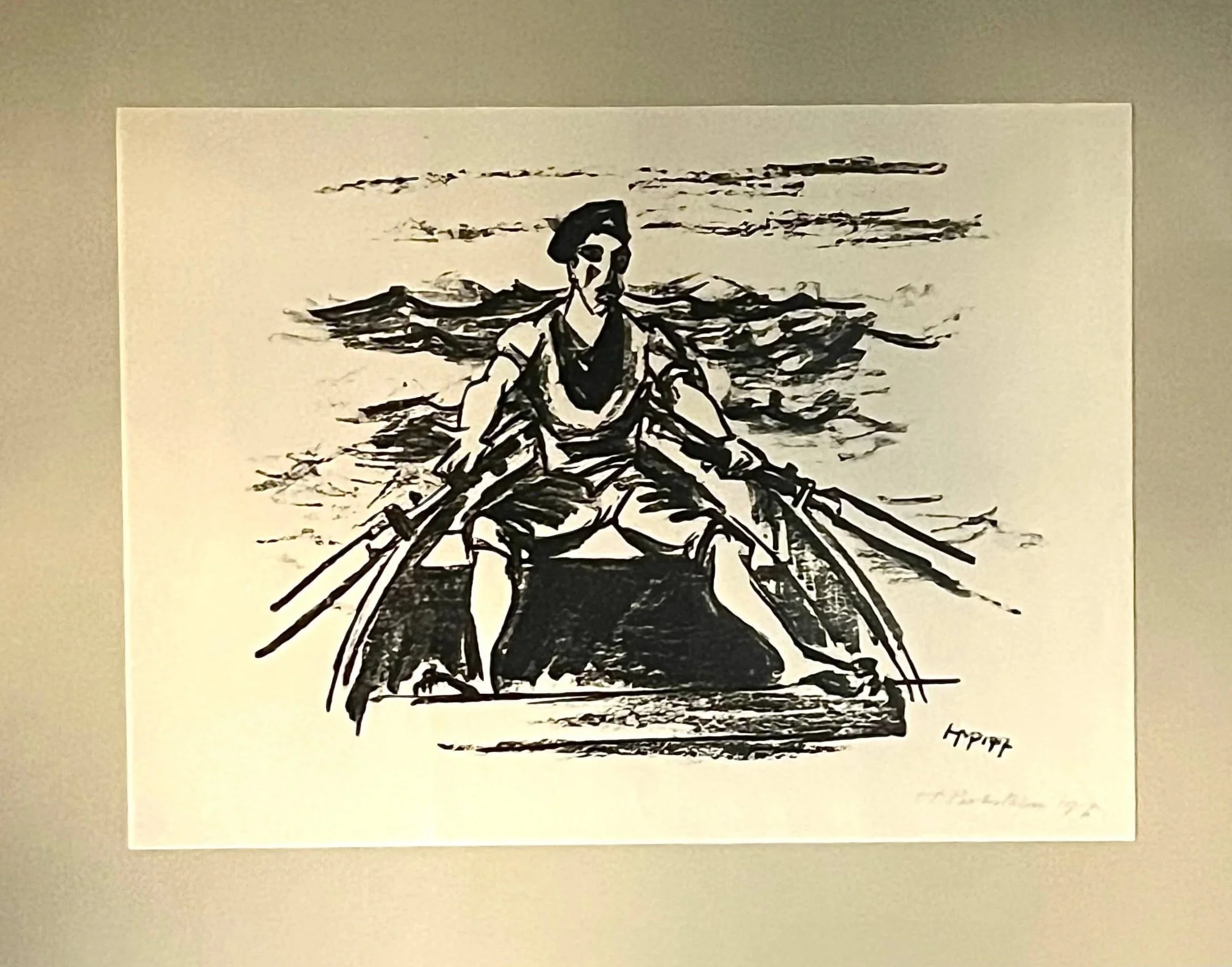
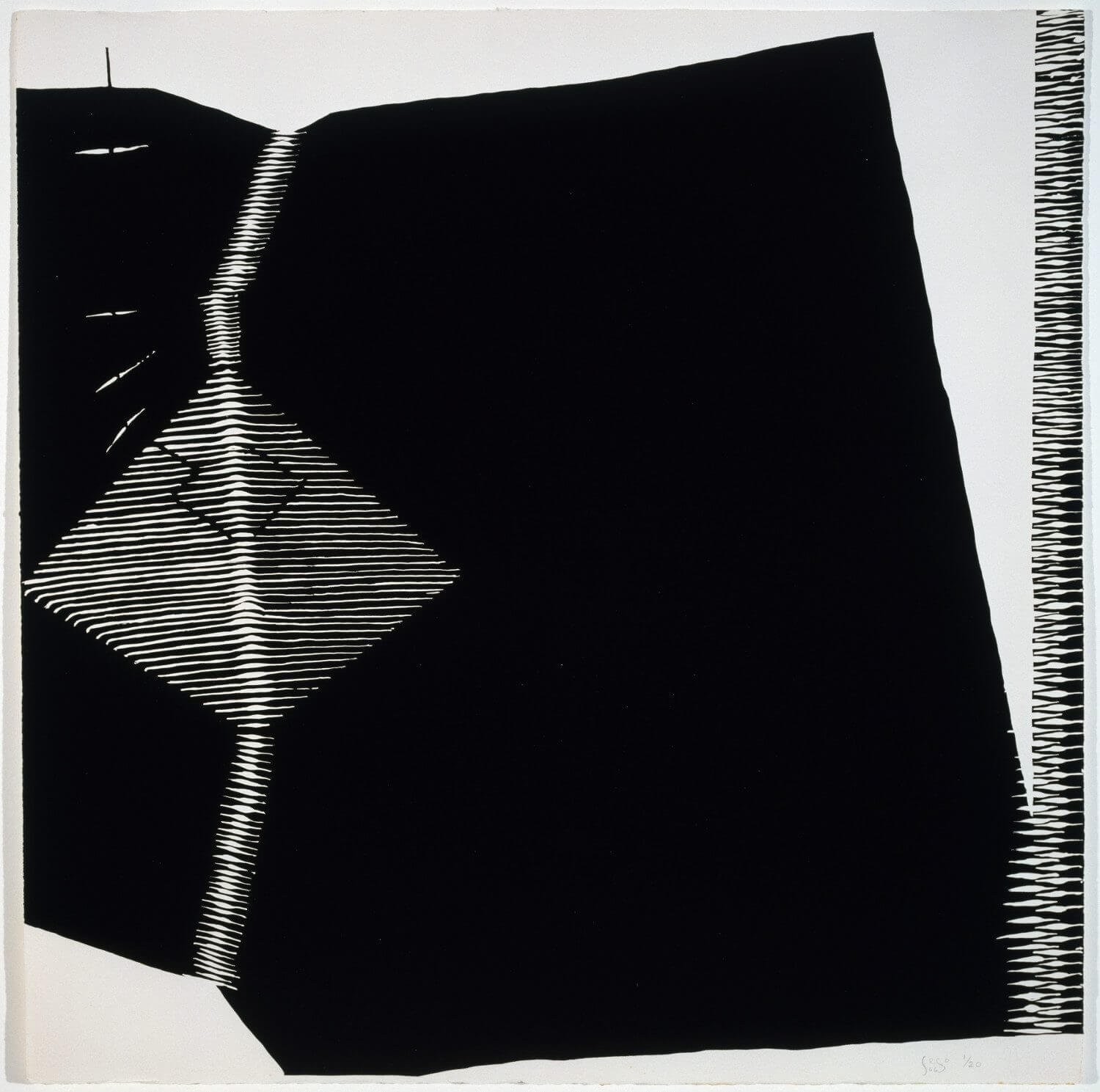
(L)Italian Sailor, H Max Pechstein, lithograph, 1917, collection of the writer (R) Untitled (Tamarind 961), Gego, lithograph, 1963, collection of the writer
I'm lucky to have some pieces by the artists from that exhibit. Of course, I'm lucky to be here at all. My mother was born into a Hamburg Jewish family in 1932, the year before Hitler took power. One of the first imprisoned journalists was a relative, a political activist jailed and beaten to death by Nazis in 1933. My mother, grandparents, and most of my aunts and uncles escaped. Many of my relatives escaped, but not all.

Untitled pastel, Otto Freundlich, undated, collection of Rebecca Alexander (a cousin)
When the Nazis held the "Degenerate Art" exhibit, the cover of its guide was Otto Freundlich's African-inspired sculpture The New Man, confiscated from the Hamburg Museum für Kunst und Gewerbe. What could be a greater affront to "Aryan" purity than an African as the new man?
The Nazis killed Freundlich in a Polish concentration camp. I grew up with his art. My grandparents hung pieces by him in their home. Only this year, I learned that their relationship to the artist was probably closer than that. My grandfather's sister, Olga, was the owner of The New Man sculpture, years before it wound up in the Hamburg museum.
When the Nazis confiscated thousands of artworks from museums, they included hundreds of works by Lovis Corinth, Käthe Köllwitz, Max Liebermann, H. Max Pechstein, and Karl Schmidt-Rottluff. Just this month, I saw paintings and sculptures by some of these artists at the Los Angeles County Museum of Art, which has a terrific collection of German Expressionism.
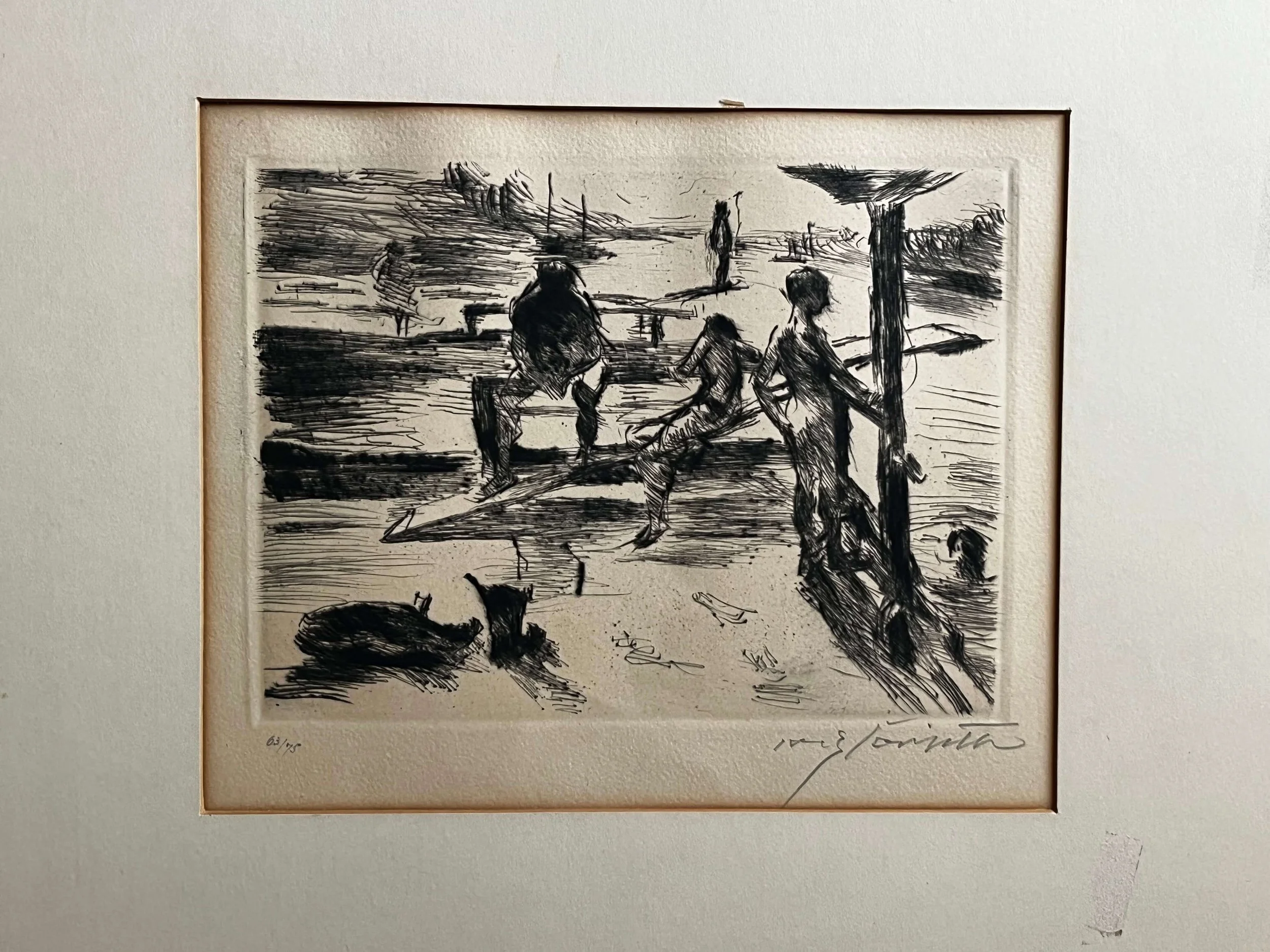
Bathing Place, Lovis Corinth, drypoint etching, 1919, collection of the writer
I can also see a lithograph, etchings and a woodcut by some of these same names every day. They are in my home because my grandparents preserved them and handed them down. My grandparents didn't talk much about the art in their home. They didn't discuss the artists or their fates. I didn't even know about some of the pieces they had. But I understood what my grandparents had gone through, living under the Nazis until 1941, and I knew that art was important to them.
So I will draw the connections that they didn't make explicit – not just connections between the "degenerate" artworks and the Nazis, but between those times and our modern times. Some people would like to believe art can ignore politics. My reading of the story of "Degenerate Art" suggests that it can't.
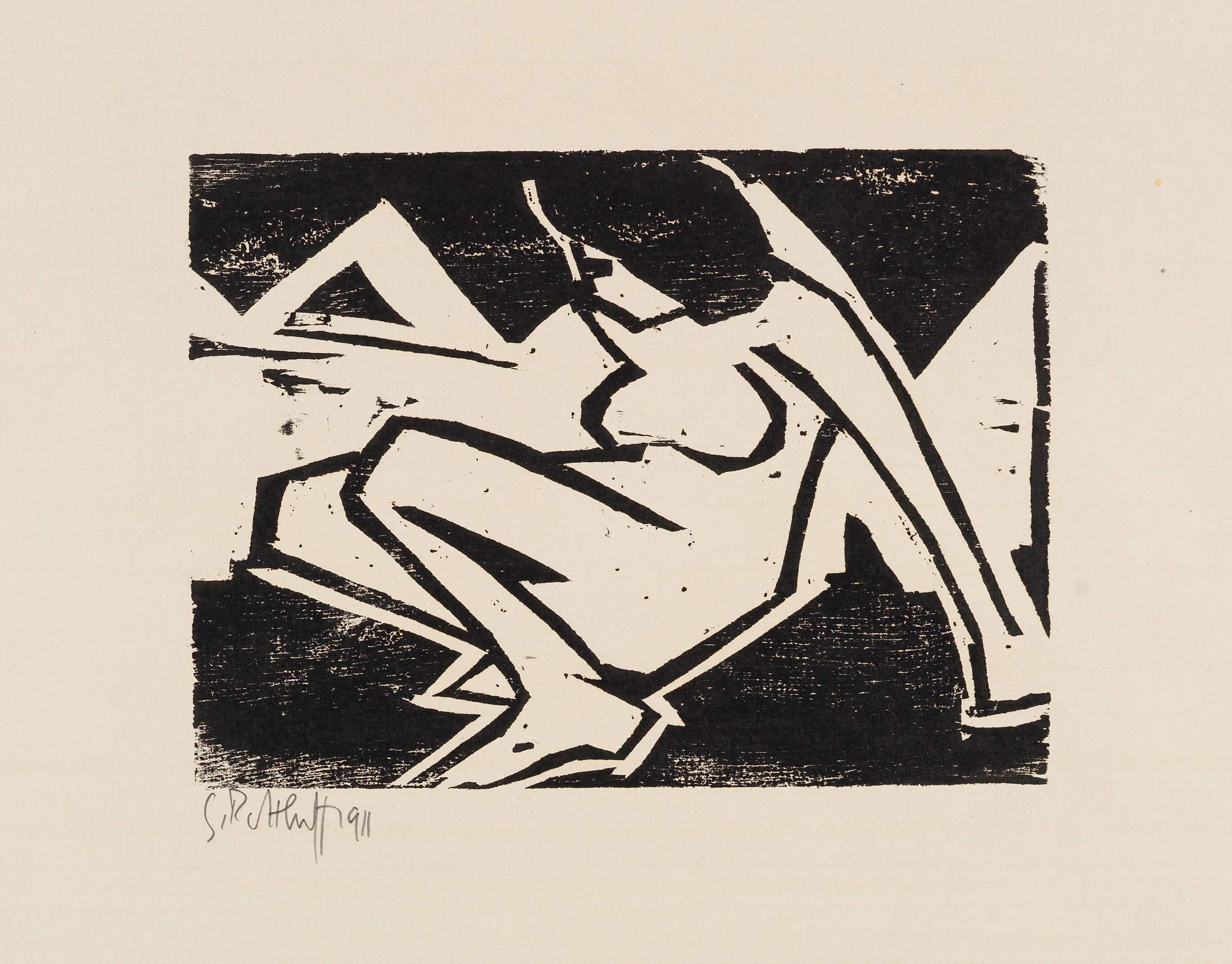
Crouching Woman, Karl Schmidt-Rottluff, woodcut, 1911, collection of the writer
I'm drawn to contemporary artists such as Keith Haring, Mark Bradford, Diana al-Hadid and Diego Romero. They exhibit great aesthetic values along with important civic and political values. Their work comes out of their individual experiences and our shared cultural experiences. They speak of gay rights, police brutality, violence in the Middle East, and the heritage of Indigenous peoples I would not be surprised to hear that our current regime has those names on its list of what is unacceptable.
I want to mention one more German artist persecuted by the Nazis, although she wasn't one of the "Degenerate" artists. Her work can also be found in my home. Gertrud Goldschmidt, known better as Gego, was just 20 when Hitler came to power. By the time she finished studying architecture in Stuttgart, the Nazis made it impossible for Jews like her to practice professionally.
In 1939, after the rest of her family had abandoned their Hamburg home, it was left to Gego to lock the door. She threw the key in the Elbe and escaped to Venezuela, though she knew not a word of Spanish. It was there that she gained fame as an artist, first domestically and later internationally.
I have art by Gego because she was my grandmother's sister. In 1974, I spent the summer at Gego's Caracas apartment, watching her work and even helping to bend wires for her famous abstract Reticularea sculptures.
She is one of the most famous artists to come out of Venezuela. In 2023, her work was honored with a five-floor retrospective at the Guggenheim in New York City. The show then traveled to the Guggenheim Museum Bilbao.

Former Goldschmidt family home with plaque honoring Gego, Hamburg, Germany
Today, there is a German plaque for Gego at the home she had to escape in 1939. Today, too, German museums make explicit what happened to the art and artists of the Nazi period.
I come from a line of lovers of art, degenerate and otherwise.
