

Olivia Reich, What is Grief if Not Love, Woods Lowside
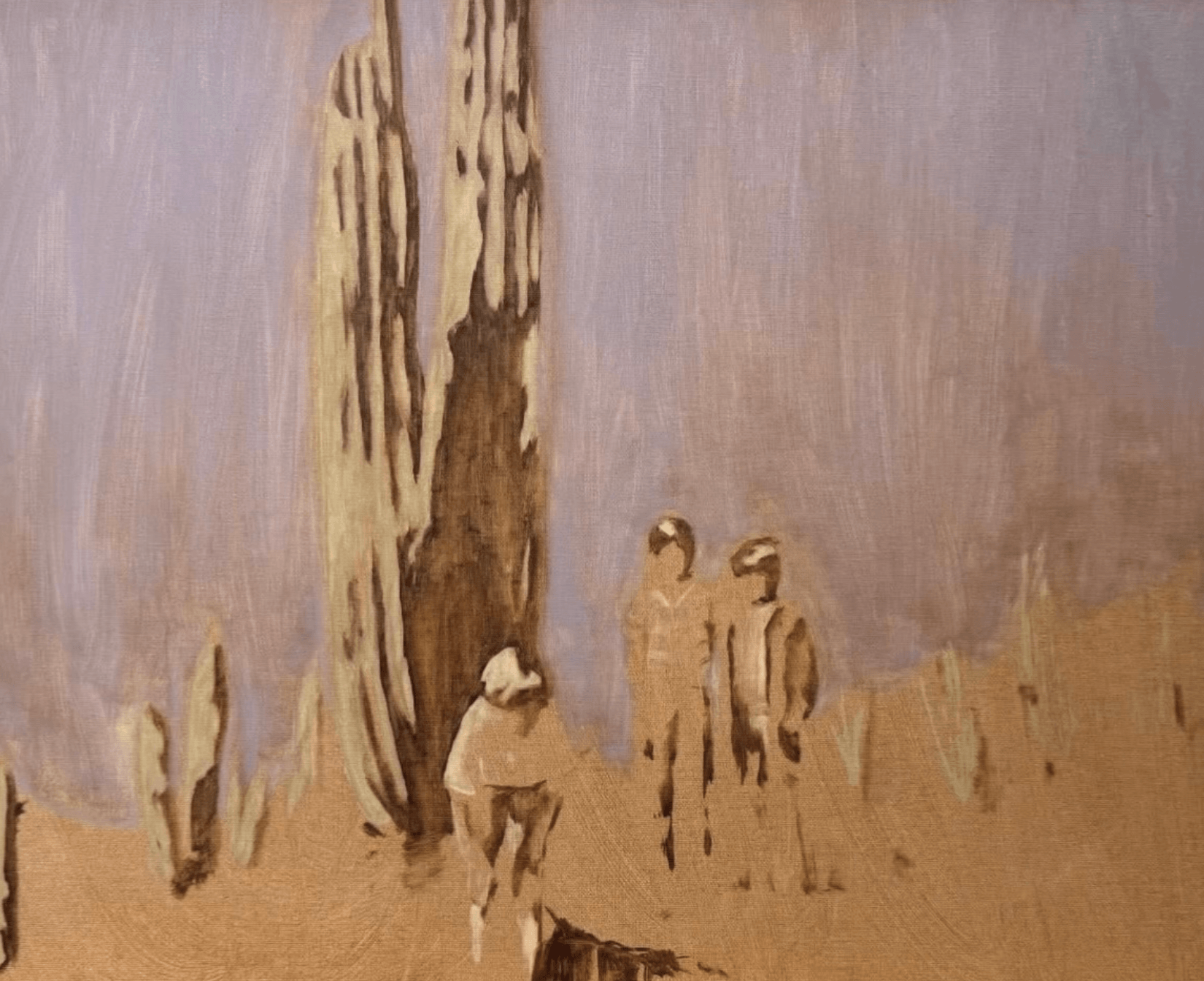
Olivia Reich, Baja, oil on canvas, 18 x 24 inches, 2026.
By Doug Welch
Olivia Reich’s first solo exhibition is on display at Woods Lowside, located at 530 Haight street in San Francisco. The show runs until May 8. The space, a casual neighborhood venue that serves locally produced beer and wine, provides an intimate social environment from which to experience Reich’s paintings. As you enter the space, there is a compilation of Reich’s family photographs displayed on the wall. Reich’s paintings are based on these photos which currently surround the bar/eatery giving viewers an opportunity to linger on these haunting images, return to their friends, and then focus again and ponder these paintings.
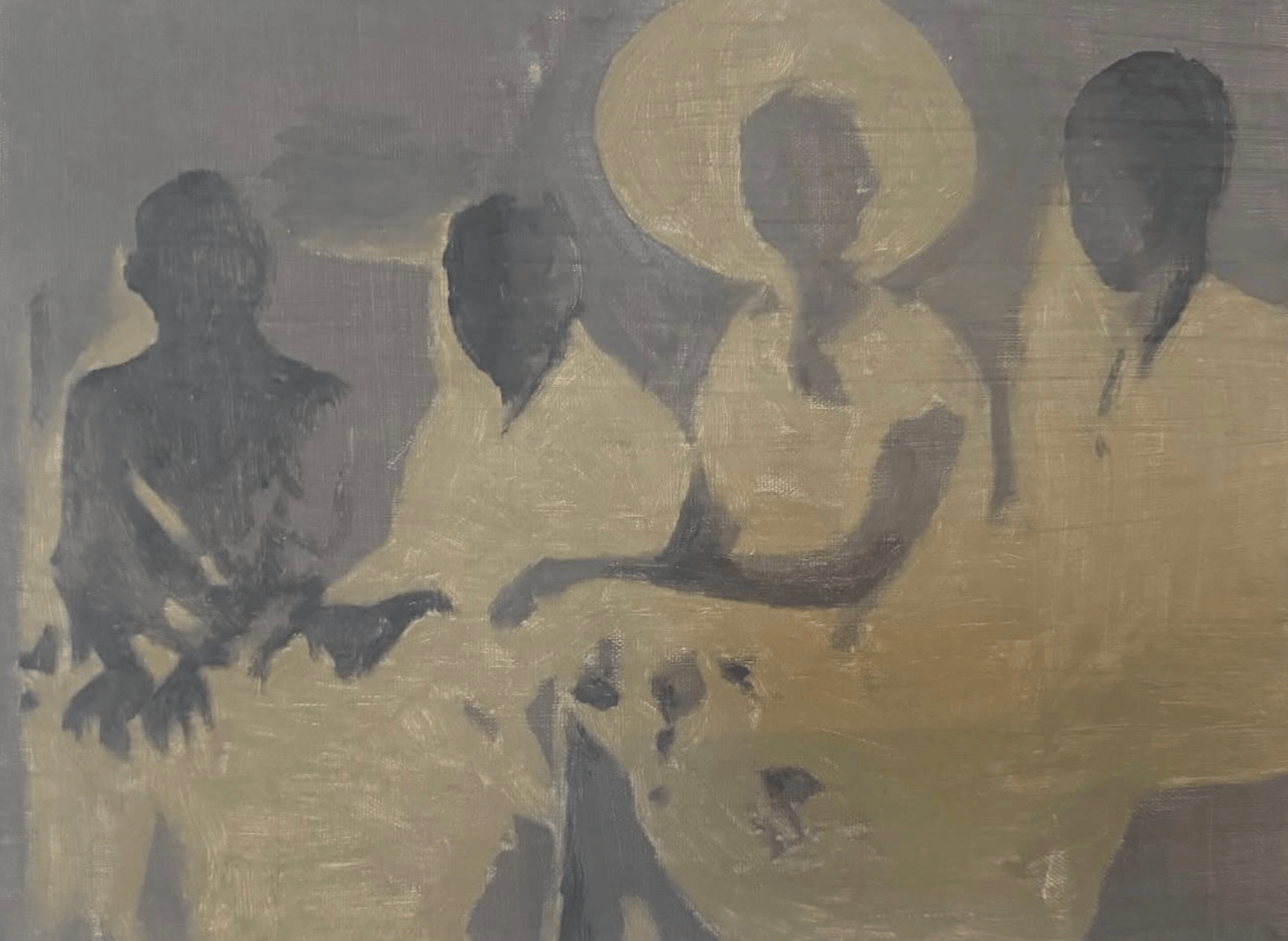
Olivia Reich, Untitled, oil on canvas, 12 x 16 inches, 2026.
The compilation of photos seen upon entry, seem familiar. They are the photos we all find stowed away in a closet or drawer and then spend hours looking through. In most instances, these photos haven’t been seen by anyone in years, yet we struggle to discard them. They could be photos of your dad’s childhood friends, distant cousins at an old family reunion, or of your great aunt with her grandchildren. These photos convey a sense of intimacy even though we don’t know who they depict. Identifying the subjects can be near impossible unless someone has written the names on the back, and even then, their relation or connection to family may remain unknown. It is this context and relationship with vintage family photos that Reich’s paintings speak to.
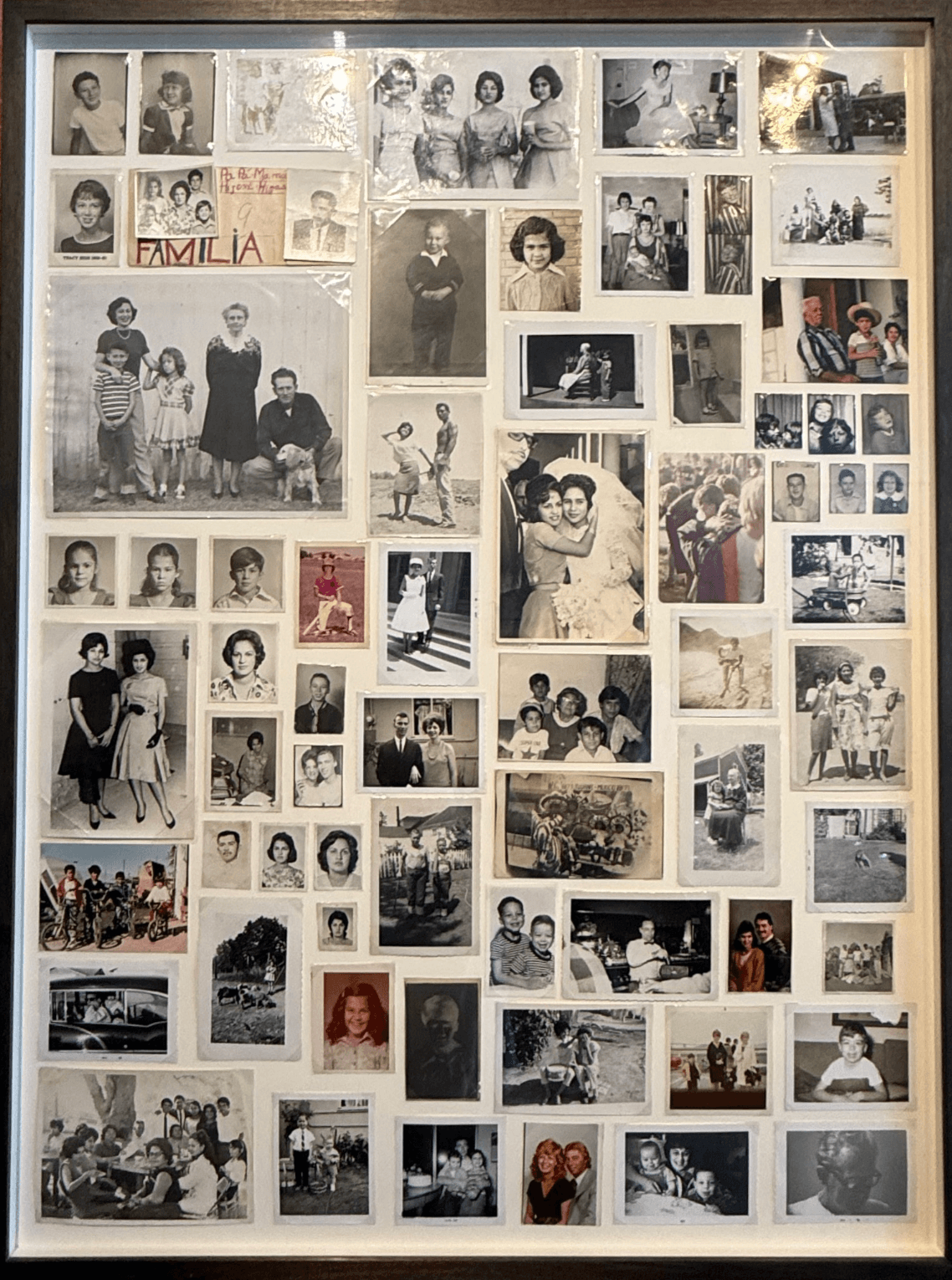
Olivia Reich, compilation board of family photographs on display at entrance.
Reich’s piece “A Familiar Unfamiliar” is an oil painting showing a multigenerational family (including their dog). The painting omits aspects found in the corresponding photo. Reich isn’t trying to paint a literal copy and this is a theme seen throughout the exhibition. The figures in the piece have no faces. However, a woman with her arm around two children, a man kneeling beside their dog, and an older woman in the center of the composition are readily identifiable somehow. Most people would quickly conclude the painting shows a grandmother, a mother and father with their children, and the family dog. Notably, even with faceless figures it’s quite easy to identify major details such as age, probable gender, and the likely relationship between the figures. This alone allows for reflection on how we relate to these images and makes us contemplate on our minds constantly filter, judge, and categorize reality. We do this instinctively without questioning or conscious wondering. The seemingly automatic identification that occurs, limits possibility and closes what could remain open. Obviously, our minds’ automation is a shortcut that saves time and resources and allows us to focus on other tasks. However, this painting, like Reich’s others, challenges us to consider the value of not categorizing so quickly, to allow for more openness and curiosity to fill the void—who knows what might take certainty’s place.
The muted colors of, “A Familiar Unfamiliar” give it a time worn feel. This emotion along with the facelessness of the figures, conveys a sense of loss or of something that cannot be reclaimed. What exactly, is for each to decide. The faceless figures allow us to project our own experiences or memories onto the piece. The universality of the family photo invites the viewer to connect quite easily to their own life. The earliest memories of one’s youth, when their parents were active, still working, still healthy and zealous. For many, this is a time that has long passed and a time that is missed. The absence of faces gives us permission to connect with this family in a more personal way. The nostalgia these paintings convey, which Reich has carefully orchestrated, make them irresistible and easy to spend time with.
Looking at old family photos often means looking at photos of people who are strangers. Without a date, place, or names, the people in these photos shift from friends or family to unknown faces. Even if we become curious about who these people are, it is likely the people who could help identify them aren’t around any longer. In that way, the omission of detail in Reich’s pieces also communicates this loss. Whether in a clear photograph or a painting with faceless figures, these people are already in the realm of the unknown. In particular, “A Familiar Unfamiliar” conveys nostalgia and hope, longing and good memories, all intertwined with a sense of grief. There is a universality to this kind of loss, we all have these photos tucked away somewhere. Reich forces us to confront whether it matters who is remembered.
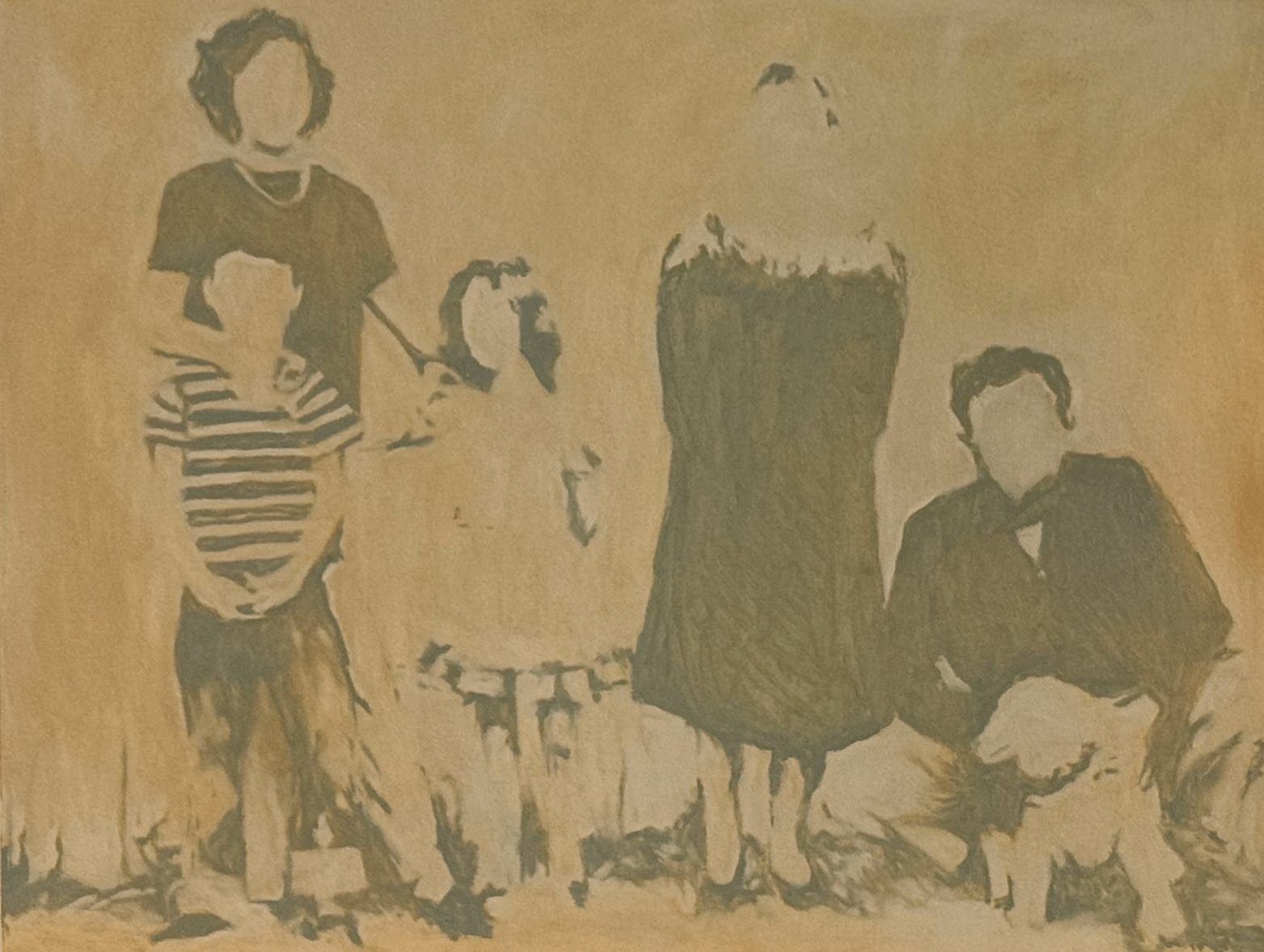
Olivia Reich, A Familiar Unfamiliar, oil on canvas, 24 x 36 inches.
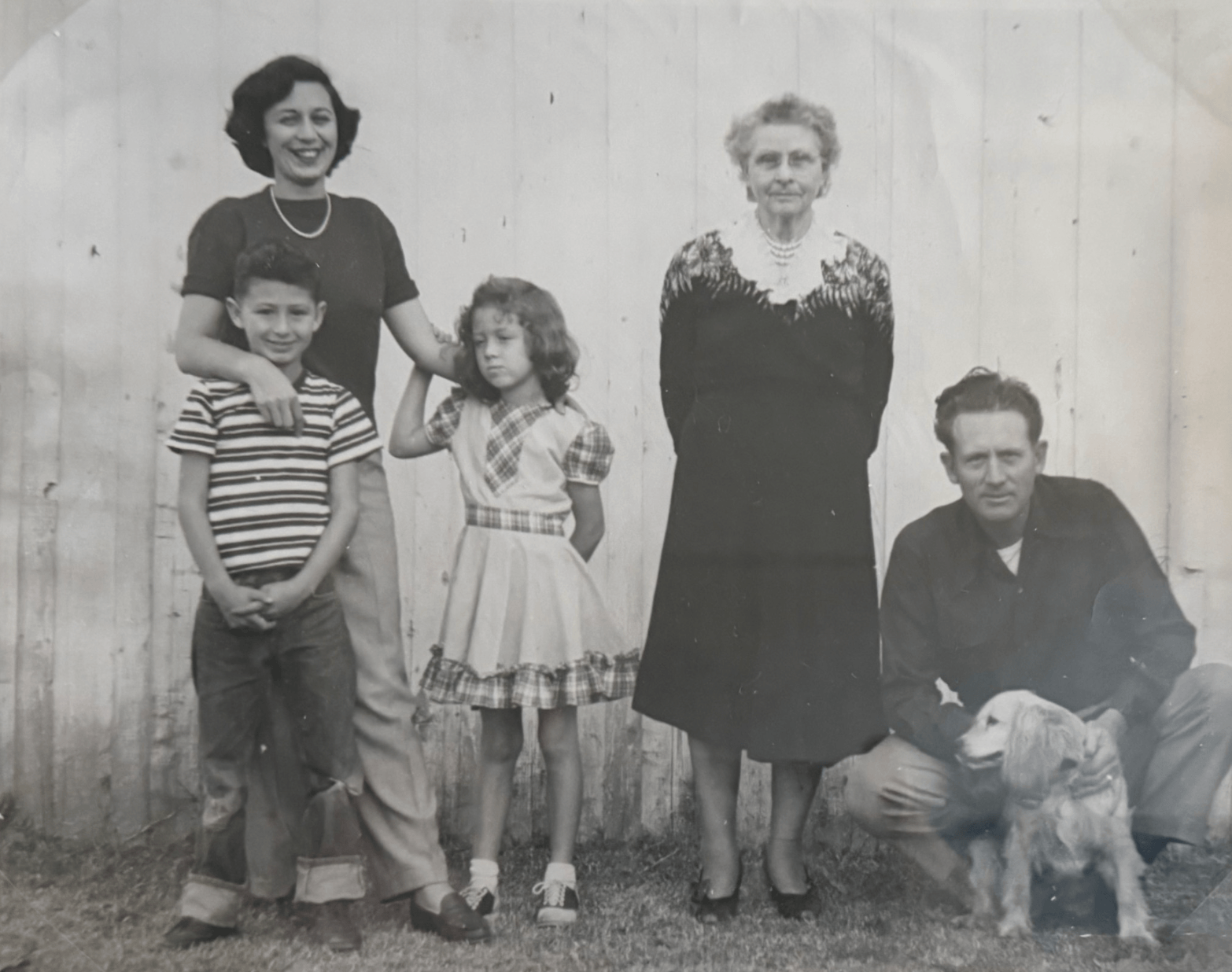
Olivia Reich, reference family photograph for ‘A Familiar Unfamiliar’.
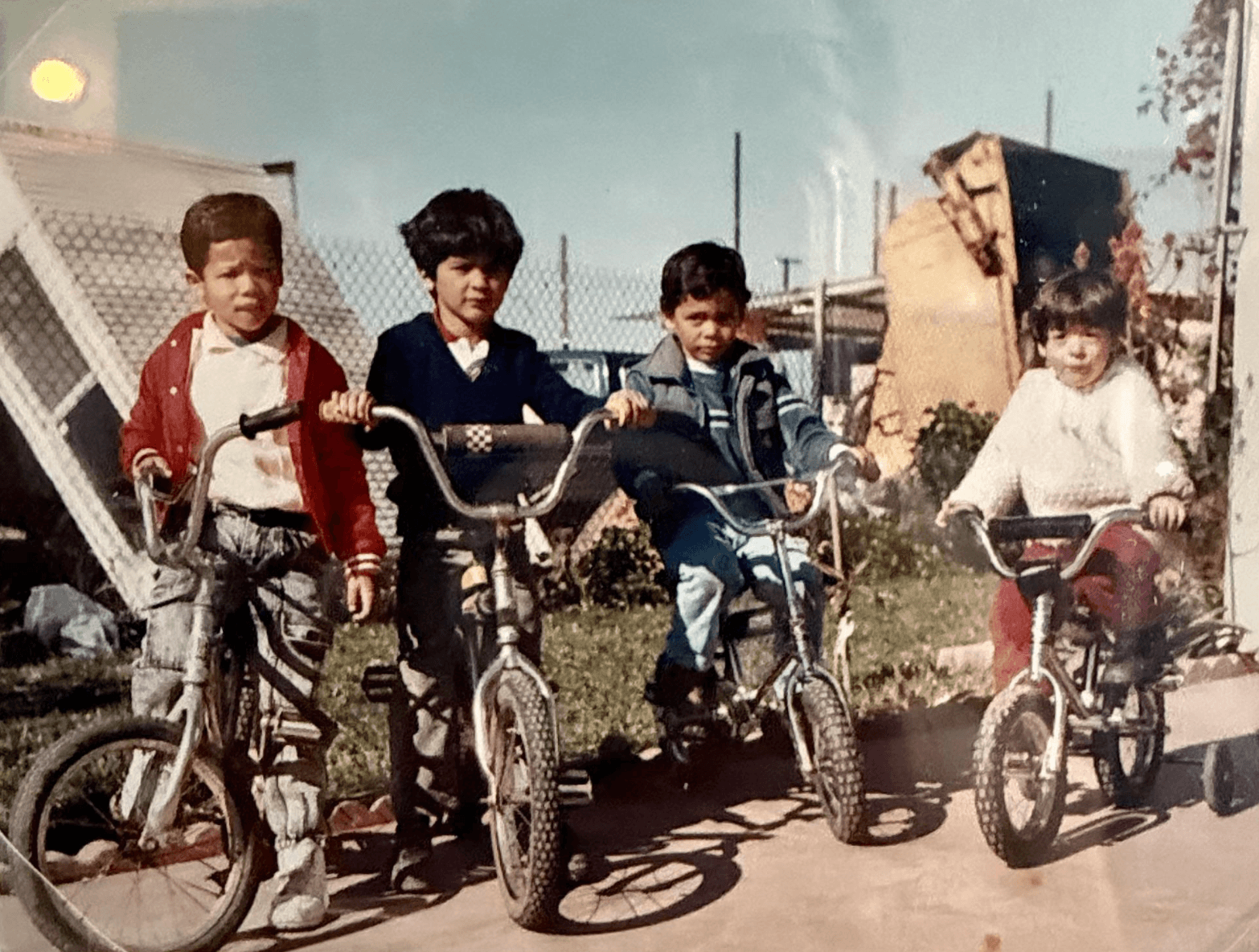
Olivia Reich, family photo reference for painting titled ‘By the Corner Store’.

Olivia Reich, By the Corner Store, oil on canvas, 24 x 36 inches.
The painting “By the Corner Store” depicts four kids with BMX style bikes. It’s rendered in bold, high contrast neutral tones. This scene could easily be that of many people’s youth. Once again, the faceless aspect creates a shared commonality that allows us to connect quite personally with the painting. It’s the viewer and their childhood friends, it’s the viewer’s children, or their child with their child’s friends. The anonymity allows for a sense of limitlessness. It is not confined by the specificity a face imposes.The forms in the piece are less defined than a photo would capture. It’s less a particular moment in time from the past than a representation of many moments (possible moments, potential moments) from the past.
Ironically, the restraint used by Reich in these paintings, allows the painting to become more than it otherwise would be. The bluriness in the paintings is quite intentional. Reich could easily have made them more literal. Without restraint, however, these kids on bikes are not me and my friends, they cannot be my dad with his buddies, or represent a vague memory of being carefree. Without the vagueness restraint offers us, these kids are someone else, from a specific time and place. The skill Reich exercises by holding back allows for a much more personal connection between the viewer and the painting. The openness created through the omission of certain details, along with the gestural and soft brush work, shift the documentary nature of a photo into a painting of feeling, imagination, and possibility.
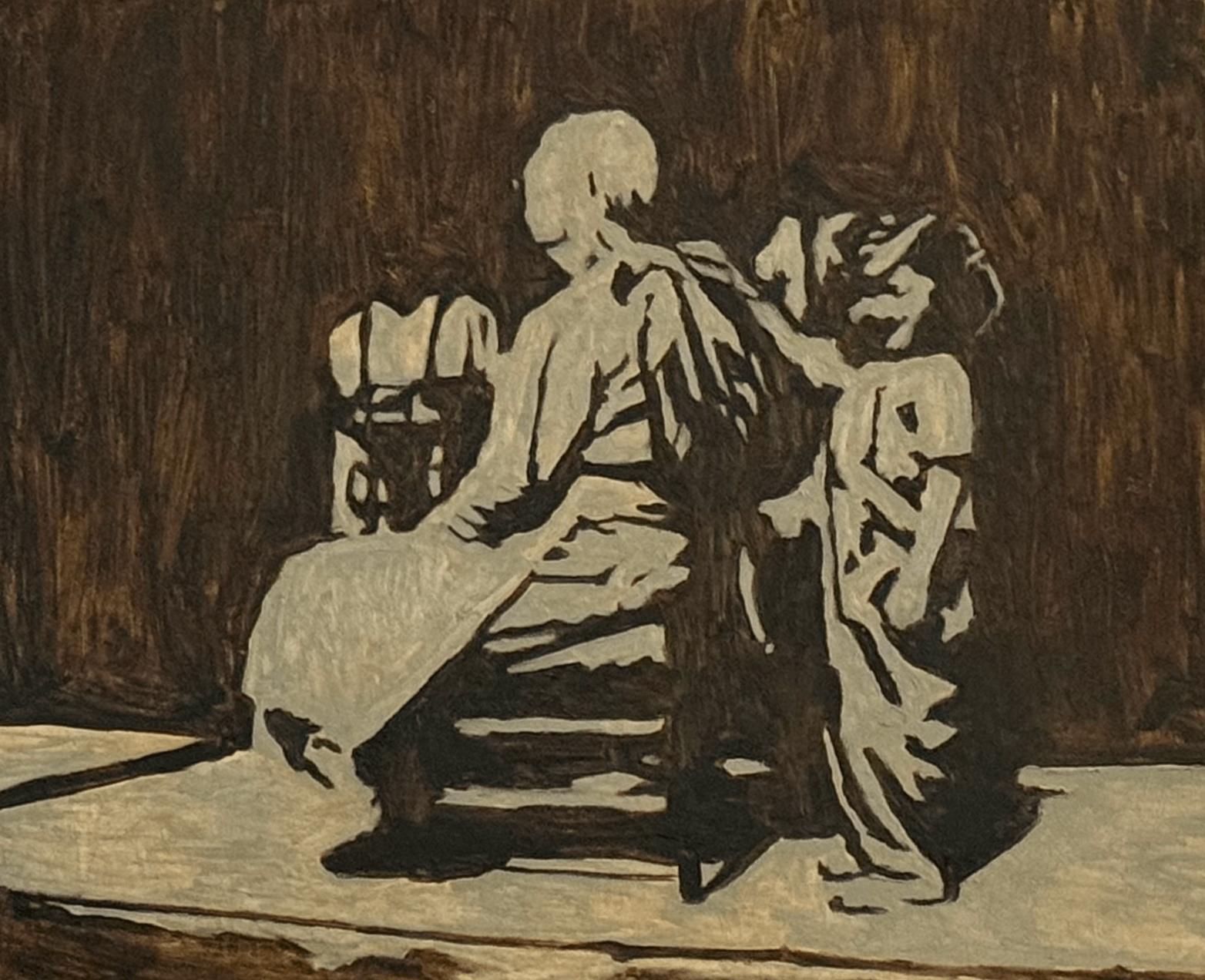
Olivia Reich, An Act of Love, oil on canvas, 20 x 24 inch.
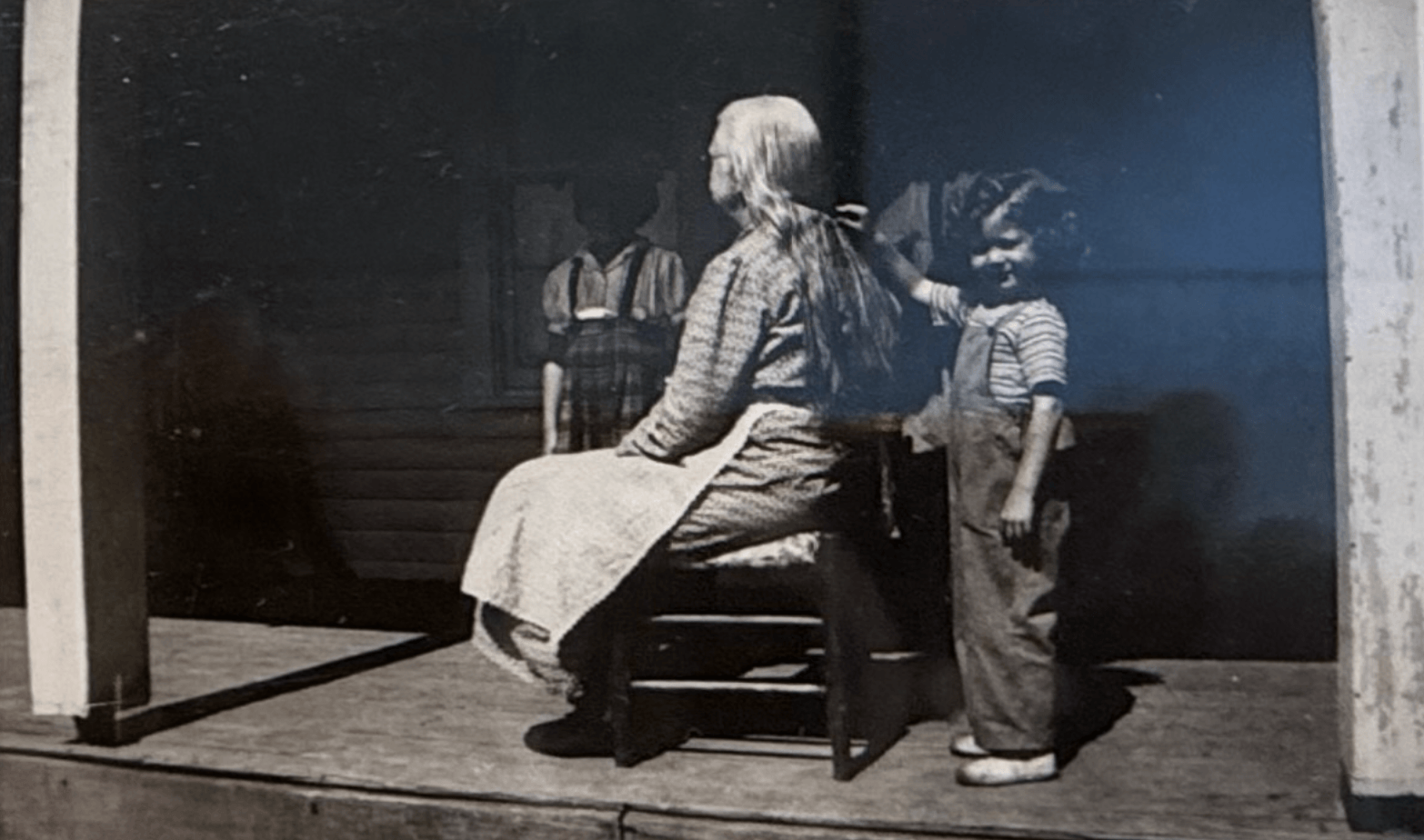
Olivia Reich reference family photograph for the painting titled ‘An Act of Love’.
An Act of Love is a 20 x 24 inch oil painting. The painting depicts an older woman seated in profile, a child stands behind her with their hand reaching out toward the woman. A third figure, likely a child, is standing to the side of the woman but facing forward. The undifferentiated background focuses the viewers’ eye on the figures. This alone helps remind us of what is important, i.e. the people in our lives and our relationships with them. What exactly the child is doing by extending their arm out is not clear but the viewer is still left with a sense that this physical contact conveys a closeness, intimacy and connection between them. Vintage photographs often have indecipherable gestures because each print was typically saved, regardless of quality. In today's social media age, where everyone carries a camera, we constantly delete the kinds of images earlier generations were certain to save.
Looking closely at An Act of Love will continue to push the viewer to try to make sense of the narrative. There is a ghostly quality to the other child standing beside the woman. Only a body is visible as the child’s head becomes absorbed into the brown background and shadows the light cast.They are almost receding into it, as if the child is moving further away from us. And as they move away, they disappear. The physical absence represented in An Act of Love, reflects a reality we all experience as time moves on. Our memories fade, our ability to connect with people (like those represented in the compilation of family photos), and even our ability to know who someone is, all become hazy and tests what is memory and what is invented for convenience sake.
The title of the piece suggests that the viewer might try to discern what act it refers to. Is it the child reaching out? What is this act of love? The painting shows a child extending toward the woman, creating a physical connection. Yet, through this restraint, clear answers and certainty remain unattainable. This unknowability ultimately gives the painting its power.
Possibly the “act” is not the key, any more than there can be certainty in understanding any of Reich’s paintings. It’s also not even clear that the child reaching out is necessarily the “act” that the title references. The meaning of the painting may lie in the quiet fact of the three figures being together. The act of love is presence.
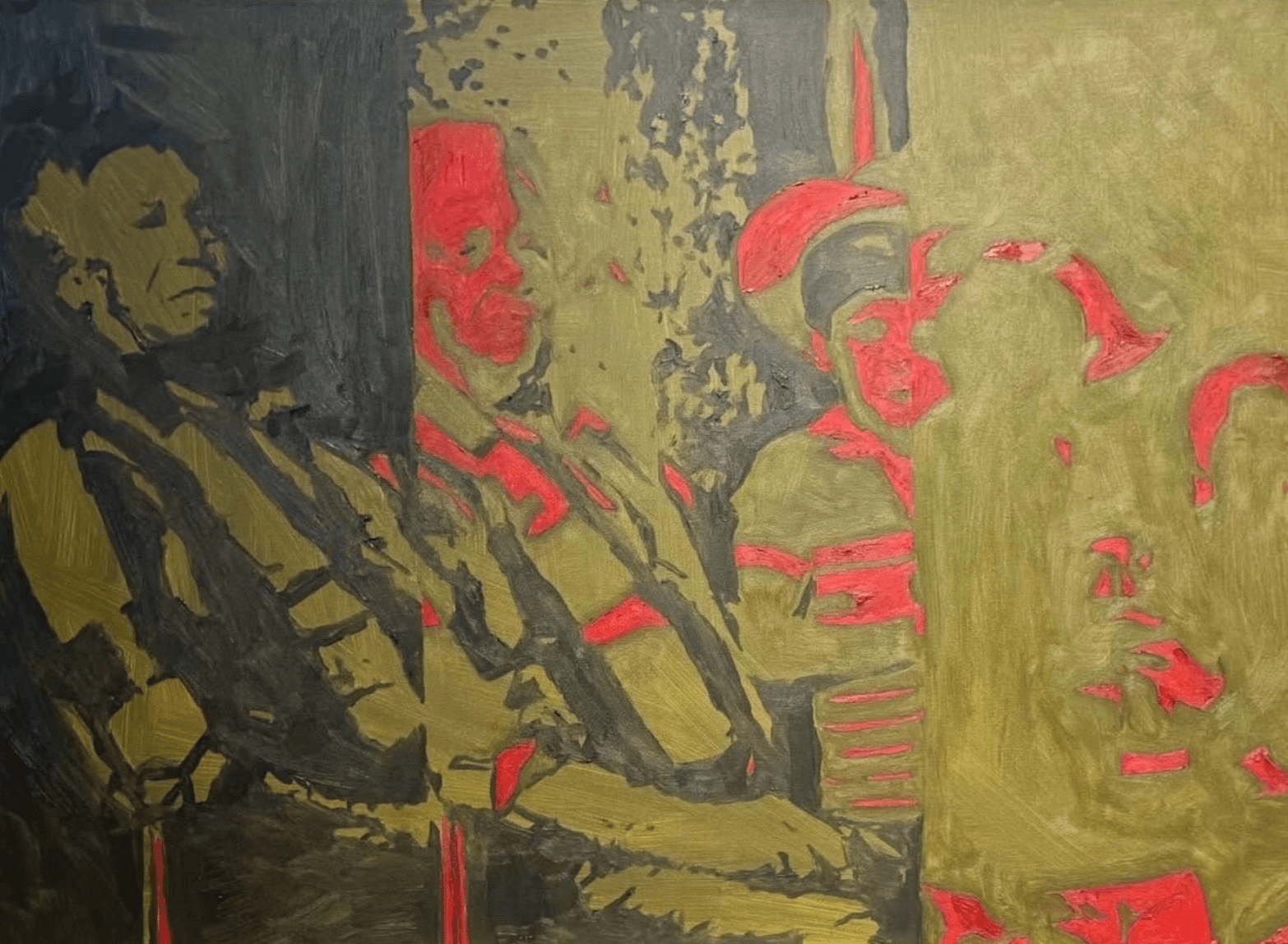
Olivia Reich, I Wish I Knew Him, oil on canvas, 24 x 36 inches, 2026.
Reich’s first show is powerful because it is personal but also universal, and therefore relatable. Through her paintings, her family members become people close to us too. The paintings point us to a recognition of what is most important and offer an intimate reminder of impermanence. These paintings leave the viewer encouraged with the knowledge that we really are all in this together.
