

Closures and the Concept of Grief: Rethinking Cultural Loss in the Bay Area Arts Ecosystem
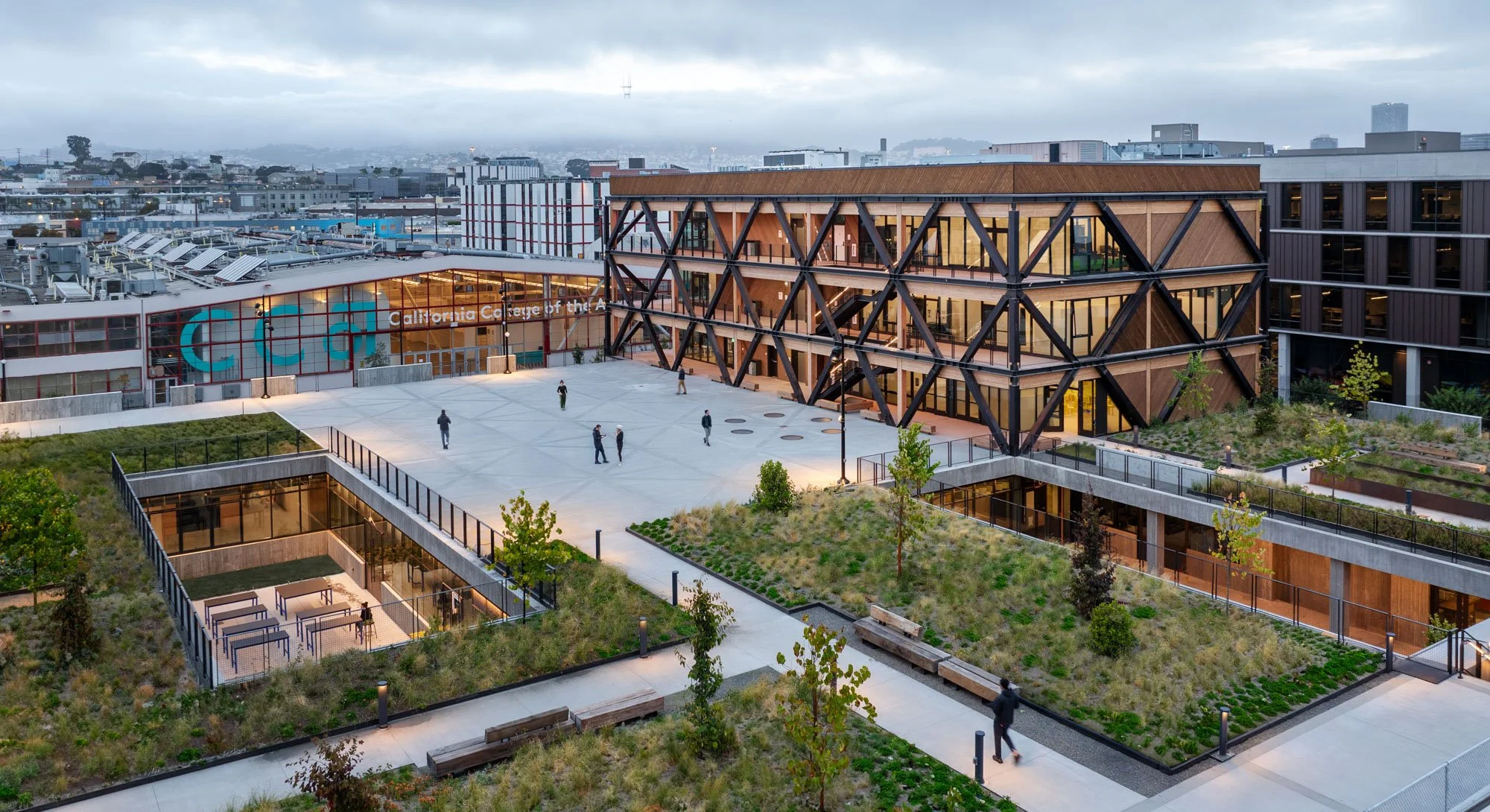
California College of the Arts, San Francisco CA
David C. Howse was recently on the Roborant Review Podcast and was able to shed light on the closure of California College of the Arts (CCA) and what the future may hold for the arts in the Bay Area. I was in the process of writing a review of the 2026 season of Friday Nights at OMCA. The Oakland Museum of California has a schedule of public programs every Friday which started in April and ends in October this year. OMCA is inviting visitors to gather for a dynamic series of live music, dance, art-making, film, and community connection. A program that endeavors to keep artists and patrons sharing in joy, solidarity and the sacredness of creative expression. Check out their website for the entire calendar and attend an event!

Oakland Museum of California
I have written in previous posts here about how joy is as much a cleansing ritual as it is sovereign Beingness for me as a Black woman. In light of the conversation with David Howse and all the closures of museums, art galleries, and institutions across the Bay Area and the country, I had my own internal conversation. I was contending with this notion: speaking about these closures and the loss of creative spaces without acknowledging American racial history is to misunderstand the moment entirely. At least from my perspective as a Black-Afro Female creative. The truth is, whenever this country shifts or transforms, it exposes a familiar reality: despite the claim that safety, economic stability, and in this case art are for everyone, the structures that stratify the arts endure—and the hierarchy remains firmly in place, even here.
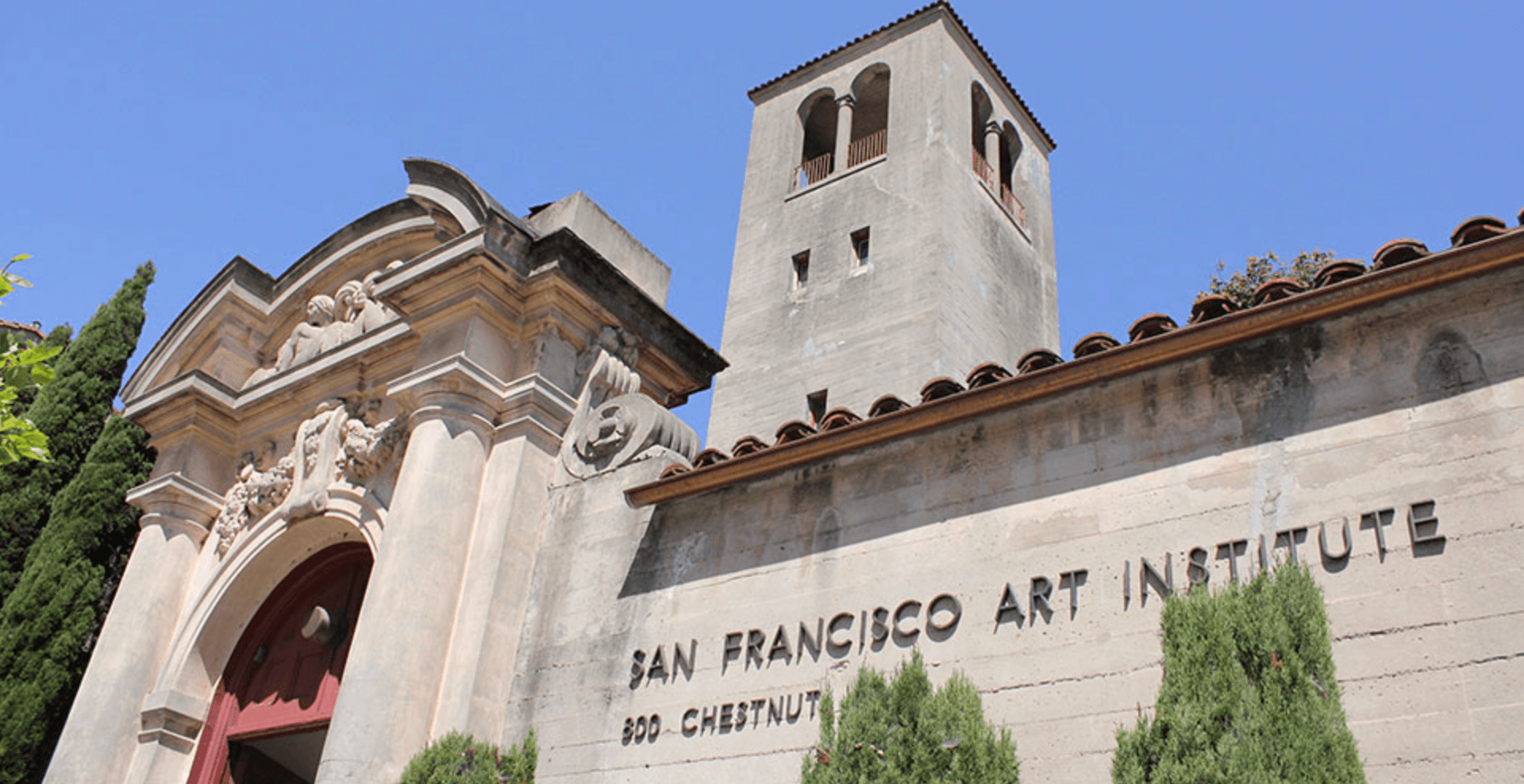
San Francisco Art Institute
Here is an example that comes to mind. When the San Francisco Art Institute closed, the response was swift and there was a clear expression of grief. It was, deservedly so, framed as the loss of an “artistic landmark.” I, like many, grieve the loss of any space that allows artists to blossom. Because any rupture in cultural expression that devastates cultural continuity hurts us all. It always has and always will. And yet, for many Black creatives, access has been and still is an issue. More often than not, when we grieve for the loss of creative spaces we are not even having the same conversation. Being Black is to know all too well that institutions shutter, programs dissolve, we scream into the void and a fleeting sense of solidarity being held together by the love of the arts happens.The absence of creative spaces is a very real thing and yet so is the distance that has alienated creatives of color in the art world as well. Our collective grief is misaligned: white creatives may mourn the loss of access, but rarely the quiet loss of dignity endured by nonwhite creatives in the struggle to claim even a fragment of it.
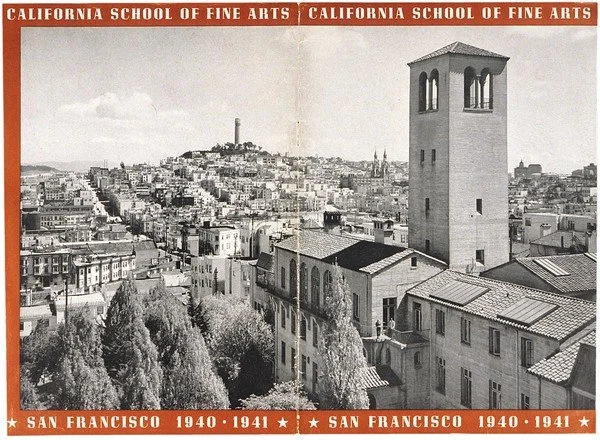
California School of Fine Arts (now SFAI) catalogue cover, 1940–41, featuring a photograph of the campus by Ansel Adams. Image: courtesy SFAI, reproduced with permission from The Ansel Adams Publishing Rights Trust
Here are a few historical and current cultural barriers worth highlighting as we process the closures of artistic spaces and the grief that follows:
Early museums, galleries, and art schools in the Bay Area largely centered white artists and European traditions.
Redlining and spatial segregation in areas like West Oakland shaped where art spaces, studios, and cultural hubs could exist—and which ones received investment.
Institutions like California College of the Arts and San Francisco Art Institute have historically had low Black enrollment due to cost, recruitment practices, and cultural barriers.
Curatorial leadership has historically been overwhelmingly white, therefore decisions about what is “museum-worthy” often excluded Black aesthetics, narratives, and media.
Black-led creative gatherings and movements have historically been surveilled or disrupted. This impacted the sustainability of cultural production tied to political expression.
Rising costs in Oakland, San Francisco, and surrounding areas have pushed Black artists out of historically significant cultural neighborhoods.
Grants, fellowships, and philanthropic funding still disproportionately go to white-led institutions or artists with existing institutional ties. Black artists are often funneled into “community arts” funding pools with smaller budgets.
Narrative control and curatorial power — even when Black artists are included, their work is often framed through institutional lenses that dilute or reinterpret their intent. Conversations about race in art are frequently mediated by non-Black curators or organizations.
Tokenism vs. Sustained Inclusion — need I say more. Black artists are often included during moments of racial reckoning, then sidelined again.
Artists without formal training (disproportionately nonwhite) are often undervalued compared to those with MFAs or institutional affiliations. Community-rooted practices are labeled “informal”, reinforcing hierarchies of value.
While digital spaces offer new visibility, algorithmic bias and resource gaps (time, tech, marketing knowledge) affect who can fully leverage these platforms.
Unfair emotional and cultural labor — Black artists are often expected to produce work that educates audiences about race or trauma. This hinders creative freedom and places an additional burden not equally shared by white artists.

Oakland Museum of California Friday Nights
So what is my point? There was a part during the interview where David Howse stated that, “We can choose to see this moment as a decline. We can also choose to see it as a transition [...] As things are winding down, new things are emerging.” I believe that to be the Black Artist’s Way anyway because when left with no resources as is evident in West Oakland, community-rooted spaces of creativity prevail. Black creatives are in a constant state of emerging because at times we are given no other choice but to thrive without institutional investment. The difference in grieving these closures matters. That delineation matters. When White artists are experiencing loss of access, some even for the first time, Black/nonwhite artists are buckling up for another round. The difference here matters because the conversation around the closures will inform how we both grieve and emerge together. This transition is about what remains when the “fires of the closures” die down: who will do the preserving; what will be preserved; who will lead these solutions and at the crux of it, can the Artist truly imagine freely without structural constraint?
OMCA’s programs such as Friday Nights are sacred spaces that foster the tradition of community-based artistic ecosystems. Erosion of any creative space, be it institutional or community-based, causes irreparable damage to artistic ecosystems. Ecosystems that have held nonwhite communities together through unrelenting hardships especially because they could not wait for the political system to see them or invest in them. Institutions like the San Francisco Museum of Modern Art have made visible efforts toward inclusion. But inclusion within existing biased frameworks is not the same as transformation. Spaces like MoAD and EastSide Arts Alliance carry forward a lineage of art as both cultural expression and political practice. But they do so with far fewer resources, operating in a landscape where sustainability is uncertain and support is inconsistent. Therefore, I too, like David Howse, see this as a transition period. The question remains as it has always been, who defines the terms of engagement?
